Blessed Franz Jägerstätter
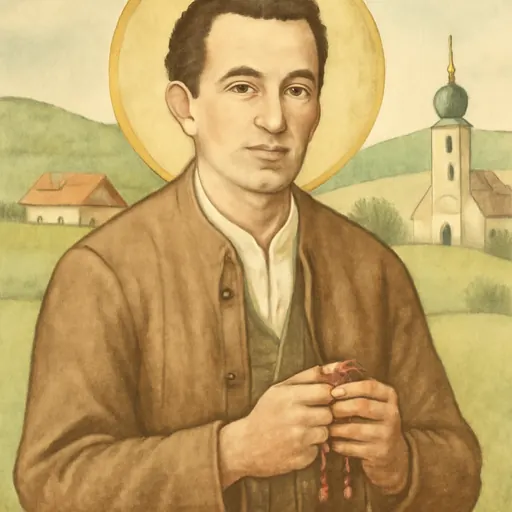
Blessed Franz Jägerstätter (1907–1943) was an Austrian farmer, husband, father and sexton who refused to fight in Hitler's army because he believed the Nazi war was unjust. He was condemned for "undermining military morale" and beheaded on August 9, 1943. The Church beatified him as a martyr in 2007; the Diocese of Linz keeps his memorial on May 21.
Who was Blessed Franz Jägerstätter?
Blessed Franz Jägerstätter was an Austrian farmer who said no to Hitler. A husband and father of three, sexton of his parish church in the village of St. Radegund near the German border, he refused in 1943 to serve in the German army because he was convinced the Nazi war was unjust and that taking part in it would betray Christ. He was condemned to death in Berlin and beheaded at Brandenburg an der Havel on August 9, 1943. He was 36.
For years even many Catholics in his village thought him a fool or worse, and his widow, Franziska, was shunned. Today the Church honors him as a martyr. He was beatified on October 26, 2007, in the cathedral of Linz, and two days later Pope Benedict XVI named him at the Angelus among the new blesseds whose example "testifies that Baptism commits Christians to participating courageously in the spreading of the Kingdom of God, if need be cooperating with the sacrifice of life itself."
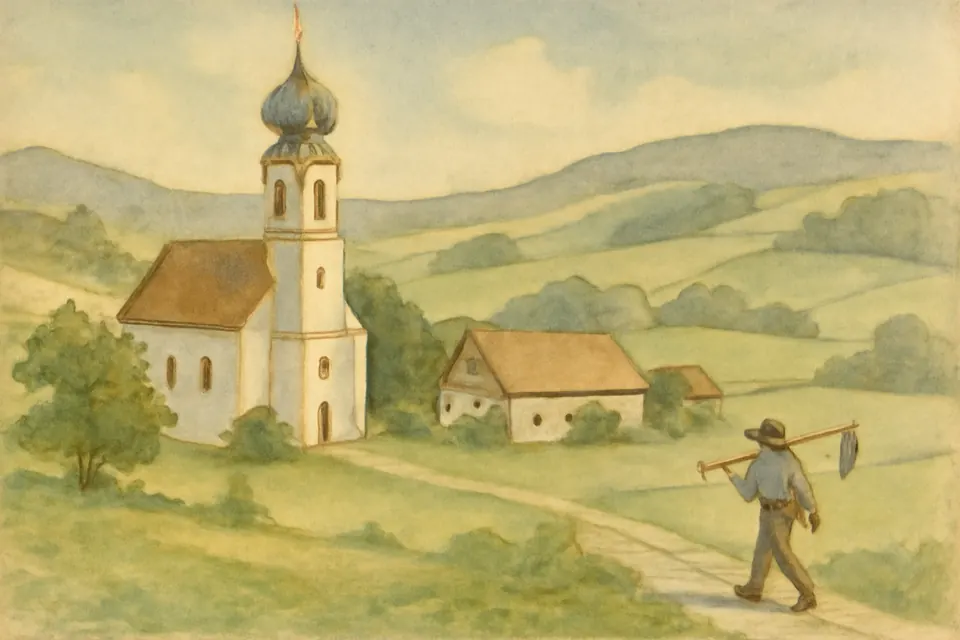
The life of Franz Jägerstätter
A wild young man
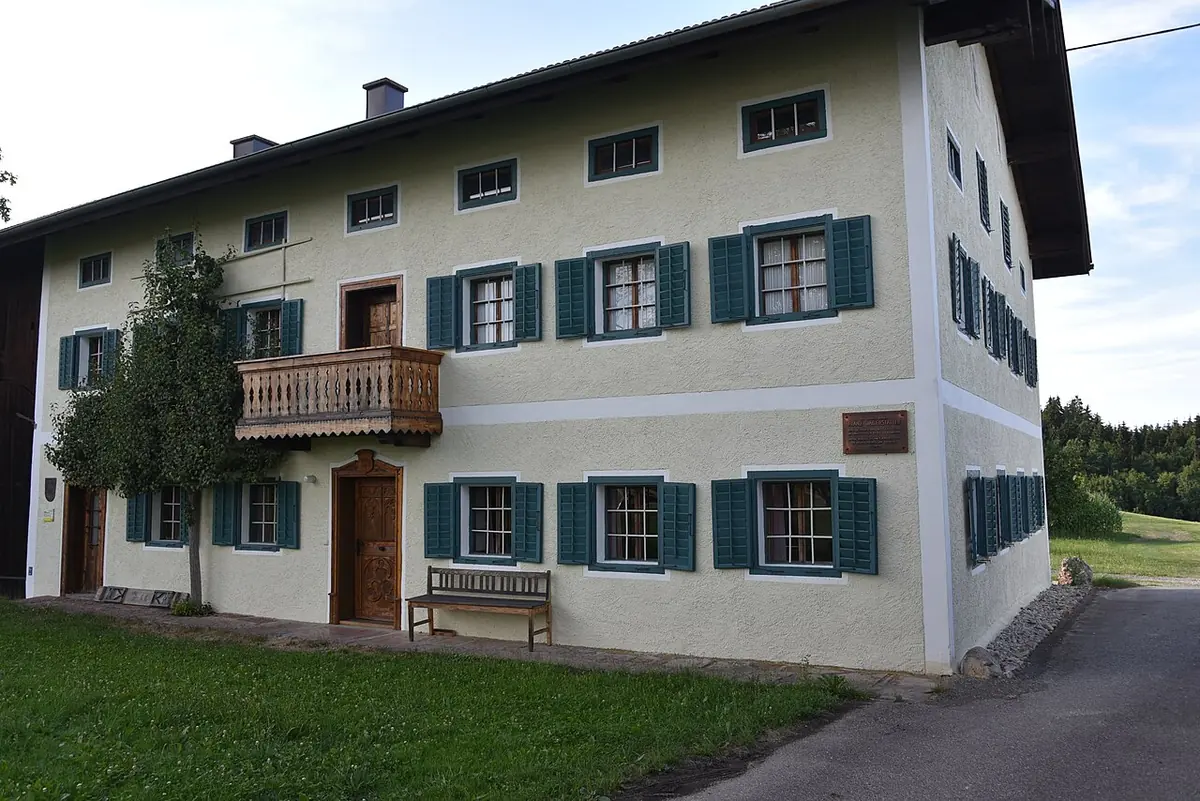
The Diocese of Linz tells his life without polish. He was born Franz Huber on May 20, 1907, in St. Radegund, the son of an unmarried farm maid, Rosalia Huber, and a farmhand, and was baptized the next day. In 1917 his mother married Heinrich Jägerstätter, who adopted the boy and gave him his name. As a young man Franz worked in the iron-mining town of Eisenerz from 1927 to 1930 and bought a motorcycle with his wages. In 1933 he fathered a daughter outside marriage. That same year he inherited the family farm, the Leherbauernhof.
Husband, father and sexton
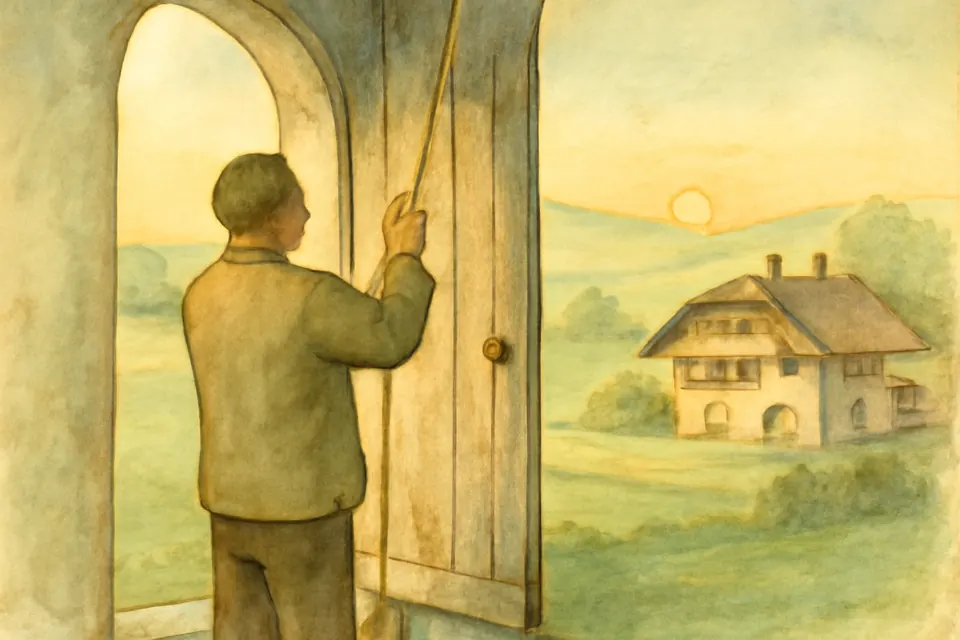
On April 9, 1936, he married Franziska Schwaninger, a devout young woman from a village about 12 kilometers away. Their marriage deepened his faith, and they had three daughters. In 1941 he became the sexton of the parish church, ringing the bells and serving at Mass.
When Austria voted on its annexation by Germany on April 10, 1938, Franz was the only person in St. Radegund to vote no.
The decision
He was first called up in 1940 and trained as a driver at Enns, but was sent home in April 1941. Over the next two years he made up his mind not to answer another call. He talked with priests he trusted and even went to Linz to talk with his bishop, Joseph Fliesser. Franziska stood by him.
His papers came on February 23, 1943. On March 1 he reported to the barracks at Enns and the next day declared that he would not serve. The English prayer card published by the Diocese of Linz says he explained that, "due to his religious conscience and in accordance with the commandments to love God and one's fellow man," he refused armed service, because "you should obey God before men." He offered to serve as a medic.
Prison and death
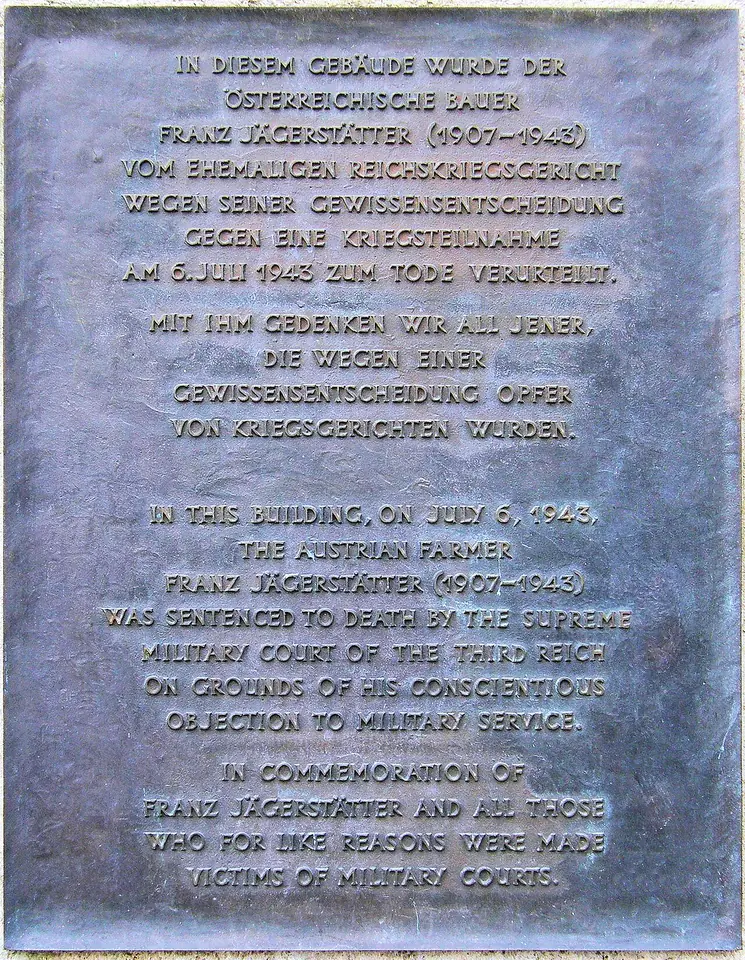
He was held in Linz, then moved to the military prison at Berlin-Tegel in May. On July 6, 1943, the Reich Military Court sentenced him to death for "undermining military morale." Franziska saw him for the last time on July 12. He was beheaded at four in the afternoon on August 9, 1943, in Brandenburg an der Havel.
His witness and beatification
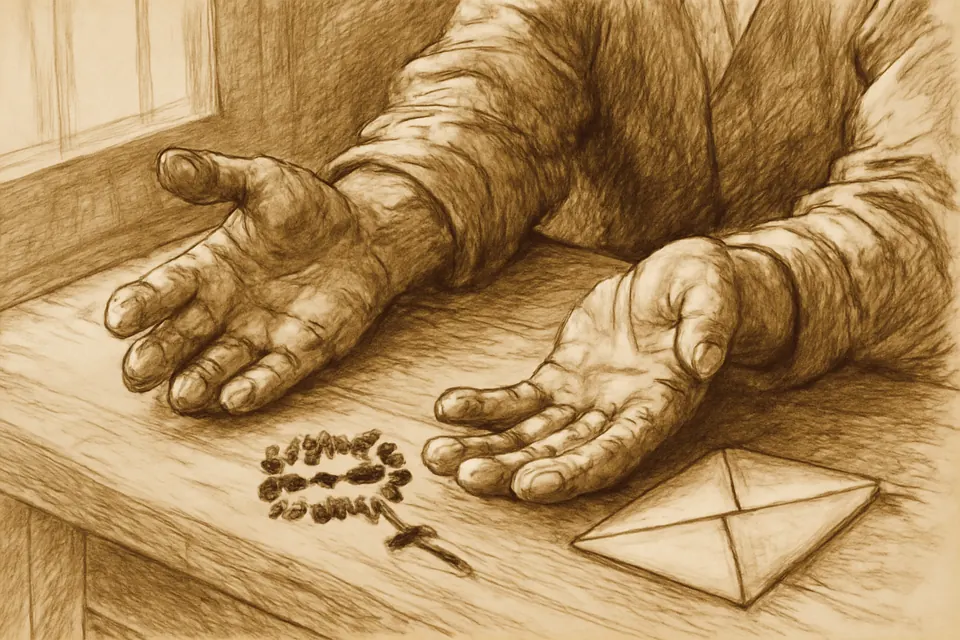
In prison, with his hands bound, Franz wrote:
Now I shall write down a few words here, just as they come from my heart. Even though I'm writing them with bound hands – yet that's still better than if my will were bound.
and, a little further on, "Neither prison, nor bonds, nor even death are able to separate a person from the love of God, to rob him of his faith and free will. God's power is invincible."
The American sociologist Gordon Zahn brought his story to the wider world in the 1960s, and Franziska kept his letters and memory alive in St. Radegund for seventy years. In 1997 a Berlin court overturned his sentence, and that same year Bishop Maximilian Aichern opened the diocesan inquiry into his beatification. As a martyr, Franz was beatified without a miracle. For canonization the Church will look for a miracle through his intercession; any healings or favors so far are reported only, not approved. Franziska lived to see the beatification, handed over a relic of her husband at the Mass, and died in 2013, shortly after her hundredth birthday.
Why Blessed Franz is honored by conscientious objectors
He has no formal patronage, but those who refuse on grounds of conscience to fight in an unjust war look to him, and Pax Christi joins the parish of St. Radegund each August for an international remembrance. He is also a model for married laymen and fathers, a man who weighed his duty to his family and his duty to God in prayer and with his wife at his side. Like St. Thomas More, he was a husband who gave his life rather than act against a conscience formed by the faith.
Symbols of Blessed Franz Jägerstätter in art
Because he is a modern blessed, there is no fixed iconography yet. Artists draw on his life:
- Plain farmer's or Sunday clothes: he is shown as a layman, not in uniform.
- A rosary or a Bible: his prayer and his reading in prison.
- Bound hands or chains: from his own words about writing "with bound hands."
- The church and bell of St. Radegund: his service as sexton.
- Open arms: a gesture of peace and surrender to God, as in the Vienna window.
A modern window in the Votivkirche in Vienna, the church built to give thanks for an emperor's escape from death, shows him in a blue suit with outstretched arms amid scenes of war and village life.
Feast day and where he is honored
The Diocese of Linz keeps his memorial on May 21, the day of his baptism, with its own Mass and Liturgy of the Hours texts. August 9, the anniversary of his death, is his date in the Roman Martyrology, and an international remembrance is held in St. Radegund around that day each year. His ashes rest by the wall of the parish church in St. Radegund, and his house is a place of pilgrimage.

Prayer to Blessed Franz Jägerstätter
The Diocese of Linz published an official prayer of intercession in 2007, with its own English translation. It thanks God for Franz Jägerstätter's love for God, his family and all people, and for the clear conscience that let him say no to an unjust war, and it asks for the courage to stand up for justice, peace and human dignity.
Frequently asked questions
Who was Blessed Franz Jägerstätter?
A farmer from the village of St. Radegund in Upper Austria, married to Franziska Schwaninger and father of three daughters. He was the only person in his village to vote against Austria's annexation by Nazi Germany in 1938, and in 1943 he refused military service. He was executed in Brandenburg an der Havel at the age of 36.
Why did Franz Jägerstätter refuse to fight?
His faith and conscience. The Diocese of Linz says he refused to serve in armed combat because of his religious conscience and the commandments to love God and neighbor, citing the words "you should obey God before men." He offered to serve as a medic instead, and was still condemned to death.
When is the feast of Blessed Franz Jägerstätter?
The Diocese of Linz keeps his memorial on May 21, the anniversary of his baptism. August 9, the day of his death, is his date in the Roman Martyrology.
Is there a prayer to Blessed Franz Jägerstätter?
Yes. The Diocese of Linz publishes an official prayer of intercession, approved in 2007, that asks God through his intercession to "strengthen our love for You and our fellow human beings." The full text is below.
Keep exploring
Sources
- Diözese Linz: Franz Jägerstätter 1907–1943 (chronology)
- Diözese Linz: Franziska Jägerstätter 1913–2013 (chronology)
- Diözese Linz: Blessed Franz Jägerstätter, prayer card in English (2007)
- Diözese Linz: Liturgy for the memorial of Blessed Franz Jägerstätter on May 21
- Pope Benedict XVI, Angelus, October 28, 2007