St. Serena of Rome
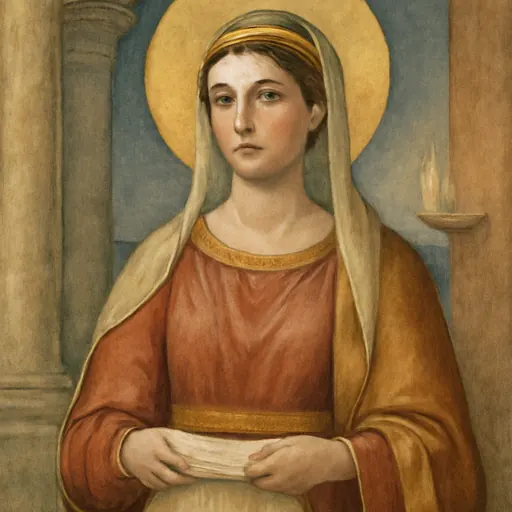
St. Serena of Rome is honored in the Roman Martyrology on August 16 as the wife of the emperor Diocletian. Her story comes from the legendary Acts of St. Susanna, where she is a secret Christian who strengthens Susanna and buries her after her martyrdom. Historians, including the Bollandists, doubt that she existed as Diocletian's wife, since Lactantius names his wife as Prisca.
Who was St. Serena of Rome?
St. Serena of Rome is the saint the Roman Martyrology remembers on August 16 in a single line: "At Rome, St. Serena, who had been the wife of the emperor Diocletian." Everything else we are told about her comes from a legend, the Acts of St. Susanna, the Roman virgin martyr whose church still stands beside the ruins of Diocletian's baths. In that story Serena is a Christian empress married to the great persecutor, who keeps her faith in secret and stands by a young woman condemned for hers.
Let us be honest about what we know. The Bollandists, the Jesuit scholars who spent centuries sifting the lives of the saints, concluded that the story of the empress Serena does not hold up as history. Yet the Church has kept her name in the martyrology for more than a thousand years, and her story is worth telling as the Church has told it.
The legend of St. Serena
The empress and the virgin
The Acts of St. Susanna, a legendary passio that the New Catholic Encyclopedia dates to the sixth century, make Susanna the daughter of the priest Gabinius and niece of Pope Caius, and a relative of Diocletian. The emperor wanted her to marry Maximian, whom the legend calls his son. She refused, because she had vowed her virginity to Christ.
Cardinal Baronius, summarizing the Acts in his Annals, tells what followed, and the Bollandists quote him in the Acta Sanctorum. Diocletian sent Susanna to his wife Serena, hoping she would talk the girl out of her new religion. But Serena "herself secretly practiced" that religion. Far from moving Susanna, she strengthened her in her confession and urged her to act bravely and firmly. She kept Susanna with her for many days, and the two prayed together day and night as Christians do.

When the emperor learned that Susanna would not give up her faith or accept the marriage, he sent her back to her father's house. Soon after, on his orders, she was put to death there by the sword.
The burial of Susanna
The Acts then return to Serena. When she heard that Susanna had completed her martyrdom, she came at night to the house, rejoicing. She cared for the body with her own hands, wrapped it in linen, embalmed it with spices, and buried it in a catacomb near the grave of St. Alexander, on August 11. The veil with which she had wiped Susanna's blood she kept in a silver case, and she prayed before it in secret day and night.

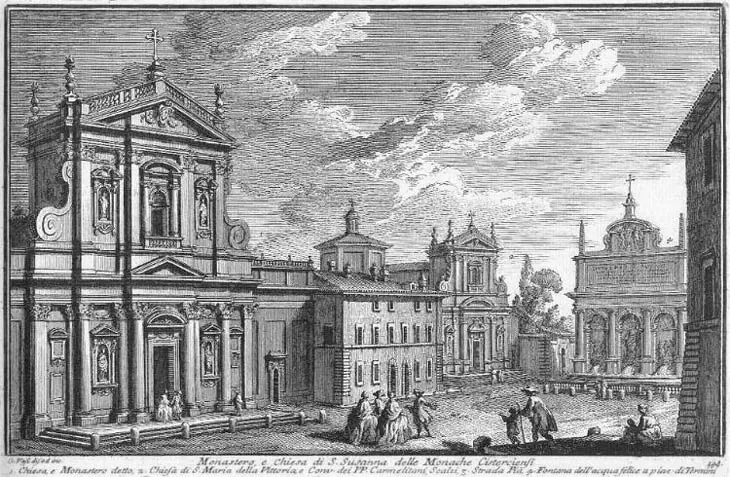
Pope Caius, the Acts say, offered Mass in Susanna's house from then on, and the house became a church. That church is Santa Susanna, near the Baths of Diocletian.
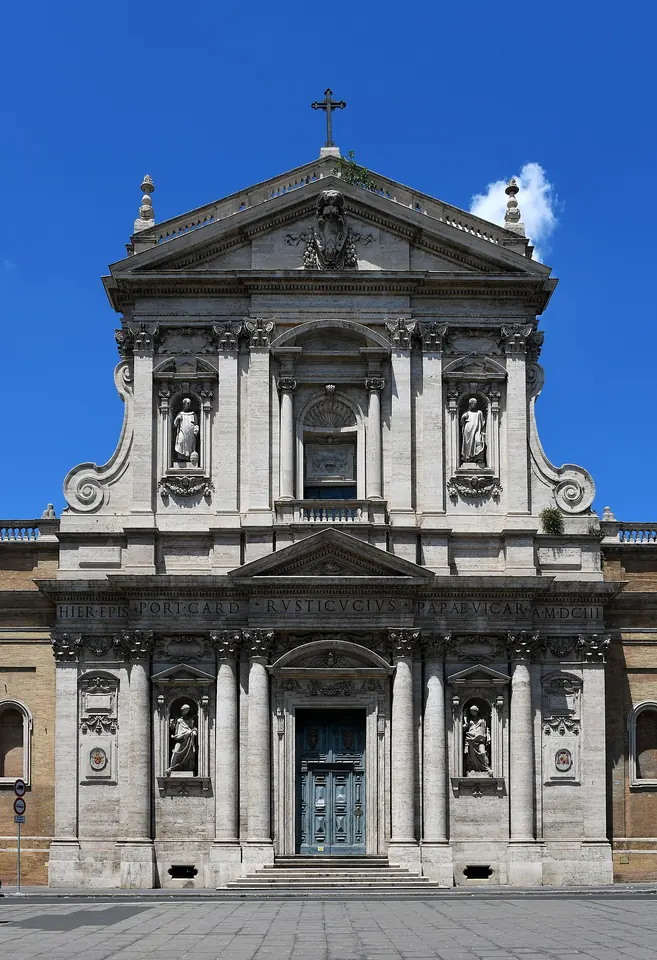
What history says
The Catholic Encyclopedia notes that the authenticity of the Acts of Sts. Sebastian and Susanna "has been rightly questioned," though Susanna's martyrdom and her day, August 11, rest on the oldest martyrologies.
Serena fares worse. Lactantius, who lived through the persecution, writes that Diocletian began his campaign by forcing "his daughter Valeria and his wife Prisca" to offer pagan sacrifice. Years later, after the persecutors had fallen, Prisca and Valeria wandered in disguise, were found at Thessalonica, and were beheaded. The Bollandists, commenting on the Acts of Susanna in 1751, reasoned that if Prisca was Valeria's mother, she must have married Diocletian before he became emperor and was still alive long after the events of the legend. They add that Baronius himself had noticed that no pagan writer and no ancient inscription ever mentions an empress Serena.
Miracles
No miracles are told of Serena herself. Her place in the traditional story is the quiet one: courage in secret, a burial given at risk, and prayer before a relic of a martyr.
Symbols of St. Serena in art
She is rarely painted on her own. When she appears, it is as an empress:
- A crown or diadem: her imperial rank in the legend.
- A veil or linen cloth: the veil stained with Susanna's blood that she kept, and the linen she used to bury her.
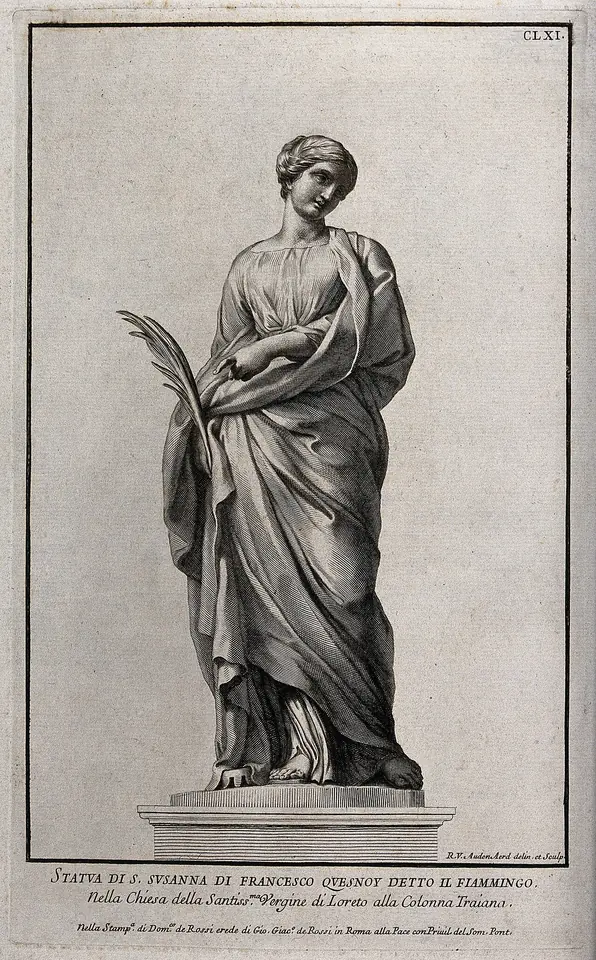
She is more often a figure in the story of St. Susanna, whose statue by François Duquesnoy holds the palm of martyrdom.
Feast day
The Roman Martyrology keeps her memory on August 16, five days after St. Susanna. See our feast days page for other saints of August.
Prayer to St. Serena
No traditional prayer to St. Serena has come down to us. We can honor her the way the legend says she honored Susanna, with quiet prayer and loyal friendship to those who suffer for Christ. Let us pray for Christians who must keep their faith hidden, in their homes or in their countries, and ask St. Susanna and all the holy martyrs of Rome to pray for us.
Frequently asked questions
When is the feast day of St. Serena of Rome?
August 16, the day the Roman Martyrology lists "St. Serena, who had been the wife of the emperor Diocletian."
Was St. Serena really the wife of Diocletian?
Probably not. Lactantius, a contemporary, names Diocletian's wife as Prisca. No pagan writer or ancient inscription mentions an empress Serena, and the Bollandists concluded that this part of the Acts of St. Susanna is not reliable.
What does the legend say St. Serena did?
In the Acts of St. Susanna, Serena secretly practiced the Christian faith, kept Susanna with her for days of prayer, encouraged her to stand firm, and after Susanna's martyrdom buried her with her own hands and kept the veil stained with her blood.
Was St. Serena a martyr?
The old martyrology entries call her a matron, not a martyr, and no reliable account of her death survives.
Keep exploring
Sources
- Roman Martyrology (pre-1962 English translation), August 16. "At Rome, St. Serena, who had been the wife of the emperor Diocletian."
- Acta Sanctorum Augusti, tomus II (Antwerp, 1751), on archive.org. The commentary on St. Susanna (August 11), which quotes Baronius's summary of the Acts, Serena's burial of Susanna and the veil, and the Bollandists' doubts that Serena was Diocletian's wife
- Lactantius, Of the Manner in Which the Persecutors Died (New Advent). Chapter 15: Diocletian forced "his daughter Valeria and his wife Prisca" to sacrifice; chapter 51: Prisca and Valeria beheaded at Thessalonica
- Catholic Encyclopedia (1912): Sts. Tiburtius and Susanna. The doubtful authenticity of the Acts of St. Susanna
- New Catholic Encyclopedia: Susanna, St.. The sixth-century legendary passio and its account of Susanna's family and refusal
- S. Baring-Gould, The Lives of the Saints, vol. 9 (August), 1914, on archive.org. Lists her on August 16 as "S. Serena, Matr." (matron), at Rome, end of the third century