St. Joseph the Hesychast (Elder Joseph of Mount Athos)
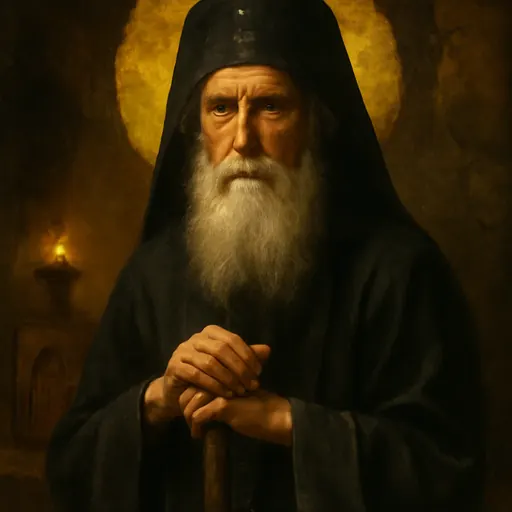
St. Joseph the Hesychast (1897–1959) was a Greek Orthodox monk from the island of Paros who lived for almost forty years in caves and huts on Mount Athos, devoted to the Jesus Prayer, and whose disciples went on to renew six Athonite monasteries and found dozens of monasteries in North America. The Ecumenical Patriarchate of Constantinople glorified him in 2019–2020. His feast day is August 16, the day after the Dormition, on which he died.
Who was St. Joseph the Hesychast?
St. Joseph the Hesychast was a Greek Orthodox monk of Mount Athos who spent nearly forty years in caves and rough huts on the steep southern tip of the Holy Mountain, praying the Jesus Prayer day and night. He was born Francis Kottis on the island of Paros in 1897, came to Athos in 1921, and died there on the feast of the Dormition in 1959. In his lifetime he was known only to a handful of monks. Today he is one of the best-loved saints of modern Orthodoxy.
The reason is his disciples. Joseph never led a monastery. He lived with five or six monks in poverty at the edge of the sea. Yet the men he formed went on to renew six of the twenty great monasteries of Athos, and one of them, Elder Ephraim, carried the same way of life to the United States and Canada, founding monasteries across the United States and Canada. The monks of those houses call Joseph "Pappou Iosif," Grandfather Joseph.

He is called the Hesychast because his life was given to hesychia, the Greek word for stillness: the inner quiet in which a monk watches over his heart and prays without ceasing. He is also called the Cave-Dweller (Spilaiotis) for the caves where he lived. The Ecumenical Patriarchate of Constantinople glorified him in 2019 and entered him in the calendar of saints in 2020, and his feast is kept on August 16.
The life of St. Joseph the Hesychast
Most of what we know about Joseph comes from his disciples, above all Elder Ephraim of Philotheou and Arizona, whose book My Elder Joseph the Hesychast is the fullest account, and from Joseph's own letters. The life published by St. Anthony's Greek Orthodox Monastery in Arizona, which Elder Ephraim founded, follows that book.
A poor boy from Paros
Francis Kottis was born on February 12, 1897, in Lefkes, a hill village in the middle of the Cycladic island of Paros. (Some sources, including the Orthodoxia News Agency, give 1898.) His parents, George and Maria, were simple and devout, and he was the fourth of their seven children. The family was very poor, and his father died while the children were young. Francis had only a little schooling.

At seventeen he left the island for Piraeus, the port of Athens, and worked there as a merchant to support his mother and brothers and sisters. He was good at trade. Nothing in those years suggested a hermit.
Two angels dressed as palace guards
When he was twenty-three, Francis was engaged to a devout young woman. The St. Anthony's life says he kept the engagement in such strict chastity that he never even kissed her. Then one night he saw a vision: two angels dressed as royal palace guards, leading him to serve the heavenly King.

After that, his disciples said, he lost interest in business. He began reading the lives of the saints, especially the great ascetics of the desert like St. Anthony the Great, broke off his engagement, and spent about two years fasting and praying in the countryside around Athens, sleeping outdoors and keeping night vigils, to prepare himself for the monastic life.
Mount Athos and the gift of prayer
In 1921 he reached Mount Athos. He was looking for one thing, an elder who could teach him "noetic prayer," the prayer of the mind in the heart, and he couldn't find one. He walked from cave to cave and cell to cell. In the end he joined the brotherhood of St. Daniel of Katounakia, a wise elder in the wild southern district of the peninsula.
Daniel saw at once that the young man wanted a stricter life than his brotherhood kept. He advised Francis to pray the Jesus Prayer alone in a remote cave and to come to him now and then for guidance, until God sent him a companion. During that time, after many temptations, Francis received what his disciples describe as a vision of the uncreated light, and with it the gift of unceasing prayer. From that day, they say, the prayer went on in his heart by itself until his death.

Fr. Arsenios and the tonsure of 1925
The companion came. Fr. Arsenios, who was already a tonsured monk, joined him, and the two were inseparable for the rest of Joseph's life. Following Daniel's advice, they placed themselves under two old monks of Katounakia, Elders Joseph and Ephraim. Elder Joseph soon died, and Elder Ephraim tonsured Francis a monk on Sunday, August 31, 1925, in the cave of St. Athanasios the Athonite. He took the name Joseph, after the elder who had just died.
When Elder Ephraim died too, Joseph became an elder himself, though Arsenios had been a monk longer. For about ten years the two lived at the Skete of St. Basil, high on the mountain, in great poverty. His disciples remembered that they ate very little, slept sitting up, spoke little so as to pray more, and spent the nights in vigil with the Jesus Prayer. Joseph wrote later of the years of temptation and struggle that came with that life. Many young monks came to him, and most of them left: few could keep his rule.
Little St. Anne's and the brotherhood
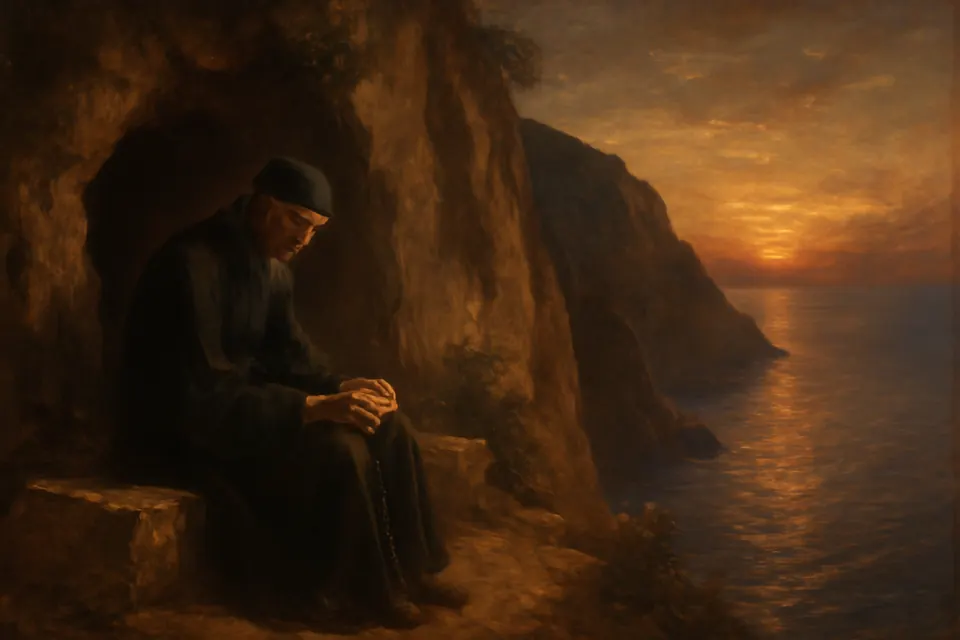
In 1938, seeking more silence, Joseph moved his small community to caves near Little St. Anne's Skete, on a cliff above the sea, beside a small chapel of St. John the Forerunner. There his brotherhood took the shape it is remembered for. According to St. Anthony's Monastery, it had five disciples at its heart:
- Fr. Arsenios, his fellow ascetic from the beginning.
- Fr. Athanasios, his own brother, who left the world to join him.
- Fr. Joseph the Cypriot, later elder of Vatopedi Monastery.
- Fr. Ephraim, later abbot of Philotheou Monastery and spiritual father of dozens of monasteries in Greece, the United States and Canada.
- Fr. Haralambos, later abbot of Dionysiou Monastery.
St. Ephraim of Katounakia, who belonged to another brotherhood, also took Joseph as his spiritual guide and is counted among his disciples.

Elder Ephraim later described how Joseph formed them: "Geronda's strategy and goal was to have us say the Jesus prayer constantly and keep vigil valiantly. He had implanted deep within us the meaning of prayer and watchfulness in vigil." (Geronda is Greek for elder.)
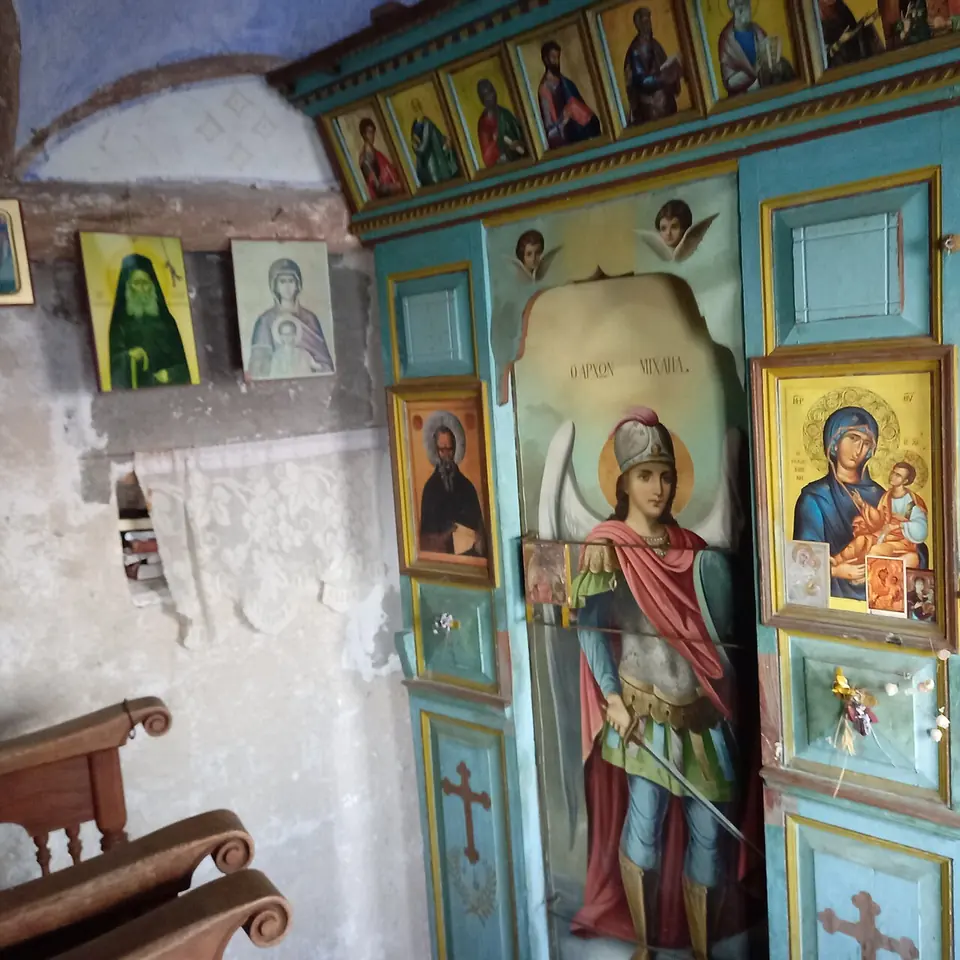
The cell still stands, rarely visited, at the end of a narrow footpath. Inside are a few icons, an oil lamp and a wooden stall.
New Skete and a death on the Dormition
After fifteen years at Little St. Anne's, the hard life and the climb had broken the health of the monks. In 1953 Joseph moved the brotherhood down the mountain, near the sea, to New Skete, a skete belonging to the Monastery of St. Paul. He lived there for his last six years.

Joseph had a special love for the Mother of God. A few months before his death, his disciples recorded, she appeared to him and promised to take him on her feast. On the eve of the Dormition, in August 1959, he kept the vigil with his monks and received Holy Communion, and he died on August 15, 1959, the feast of the Dormition (August 28 on the civil calendar, since the Holy Mountain keeps the Julian calendar).

The miracles of St. Joseph the Hesychast
Joseph was glorified by the Ecumenical Patriarchate, which, like the other Orthodox churches, does not hold a formal investigation of miracles the way the Catholic Church does for canonizations. So none of his miracles is approved in the sense this encyclopedia uses. Sorted by our labels:
- The vision of the uncreated light and the gift of unceasing prayer: reported. It comes from Joseph's own account to his disciples, recorded in Elder Ephraim's book.
- The Mother of God's promise to take him on her feast, and his death on the Dormition: reported. His disciples recorded the promise; the date of his death is a matter of record.
- Healings and deliverances through his prayers and relics: reported. Elder Ephraim's My Elder Joseph the Hesychast tells of exorcisms in Thessaloniki, Athens and at St. Anthony's Monastery in Arizona in which, he writes, the demons cried out against "Joseph." Pemptousia reprinted those accounts in 2020.
The Orthodox faithful, especially in the monasteries founded by his spiritual children, tell of many graces received through his intercession. They have not been examined by any church tribunal.
Why St. Joseph is called a father of modern monasticism
Joseph has no traditional patronage of a trade, an illness or a city, and we don't invent one. The Church honors him for one gift: he taught the Jesus Prayer and the ascetic life of the old Fathers at a time when the Holy Mountain was short of monks and short of guides.
His disciples spread that teaching. In the decades after his death, monks formed by him or by his spiritual children took over and renewed Philotheou, Vatopedi, Dionysiou and other monasteries of Athos; the monastery of St. Tikhon of Zadonsk in Pennsylvania notes that his teaching "helped revitalize six of the twenty monasteries on Mt. Athos, all of which previously were in decline." Elder Ephraim then came to North America and founded monasteries in the United States and Canada, among them St. Anthony's in the Sonoran desert of Arizona, where he died in 2019. St. Anthony's counts thirty-three monasteries under his spiritual care in Greece, the United States and Canada.

Within months of his glorification, churches were being built in his name. OrthoChristian reported that the first parish church dedicated to St. Joseph the Hesychast was consecrated in Tbilisi, Georgia, on July 22, 2020, and that a church in his honor had just been finished for Madagascar's first monastery for men.
Symbols of St. Joseph the Hesychast in art
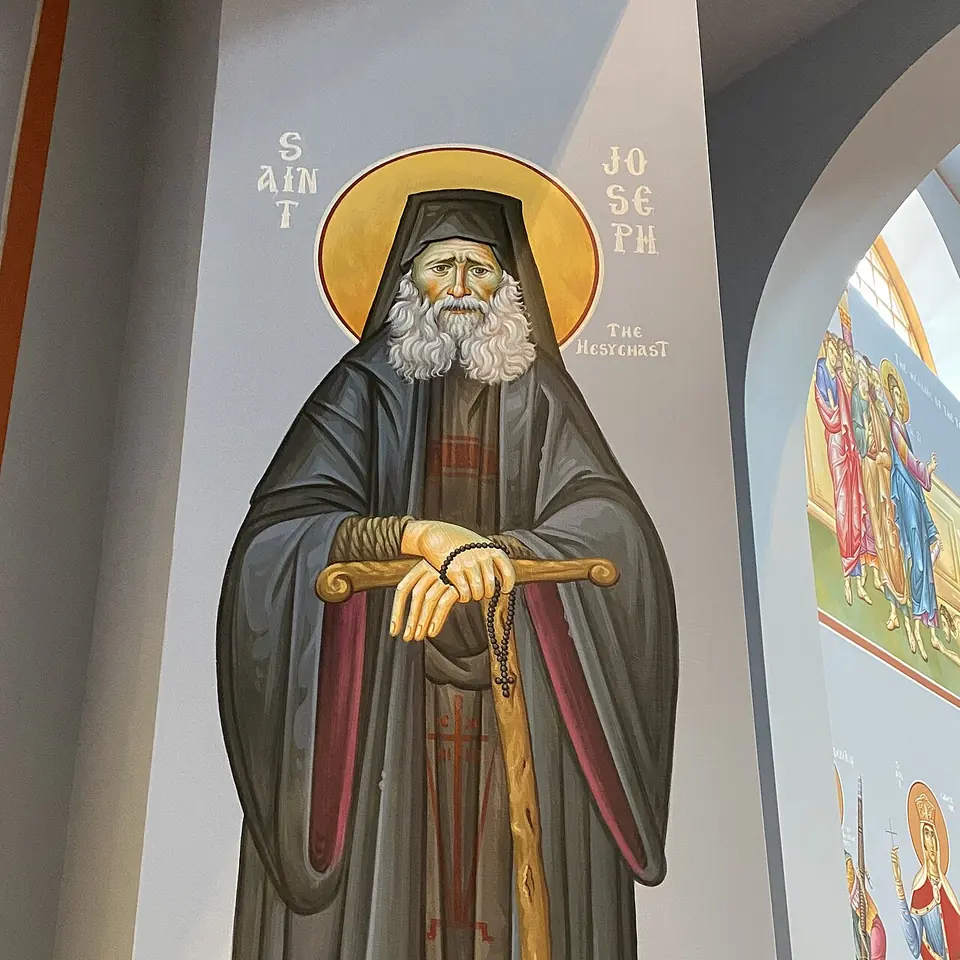
Joseph is a modern saint, and his icons are new: most were painted after 2019. Because many photographs of him survive, iconographers follow his real face closely. Look for:
- The black monastic schema and hood: the dress of an Athonite monk. In icons the hood often bears small embroidered crosses.
- A long white beard and a thin, deeply lined face: taken from photographs of his last years.
- A prayer rope: the black knotted wool rope (komboskini) used for the Jesus Prayer, the center of his life.
- A monk's staff: often a T-shaped walking stick on which he rests both hands.
- A scroll: in some icons he holds an open scroll with a line from his letters on prayer.
- A cave or cliff: in fuller icons, the rocks of Mount Athos and the sea behind him.
He is easy to tell from St. Paisios, another 20th-century Athonite: Paisios is usually shown in a soft knitted cap with a scroll and a hand raised in blessing, while Joseph wears the full monastic hood and holds a staff and prayer rope. The parish icon below shows him in the standard way.
He belongs only to Eastern iconography. Western paintings and statues of him don't exist, because he lived and was glorified in the Orthodox Church.
Feast day and where St. Joseph is honored
St. Joseph's feast is August 16, or August 29 for churches that keep the Old Calendar, as Mount Athos does. He died on the Dormition, August 15, and the Patriarchate of Constantinople set his feast on the following day so that the two would not coincide. His feast was kept officially for the first time on August 16, 2020, on Athos, in the monasteries founded by his spiritual children in North America, and on Paros, where Metropolitan Kallinikos of Paronaxia celebrated the Divine Liturgy. See the other saints of August on our feast days page.
The places connected with him are spread across two continents:
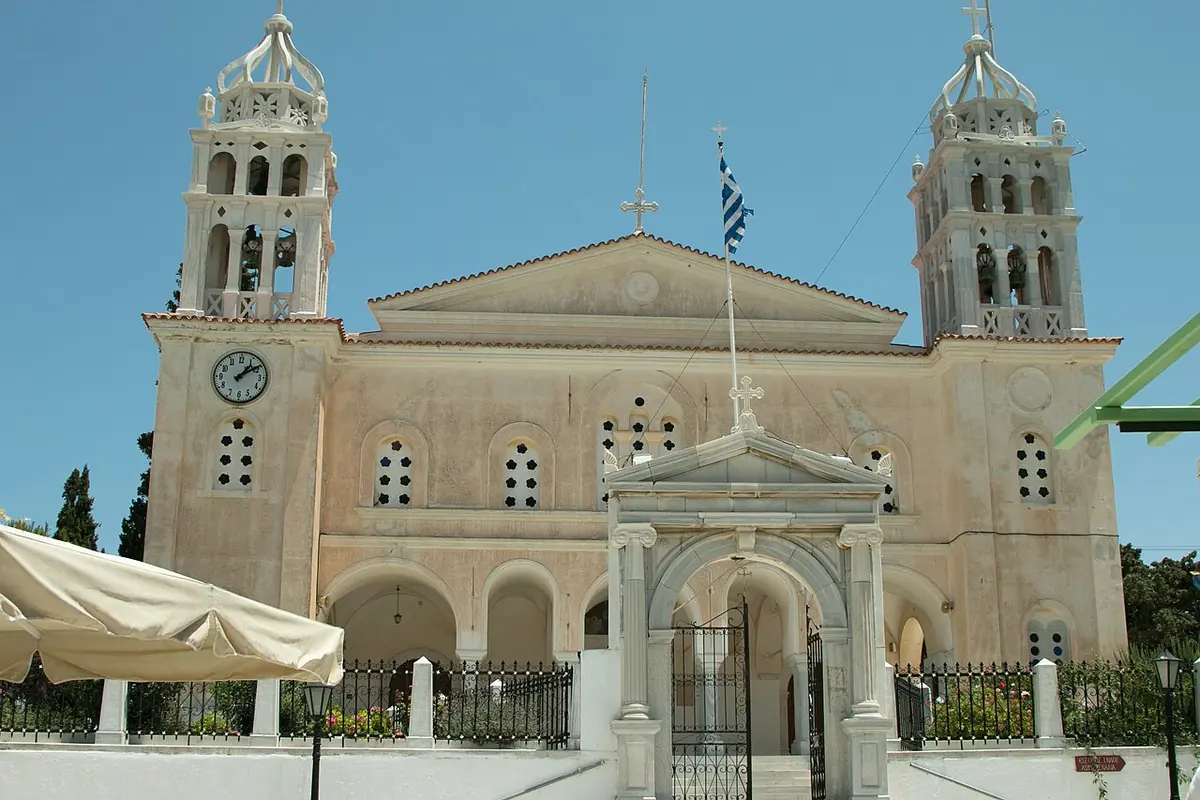
- Lefkes, Paros: his birthplace, a village whose 19th-century Church of the Holy Trinity dominates the town. The Orthodoxia News Agency reported the first commemoration of the new saint there in August 2020.
- Little St. Anne's Skete, Mount Athos: his cell and the chapel of St. John the Forerunner, reached by a footpath. Only men may visit Athos, with a permit.
- New Skete, Mount Athos: where he died and was first buried.
- St. Anthony's Greek Orthodox Monastery, Florence, Arizona: which keeps his "precious skull," as OrthoChristian put it in 2020. Elder Ephraim's book says the skull was earlier kept at Philotheou Monastery on Athos.
- Vatopedi Monastery, Mount Athos: where other relics are reported, and where his disciple Joseph the Cypriot was elder until his death in 2009.
The Jesus Prayer and the teaching of St. Joseph
Joseph's whole teaching turns on the Jesus Prayer: "Lord Jesus Christ, Son of God, have mercy on me," said slowly, with attention, over and over, until it settles in the heart. It is the prayer of the blind man at Jericho and of the publican in the temple, and it was taught by the Desert Fathers, by St. Symeon the New Theologian and by the Athonite St. Gregory Palamas. Joseph didn't invent anything. He lived the old way so completely that he could teach it again.
He insisted on attention. A saying of his, quoted by St. Anthony's Monastery, warns:
You will fatigue greatly until you realize that prayer without attention and watchfulness is a waste of time, work without pay. Without attention, both the nous [the eye of the soul] and the powers of the soul are diffused in vain and ordinary things, like useless water running down the streets.
He wrote, too, about where the prayer can lead, in words quoted by St. Tikhon's Monastery:
It overflows throughout the body, and the prayer stops; the bodily members cease to move, and only the nous is in theoria within an extraordinary light. A union of God and man occurs. Man is unable to distinguish himself.
Most of his letters, gathered in Monastic Wisdom, are plainer and very pastoral. They were written to monks, nuns and lay people who asked him for help in sorrow, sickness and temptation. One line from them, again quoted by St. Tikhon's, sounds like him at his gentlest:
Who knows my child the judgments of God? Everything is known to Him. He sees everything and nothing escapes His notice but no one knows His will. The works of Satan are nothing next to the power of God. So when the Lord tests us as He knows best we should show our patience and thankfulness.
Catholics will recognize the prayer: the Catechism of the Catholic Church praises the invocation of the holy name of Jesus as "the simplest way of praying always" (2668). The Jesus Prayer belongs to the whole Church.
Prayer to St. Joseph the Hesychast
The Orthodox Church sings a troparion and a kontakion composed for his feast after his glorification. We have not found an official English text we can confirm, so we don't print one here.
The faithful ask his prayers in the simple Orthodox way: "Holy Father Joseph, pray to God for us." The best way to honor him is the one he taught: to take a prayer rope, sit quietly, and say the Jesus Prayer with attention, a few minutes at first and then longer. Let us ask St. Joseph the Hesychast to help us pray as he did, with watchfulness and a humble heart, so that the name of Jesus may live in us.
Frequently asked questions
When is the feast of St. Joseph the Hesychast?
August 16 (August 29 on the Old Calendar). He died on August 15, 1959, the feast of the Dormition of the Mother of God, and the Patriarchate of Constantinople placed his feast on the following day so the two would not coincide. His first official feast was kept on August 16, 2020.
When was Elder Joseph the Hesychast canonized?
Ecumenical Patriarch Bartholomew announced his glorification during a visit to Mount Athos on October 20, 2019, and the Holy Synod of the Ecumenical Patriarchate formally entered him in the calendar of saints on March 9, 2020, together with Elders Daniel and Ephraim of Katounakia.
Where are the relics of St. Joseph the Hesychast?
His skull is kept at St. Anthony's Greek Orthodox Monastery in Florence, Arizona, where his disciple Elder Ephraim spent his last decades. Other relics are reported at Vatopedi Monastery on Mount Athos. His first grave was at New Skete on Mount Athos, where he died.
Why is he called "the Hesychast"?
Hesychia is Greek for stillness. A hesychast is a monk who seeks inner stillness through watchfulness and unceasing prayer of the heart, above all the Jesus Prayer. Joseph spent his whole monastic life in that way of prayer and taught it to his disciples, so the name stuck.
Who were the disciples of Joseph the Hesychast?
His small brotherhood included Fr. Arsenios, his fellow ascetic; his own brother Fr. Athanasios; Fr. Joseph the Cypriot, later elder of Vatopedi; Fr. Ephraim, later abbot of Philotheou and founder of monasteries in the United States and Canada; and Fr. Haralambos, later abbot of Dionysiou. St. Ephraim of Katounakia, though in another brotherhood, was also his spiritual son.
What books contain the teaching of Elder Joseph?
Monastic Wisdom: The Letters of Elder Joseph the Hesychast (St. Anthony's Greek Orthodox Monastery, 1998) gathers his letters, and My Elder Joseph the Hesychast by his disciple Elder Ephraim (St. Anthony's, 2013 in English) tells his life. Vatopedi Monastery published Elder Joseph the Hesychast: Struggles, Experiences, Teachings.
Is St. Joseph the Hesychast recognized by the Catholic Church?
He was canonized by the Ecumenical Patriarchate of Constantinople, so he is a saint of the Orthodox Church and is not on the Roman Catholic calendar. Many Catholics read his letters and value his teaching on the Jesus Prayer, which the Catechism of the Catholic Church also commends.
Keep exploring
Sources
- St. Anthony's Greek Orthodox Monastery: St. Joseph the Hesychast (1897–1959)
- Orthodoxia News Agency: Ecumenical Patriarchate announces canonization of Joseph the Hesychast (March 9, 2020)
- OrthoChristian: Feast of St. Joseph the Hesychast celebrated for first time since his canonization (2020)
- Orthodoxia News Agency: Memory of St. Joseph the Hesychast commemorated in his Paros island birthplace (2020)
- Monastery of St. Tikhon of Zadonsk: Elder Joseph the Hesychast (1897–1959), with quotations from Monastic Wisdom
- Pemptousia: Confessions of the Demons (Miracles of Saint Joseph the Hesychast), from Elder Ephraim's My Elder Joseph the Hesychast