St. Peter Faber
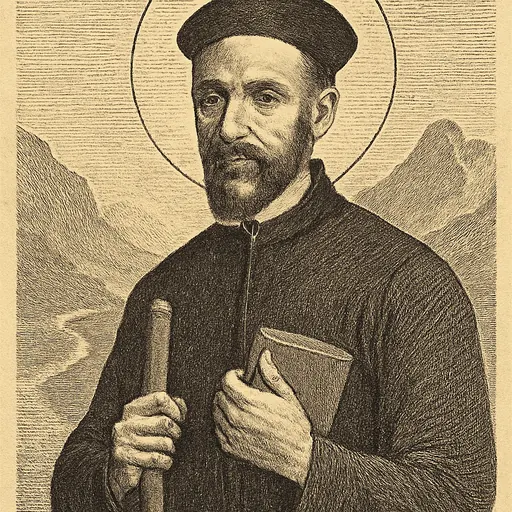
St. Peter Faber (1506–1546) was a shepherd boy from Savoy who became one of the founding companions of St. Ignatius and the first priest of the Jesuits. He crossed Europe during the Reformation, winning hearts through friendship and the Spiritual Exercises. Pope Francis canonized him in 2013. His feast is August 1, kept by the Jesuits on August 2.
Who was St. Peter Faber?
St. Peter Faber was the first priest of the little band of friends who founded the Society of Jesus, and the man St. Ignatius of Loyola trusted most to give the Spiritual Exercises. He was born on April 13, 1506, at Villaret in the Duchy of Savoy, a hamlet that is now part of Saint-Jean-de-Sixt in the French Alps. In French he is Pierre Favre, sometimes written Lefèvre. He died in Rome at forty, worn out by travel, on August 1, 1546.
Faber never wrote a famous book or founded a great school. He talked with people, one at a time, and they changed. Pope Francis, who called him his model, listed what moved him most: Faber's "dialogue with all, even the most remote and even with his opponents; his simple piety, a certain naïveté perhaps, his being available straightaway, his careful interior discernment, the fact that he was a man capable of great and strong decisions but also capable of being so gentle and loving."
The life of St. Peter Faber
A shepherd who taught the catechism
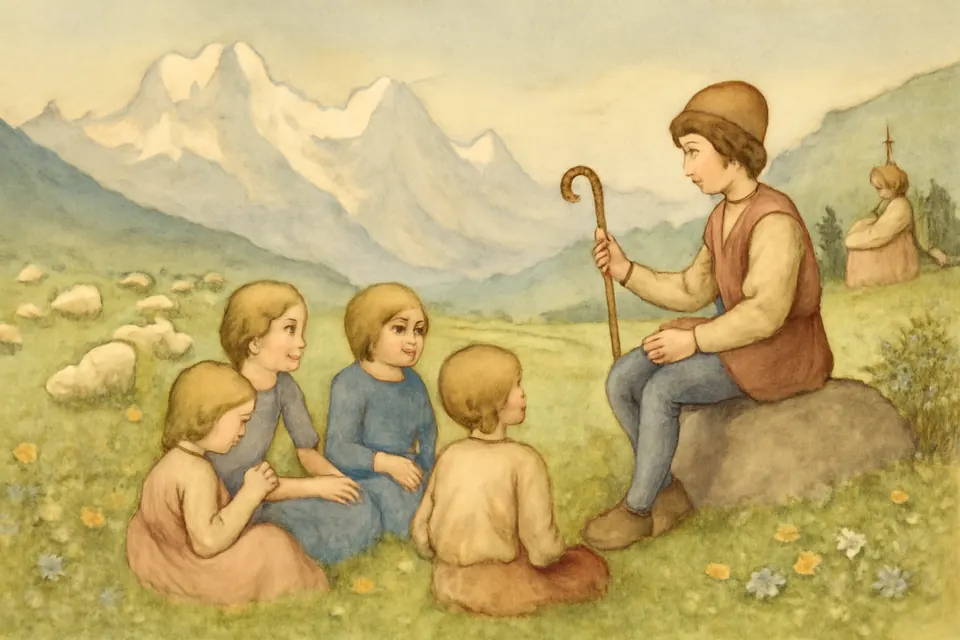
As a boy Faber kept his father's sheep during the week, and on Sundays he taught the catechism to the other children. A desire to study grew in him. He was sent first to a priest at Thônes, then to a nearby school, and in 1525, with his parents' blessing, he went to Paris.
Three roommates in a tower
At the College of Sainte-Barbe, Faber was admitted without fees and shared lodgings in a tower with a student from Navarre, Francis Xavier. The two received their master of arts degrees on the same day in 1530. Then a third man came to share their rooms: Ignatius of Loyola, an older Basque student and former soldier. Under his guidance Faber found his vocation.
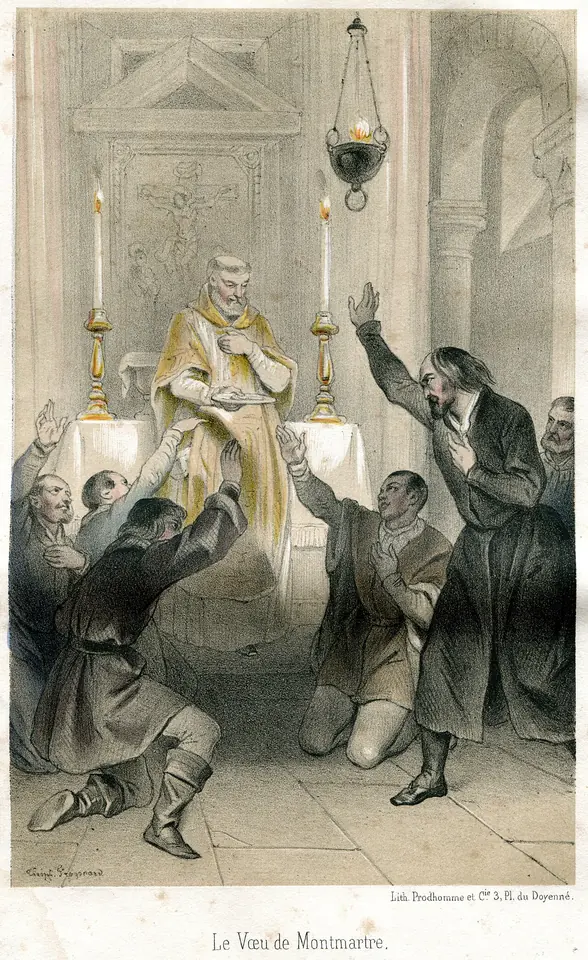
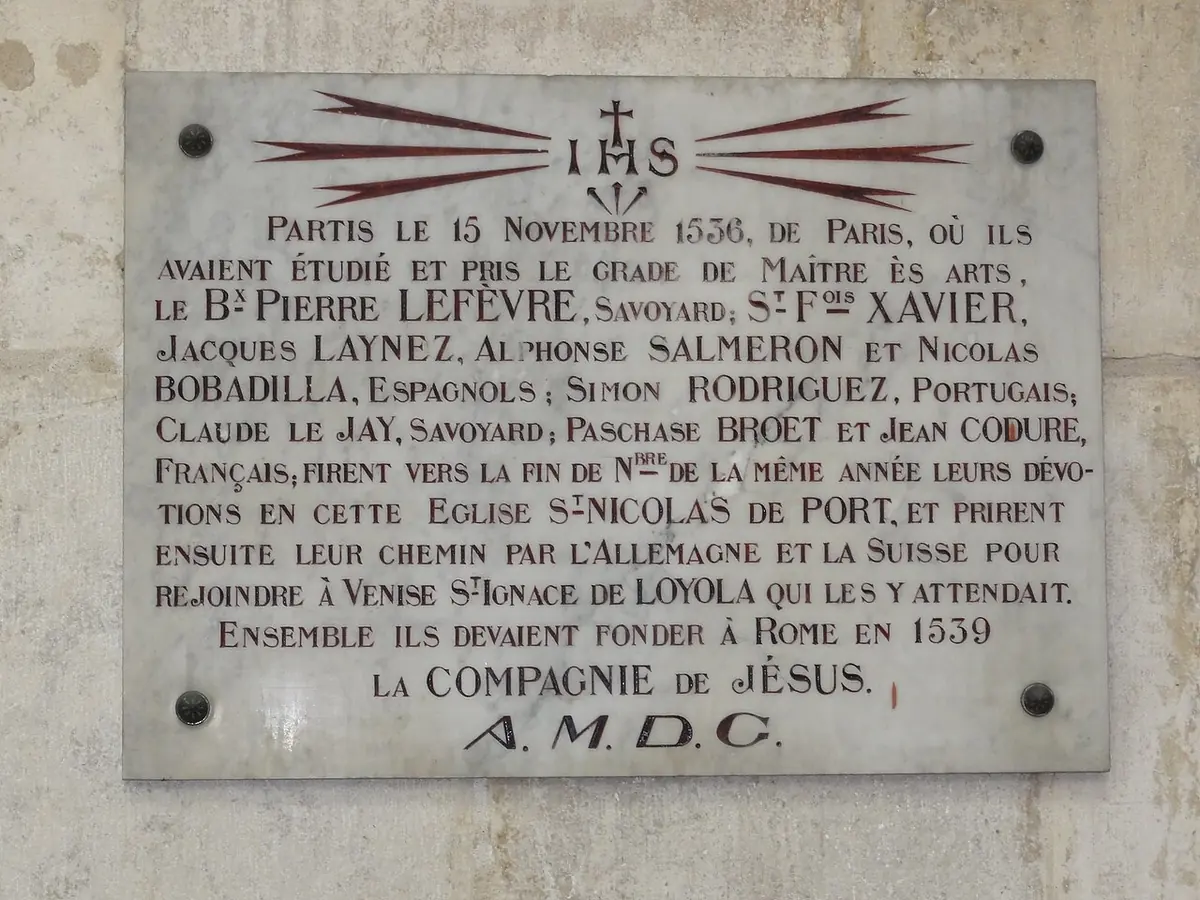
He was ordained a priest in 1534, the first of the group. On August 15 of that year, on the hill of Montmartre, he said the Mass at which Ignatius and five companions made their vows. When the companions set out from Paris on November 15, 1536, to meet Ignatius in Venice, it was Faber whom Ignatius had put in charge of the journey.
On foot across a divided Europe
The pope sent Faber to preach in Parma and Piacenza, then to Germany, to the imperial diets at Worms in 1540 and Ratisbon (Regensburg) in 1541. He saw how badly the Church in Germany had been wounded and concluded that the cure lay less in debating the Protestants than in the renewal of Catholics, above all the clergy. At Speyer, Mainz and Cologne he gave the Spiritual Exercises to princes, bishops and priests. The Catholic Encyclopedia says that his decisive influence on the vocation of St. Peter Canisius alone would justify calling him the apostle of Germany.
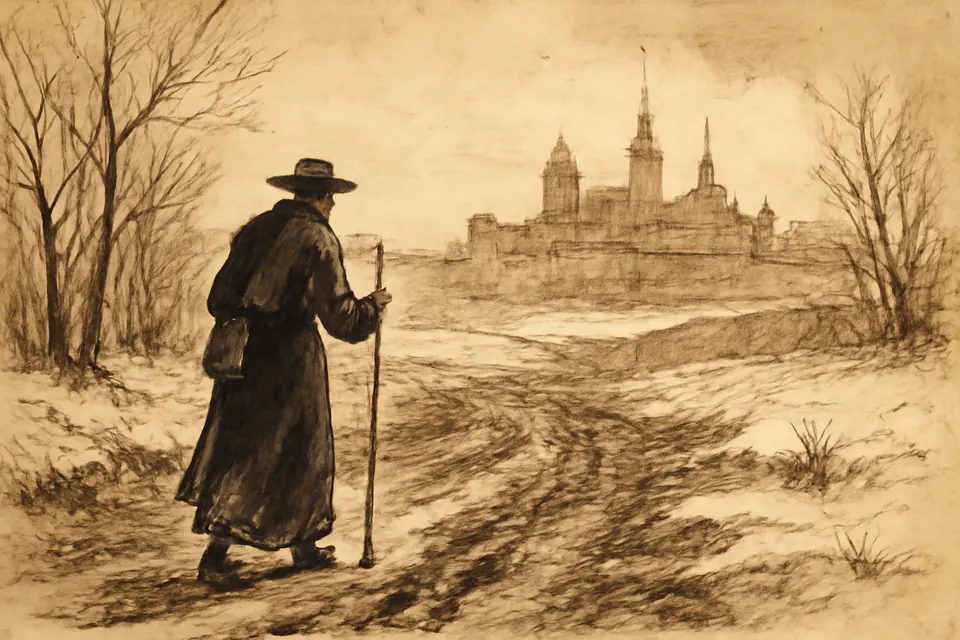
After months at Louvain in 1543, where many young men found their vocations through him, he was sent to Portugal and Spain. At the courts of Lisbon and Valladolid he did the same quiet work, and he helped strengthen the vocation of Francis Borgia. He walked nearly everywhere he went. Pope Francis quoted a saying about him: "it seems he was born not to stay put anywhere."
Death in Rome
In 1546 the pope wanted to send Faber to the Council of Trent as theologian of the Holy See, and King John III of Portugal wanted him made Patriarch of Ethiopia. He was forty and exhausted. He reached Rome with a fever on July 17, 1546, and died on August 1, in the arms of St. Ignatius.
Miracles and canonization
Those who knew Faber called on him as a saint as soon as he died, and Savoy has always honored him. St. Francis de Sales, the next great saint of Savoy, never spoke of him except as a saint. Pius IX beatified him on September 5, 1872. On December 17, 2013, Pope Francis declared him a saint by equivalent canonization: as the Jesuits of Canada explain, his name was added to the universal calendar without a miracle being verified and without a ceremony. No approved miracle is attached to his cause; his long-standing cult was the ground for it.
Symbols of St. Peter Faber in art
Faber is shown simply. He wears the black cassock of a 16th-century Jesuit, often with the biretta. Banners and modern images give him a walking staff, for the thousands of miles he walked, and sometimes a book, the Spiritual Exercises or his Memoriale. In group scenes of the first Jesuits, look for the priest at the altar at Montmartre: that is Faber.
Feast day and where he is honored
The Society of Jesus keeps his feast on August 2, the day after his death and two days after the feast of St. Ignatius. He is honored in his home parish of Saint-Jean-de-Sixt, in Haute-Savoie, and in Rome at the Church of the Gesù, where Pope Francis celebrated Mass with the Jesuits on January 3, 2014, and preached on Faber two weeks after declaring him a saint. See other saints of early August on our feast days page.
Prayer and words of St. Peter Faber
Faber left us his Memoriale, a journal of his prayer. Pope Francis quoted it at the Gesù. Faber wanted to "allow Christ to occupy the centre of his heart," and wrote that the heart's first movement should be "desiring what is essential and primordial, that is, the first place be left to the perfect intention of finding our Lord God." And this, which can be our prayer too:
let us never seek in this life to be tied to any name but that of Jesus
Let us ask St. Peter Faber to pray for those who give retreats and spiritual direction, for Christians divided from one another, and for all who walk long roads to bring Christ to others.
Frequently asked questions
When is the feast day of St. Peter Faber?
He died on August 1, 1546, and the Society of Jesus celebrates his feast on August 2.
When was Peter Faber canonized?
Pope Francis canonized him on December 17, 2013, his own 77th birthday, by "equivalent canonization": the pope added him to the calendar of saints of the universal Church without a miracle being verified and without a canonization ceremony, as is done for someone long venerated. He had been beatified on September 5, 1872.
Why is Peter Faber called the first Jesuit?
He was Ignatius of Loyola's first companion, his roommate at the College of Sainte-Barbe in Paris, and he was the first of the group ordained a priest, in 1534. At Montmartre on August 15, 1534, it was Faber who said the Mass at which Ignatius and five companions made their vows.
What is Peter Faber's Memoriale?
His spiritual journal, in which he records his prayer, his desires and God's gifts to him. Pope Francis quoted it in his homily of January 3, 2014: "let us never seek in this life to be tied to any name but that of Jesus."
Keep exploring
Sources
- Catholic Encyclopedia (1911): Bl. Peter Faber. His childhood, Paris, the missions in Germany, Spain and Portugal, Canisius and Borgia, and his death in the arms of Ignatius
- Pope Francis, Homily at the Church of the Gesù, January 3, 2014. Quotations from the Memoriale
- Interview with Pope Francis by Fr. Antonio Spadaro (L'Osservatore Romano, September 21, 2013). Why Pope Francis admired Faber
- Jesuits of Canada: Reflections from the Second Jesuit, St. Peter Faber, on His Feast Day. The equivalent canonization of December 17, 2013, and the Jesuit feast on August 2 (the page gives his death year as 1547; the Catholic Encyclopedia and other sources give 1546)