Blessed Nicholas Postgate, the Martyr of the Moors
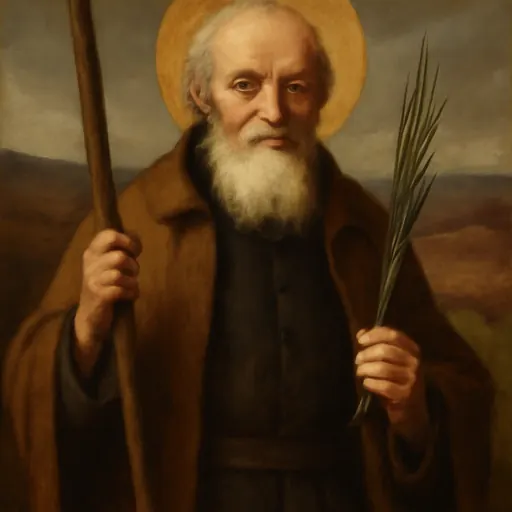
Blessed Nicholas Postgate (about 1597–1679) was a Yorkshire priest who served the hidden Catholics of the North York Moors for nearly fifty years, often dressed as a gardener. At the age of 82 he was arrested while baptizing a baby near Whitby, condemned at York simply for being a priest, and hanged, drawn and quartered on the Knavesmire. He was beatified in 1987. His feast is August 7.
Who was Blessed Nicholas Postgate?
Blessed Nicholas Postgate was an English Catholic priest who spent almost fifty years ministering in secret in Yorkshire, most memorably on the North York Moors, where he was born. People there still call him the Martyr of the Moors. In 1678, at about 82 years of age, he was arrested in the middle of a baptism; in August 1679 he was hanged, drawn and quartered at York. Pope John Paul II beatified him in 1987 with the 85 Martyrs of England and Wales.

The life of Blessed Nicholas Postgate
A recusant boy from Egton Bridge
Nicholas was born around 1597 to 1599 at Kirkdale House, which the Postgate Society describes as "not a great house but a humble cottage," near the River Esk at Egton Bridge. His parents were listed by the authorities as recusants, Catholics who would not attend the Church of England. In the moorland parishes of the area, known then as Blackamoor, the old faith survived among ordinary farming families rather than only under the shelter of the gentry.

In 1621 he crossed to the English College at Douai in northern France, founded by William Allen to train priests for England. He was ordained in 1628 and sent home in 1630, almost certainly knowing that under the law of 1585 any priest ordained abroad who entered England was guilty of high treason.
Chaplain, then shepherd of the moors
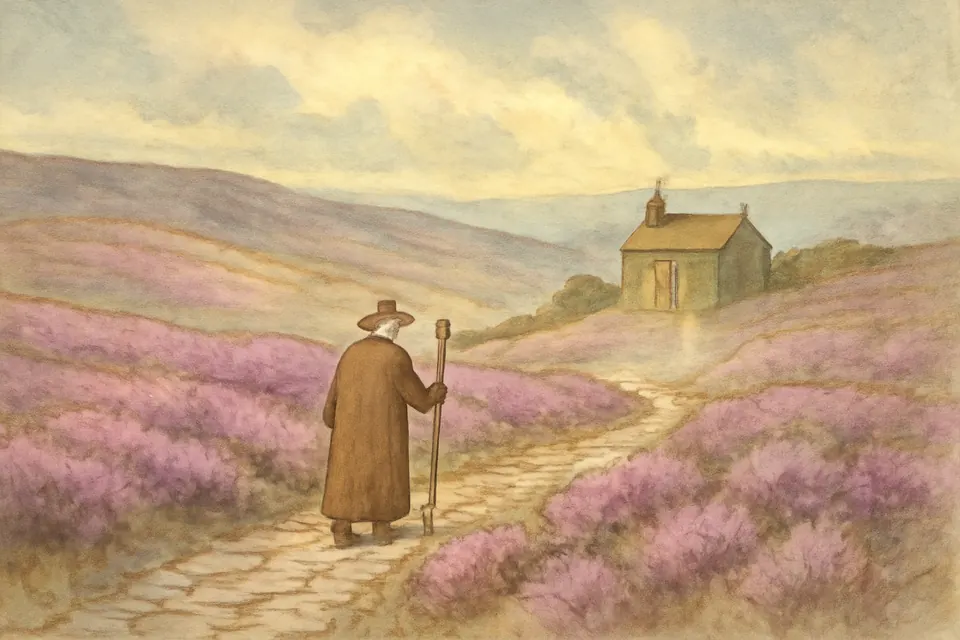
For his first decades on the mission he worked as a household chaplain: to Lady Hungate at Saxton near Tadcaster, then to Lady Dunbar, and later to the Meynell family at Kilvington near Thirsk. Around 1660, when he was nearly sixty, he came home to Blackamoor. He lived first under the protection of the Radcliffe family at Ugthorpe Old Hall and then in a small cottage at a spot called The Hermitage.
From there he served a flock that stretched from the coast at Whitby across the moors to Pickering. Mass was said in farmhouses and in secret rooms like the Mass House at Egton. Catholics passed signals to one another, a sheet left drying over a hedge, hawthorn in a window. His chalice unscrewed into three pieces so he could carry it hidden, and his altar was a small slab of slate. Local tradition says he often went dressed as a gardener and that he brought the daffodil to North Yorkshire.

Arrest at a baptism
By the 1670s it seems that many people in the district, Protestant as well as Catholic, knew perfectly well who the old man was. That quiet tolerance ended with the Popish Plot of 1678, the invented story of a Jesuit scheme to murder King Charles II. Rewards were paid to informers, and an exciseman named John Reeves found out that Postgate was a priest. Late in 1678 Father Postgate came to a house called Redbarns at Littlebeck, near Whitby, to baptize a child, and Reeves arrested him there.
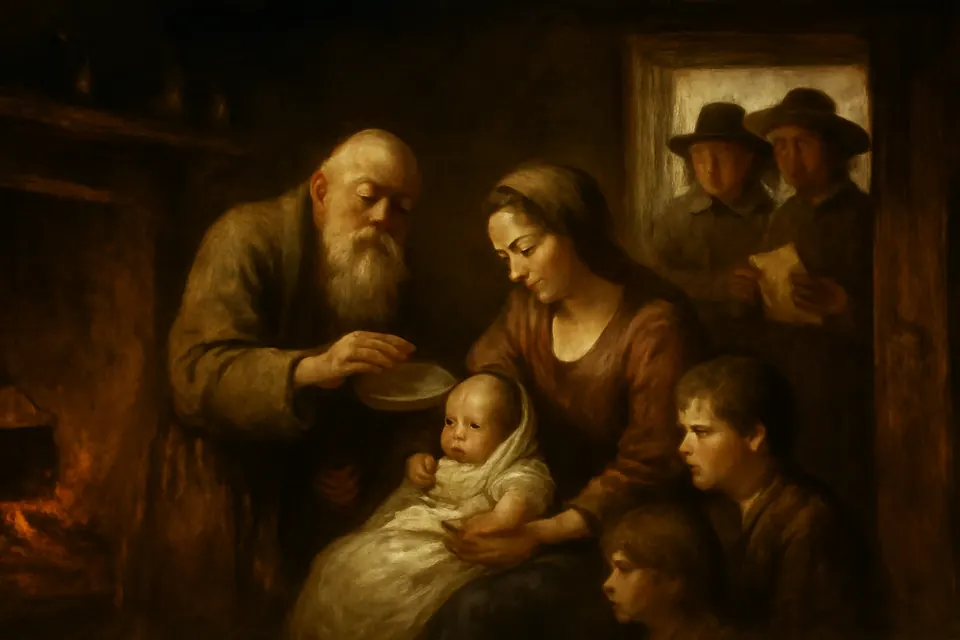
He was taken before a magistrate at Brompton and sent to the York assizes. On March 17, 1679, he was convicted, in the words of the Treasury records, "for being a seminary priest." According to the Postgate Society, the judge found him guilty reluctantly. On May 3 a royal warrant ordered £22 paid to John Reeves "for apprehending Nicholas Postgate alias Posket." Tradition holds that he wrote a hymn in prison that is still sung in the area; we have not been able to verify its text against an early source, so we do not reprint it here.
Martyrdom on the Knavesmire
On August 7, 1679, Nicholas Postgate was taken to the gallows on the Knavesmire outside York. He was too old and weak for a long speech. He said he was dying for the Catholic faith, not for any plot, and asked the sheriff to tell the king that he had never wronged him in any way. He prayed that God would give the king grace and the light of truth, forgave everyone who had brought him to his death, and asked forgiveness of all. Then he was hanged, drawn and quartered. His remains were given to friends, and one hand was sent to Douai.
Beatification
The Catholics of the moors never forgot him. By 1768, with the penal laws still in force, there was a chapel and school at Ugthorpe; new chapels followed at Egton Bridge in 1790 and Ugthorpe in 1810, and two chalices that had belonged to him were later given to the new church at Ugthorpe. Pope John Paul II beatified him on November 22, 1987, with George Haydock and 83 other martyrs of England and Wales. As a martyr he needed no approved miracle, and none is recorded of him.
Symbols of Blessed Nicholas Postgate in art
The portrait in the Whitby Museum, believed to date from about 1710, shows him as an old man with a long white beard, a robe and a staff, closer to a hermit or a pilgrim than a priest in vestments. Later images follow that pattern:
- White beard and staff: his great age and the miles he walked on the moors.
- A gardener's or countryman's dress: the disguise tradition says he wore.
- Martyr's palm and rope: the death he suffered at York.
Feast day and prayer
We keep his feast on August 7, and he is remembered with the 85 Martyrs on November 22. Each summer the Diocese of Middlesbrough holds the Postgate Rally, an open-air Mass on the moors, weather permitting. See more August saints on our feast days page.
We have not found a traditional prayer to Blessed Nicholas Postgate with a source we can cite, so we do not print one. The Postgate Society closes its account of his life simply: "Blessed Nicholas Postgate, pray for us." Let us make that prayer our own, and ask him to pray for priests who serve scattered country parishes, for families bringing their children to baptism, and for all who are persecuted for their faith.
Frequently asked questions
Who was Blessed Nicholas Postgate?
A Catholic priest born at Egton Bridge on the North York Moors, trained at Douai and ordained in 1628, who ministered in secret in Yorkshire from 1630 until his arrest in 1678. He was executed at York on August 7, 1679, one of the last priests put to death for the faith in England.
Why is Nicholas Postgate called the Martyr of the Moors?
Because for about twenty years, from around 1660, he walked the moorland between Whitby, Guisborough, Pickering and Scarborough on foot, from a cottage at Ugthorpe, carrying the sacraments to scattered Catholic families.
How old was Nicholas Postgate when he died?
He was about 82 at his arrest in 1678 and around 80 to 82 at his death in August 1679; his birth year is given as anywhere from 1596 to 1599.
When is the feast of Blessed Nicholas Postgate?
August 7, the anniversary of his martyrdom. He is also remembered on November 22 with the 85 Martyrs of England and Wales, beatified on that day in 1987.
Keep exploring
Sources
- Postgate Society, The Life of Nicholas Postgate (archived 2016). Kirkdale House, Douai 1621, chaplaincies at Saxton and Kilvington, Ugthorpe, the altar stone at Pickering, the arrest at Redbarns, Littlebeck, and his last words
- Calendar of Treasury Books, vol. 6, 1679–1680 (British History Online). Entry of May 3, 1679: a royal warrant for £22 to John Reeves for apprehending 'Nicholas Postgate alias Posket,' convicted at the York assizes on March 17, 1679, 'for being a seminary priest'
- Pope John Paul II, Homily for the Beatification of 85 English Martyrs, November 22, 1987. The beatification of George Haydock and 84 companions