St. Justin de Jacobis

St. Justin de Jacobis (1800–1860) was an Italian Vincentian priest who went to Ethiopia in 1839, learned Ge'ez and Amharic, dressed and prayed as the people did, and formed a native clergy in the Ge'ez rite. Ethiopians called him Abuna Yaqob. He died on the road near Hebo, in present-day Eritrea, and was canonized in 1975. His feast is July 31.
Who was St. Justin de Jacobis?
St. Justin de Jacobis was an Italian priest of the Congregation of the Mission who spent the last twenty years of his life in the highlands of Ethiopia and Eritrea. He came with no wish to make Ethiopians into Europeans. He learned their languages, wore their dress, kept their calendar and trained Ethiopian priests who celebrated the liturgy in their own ancient Ge'ez rite. The people called him Abuna Yaqob, Father Jacob.
Pope Paul VI, canonizing him in 1975, quoted the Ethiopian bishops' words: "Il Beato Giustino De Jacobis è stato padre per la Chiesa d'Etiopia" (Blessed Justin de Jacobis was a father to the Church of Ethiopia). We keep his feast on July 31.
The life of St. Justin de Jacobis
From San Fele to Naples
He was born on October 9, 1800, at San Fele, a hill town in Basilicata, into a large and respected family. He entered the Vincentians, the congregation of St. Vincent de Paul, on October 17, 1818, and was ordained a priest at Brindisi on June 12, 1824. He worked in Apulia and then in Naples, preaching in poor neighborhoods, prisons and hospitals. Paul VI recalled his courage in Naples during a deadly epidemic.

To Abyssinia
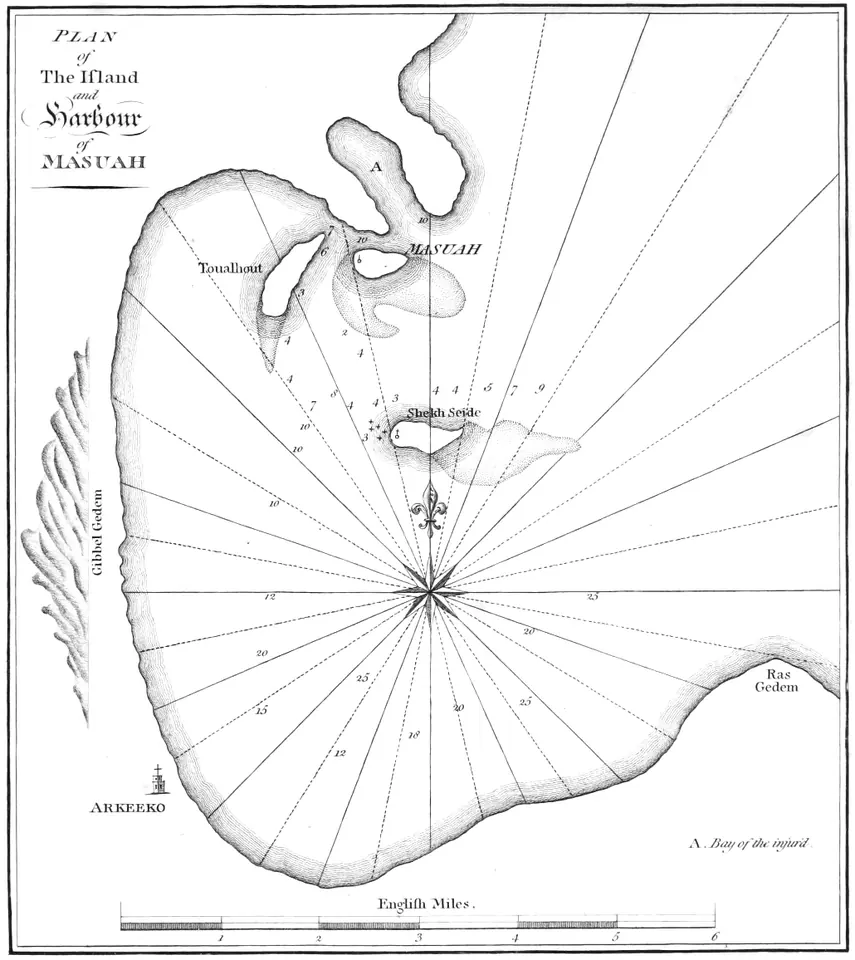
In 1839, close to forty years old, he accepted the post of Prefect Apostolic of Abyssinia from the Congregation for the Propagation of the Faith. He landed at Massawa on the Red Sea and went up into Tigray, working first at Adwa and then at Guala.
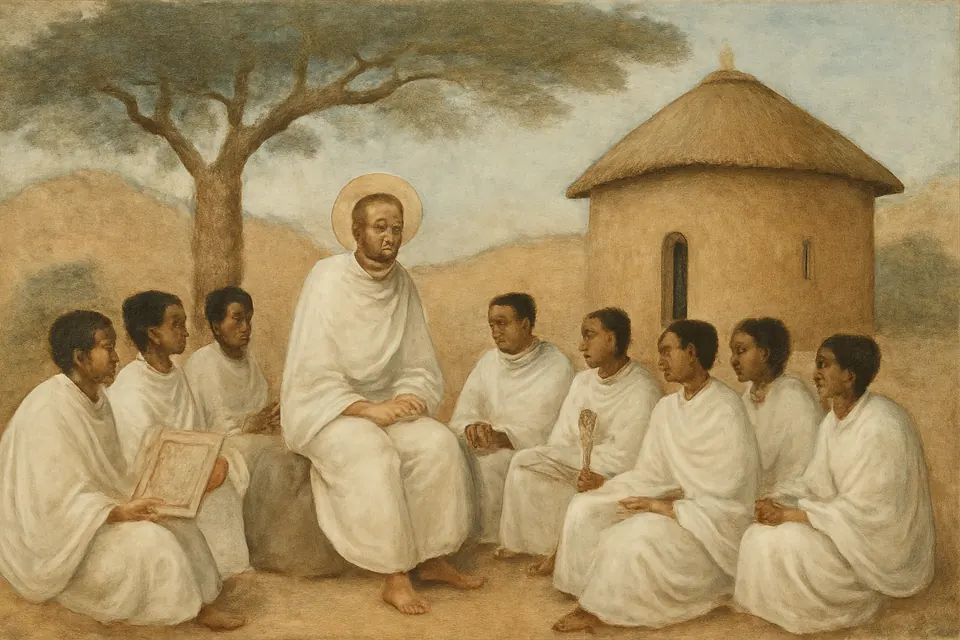
He made a choice there that set the course of his life. The Christians of Ethiopia had kept the faith since the days of St. Frumentius, and he would not treat them as pagans or as enemies. He learned Amharic and the liturgical language, Ge'ez, wore the white cotton shamma, and followed the Ethiopian liturgical calendar. Paul VI called him "abissino tra gli abissini," an Abyssinian among the Abyssinians.
A native clergy
His great work was forming Ethiopian priests who stayed Ethiopian. He founded a seminary called the College of the Immaculate Conception and insisted that his clergy and seminarians keep their own rite rather than be Latinized. His closest companion was Abba Ghebre Michael (1791–1855), a learned monk who became a Catholic and whom Justin ordained a priest. Ghebre Michael died in 1855 after months of suffering for the faith; the Church honors him as a martyr and beatified him in 1926.
The Vincentians also remember that he used what little money he had to buy slaves their freedom and took them into his communities.
Bishop, prisoner and exile
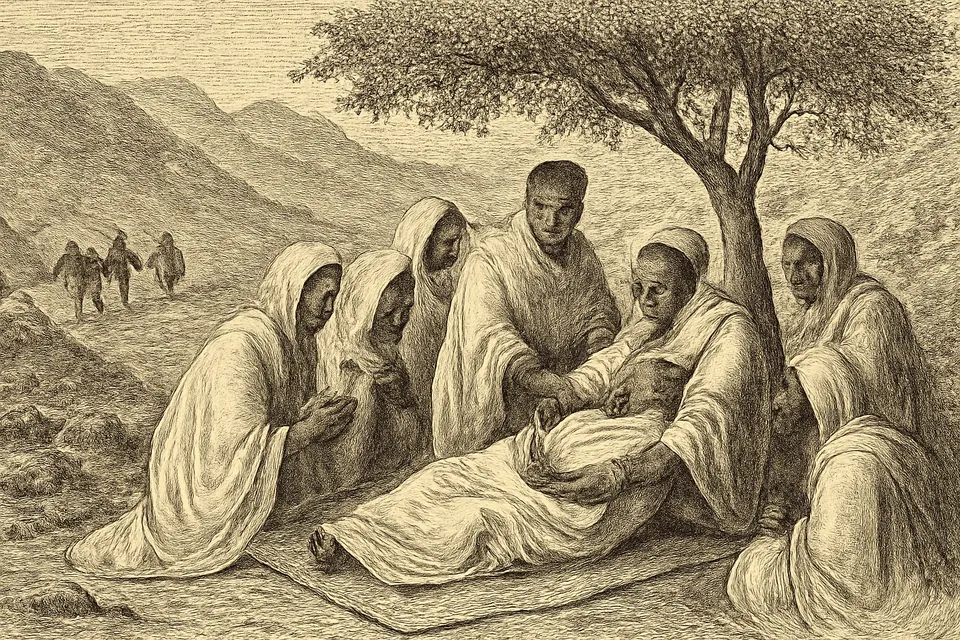
At the urging of the Capuchin missionary Guglielmo Massaia, later a cardinal, the Holy See made him a bishop. Massaia consecrated him secretly at Massawa on January 8, 1849. His work brought hard opposition, and when the Catholic faith was banned in 1860 (the Vincentian account names Theodore II), he was imprisoned for several months and then forced out toward the Halai district of Eritrea. Worn out by hunger and illness, he died on July 31, 1860, on the road near Hebo, with a small group of the faithful around him. Among his last words, as the Vincentians record them, were "Do not weep, do not be afraid" and "My children, all of you have a part in my love."
Miracles and devotion
Pope Pius XII beatified him in 1939, and Paul VI canonized him on October 26, 1975. Each step required a healing that the Church investigated and approved as a miracle; the sources we used don't describe those cases, so we leave them aside here.
At Hebo his tomb is still a place of pilgrimage. Devotional accounts say that people come there in times of war, disaster and drought to ask his prayers, and that the devotion reaches beyond the Catholic community; these are reported favors, not formally examined.
Symbols of St. Justin de Jacobis in art
Images of him are mostly modern, and they show him the way Ethiopians knew him:
- The white shamma: the cotton wrap of the highlands, a sign that he took on the life of the people.
- A long beard: as in the portraits of him as bishop.
- A bishop's cross: often a simple cross rather than a European pectoral, for the bishop consecrated in secret.
- A walking staff: for the years of travel on foot and the forced march into exile.
Feast day and shrines
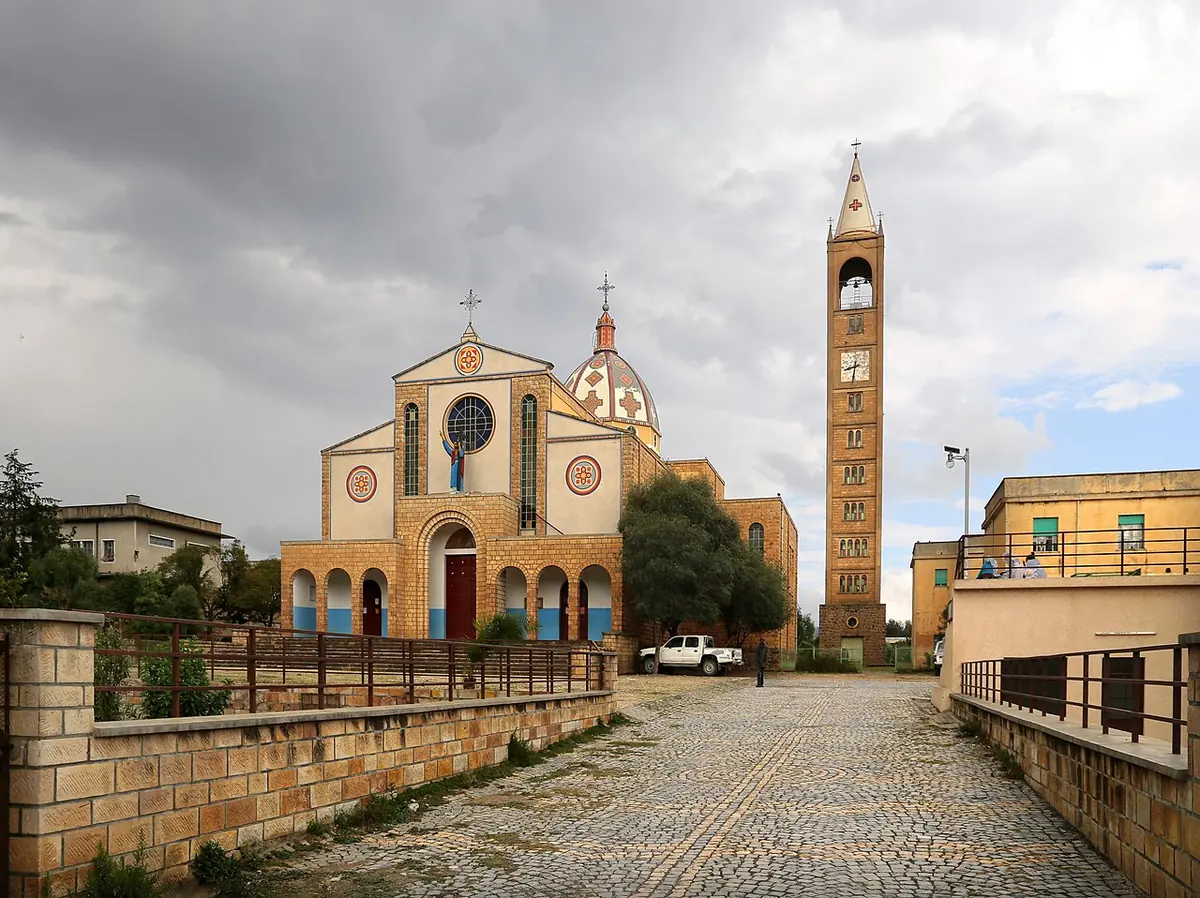
His feast is July 31; the Vincentian family keeps it on July 30. See our feast days page for other saints of the season. His tomb is at the Shrine of St. Justin de Jacobis in Hebo, in the Eritrean Eparchy of Segheneyti. The Catholic Church he planted lives on in the Ethiopian and Eritrean Catholic Churches of the Ge'ez rite, with dioceses such as Adigrat in Tigray, where he first worked.
Prayer to St. Justin de Jacobis
We know of no traditional prayer to him that we can cite. Let us ask St. Justin de Jacobis to pray for the peoples of Ethiopia and Eritrea, for peace in the Horn of Africa, for the unity of Christians, for missionaries who learn to love another people's ways, and for all who are trafficked or enslaved. St. Justin de Jacobis, pray for us.
Frequently asked questions
When is the feast day of St. Justin de Jacobis?
July 31, the day he died in 1860. The Vincentians keep his memorial on July 30.
Where is St. Justin de Jacobis buried?
At Hebo in Eritrea, where his tomb in the Catholic church is a place of pilgrimage. The shrine belongs to the Eritrean Catholic Eparchy of Segheneyti.
Why is St. Justin de Jacobis called the apostle of Ethiopia?
Because he founded the modern Catholic Church of Ethiopia and Eritrea. He trained Ethiopian priests who kept their own Ge'ez liturgy and calendar, and the Ethiopian bishops called him "father of the Church of Ethiopia."
Who was Abba Ghebre Michael?
A learned Ethiopian monk whom Justin received into the Catholic Church and ordained a priest. He died in 1855 after months of mistreatment for his faith and was beatified as a martyr in 1926.
Keep exploring
Sources
- Paul VI, homily for the canonization of Bishop Giustino de Jacobis, October 26, 1975 (Italian). His 1839 mission, Adwa and Guala, the name Abuna Yaqob, his consecration by Massaia on January 8, 1849, the seminary, Ghebre Michael and the quotations
- VincentWiki: Justin de Jacobis. Birth date, vows, ordination at Brindisi in 1824, the secret consecration at Massawa, his imprisonment in 1860 and the beatification year
- Congregation of the Mission: Saint Justin of Jacobis, the Apostle of Ethiopia and Servant of Unity. Ge'ez and Amharic, the shamma, his work against the slave trade and his death at Hebo
- Famvin: Devotion to St. Justin de Jacobis in Eritrea and Ethiopia (2025). His last words, his tomb at Hebo and the July 30 memorial
- GCatholic: Shrine of St. Justin de Jacobis, Hebo. Location of the shrine