St. Fraimbault de Lassay
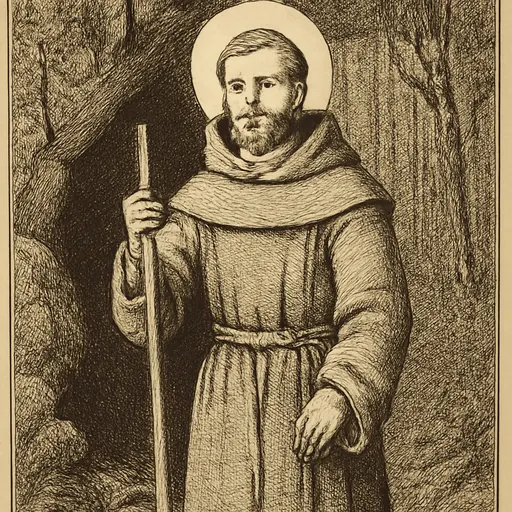
St. Fraimbault de Lassay (also St. Frambourg, Latin Frambaldus) was a sixth-century hermit and monk who, according to tradition, left the Frankish court, trained at the abbey of Micy near Orléans and came to the forests of Maine, where he lived in a grotto and founded a monastery at Lassay. Towns in Mayenne and Orne bear his name, and the royal chapel of Saint-Frambourg in Senlis is dedicated to him. His feast is August 16.
Who was St. Fraimbault de Lassay?
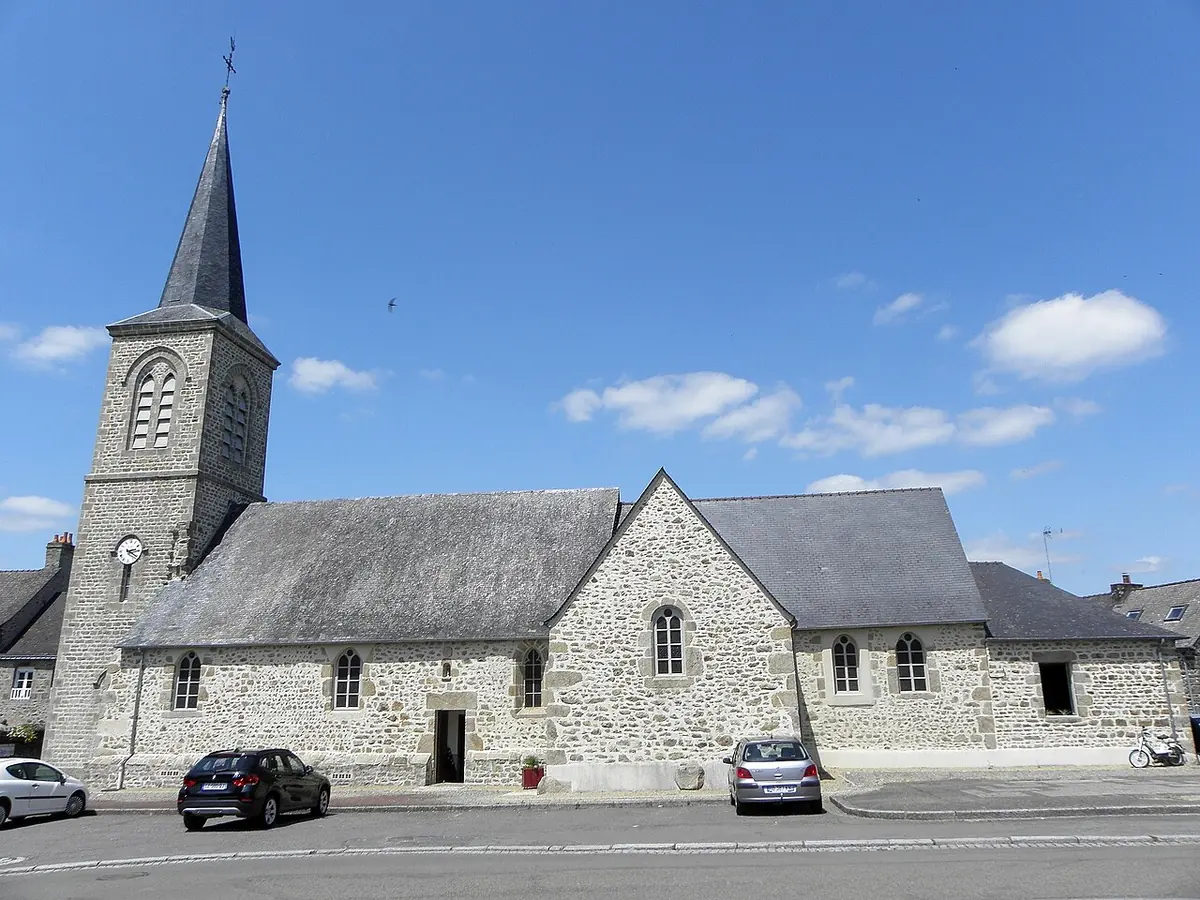
St. Fraimbault was a hermit and monk of the sixth century, one of the holy men who carried the Gospel into the great forests of Maine in western France. His name lives on in the villages of Saint-Fraimbault-de-Prières and Saint-Fraimbault-de-Lassay in Mayenne and Saint-Fraimbault in Orne, in the royal chapel of Saint-Frambourg at Senlis, and in Ivry-sur-Seine near Paris, which honors him as its patron. We keep his feast on August 16.
We should say plainly at the start: there is no record of St. Fraimbault written in his lifetime. His story comes from a legend set down centuries later and from the devotion of the places that kept his name and relics. What follows is that tradition, told as tradition.
From the court to the cave
Tradition holds that Fraimbault was born around 500 in the Auvergne, into a family of Gallo-Roman nobility, and that as a youth he was placed at the court of the Frankish king Childebert I. He turned away from that life and went to live as a hermit in a cave at Ivry, beside the Seine. The old story says that when his father came to bring him home, the waters rose around the cave and made it a lake, so that no one could reach him. Ivry-sur-Seine still honors him as St. Frambourg, and its parish obtained a relic of him in 1675, according to the local tradition.
A monk of Micy
The legend then sends him to the abbey of Micy, near Orléans, a monastery founded in the time of Clovis that trained many of the monks who went out to evangelize western Gaul. There he became a priest. Bishop Innocent of Le Mans asked Micy for missionaries for the wild border country of his diocese, and Fraimbault set out with a companion, St. Constantian, who would found the monastery of Javron.
The hermit of the Mayenne
In Maine, the story goes, he settled first near Saint-Georges-de-la-Couée, then went deeper into the forest country of the Passais, at the bishop's request. He found a grotto above the river Mayenne, near today's Saint-Fraimbault-de-Prières, and lived there in prayer. The grotto is still visited, with a statue of the saint in it.

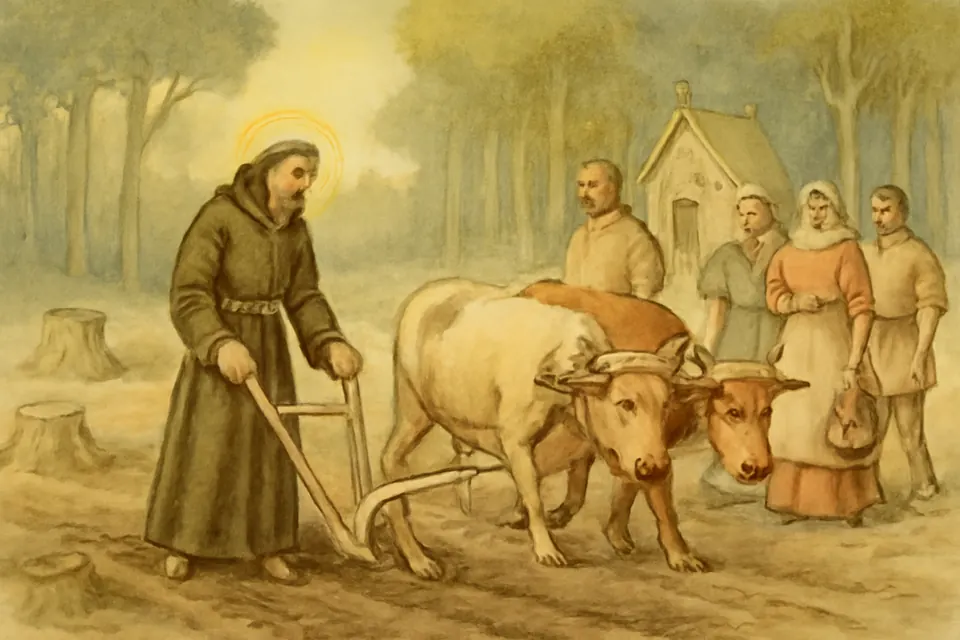
Disciples gathered around him, and he founded a monastery on the plateau of Lassay. His legend says he taught the people of the forest to clear the land and farm it, which is how many monks of his time changed the countryside of Gaul as much as its faith.
He died, according to tradition, while on a preaching journey at the place now called Saint-Fraimbault in Orne, and was buried in his monastery at Lassay. The usual date given is about 570, though an older local history gives 542. Pilgrims came to his tomb, and miracles were reported there.
His relics: Lassay and Senlis
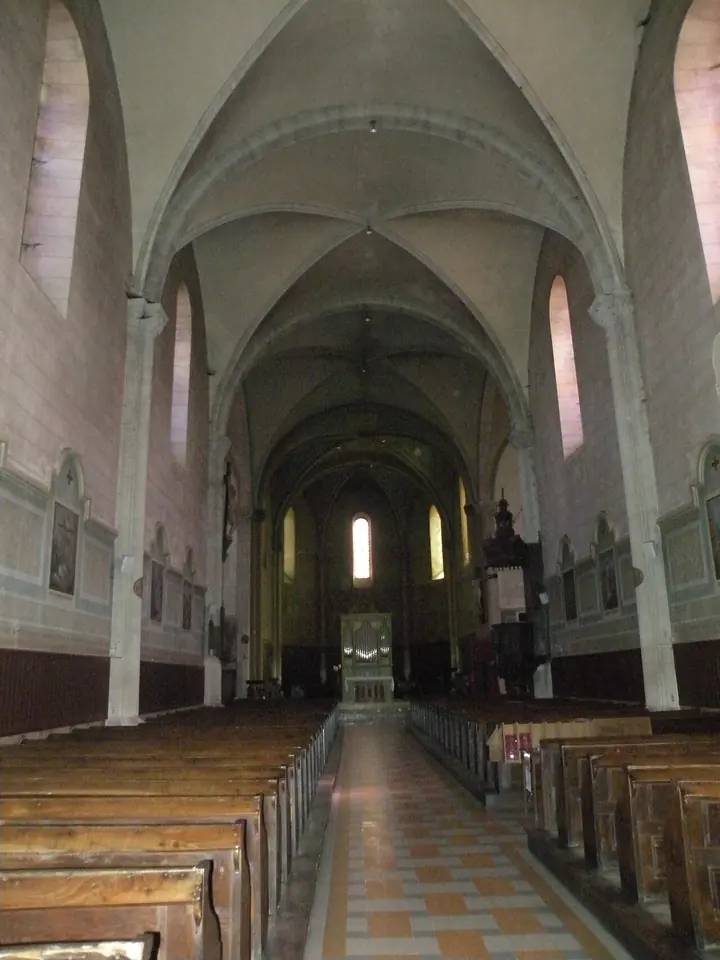
The local tradition holds that his head remained at Lassay, where it is carried in procession on Pentecost Monday from the old church in the hamlet of Saint-Fraimbault to the church of Lassay.
His body went to Senlis, north of Paris, where a royal chapel was built in his honor. When and why is uncertain: some accounts speak of monks fleeing the Viking raids of the ninth century, others of a gift arranged at the end of the tenth. The Fondation Cziffra, which owns the chapel today, records that it was founded by Queen Adelaide, wife of Hugh Capet, the first Capetian king, and that Hugh was acclaimed king in the crypt of the earlier chapel. Louis VII rebuilt it in the twelfth century. In 1973 the pianist Georges Cziffra bought and restored the ruined chapel, and it is now a concert hall with windows designed by Joan Miró.

Where the relics of St. Fraimbault de Lassay are kept: see them on the relics map →
Fraimbault and Lancelot
In the twentieth century René Bansard and other researchers of Normandy suggested that the legend of Fraimbault "de Lassay," a nobleman turned hermit, lay behind the medieval romance of Lancelot "du Lac," noting that Lassay was written Laceio in medieval Latin. It is an intriguing idea and a local point of pride, but it remains a theory.
Miracles of St. Fraimbault
- Traditional: the rising waters that hid his cave at Ivry from his father.
- Reported: cures and graces at his tomb at Lassay, which drew pilgrims, according to his legend. No account of them survives from his own century.
Symbols of St. Fraimbault in art
Statues in Ivry, Lassay and the Mayenne villages show him as a monk or hermit in a plain habit, often with a staff. Look for:
- A grotto: his hermitage above the Mayenne.
- Water or a spring: the legend of the cave turned into a lake.
- A spade or plow: the forest he taught his people to clear.
Feast day and prayer
We keep the feast of St. Fraimbault on August 16. See the feast day calendar for the other saints of August.
We have not found a traditional prayer to St. Fraimbault. Let us ask him to pray for those who leave the world's honors to seek God, for monks and hermits, and for the farming country of western France. St. Fraimbault, pray for us.
Frequently asked questions
Who was St. Fraimbault de Lassay?
A hermit and monk of sixth-century Gaul, honored in Maine (today the Mayenne and Orne regions of France) as one of the monks who brought the Gospel to its forests. Almost everything about his life comes from a late legend.
When is the feast of St. Fraimbault?
August 16. Ivry-sur-Seine has also honored him on May 1, and Saint-Fraimbault-de-Lassay keeps a procession on Pentecost Monday.
Is St. Fraimbault the same as St. Frambourg?
Yes. Fraimbault, Frambourg, Frambaud and Frambour are French forms of the same Latin name, Frambaldus. The royal chapel of Saint-Frambourg in Senlis and the parish of Ivry-sur-Seine honor the same saint.
Was St. Fraimbault the model for Lancelot?
Some twentieth-century researchers in Normandy, beginning with René Bansard, proposed that the legend of Fraimbault "of Lassay" helped shape Lancelot "of the Lake." It is an interesting theory, not an established fact.
Keep exploring
Sources
- Fondation Cziffra: Histoire de la Chapelle Saint Frambourg (Senlis). Founded by Queen Adelaide, wife of Hugh Capet, rebuilt by Louis VII, saved by Georges Cziffra in 1973
- Georges Bertin, Les ermites et la forêt dans le roman arthurien. The monks sent from Micy into the forests of Maine, and the Lancelot theory
- Wikimedia Commons: Category Fraimbault de Lassay. The places and churches that bear his name