St. Andrew Stratelates and the 2,593 Soldier Martyrs
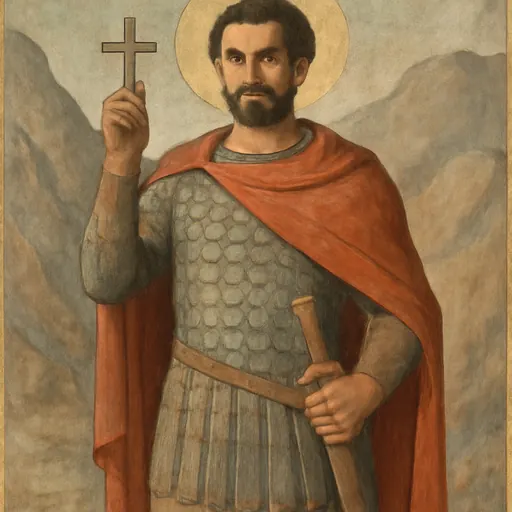
St. Andrew Stratelates ("the Commander") was a Roman officer in Syria under the Emperor Maximian who, though not yet baptized, led his outnumbered soldiers into battle against the Persians calling on Christ, and won. Denounced as a Christian, he was later hunted down and beheaded with 2,593 of his soldiers in the passes of the Taurus Mountains about the year 300. We keep his feast on August 19.
Who was St. Andrew Stratelates?
St. Andrew Stratelates was a Roman army commander in Syria at the end of the third century who led his men first to victory and then to martyrdom. His title, Stratelates, is Greek for "commander" or "general." He is one of the great warrior saints of the Christian East, honored beside St. George, St. Demetrius and St. Theodore Stratelates, and the Orthodox Church remembers him with 2,593 soldiers who died with him.
We keep his feast on August 19. On the same day the traditional Roman Martyrology records: "In Cilicia, the birthday of St. Andrew, tribune, and his military companions, who were converted to Christianity through a miraculous victory they had gained over the Persians. " Accused for this, they were killed in the passes of Mount Taurus under the Emperor Maximian.
His story comes to us through his Passion, the account of his martyrdom read in the churches and summarized in the Orthodox synaxarion. Its outline is the same East and West, though the details are legend as much as history.

A victory in the name of Christ
The Orthodox life, as the Orthodox Church in America tells it, says Andrew served under the Emperor Maximian (284–305) and was loved by the army "because of his bravery, invincibility and sense of fairness." When a large Persian army invaded Syria, the governor Antiochus gave him command and the title of Stratelates.
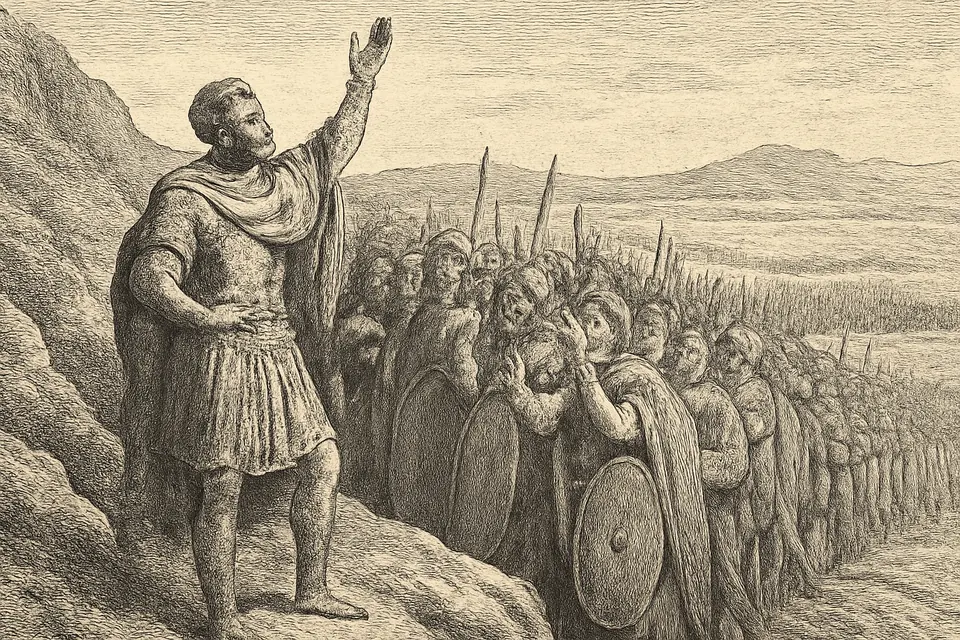
Andrew chose a small company of brave men. His soldiers were pagans, and Andrew himself had not yet been baptized, but he already believed in Jesus Christ. Before the battle he told his men that the pagan gods could not help them, and he preached to them Christ, "the omnipotent God of Heaven and earth." The soldiers went into battle calling on the Savior, and the small detachment routed the great Persian host.
Trial, baptism and the road to the mountains
Glory brings envy. Men jealous of Andrew told Antiochus that the commander was a Christian who had converted his troops. At his trial Andrew confessed Christ openly and was tortured. The life tells us he was laid on a bed of white-hot copper, and as soon as he called on the Lord it cooled. His soldiers were hung on trees, and not one of them denied Christ.
Antiochus would not put such a famous champion to death on his own, so he sent the case to the emperor. Maximian, knowing how the army loved Andrew and afraid of a mutiny, ordered the prisoners freed in public and secretly ordered them killed on some pretext.
Once free, Andrew and his men went to Tarsus in Cilicia, the city of St. Paul. There, the life says, Bishop Peter of Tarsus and Bishop Nonos of Beroea baptized them. Then they moved on toward the mountains.
Martyrdom in the Taurus passes
Antiochus wrote to Seleucus, governor of Cilicia, to overtake the company and kill them as deserters. Seleucus's troops caught up with them in the passes of the Taurus Mountains. Andrew called his soldiers "his brothers and children" and urged them not to fear death. He prayed for everyone who would honor their memory and asked God to make a healing spring flow where their blood was shed. Then they were beheaded.
The life says a spring rose from the ground at that spot. The bishops, who had followed in secret, buried the martyrs, and one of their clergy, long troubled by an evil spirit, drank from the spring and was healed. Sick people came to it for generations. The bed of copper, the spring and this healing are traditional wonders of his Passion, never examined by the Church but loved and repeated for many centuries.

Symbols of St. Andrew Stratelates in art
In Byzantine and Russian icons he looks like the other warrior saints, so read the inscription:
- Roman armor and a red cloak, for the officer he was. The red also speaks of martyrdom.
- A sword, spear or banner and a shield, the arms of a commander.
- A small cross held up in one hand, the sign of a martyr and of the God who gave him victory.
- A company of soldiers around him in frescoes and on calendar icons, for the 2,593 who died with him.
Do not confuse him with St. Andrew the Apostle, shown as an old man with a saltire cross, or with St. Theodore Stratelates, another martyr general whose icons look much the same.
Feast day and devotion
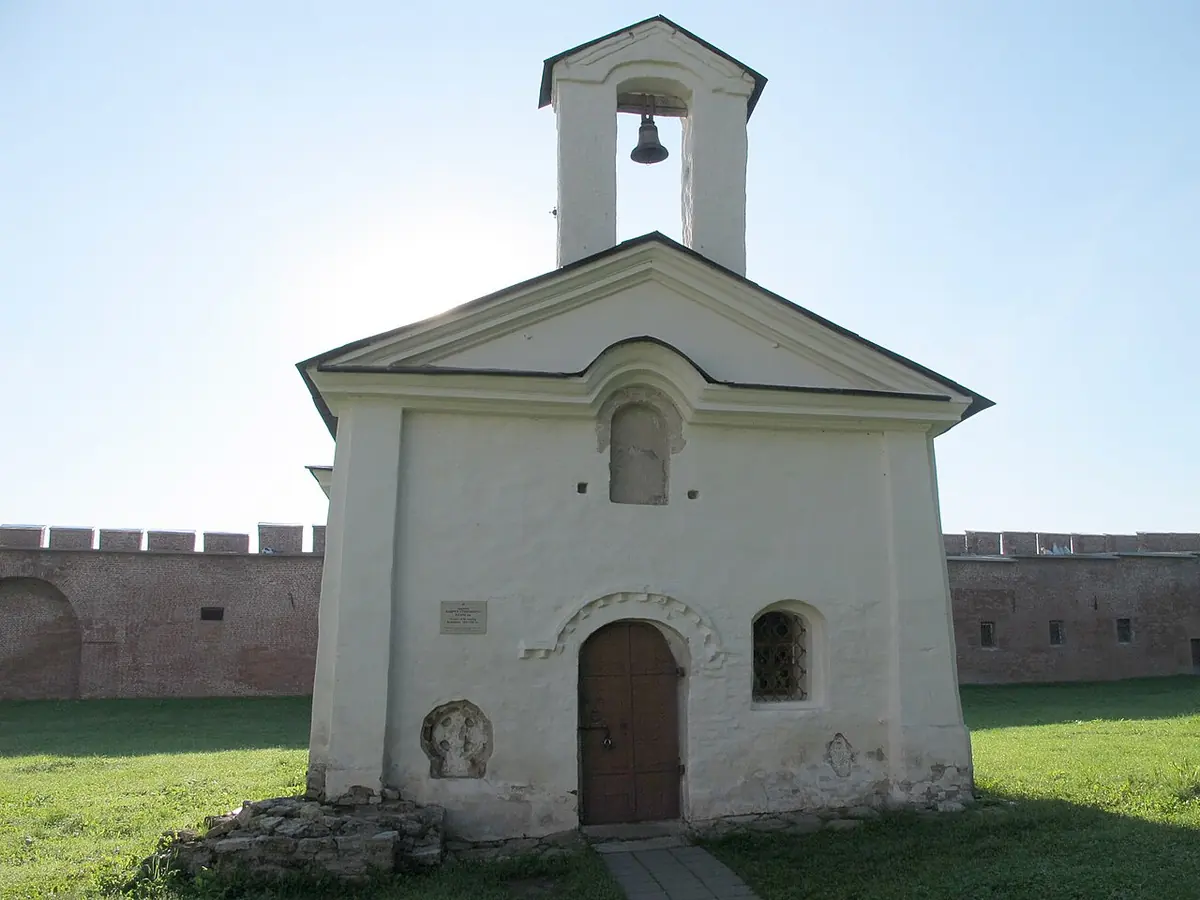
The Orthodox and Byzantine Catholic churches sing his memory on August 19, during the afterfeast of the Dormition. He was much loved in old Russia: inside the Kremlin of Veliky Novgorod stands a small white church dedicated to him.
The Orthodox Church honors him with a troparion and kontakion on his day. We know of no traditional prayer to him in wide use in English, and we will not compose one in his name. Let us ask St. Andrew Stratelates and his soldier companions to pray for us, and for all who serve in uniform: that they may be brave and fair as he was, and faithful to Christ to the end. See the feast day calendar for the other saints of August.
Frequently asked questions
Who was St. Andrew Stratelates?
A Roman military commander in Syria at the end of the third century who believed in Christ, brought his soldiers to faith after a victory over the Persians, and was martyred with them in Cilicia under the Emperor Maximian.
What does Stratelates mean?
It is a Greek military title meaning "commander" or "general." The governor Antiochus gave it to Andrew when he put him in charge of the army against the Persians. The same title belongs to St. Theodore Stratelates.
When is the feast of St. Andrew Stratelates?
August 19, in both the Orthodox calendar and the traditional Roman Martyrology.
How many soldiers died with St. Andrew Stratelates?
The Orthodox tradition counts 2,593 soldiers martyred with him in the Taurus passes. The Roman Martyrology speaks simply of "his military companions."
Keep exploring
Sources
- Orthodox Church in America: Martyr Andrew Stratelates, and 2,593 soldiers with him, in Cilicia. The Orthodox life, the battle, the trial, the baptism at Tarsus, the martyrdom and the healing spring
- The Roman Martyrology in English, August (Boston Catholic Journal). August 19: Andrew, tribune, and his military companions, killed in the defiles of Mount Taurus