St. Sixtus II, Pope and Martyr
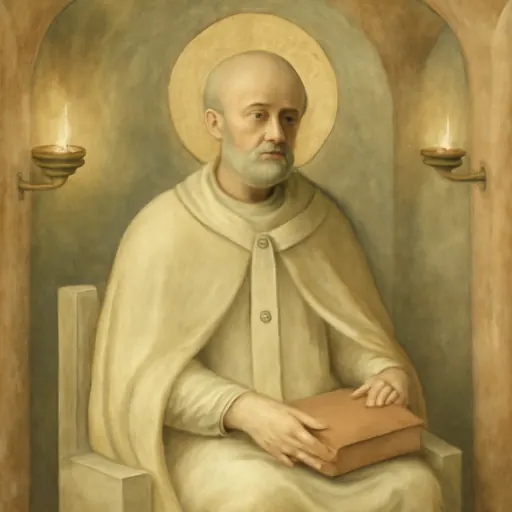
St. Sixtus II was bishop of Rome for less than a year, from August 257 until August 6, 258, when soldiers of the emperor Valerian seized him while he was preaching in a catacomb and beheaded him with four of his deacons. The Church keeps his memorial on August 7, and he is named in the Roman Canon.
Who was St. Sixtus II?
St. Sixtus II was the bishop of Rome who died for Christ in the catacombs in the summer of 258. He was elected on August 31, 257, and less than a year later soldiers found him seated on his chair, teaching his flock in a cemetery off the Appian Way. They beheaded him there, along with four of his deacons. He is often called Xystus, the older Greek spelling of his name, and he is the pope whose deacon was the great St. Lawrence.
We know his death unusually well, because a bishop who lived through the same persecution wrote it down within weeks. Where later stories fill in the gaps, we say so.
A peacemaker pope
Nothing certain is known of his birthplace. The Liber Pontificalis calls him a Greek, but the Catholic Encyclopedia thinks this a mistake born of confusing him with a pagan philosopher named Xystus, whose collection of maxims later circulated under the pope's name.
Sixtus came to the Chair of Peter in a tense moment. His predecessor, St. Stephen I, had quarreled sharply with the churches of Africa and Asia Minor over whether heretics returning to the Church should be baptized again. St. Cyprian of Carthage was on the other side. Sixtus kept the Roman practice of not rebaptizing, but he restored friendship with Carthage. Cyprian's biographer Pontius calls him bonus et pacificus sacerdos, "a good and peaceful priest."
Martyrdom in the catacombs, August 6, 258
The emperor Valerian's first edict had forbidden Christians to gather in their cemeteries. Sixtus kept shepherding his people anyway. Then, early in August 258, a second and far harsher order arrived. St. Cyprian, waiting for his own arrest in Carthage, sent messengers to Rome to learn what it said, and wrote to a fellow bishop, Successus:
Valerian had sent a rescript to the Senate, to the effect that bishops and presbyters and deacons should immediately be punished
And then the news that reached him from the city:
But know that Xistus was martyred in the cemetery on the eighth day of the Ides of August, and with him four deacons.
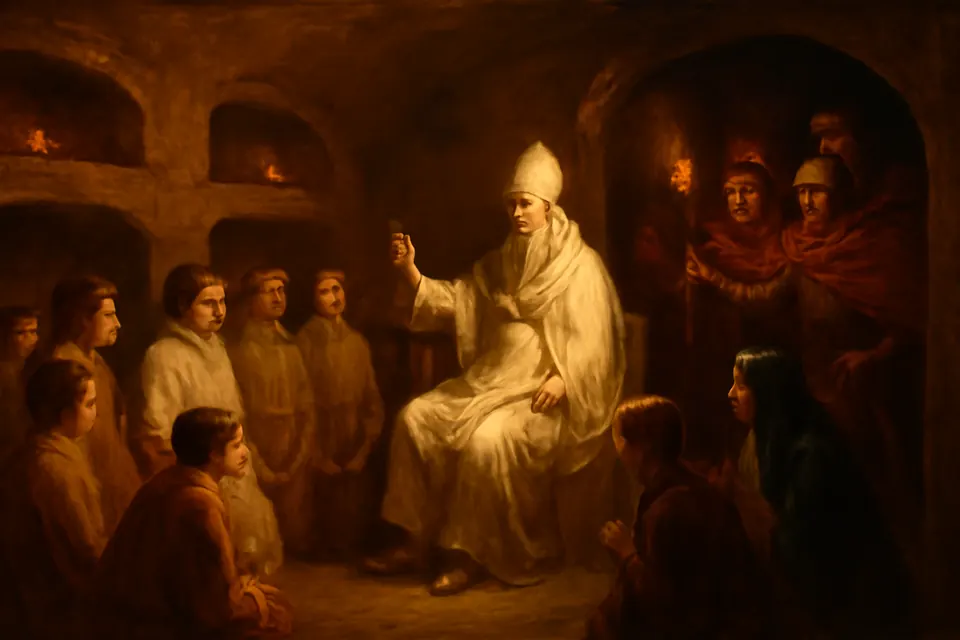
The eighth day before the Ides of August is August 6. To avoid notice, Sixtus had gathered the faithful in the Cemetery of Praetextatus, a lesser-known burial ground on the Appian Way, almost across from the Catacomb of St. Callixtus. Soldiers came in while he sat on his chair addressing the people. The Catholic Encyclopedia thinks he was probably taken before a judge and then led back to the cemetery to die, though the old sources can be read either way. The four deacons with him were Januarius, Vincent, Magnus and Stephen. Two more deacons, Felicissimus and Agapitus, were martyred the same day. Four days later, on August 10, St. Lawrence followed.
"After three days you shall follow me"
The most loved story of Sixtus is his farewell to Lawrence. St. Ambrose, writing in the 4th century, says Lawrence saw his bishop led away and wept, not for the pope's sufferings but because he himself was left behind: "Where, father, are you going without your son? Where, holy priest, are you hastening without your deacon?" Sixtus answered him:
I leave you not nor forsake you. Greater struggles yet await you. We as old men have to undergo an easier fight; a more glorious triumph over the tyrant awaits you, a young man. Soon shall you come. Cease weeping; after three days you shall follow me.
The poet Prudentius tells it too. The Catholic Encyclopedia, careful as always, calls the meeting "probably a mere legend," so we count it as traditional. It has lasted because it rings true to what we do know: the pope and his deacons died together, and Lawrence was right behind them.
His tomb and the papal crypt
Christians carried the body of Sixtus to the nearby Catacomb of St. Callixtus and laid him in the crypt where the 3rd-century popes were buried. Behind his tomb they kept the chair, stained with his blood, on which he had been beheaded. At the place of his death, an oratory called the Oratorium Xysti stood over the Cemetery of Praetextatus, still visited by pilgrims in the 7th and 8th centuries. Later, Pope St. Damasus placed a verse inscription at the tomb; the archaeologist Giovanni Battista de Rossi found fragments of it in the crypt in the 19th century.
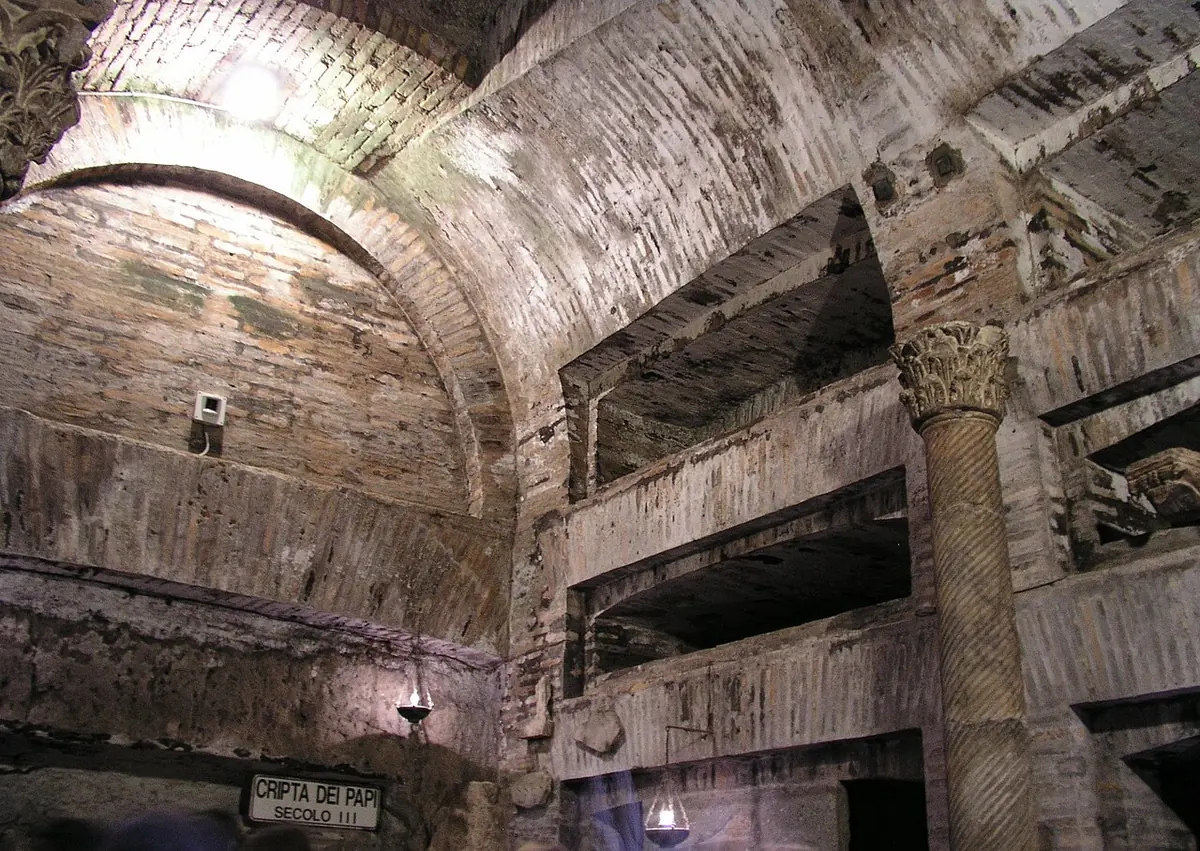
Relics of Sixtus were later honored in other places too. The Museum of Decorative Arts in Madrid keeps a jeweled reliquary casket made for his relics by the goldsmith Francisco Merino in 1601.

Symbols of St. Sixtus II in art
Sixtus is almost always shown as a pope, and almost always with Lawrence nearby.
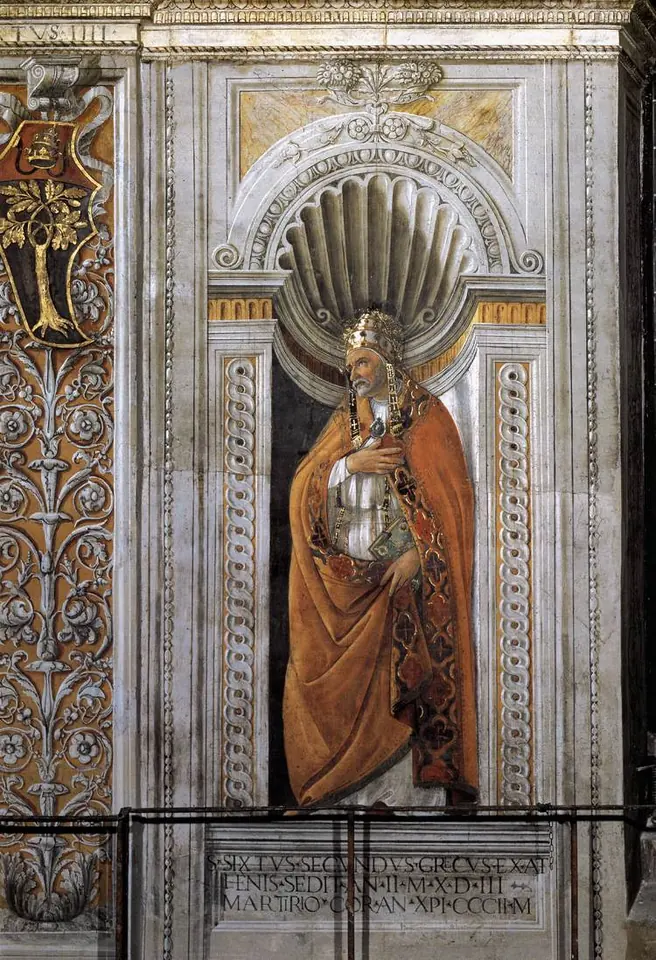
- Papal tiara and vestments: artists of the Renaissance dressed him as a pope of their own day, as Botticelli did in the Sistine Chapel, even though a 3rd-century bishop of Rome wore nothing of the kind.
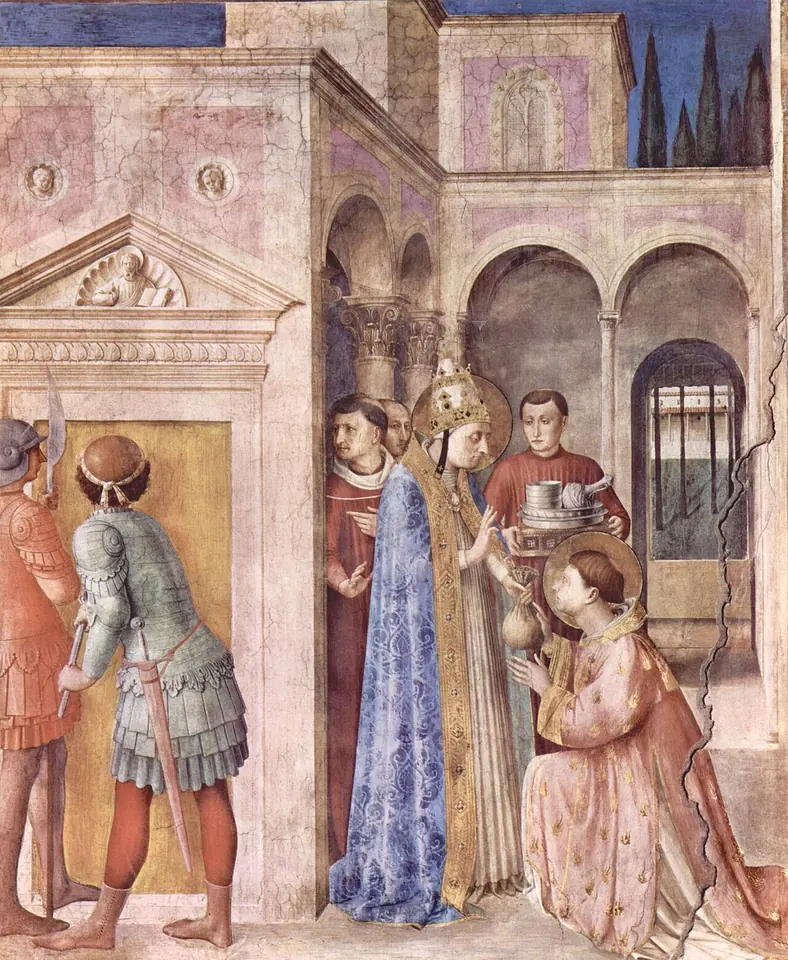
- A purse or a vessel of coins: the treasures of the Church, which he hands to Lawrence for the poor in Fra Angelico's fresco.
- A sword: the weapon of his beheading.
- A martyr's palm and a book: his witness and his teaching.
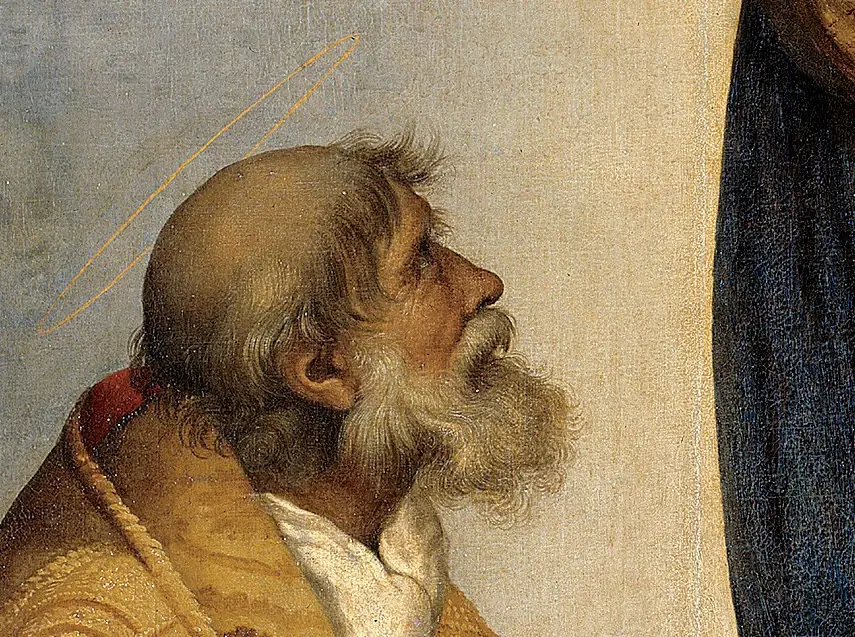
He also appears in one of the most famous paintings in the world. In Raphael's Sistine Madonna, the old pope kneeling at the left and gazing up at Mary is St. Sixtus, because the painting was made for the monks of San Sisto in Piacenza, whose church was dedicated to him.
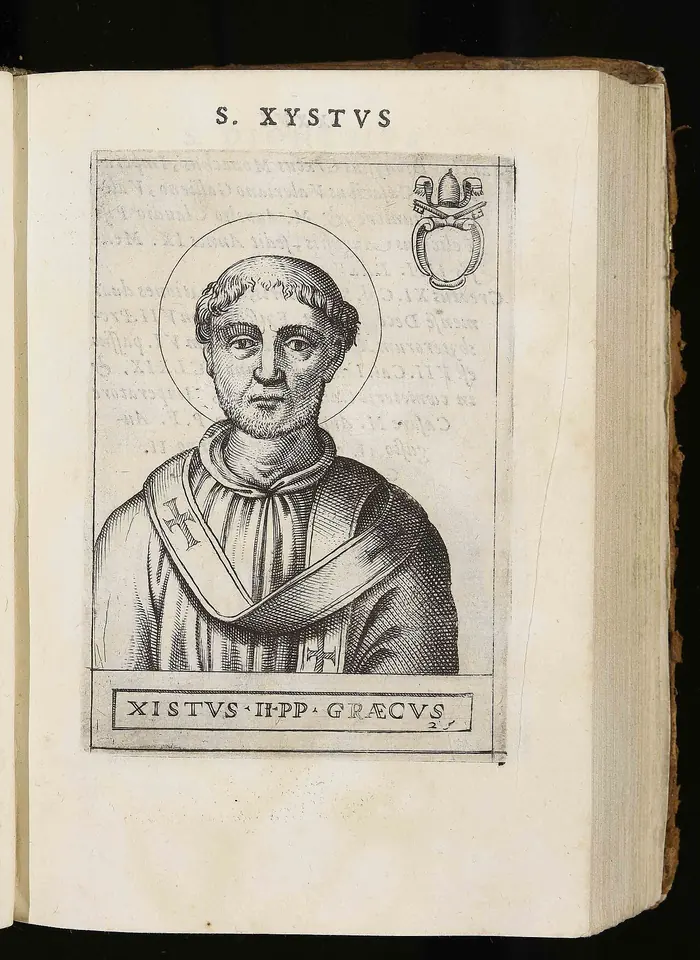
In the old printed series of papal portraits, he is a simple engraved bust labeled Xystus.
Feast day and the Roman Canon
The Roman Martyrology remembers Sixtus on the day of his death, August 6. Because that day belongs to the Transfiguration, the General Roman Calendar keeps his memorial, with his companion martyrs, on August 7. You can see the saints of that week on our feast days page.
Every time a priest prays the Roman Canon, Sixtus is named: "Linus, Cletus, Clement, Sixtus, Cornelius, Cyprian, Lawrence, Chrysogonus..." He stands there beside his deacon Lawrence and his friend Cyprian, who died for Christ a few weeks after him, on September 14, 258.
Prayer to St. Sixtus II
No traditional prayer to St. Sixtus II alone has come down to us. The Church prays with him in the Mass, where his name is joined to the apostles and martyrs in the Roman Canon, and on his memorial in the collect of the day.
Let us ask his prayers in our own words: for courage to keep gathering in Christ's name when it is costly, for pastors who stay with their people, and for every deacon who serves the poor as Lawrence did.
Frequently asked questions
When is the feast of St. Sixtus II?
August 7 in the General Roman Calendar, as "St. Sixtus II, Pope, and Companions, Martyrs." He was martyred on August 6, 258, but that day belongs to the Transfiguration, so his memorial is kept the day after.
How did Pope Sixtus II die?
In August 258 the emperor Valerian ordered that bishops, priests and deacons be put to death at once. On August 6, Sixtus was seized while seated and teaching his people in the Cemetery of Praetextatus on the Appian Way, and was beheaded there with four deacons. St. Cyprian of Carthage reported his death within weeks.
What did St. Sixtus II say to St. Lawrence?
St. Ambrose tells that Lawrence wept to be left behind, and Sixtus answered, "Cease weeping; after three days you shall follow me." The Catholic Encyclopedia judges this famous meeting probably a legend, so we hold it as traditional.
Is Sixtus II mentioned at Mass?
Yes. He is one of the martyrs named in the Roman Canon (Eucharistic Prayer I), in the list "Linus, Cletus, Clement, Sixtus, Cornelius, Cyprian..."