St. Alberto Hurtado

St. Alberto Hurtado (1901–1952), known in Chile as Padre Hurtado, was a Chilean Jesuit priest who founded the Hogar de Cristo, a home and charity for the homeless poor, worked for workers' rights, and taught a generation of young Catholics to see Christ in the poor. Pope Benedict XVI canonized him on October 23, 2005. We keep his feast on August 18.
Who was St. Alberto Hurtado?
St. Alberto Hurtado, whom Chileans simply call Padre Hurtado, was a Jesuit priest of Santiago who gave his life to the poor of his country. He is best known as the founder of the Hogar de Cristo, "Christ's Home," which began in 1944 as a shelter for homeless men and children and still serves the poor today. He was also a teacher, a writer and a tireless voice for workers' rights. Pope Benedict XVI, who canonized him on October 23, 2005, called him "a true contemplative in action."
We keep his feast on August 18, the day he died in 1952.
A boy who knew poverty
Alberto Hurtado Cruchaga was born in Viña del Mar on January 22, 1901. When he was four, his father died and left the family deep in debt. His mother, Ana Cruchaga, sold their farm for far less than it was worth and moved with her two sons to Santiago, where they lived as guests in the houses of relatives. The biography published by Chile's National Library recalls the words by which she taught him generosity: "Las manos juntas para orar, pero abiertas para dar," hands joined to pray, but open to give.
He studied at the Jesuit Colegio San Ignacio and as a teenager worked with friends from school at the Patronato de Andacollo, a charity in the poor, crowded Mapocho quarter of Santiago. At fifteen he asked to become a Jesuit, but his spiritual director told him to finish school first. Then the family's money troubles held him back. He studied law at the Catholic University instead and wrote his theses on child labor and on the conditions of people who did piecework at home. Only when a lawsuit over the old farm was settled, and his mother was provided for, was he free. On August 14, 1923, he entered the Society of Jesus and began his novitiate in Chillán.

Priest and teacher
His Jesuit studies took him to Córdoba in Argentina and then to Spain, until the persecution of religious orders under the Spanish Republic sent the Jesuit students to Belgium. He was ordained a priest at Louvain on August 24, 1933, and earned a doctorate in education there. "Soy plenamente feliz," I am fully happy, he wrote after his ordination.
He came back to Chile in 1936 and threw himself into teaching at his old school, the Catholic University and the seminary. Young people flocked to him. He gave retreats, guided many young men toward the priesthood, and in 1941 became national adviser to the youth of Catholic Action. That same year he published a book with a pointed title, ¿Es Chile un país católico?, "Is Chile a Catholic country?", which asked his readers to look honestly at the poverty around them.
The Hogar de Cristo
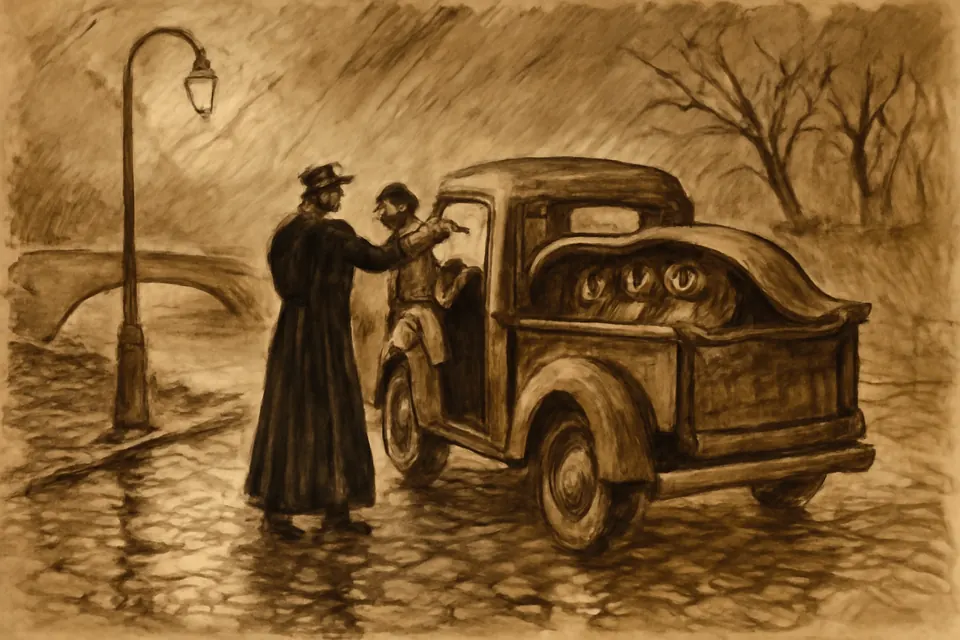
On a cold, rainy night in October 1944, a poor man stopped Padre Hurtado and asked for help: he had nowhere to sleep. The priest saw that he was sick and alone, and he felt, as his biographers put it, that this poor man was Christ himself, abandoned. A few days later he spoke about it to a group of women on retreat. Moved by what he said, they gave him their jewelry and whatever they had with them to start a great work of charity. On December 21, 1944, he laid the first stone of the Hogar de Cristo.

Santiago still remembers the green pickup truck in which Padre Hurtado went out at night to gather homeless boys sleeping under the bridges of the Mapocho River.
Justice for workers
He did not think charity was enough. "La injusticia social trae más males que los que puede reparar la caridad," he said: social injustice causes more harm than charity can repair. To understand workers' lives he worked incognito in a nitrate mine in the north and in a coal mine at Lota. In 1947 he founded ASICH, a Christian labor movement, and in 1951 the Jesuit magazine Mensaje.
"Content, Lord, content"
He fell ill with pancreatic cancer and died on August 18, 1952, at fifty-one. Pope Benedict XVI recalled in his canonization homily that "in his last days, amid the strong pains caused by illness, he still had the strength to repeat: 'I am content, Lord'." All of Chile mourned. The poet Gabriela Mistral wrote a tribute from Naples called "Un pastor menos," "One shepherd fewer."
The miracles of St. Alberto Hurtado
Two healings were approved by the Church:
- For his beatification (1994): the recovery of María Alicia Cabezas from a serious brain disease, according to the National Library's biography.
- For his canonization (2005): a girl of about sixteen, gravely injured in an accident, lay in a coma for weeks after surgery. Her family asked Padre Hurtado's intercession, and she recovered without lasting harm. The Congregation for the Causes of Saints approved the miracle in April 2004.
Many other favors are reported through his intercession; the National Library's biography notes that the Jesuit in charge of his cause kept receiving new accounts, each one examined carefully.
Symbols of St. Alberto Hurtado in art
Padre Hurtado lived in the age of photography, and his statues follow the photographs closely:
- Black Jesuit cassock: the priest's dress he wore every day.
- Children at his side: a boy under his arm or holding his hand, for the street children he took in.
- The green pickup truck: for his nights on the streets of Santiago.
- Open hands: recalling his mother's motto, hands open to give.
Feast day and his sanctuary
We keep his feast on August 18. He was beatified by Pope John Paul II in 1994 and canonized by Pope Benedict XVI in 2005; Benedict called him "a great figure of the Chilean Nation."
His body rests in the Santuario Padre Hurtado in Estación Central, Santiago, next to the Hogar de Cristo he founded. Pilgrims walk a long path to his tomb to pray, give thanks and ask his help. See our feast days calendar for more saints.

Prayer to St. Alberto Hurtado
The Church in Chile uses prayers for his intercession, but we have not found a single standard text to reproduce here. The day after the canonization Pope Benedict prayed, "May St Alberto Hurtado intercede for all." Let us ask him to pray for the homeless and for children who sleep in the streets, for workers treated unjustly, and for us, that we may be content with whatever the Lord sends, as he was.
Frequently asked questions
Who was St. Alberto Hurtado?
A Chilean lawyer who became a Jesuit priest, a teacher and youth chaplain, the founder of the Hogar de Cristo for the homeless in 1944, of a Christian labor movement and of the magazine Mensaje. He died of pancreatic cancer in Santiago in 1952, at fifty-one.
What is the Hogar de Cristo?
"Christ's Home," the charity Padre Hurtado founded in Santiago after meeting a sick, homeless man on a rainy night in October 1944. He laid its first stone on December 21, 1944, and it still serves the poor today.
What were St. Alberto Hurtado's last words?
In his last days, amid great pain, he kept repeating "I am content, Lord" (Contento, Señor, contento), as Pope Benedict XVI recalled in the canonization homily.
What miracles led to his canonization?
For his beatification in 1994, the healing of María Alicia Cabezas from a brain disease. For his canonization, the recovery of a girl of about sixteen who had been in a coma for weeks after a serious accident, approved by the Congregation for the Causes of Saints in 2004.
Keep exploring
Sources
- Pope Benedict XVI, Homily for the canonization of five Blesseds, October 23, 2005 (vatican.va). "Contemplative in action" and his last words, "I am content, Lord"
- Pope Benedict XVI, To pilgrims who had come for the canonization of five new saints, October 24, 2005 (vatican.va)
- Memoria Chilena, Biblioteca Nacional de Chile: Alberto Hurtado (1901-1952), Biografía (first part, Fundación Padre Hurtado). His father's death, his mother's motto, the Patronato de Andacollo and his law theses
- Memoria Chilena: Alberto Hurtado, Biografía (second part). Ordination at Louvain on August 24, 1933, his doctorate, and his return to Chile in 1936
- Memoria Chilena: Alberto Hurtado, Biografía (third part). The founding of the Hogar de Cristo in 1944, ASICH, Mensaje, his death from pancreatic cancer, the beatification miracle, and the sanctuary
- Memoria Chilena: Temprana muerte en 1952 (Gabriela Mistral, "Un pastor menos")
- EWTN News (ACI Prensa): Aprobado milagro del Padre Hurtado que reconoce su santidad (2004). The approval of the canonization miracle in April 2004