Pope St. Stephen I
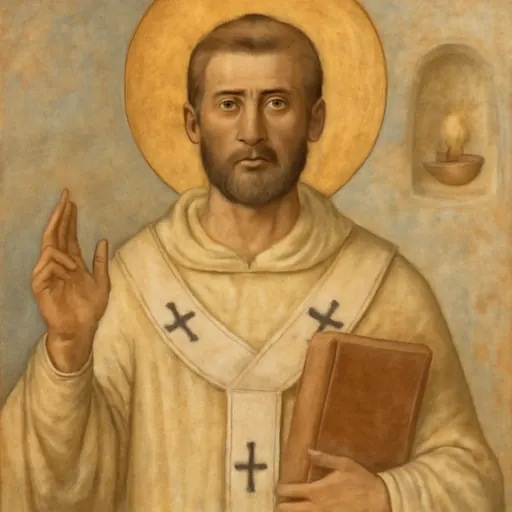
Pope St. Stephen I was bishop of Rome from 254 to 257. He is remembered above all for defending the Church's tradition that baptism given by heretics in the name of the Trinity is valid and must not be repeated, a dispute that set him against St. Cyprian of Carthage. His feast is August 2 in the Roman Martyrology, and he is the patron of the town of Hvar in Croatia.
Who was Pope St. Stephen I?
Pope St. Stephen I was the bishop of Rome from 254 to 257, in the hard years between two great persecutions. He was a Roman, the son of a man named Jovius, and he had served as archdeacon to Pope Lucius I, who entrusted the care of the Church to him before his own death. The Catholic Encyclopedia dates his pontificate from May 12, 254, to August 2, 257, with some doubt.
Two other saints share his name. St. Stephen, the deacon stoned in Jerusalem, is the Church's first martyr. St. Stephen of Hungary was a king who died in 1038. This Stephen is the pope, and the Church remembers him for one great act of faithfulness: he would not let the tradition of baptism be changed.
The life of Pope Stephen I
A Church still healing from persecution
Stephen came to the chair of Peter a few years after the persecution of the emperor Decius (250 to 251). Many Christians had denied the faith to save their lives, and some had bought certificates saying they had sacrificed to the gods. When they repented, bishops had to decide how to receive them back. His predecessor Pope St. Cornelius had already faced the rigorist Novatian, who refused them pardon.
Two cases from Stephen's pontificate survive in the letters of St. Cyprian. Marcian, bishop of Arles in Gaul, had sided with Novatian and refused absolution to penitents, even on their deathbed. The bishops of Gaul and Cyprian urged Stephen to act, and the Catholic Encyclopedia notes that Marcian disappears from the record afterward, which suggests he was deposed. In Spain, two bishops removed for buying such certificates went to Rome and persuaded Stephen to restore them. Cyprian's council in Africa upheld their removal, adding kindly that Stephen, "situated at a distance, and ignorant of the true facts," had been deceived.
The Liber Pontificalis adds that Stephen sent help to the churches of Syria and Arabia, and that he ruled that vestments used at the altar should not be worn in daily life.
The baptism controversy
The great question of Stephen's pontificate was whether a person baptized by heretics had to be baptized again. Cyprian and the bishops of Africa, with Firmilian of Caesarea and others in Asia Minor, said yes. Stephen said no: if the baptism was given with water in the name of the Father, the Son and the Holy Spirit, it was true baptism, and the convert should be received by the laying on of hands for repentance.
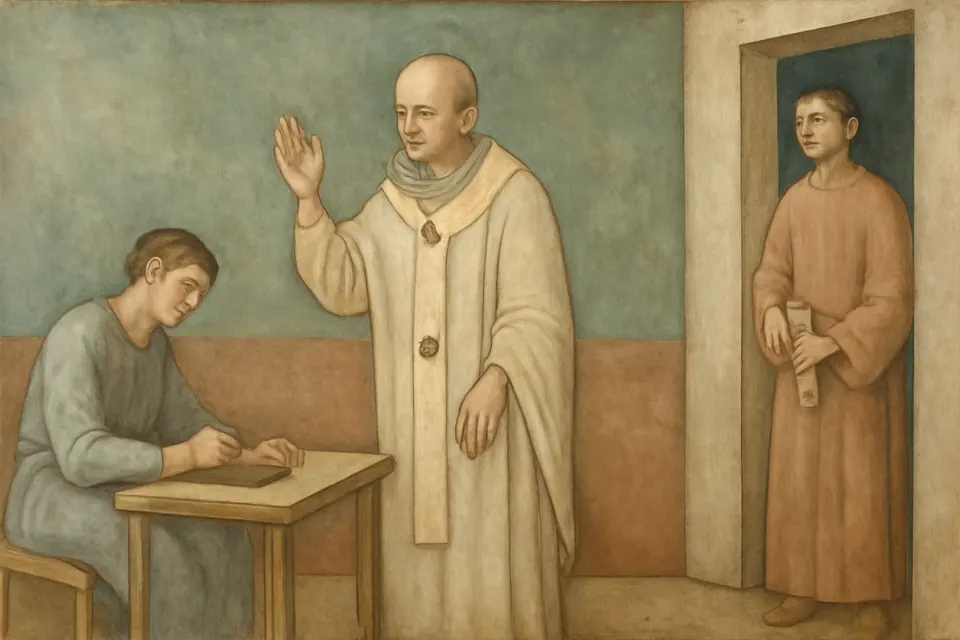
We know his ruling mostly through his opponent. Cyprian, writing to a bishop named Pompey, quotes it:
If any one, therefore, come to you from any heresy whatever, let nothing be innovated (or done) which has not been handed down, to wit, that hands be imposed on him for repentance.
Eusebius, writing about 325, says the same in his own words: Stephen considered it "unnecessary to add any innovation contrary to the tradition which had been held from the beginning." The dispute grew sharp. Stephen threatened to break communion with the bishops who rebaptized, and St. Dionysius of Alexandria wrote to him pleading for peace. Stephen died before the question was settled, but the Church kept his position, and Catholics still do not repeat a valid baptism given outside the Church. Cyprian and Stephen are both honored as saints.
His death: history and legend
Stephen died on August 2, 257, the year the emperor Valerian renewed the persecution. He was buried in the Catacomb of St. Callixtus on the Appian Way.
A later account of his death, kept in his acts and retold in the Golden Legend, says soldiers found him celebrating Mass in the catacombs and beheaded him as he sat in his chair, and that the chair was buried with him. This is traditional.
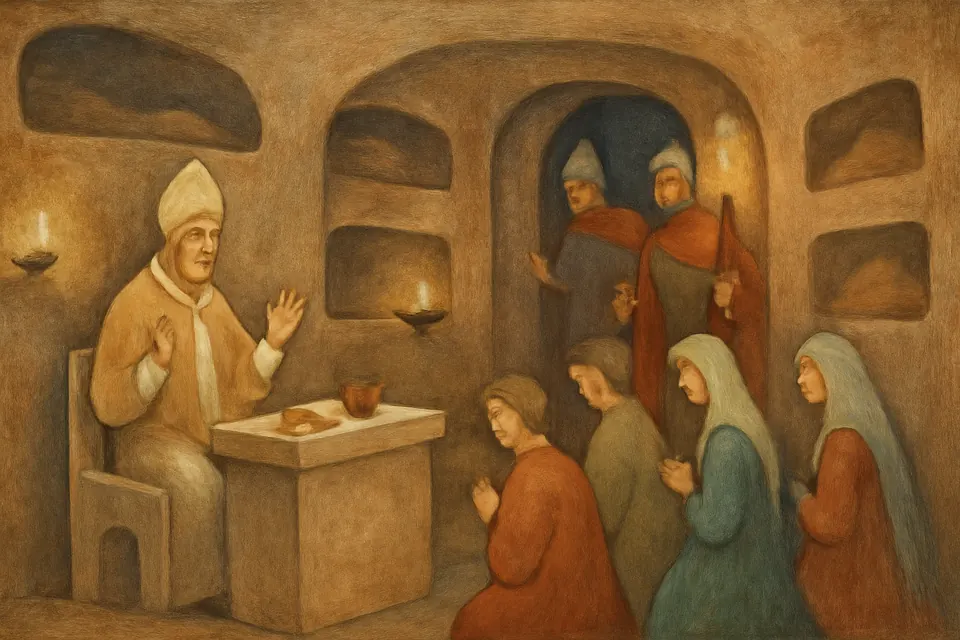
Alban Butler, writing in the 1700s, says the chair was still shown stained with his blood. But the Depositio episcoporum, the Roman list of bishops' burials compiled in 354, does not call him a martyr. The 1969 Calendarium Romanum says so plainly: Stephen was a pope, "not, however, a martyr." His successor, Pope St. Sixtus II, did die a martyr in the next year of the same persecution, a few days before his deacon St. Lawrence.

No miracles are recorded of Pope Stephen in the early sources.
Why Pope St. Stephen I is the patron of Hvar
The cathedral of Hvar, on the Dalmatian island of the same name, is dedicated to St. Stephen I, pope and martyr, and the town keeps him as its patron. Every year Hvar celebrates his feast as its Town Day on October 2, with Vespers in the cathedral, a solemn Mass and procession, and a parade of sails in the harbor.

He has no other formal patronage.
Symbols of Pope St. Stephen I in art
Stephen is shown as a pope, and the details tell you which pope:
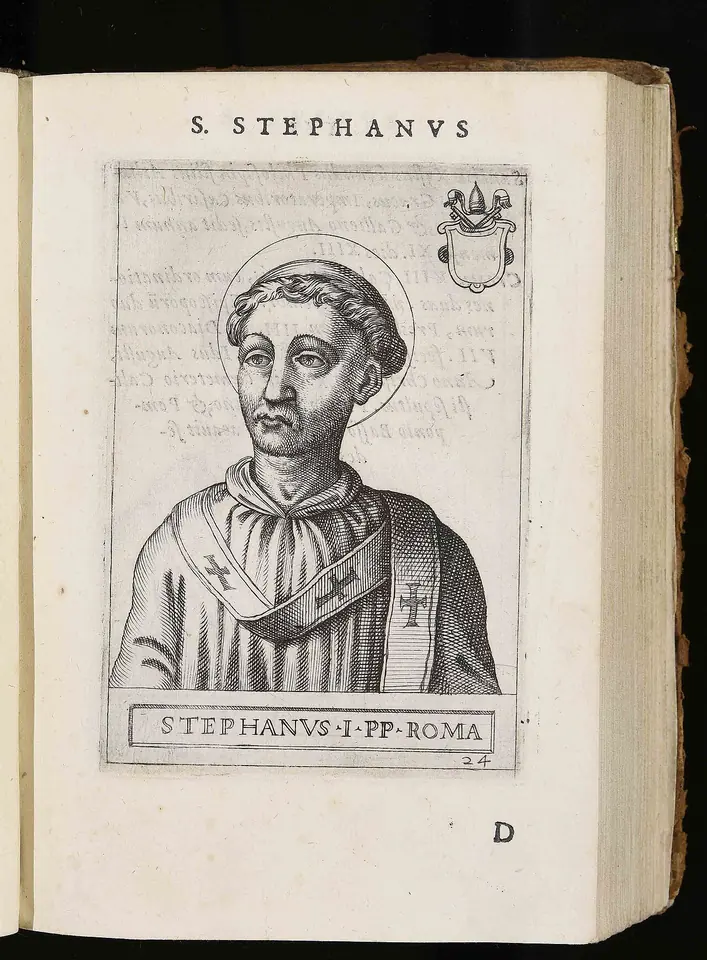
- Papal vestments, pallium and tiara or miter: he is shown as the bishop of Rome, as in the engraved series of popes published by Cavalieri in 1580.
- A sword: the instrument of the martyrdom told in his acts.
- A chair: the papal chair in which, by tradition, he was killed.
- A martyr's palm: in older Western art, which followed the legend.
In Eastern icons and frescoes, such as the one at Dionysiou on Mount Athos, he appears as a bishop in a cross-patterned vestment, often in the scene of his beheading.
Relics and shrines
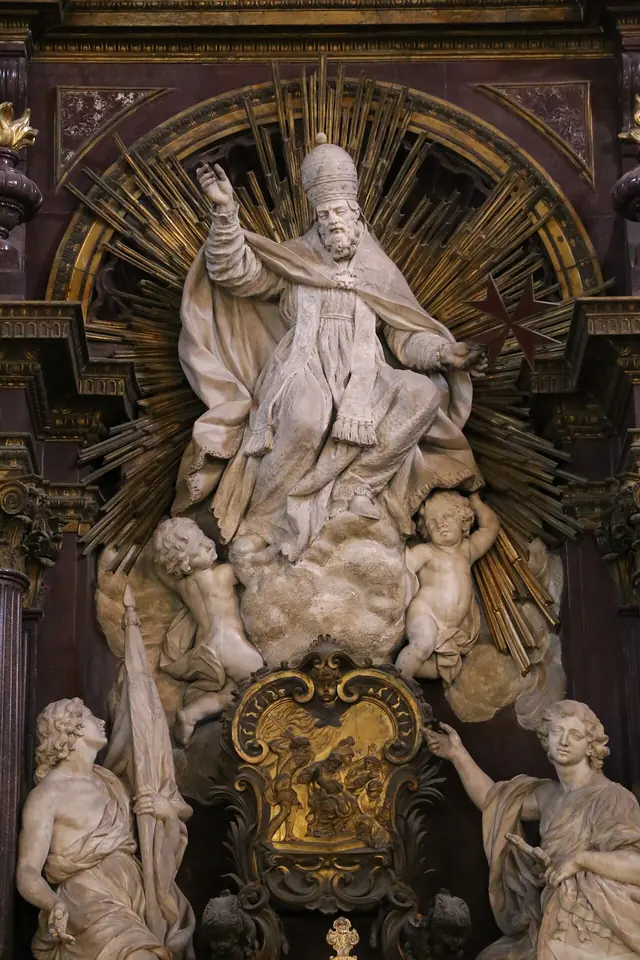
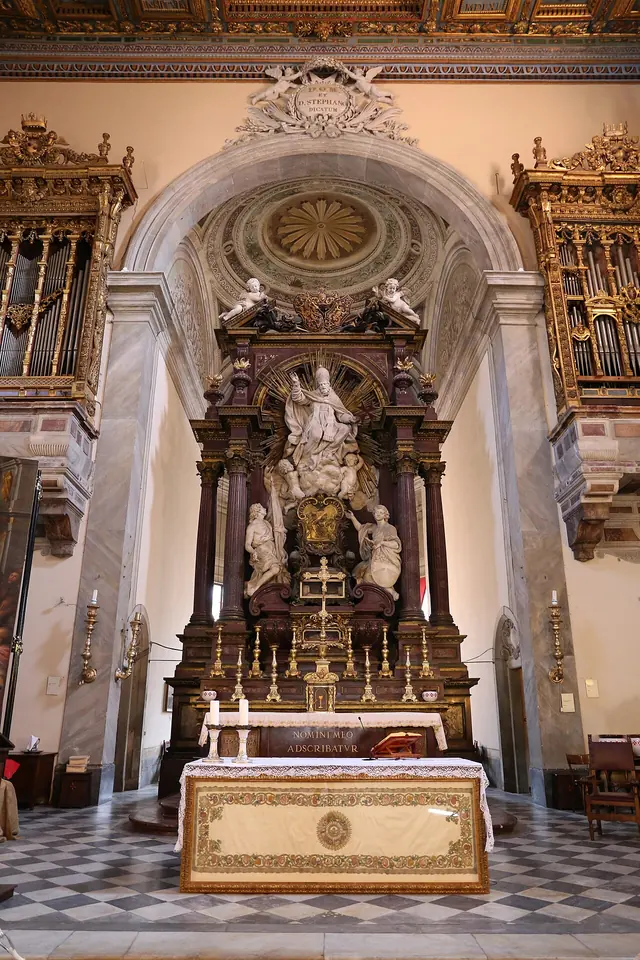
Butler records that Stephen's relics were moved to Pisa in 1682 and venerated "in the great church which bears his name." That is Santo Stefano dei Cavalieri, the church of the Knights of St. Stephen, the order founded by Cosimo I de' Medici in the 1560s and named for this pope. His remains rest in the urn beneath the high altar that Foggini built between 1702 and 1709.
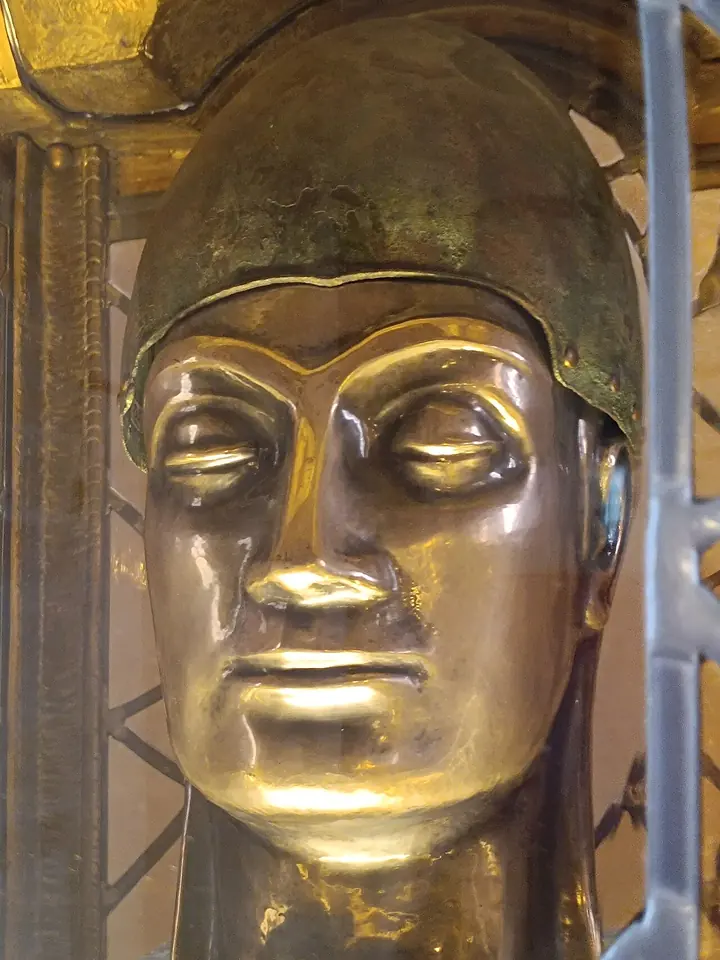
Butler adds that the head was kept "with great respect at Cologne." Today Speyer Cathedral in Germany displays a gold head reliquary under his name.
Feast day and prayer
The Roman Martyrology lists Pope St. Stephen I on August 2. The 1969 reform of the calendar removed his memorial from the General Roman Calendar, not because his holiness was doubted, but because, in its words, he is not a saint "of truly universal importance." A priest may still celebrate his memorial on August 2 where no other obligatory celebration falls, and Hvar keeps its great feast on October 2. Browse other saints of early August on our feast days page.
There is no traditional prayer to Pope St. Stephen I with a known origin. On his day, the Mass may be taken from the Common of Pastors, for a pope. Let us ask St. Stephen to pray for the Holy Father and for all bishops, that they may keep what has been handed down to them, and receive the repentant with mercy.
Frequently asked questions
Was Pope St. Stephen I a martyr?
Later tradition says so. His acts, which Butler thought deserved some regard, say Valerian's soldiers beheaded him in his papal chair in 257, and the chair was shown stained with blood into the 1700s. But the Roman list of bishops' burials from 354 does not count him among the martyrs, and the 1969 Calendarium Romanum calls him a pope, not a martyr.
When is the feast of Pope St. Stephen I?
August 2, the day he died in 257, in the Roman Martyrology. Since 1969 he is no longer on the General Roman Calendar, so his memorial is kept in local calendars. Hvar in Croatia celebrates him on October 2, its Town Day.
What did Pope Stephen I teach about baptism?
That a Christian baptized by heretics with water in the name of the Father, Son and Holy Spirit is truly baptized and should be received into the Church by the laying on of hands, not baptized again. St. Cyprian quotes his ruling: let nothing be innovated beyond what has been handed down. The Church kept Stephen's position.
Is Pope Stephen I the same as St. Stephen the first martyr or King Stephen of Hungary?
No. St. Stephen the deacon was stoned in Jerusalem in the first century (feast December 26). St. Stephen of Hungary was a king who died in 1038 (feast August 16). Pope St. Stephen I led the Church of Rome from 254 to 257.
Sources
- Catholic Encyclopedia (1912): Pope St. Stephen I
- St. Cyprian of Carthage, Epistle 73, to Pompey, against the letter of Stephen (New Advent)
- Eusebius, Church History, Book VII, chapters 2 to 5 (New Advent)
- Alban Butler, Lives of the Saints (1866), vol. VIII: St. Stephen, Pope and Martyr, August 2 (Bartleby, archived)
- Calendarium Romanum (1969), Internet Archive. p. 133: Stephen I, pope but not martyr, left to particular calendars
- Visit Hvar (Hvar Tourist Board): Hvar Town Day 2026, Programme of Events