St. Jacob Baradaeus, Bishop of Edessa and Father of the Syriac Orthodox Church

St. Jacob Baradaeus (about 500–578) was a Syriac monk secretly made bishop of Edessa around 542. Disguised in a ragged cloak, he traveled across Syria, Mesopotamia and Asia Minor for more than thirty years, ordaining bishops and clergy for the Christians who rejected the Council of Chalcedon. The Syriac Orthodox Church honors him as a saint on July 31.
Who was St. Jacob Baradaeus?
St. Jacob Baradaeus was a Syriac monk of the sixth century who became bishop of Edessa and spent his life on the road, ordaining priests and bishops for the Christians of Syria and the East who would not accept the Council of Chalcedon. He kept their church alive when the emperor was trying to end it. So many of its clergy traced their ordination to him that his opponents called that church the "Jacobites." Today it is the Syriac Orthodox Church, and it honors him as a saint on July 31.
We describe him here as the Syriac Orthodox Church keeps him. He is not a saint of the Catholic Church, which accepts Chalcedon. Yet the Catholic Church and the Syriac Orthodox Church have since recognized that they share the same faith in Christ, true God and true man, and we can learn from the courage and poverty of this tireless pastor.
He is not the same man as St. Jacob of Nisibis or St. Jacob of Serugh, two other great Syriac bishops.
The life of St. Jacob Baradaeus
A child of the monastery
His contemporary and friend John of Ephesus, who wrote his life, says Jacob was born at Tella, also called Constantia, a city of Osrhoene east of Edessa, toward the end of the fifth century. His father, Theophilus bar Manu, was a priest there. Because of a vow his parents had made, he was placed at the age of two in the monastery of Phesilta under the abbot Eustathius and raised in Greek and Syriac learning and in strict asceticism. When his parents died, he freed the two slaves he inherited and gave them the house and the estate, keeping nothing for himself.
Fifteen years in Constantinople
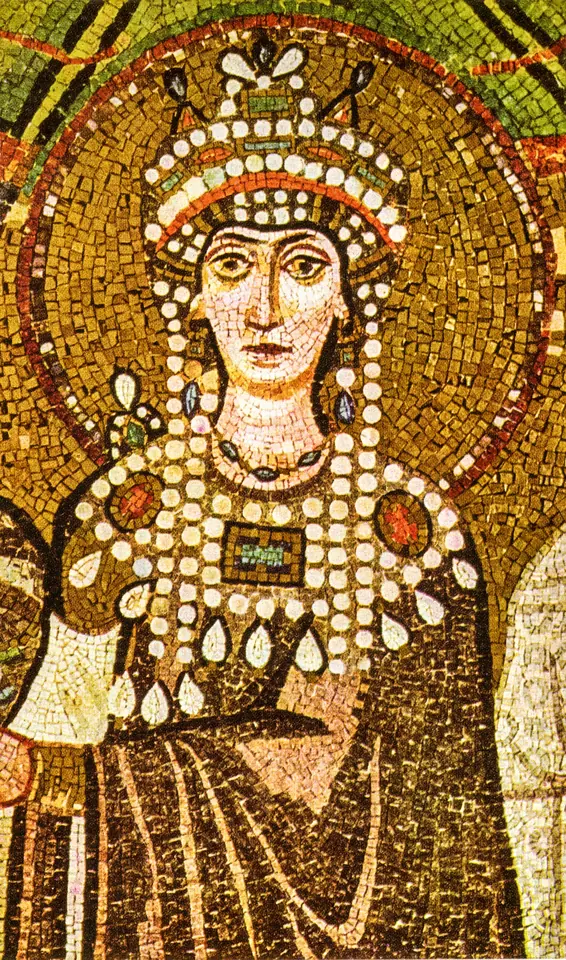
His reputation for holiness reached the empress Theodora, who supported the opponents of Chalcedon. Jacob was persuaded with difficulty to come to Constantinople, where she received him with honor. The court meant nothing to him. He shut himself in a monastery in the city as a recluse, and according to John he stayed about fifteen years.
Consecrated in secret
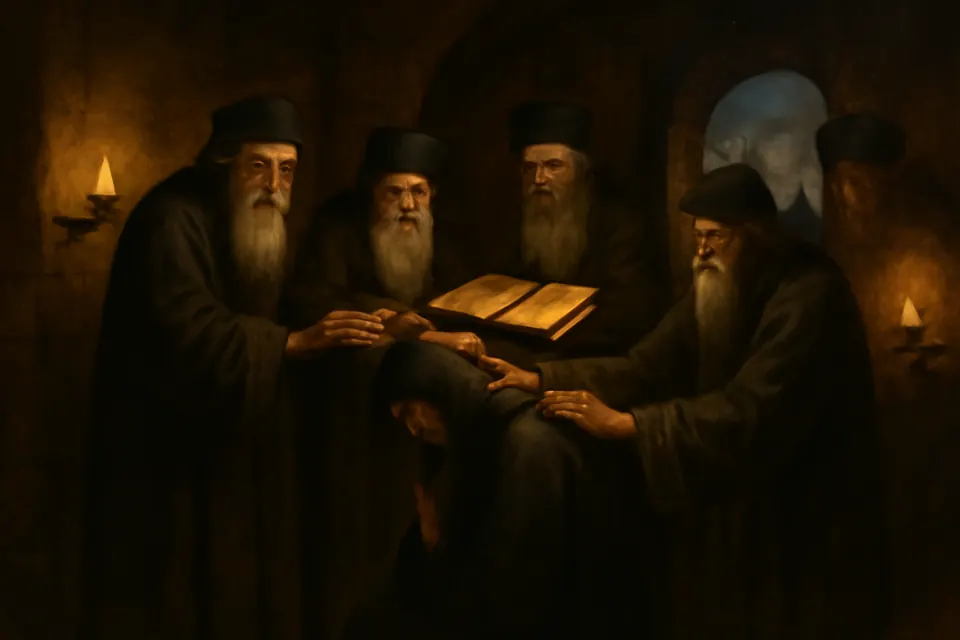
Meanwhile the emperor Justinian was enforcing Chalcedon. Bishops who refused it were imprisoned or exiled, and whole districts of Syria were left without clergy. Around 542 the Ghassanid Arab king al-Harith bar Gabala asked Theodora to have new bishops made. Exiled bishops then held in Constantinople, among them Theodosius, the patriarch of Alexandria, consecrated Jacob, in name bishop of Edessa, in practice a traveling bishop for the whole East. A monk named Theodore was consecrated at the same time for the Arabs.
The man in the horse-cloth
For more than thirty years Jacob crossed Syria, Mesopotamia, Armenia, Cappadocia, Cilicia, Asia Minor and the islands of the Aegean, on foot and on the fast camels of his Arab allies, ordaining clergy as he went. To avoid arrest he dressed as a beggar in a cloak patched from old saddle-cloths. The Syriac word for it gave him his name, Burde'ana, which Greek and Latin writers turned into Baradaeus. The emperor offered rewards for his capture. He was never taken.

John of Ephesus lists twenty-seven bishops and two patriarchs ordained by him and his companions, "besides many clergy." Elsewhere the numbers grow much larger: 100,000 clergy, by one account, and 80,000 by another. We can't check such figures. What they show is how his people remembered him.
Sorrow and death
His last years were troubled. Bitter disputes broke out among the bishops he had ordained, especially over Paul, the patriarch of Antioch, and the old man was pulled from side to side. John of Ephesus, who loved him, admits that his simplicity left him at the mercy of men who used him. In 578 Jacob set out secretly for Alexandria to make peace. At the monastery of Casium, also called Mar Romanus, on the frontier of Egypt, a sickness struck his party. Two bishops died first; Jacob died on July 30, 578.
The miracles of St. Jacob Baradaeus
A longer Syriac life, which goes under John's name but was expanded later, tells several wonders. They are traditional: we have them only from this devotional life. On the way to Mount Sinai in the summer heat, Jacob's young disciple fainted from thirst, and Jacob knelt and prayed beside a dry watercourse until a spring burst out. At Amida he took a paralyzed woman by the hand at the city gate and said, "May our Lord Jesus Christ heal you, my daughter," and she rose and walked into the church. At Edessa he laid his hand on a blind man's eyes in the name of Christ, and the man saw.
The same life tells how, in 622, monks from Tella went to Casium pretending to be envoys to Alexandria, quietly took his body from its tomb, and carried it home. The people of Tella met it with lights, incense and hymns, and laid it in the church he had built at Phesilta.
Symbols of St. Jacob Baradaeus in art
Old images of Jacob are rare. In Syriac Orthodox icons and church art he appears as a bishop-monk. Look for:
- A ragged, patched cloak: the saddle-cloth disguise that gave him his name.
- A black monastic hood (eskimo) embroidered with small crosses: the headdress of Syriac Orthodox monks and bishops.
- A hand cross: the cross a Syriac bishop holds to bless.
- A walking staff: his journeys.
The Rabbula Gospels, a Syriac Gospel book finished in 586 at the monastery of Beth Zagba in northern Syria, only eight years after Jacob's death, show the kind of art his church knew.

Feast day
The Syriac Orthodox Church keeps St. Jacob Baradaeus on July 31, the day after his death. E. W. Brooks, who edited his Syriac lives in 1926, noted that he was also remembered on March 21, probably the day his body was brought home to Phesilta in 622. You can see the saints of nearby days on our feast days page.
Praying with St. Jacob Baradaeus
There is no prayer to St. Jacob Baradaeus in Catholic prayer books. In the Syriac Orthodox liturgy his name is remembered among the fathers of that church. As Catholics, let us pray with him for the unity of all Christians, and for bishops and priests who go wherever their people are, at any cost. In 1984 Pope John Paul II and Patriarch Zakka I pledged to work "to remove the last obstacles still hindering full communion" between their churches. Let us make that hope our prayer.
Frequently asked questions
Is Jacob Baradaeus a saint in the Catholic Church?
No. He is a saint of the Syriac Orthodox Church and the other Oriental Orthodox churches. He rejected the Council of Chalcedon (451), which the Catholic and Eastern Orthodox churches accept. In 1984 Pope John Paul II and the Syriac Orthodox Patriarch Zakka I declared together that the old divisions over the person of Christ 'arose only because of differences in terminology and culture.'
Why is he called Baradaeus?
From the Syriac Burde'ana, 'the man in the horse-cloth.' He traveled disguised in a coarse cloak patched together from old saddle-cloths so that imperial agents would not recognize him. The 1907 Catholic Encyclopedia gives this explanation.
How many clergy did Jacob Baradaeus ordain?
The numbers in the sources vary widely. John of Ephesus, his contemporary, wrote in one place of 100,000 clergy, including 89 bishops and two patriarchs. In his Lives of the Eastern Saints he lists 27 bishops and archbishops besides two patriarchs, 'besides many clergy.' Later writers repeated a figure of 80,000.
When is the feast of St. Jacob Baradaeus?
July 31 in the Syriac Orthodox Church. He died on July 30, 578. Older Syriac calendars also remembered him on March 21, probably the day his body was brought home to Phesilta in 622.
Keep exploring
Sources
- John of Ephesus, Lives of the Eastern Saints, Lives 49–50 (James and Theodore; History of James), ed. and trans. E. W. Brooks, Patrologia Orientalis 19 (1926)
- Catholic Encyclopedia (1913): Jacob Baradæus (R. Butin), Wikisource
- Dictionary of Christian Biography and Literature (1911): Jacobus Baradaeus, bp. of Edessa (E. Venables), Wikisource
- Common Declaration of Pope John Paul II and Patriarch Ignatius Zakka I Iwas (June 23, 1984)