St. Beatrice of Silva
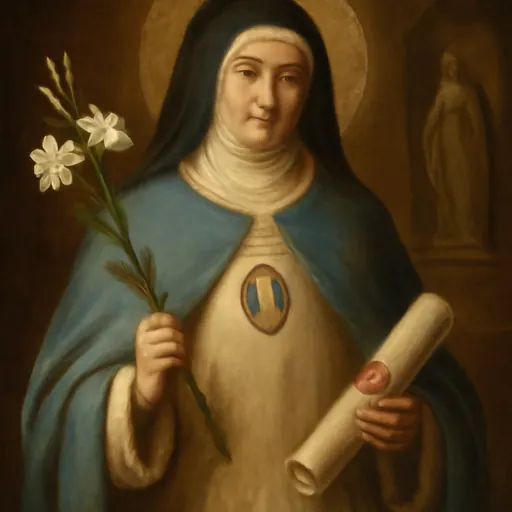
St. Beatrice of Silva (about 1426–1492) was a Portuguese noblewoman who left the royal court of Castile, lived some thirty years in prayer at a Dominican monastery in Toledo, and in 1484 founded the Order of the Immaculate Conception, the Conceptionist nuns. Paul VI canonized her in 1976. Her feast day is August 17.
Who was St. Beatrice of Silva?
St. Beatrice of Silva, in Portuguese Beatriz da Silva, was a noblewoman of Portugal who gave up life at the royal court of Castile and became the foundress of the Order of the Immaculate Conception, the Conceptionist nuns. It was the first religious order founded to honor Mary's Immaculate Conception, nearly four centuries before Blessed Pius IX defined it as a dogma in 1854. She died in Toledo in August 1492, before her nuns had even begun their regular life, and the order she left behind spread across Europe and the Americas.
Pope Paul VI, canonizing her on October 3, 1976, admitted how little we can see of her. No word of hers has reached us in her own syllables, he said, nothing written in her hand, no portrait of her face. Yet he was firm that her life was no legend: the order she founded, still flourishing, leaves no doubt.
The life of St. Beatrice of Silva
A Portuguese noble family
Beatrice was born about 1426, though some biographers say 1424. Her oldest biographer, Sister Juana de San Miguel, one of the first nuns of her order, places her birth at Campo Maior, in Portugal; Paul VI's homily names Ceuta, the Portuguese outpost in North Africa where her father had fought in the conquest of 1415. Her father, Ruy Gomes da Silva, later became governor of Campo Maior. Her mother, Isabel de Meneses, was related to the royal houses of Spain and Portugal. They had eleven children, and one of Beatrice's brothers became Blessed Amadeus of Portugal, a Franciscan reformer in Italy.
At the court of Castile
In 1447 the Portuguese princess Isabel married King John II of Castile, and Beatrice, then about twenty, went with her to Castile as a lady of the court. Every biographer agrees that she was very beautiful, and her beauty brought trouble. Nobles wanted to marry her, and the queen came to see a rival in her.
The story kept by the Conceptionist nuns is that the jealous queen had her shut up in a coffer, a large chest, for three days. There, they say, Beatrice entrusted herself to the Virgin Mary, who appeared to her in a white habit and blue mantle with the Child Jesus in her arms, comforted her, and asked her to found an order in honor of the Immaculate Conception, whose nuns would wear the same white and blue. Beatrice offered her virginity to Mary and came out after three days unharmed.

Thirty years behind a veil
Beatrice left the court and entered the Dominican monastery of Santo Domingo el Real in Toledo, not as a nun but as a lay resident. She lived there about thirty years. Her first biographer writes that, remembering the beauty God had given her, she decided that no man or woman would see her face as long as she lived, and she kept it covered with a white veil.
The foundation, 1484–1489
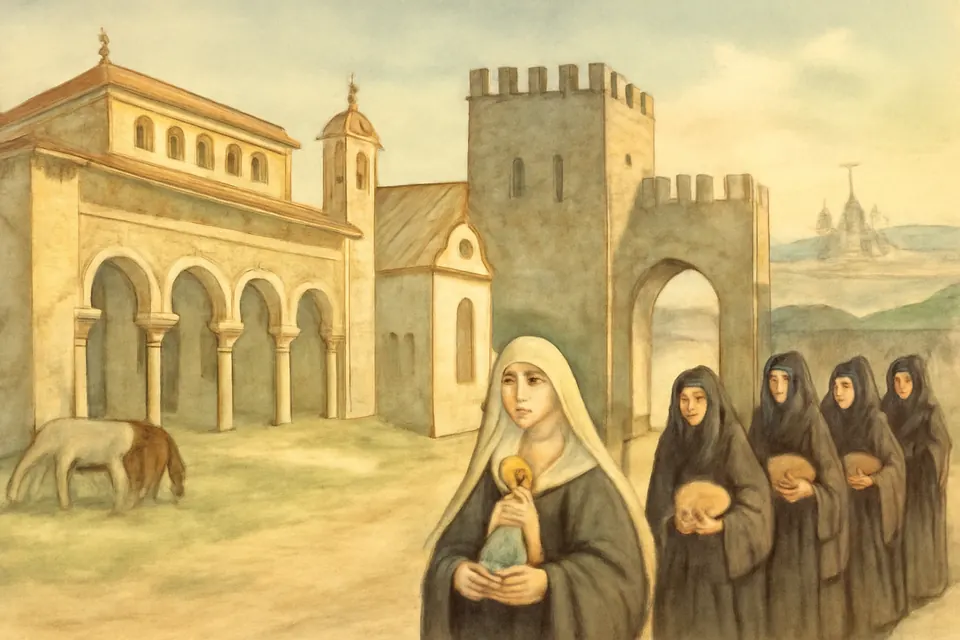
In 1484 Beatrice left Santo Domingo with a few companions for a house near the north wall of Toledo, the Palaces of Galiana, given to her by Queen Isabella the Catholic together with the chapel of Santa Fe beside it. For five years they lived there without vows or an approved rule. On April 30, 1489, at the request of Beatrice and the queen, Pope Innocent VIII approved the new foundation in the bull Inter Universa.
Beatrice died in August 1492, before the community began its regular religious life under the papal permission. The work went on. Her companions persevered, with the support of the Franciscans, the spiritual family of St. Francis and St. Clare, and on September 15, 1511, the order received its own Rule. Its first foundation in Mexico dates to 1540, and in 1976 Paul VI counted about 3,000 Conceptionist nuns in some 150 monasteries.
Miracles of St. Beatrice of Silva
- The vision in the chest: traditional. The account of the Virgin appearing to Beatrice during her three days of imprisonment comes from the order's own tradition and early biographies, and it explains the white and blue habit the nuns still wear.
- Her canonization in 1976 followed the confirmation of her ancient cult by Pius XI on July 28, 1926, and the reopening of her cause in 1950. The sources we consulted do not describe the miracle examined for her canonization, so we leave it out rather than guess.
Symbols of St. Beatrice of Silva in art
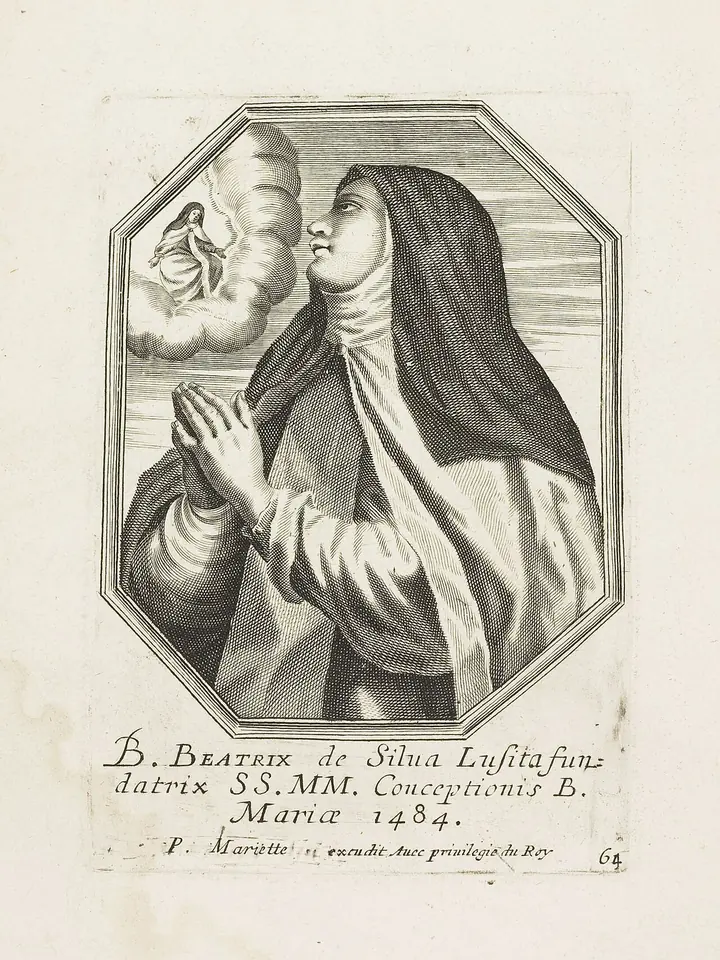
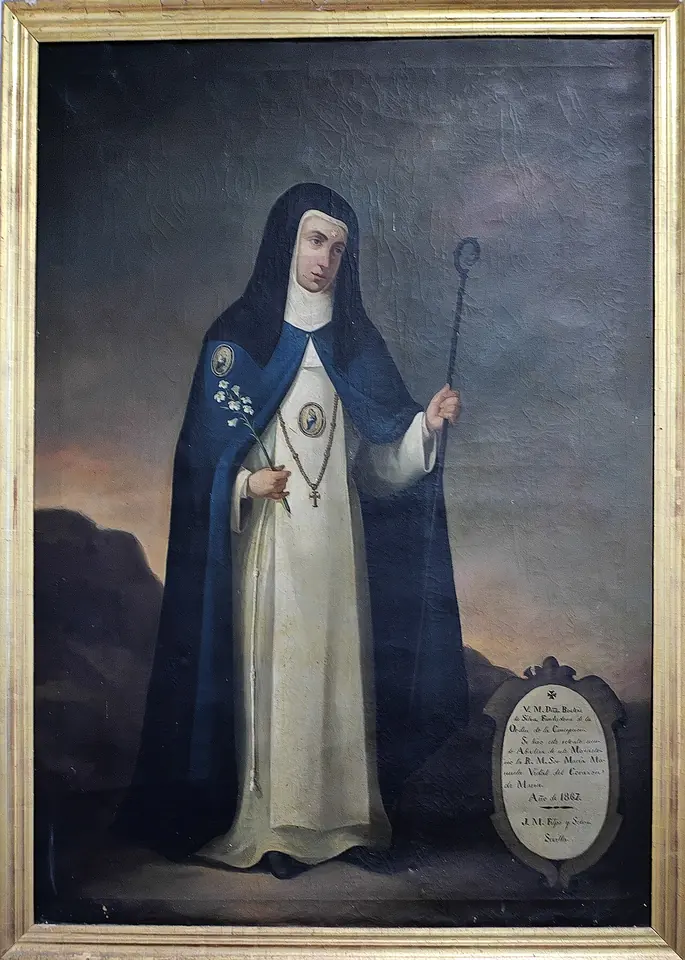
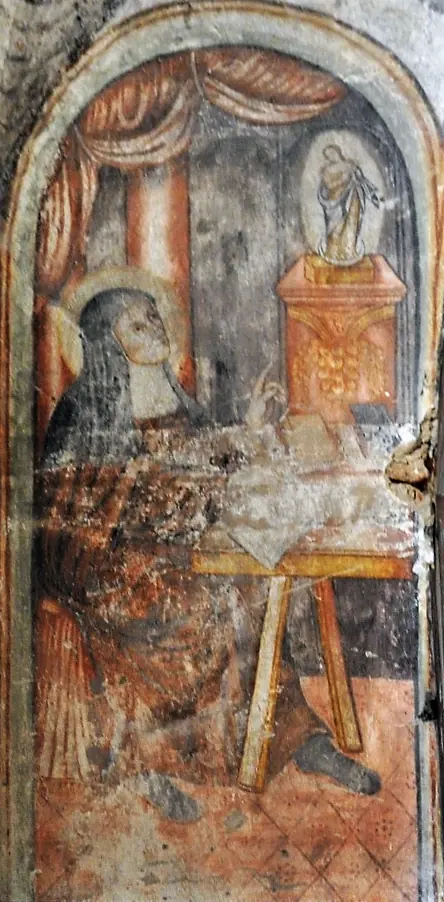
Beatrice wears the habit Mary showed her: a white habit and scapular with a blue mantle, and on the scapular an oval medallion of the Immaculate Conception. She often holds lilies, for purity, and sometimes a scroll for the papal bull of 1489. As an abbess she may carry a crozier. Older images may show her veiled or gazing up at a vision of the Virgin, as in the engraving above and the old mural at Fonni in Sardinia.
Feast day and where she is honored
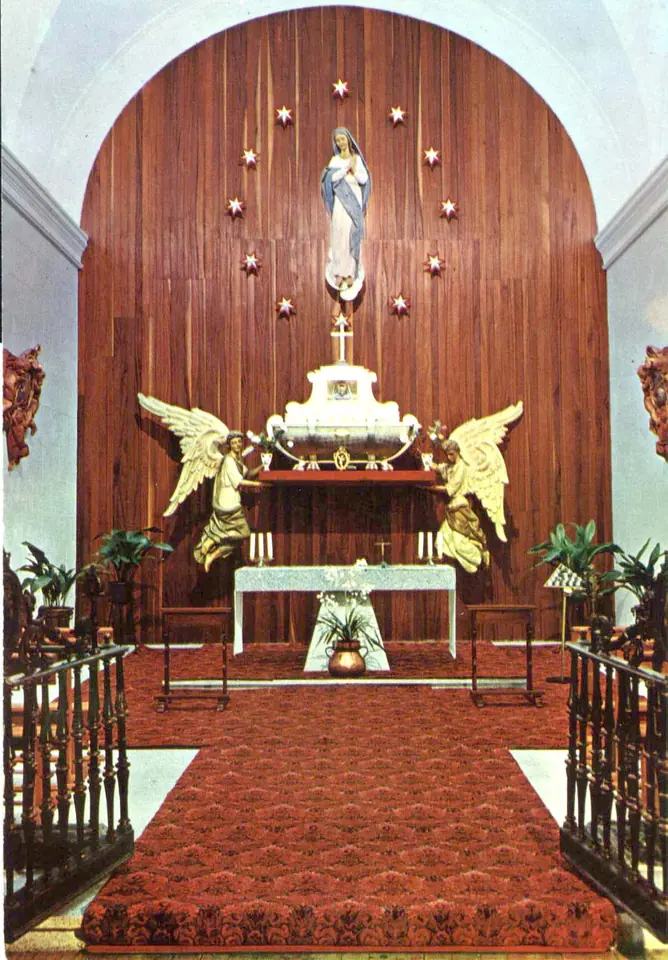
We keep her feast on August 17. Her remains rest in the mother house of her order in Toledo, where the Archdiocese of Toledo says the nuns guard them "como preciadísima reliquia," as a most precious relic. Campo Maior honors her with a bronze monument. See more saints of mid-August on our feast days page, and read about the Immaculate Conception, the mystery she gave her life to honor.
Prayer to St. Beatrice of Silva
No traditional English prayer to St. Beatrice is found in the standard prayer books. Paul VI summed up her message in one invitation: to look to Mary Immaculate, follow her example and call on her protection. We can do exactly that in her company, asking Mary Immaculate and St. Beatrice together to pray for us.
Let us ask St. Beatrice of Silva to pray for cloistered nuns, for young women facing jealousy or unwanted attention, and for all who are waiting patiently for God to keep a promise.
Frequently asked questions
When is the feast day of St. Beatrice of Silva?
August 17, the date her own order, the Conceptionist Franciscan nuns, keeps her feast. She died in August 1492.
What order did St. Beatrice of Silva found?
The Order of the Immaculate Conception, today called the Conceptionist Franciscans. Pope Innocent VIII approved the foundation on April 30, 1489, and the order received its own Rule on September 15, 1511. By her canonization in 1976 it had about 3,000 nuns in some 150 monasteries.
Why did St. Beatrice of Silva cover her face?
Her beauty had caused jealousy and unwanted attention at court. Her first biographer says she resolved that no man or woman would see her face as long as she lived, and she wore a white veil over it for the rest of her life, as penance and as a sign of her consecration to God.
Was St. Beatrice related to Blessed Amadeus of Portugal?
Yes. He was her brother. Their parents had eleven children, and Amadeus became a Franciscan in Italy and began a reformed branch of the friars, known as the Amadeites.
Keep exploring
Sources
- Paul VI, Homily for the canonization of Beatrice da Silva Meneses, October 3, 1976 (Italian, Portuguese and Spanish). Her family, the court of Castile, Santo Domingo, the 1489 approval, the veil, and the size of the order in 1976
- Monastery of Ágreda (Franciscan Conceptionists): Saint Beatriz de Silva. The story of the coffer and the apparition, the Rule of 1511, the 1926 confirmation of cult and the August 17 feast
- Archdiocese of Toledo: Carta pastoral to the Conceptionist nuns of La Puebla de Montalbán (December 2021). Her remains kept in the mother house in Toledo; the bull Inter Universa