Blessed Christopher Robinson, Priest and Martyr of Carlisle

Blessed Christopher Robinson (died 1598) was a Catholic priest from Cumberland, trained at Reims. In 1594 he watched the trial and execution of St. John Boste at Durham and wrote an eyewitness account. Four years later he was hanged, drawn and quartered at Carlisle for being a priest. He was beatified in 1987. His feast is August 19.
Who was Blessed Christopher Robinson?
Blessed Christopher Robinson was a Catholic priest from Cumberland in the far north of England who served his own people in secret during the reign of Elizabeth I. In 1594 he stood in the crowd at Durham and watched St. John Boste die, and he wrote down what he saw. In 1598 he gave his own life the same way at Carlisle. Pope John Paul II beatified him in 1987 among the 85 Martyrs of England and Wales.
The life of Blessed Christopher Robinson
A Cumberland boy at Reims
Christopher Robinson was born at Woodside, near Westward in Cumberland; the year is not known. Catholic priests could no longer be trained in England, so in 1589 he crossed to the English College, which was then at Reims in France. There young Englishmen prepared for a mission that the law at home treated as treason: after 1585 any English priest ordained abroad who set foot in the realm could be put to death. He was ordained and sent back to England in 1592.
He worked mainly in his own country, Cumberland and Westmorland. The Catholic Encyclopedia says plainly that nothing is known of the details; a priest who left records would have left evidence for the hangman.
Eyewitness at Durham, 1594

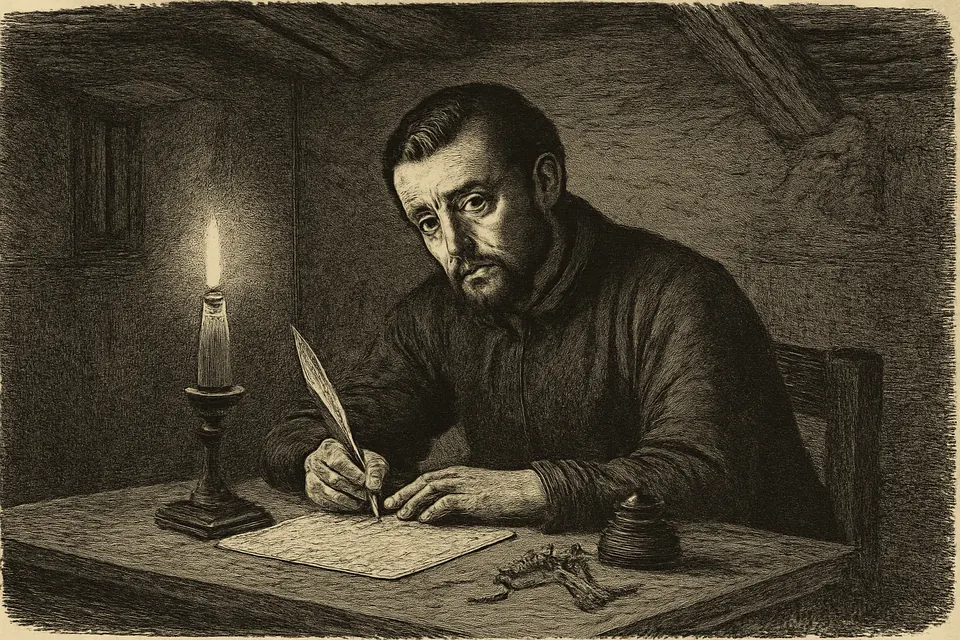
In July 1594 John Boste, a priest who had worked across the north for a decade, was tried at Durham. Robinson was there. He arrived as the jury gave its verdict and later watched the execution at the gallows outside the city on July 24. Then he wrote it all down: Boste singing the Te Deum after the sentence, saying the Angelus on the steps of the ladder, praying the psalm Return, O my soul, into thy rest, and the cruelty that followed.
He also recorded a moment in the courtroom that shows what the martyrs' courage did to others. A layman condemned with Boste, George Swallowell, had once been a Protestant minister and was wavering. After Boste and the priest John Ingram spoke to him, he cried out before the judges, "I am resolved, I am resolved," and when asked by whom, he pointed to the two priests: "martyrs before God." Near the end of his account Robinson broke off:
To be short (for I see that I blot the paper with tears) they cut off his members, and hurled them into the fire, even in his own sight, as judgment was given. … This is that cruel tragedy which I both heard and saw.
A 17th-century copy of his account survives, and the Catholic Record Society printed it in 1905. Most of what we know about St. John Boste's last day comes from it.
Arrest and martyrdom at Carlisle
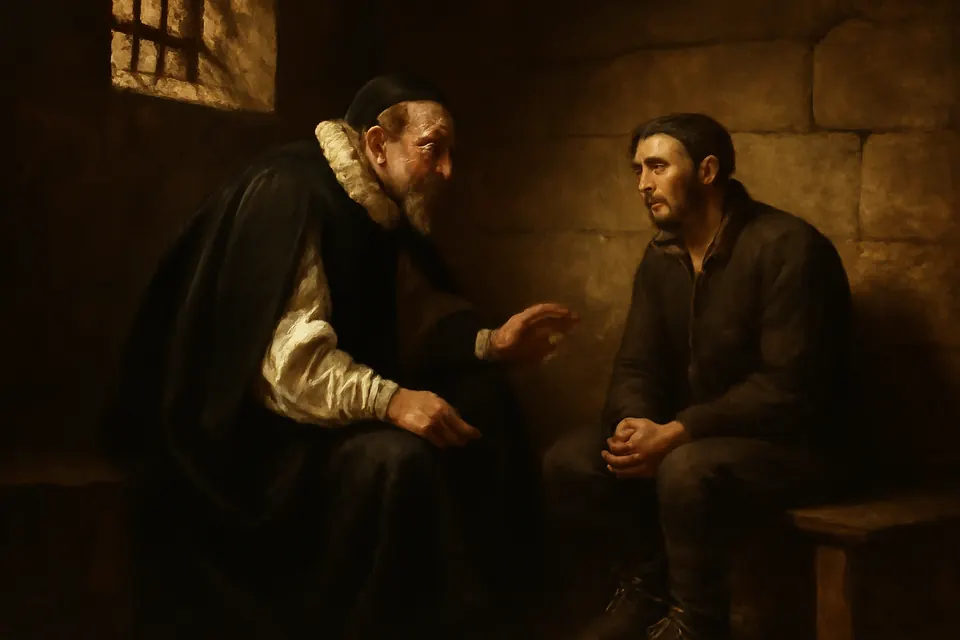
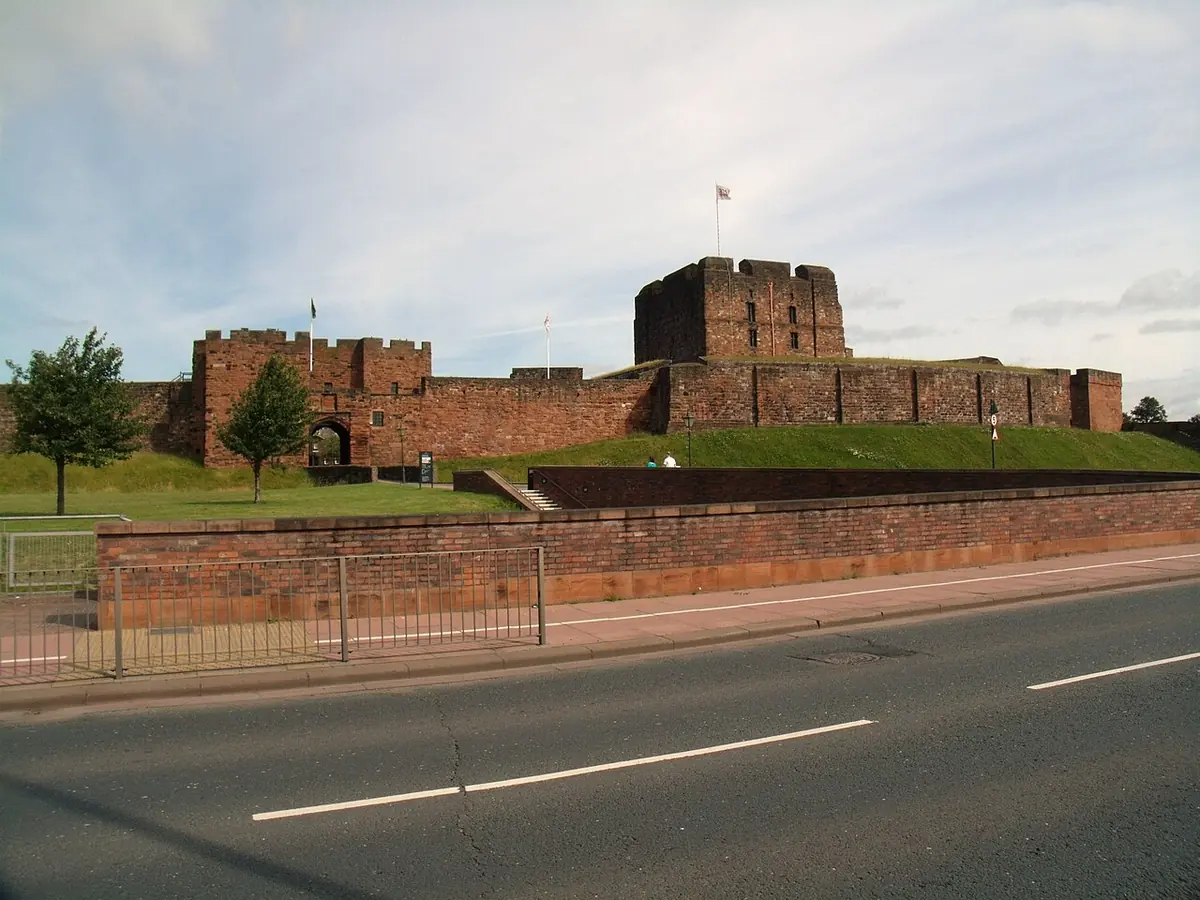
Robinson was eventually arrested and imprisoned at Carlisle. The Protestant bishop of Carlisle was also named Robinson, and the Catholic Encyclopedia suggests they may have been related. Bishop Challoner, writing in the 1740s from older manuscripts, says the bishop "spared no pains to bring him over to the new religion by persuasions and promises," and that the prisoner stayed constant.
He was condemned under the 1585 statute for being a priest who had come into the realm. Nothing else was charged against him. On August 19, 1598, he was hanged, drawn and quartered at Carlisle. Challoner records that "his meek behaviour at the place of execution, the sweetness of his words and of his countenance, and the constancy and cheerfulness with which he died, touched the hearts of many of the spectators, and was the occasion of many conversions."
Beatification
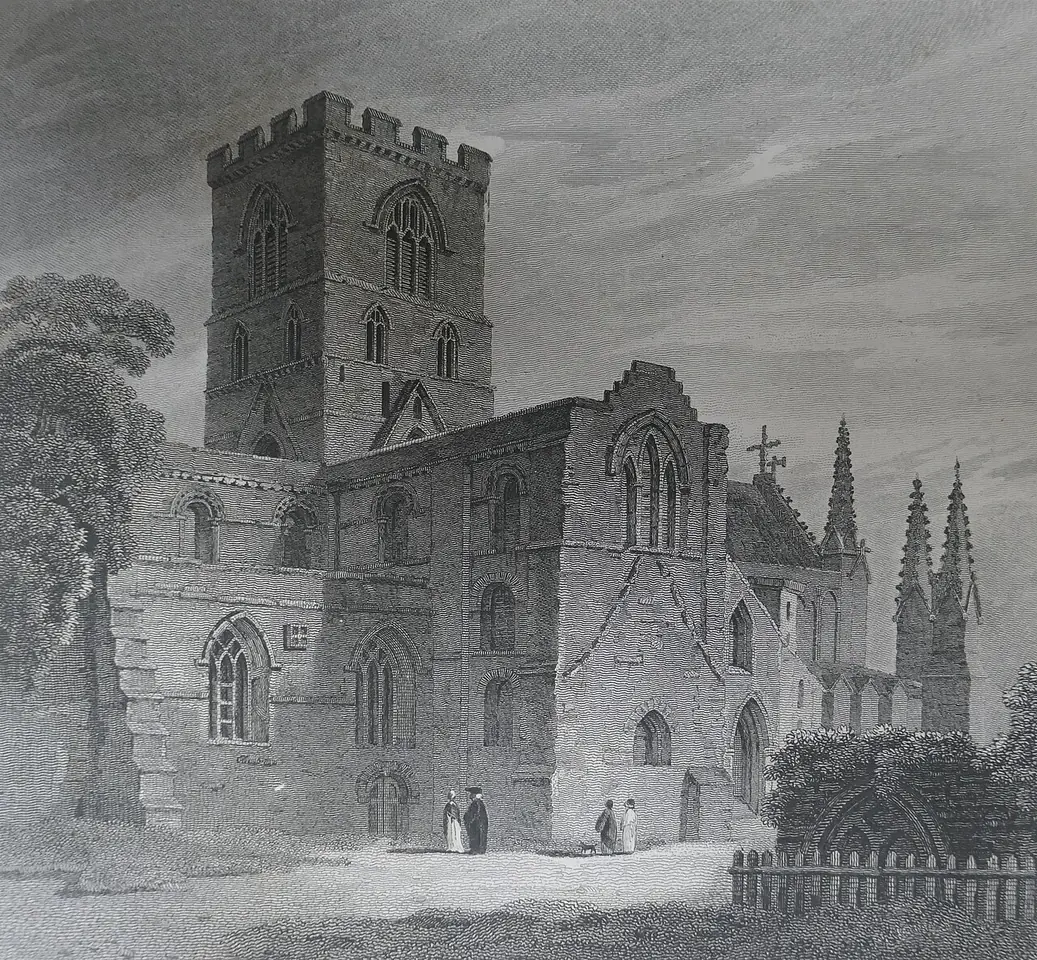
For three centuries English Catholics honored him among their martyrs, and by 1912 he held the title of Venerable. Pope John Paul II beatified him on November 22, 1987, the feast of Christ the King, with Blessed George Haydock and 83 other martyrs of England and Wales. As a martyr he needed no approved miracle. No miracles are recorded of him; his witness is his death.
Symbols of Blessed Christopher Robinson in art
No portrait of him from his own time survives. Modern images of the English martyrs give him the signs common to the group:
- Priest's cassock or the plain dress of a hunted priest: his priesthood, which was his only crime.
- Rope or noose: the manner of his death.
- Martyr's palm: the victory of the martyr.
- A pen or a written page: his eyewitness account of John Boste, which is his particular legacy.
Feast day and prayer
We keep his feast on August 19, and he is remembered with the 85 Martyrs of England and Wales on November 22. See more saints of August on our feast days page.
We have not found a traditional prayer to Blessed Christopher Robinson to reprint. Let us pray the psalm John Boste prayed on the ladder, which Robinson heard and wrote down, "Return, O my soul, into thy rest," and ask Blessed Christopher to pray for priests in Cumbria and the north of England, for all who keep the memory of the martyrs, and for persecuted Christians today.
Frequently asked questions
Who was Blessed Christopher Robinson?
A priest born at Woodside, near Westward in Cumberland, who studied at the English College at Reims from 1589, was ordained and sent to England in 1592, and worked in Cumberland and Westmorland. He was executed at Carlisle on August 19, 1598.
Why is Christopher Robinson remembered for St. John Boste?
He stood in the crowd at Durham in July 1594, heard the sentence on John Boste and watched his execution, and wrote a detailed account of it. That account, preserved in a 17th-century copy, is one of the main sources for Boste's death.
Why was Christopher Robinson executed?
Under a 1585 statute of Elizabeth I it was high treason for an English priest ordained abroad to enter the realm. He was condemned simply for being a Catholic priest and exercising his ministry.
When was Christopher Robinson beatified?
On November 22, 1987, by Pope John Paul II, as one of the 85 Martyrs of England and Wales.
Keep exploring
Sources
- John Wainewright, Ven. Christopher Robinson, Catholic Encyclopedia (1912). Woodside near Westward, Reims 1589, the mission of 1592, the Boste account printed in Catholic Record Society vol. 1, and the bishop who may have been a relative
- Richard Challoner, Memoirs of Missionary Priests, ed. J. H. Pollen (London, 1924). His life and death at Carlisle on August 19, 1598, and Appendix III, the extract of his account of John Boste's trial and death
- Pope John Paul II, Homily for the Beatification of 85 English Martyrs, November 22, 1987. The beatification of George Haydock and 84 companions