Blessed Joan of Aza, Mother of St. Dominic
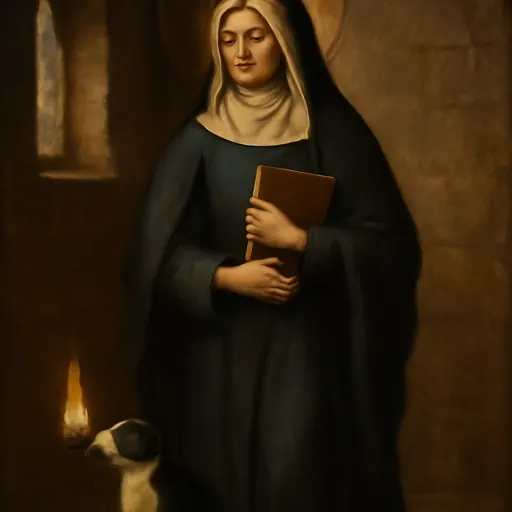
Blessed Joan of Aza (Juana de Aza) was a twelfth-century Castilian noblewoman and the mother of St. Dominic, founder of the Dominicans. Tradition remembers her dream of a dog carrying a torch that set the world alight, and her charity to the poor. Leo XII confirmed her cult in 1828, and we keep her feast on August 2.
Who was Blessed Joan of Aza?
Blessed Joan of Aza is the mother of St. Dominic, the founder of the Order of Preachers. She lived in Castile in the twelfth century, married a knight of Caleruega named Félix de Guzmán, and raised three sons who all gave their lives to God. The Dominican family has always honored her as the first to pray their founder into being. In 1828 Pope Leo XII confirmed the honor long paid to her, so she is a Blessed, not a canonized saint.
We should be honest about how much we know. The earliest life of St. Dominic, by Blessed Jordan of Saxony, tells of his mother's famous dream. Her name, her family and most of the stories about her come from Dominican tradition written down later, much of it after her son's death in 1221. A Life of St. Dominic written in 1272, as the Spanish Dominicans quote it, already describes her as "honesta, casta, intachable, prudente y muy compasiva con los pobres y afligidos": honest, chaste, blameless, prudent and full of compassion for the poor and afflicted.
The life of Joan of Aza
A noble household
Tradition says she was born in the first half of the twelfth century in the castle of Aza, near Aranda on the Douro, of the noble Garcés family. She married Don Félix de Guzmán, lord of Caleruega in Old Castile. Their home, the Short Lives of the Dominican Saints (1901) says, was so devout and orderly that people said it was more like a monastery than a knight's castle. The Spanish Dominicans recall that the family opened the gates of their tower every day to the poor, travelers and pilgrims.
Joan spent whole nights in prayer, went on pilgrimage to nearby shrines and visited the sick in their homes. Her two older sons both became priests. Antonio gave his inheritance to the poor and served the sick in a hospital. Manés became one of the first Dominican friars and has also been declared Blessed.
A son from Silos
With both older sons given to the Church, Joan longed for another son. She went to the abbey of Silos, not far from Caleruega, to pray at the tomb of St. Dominic of Silos, and made a novena there, spending even the nights on the stone floor of the church. Tradition says that on the seventh day the abbot-saint appeared to her and promised a son who would be a light to the Church. She promised in turn to name the child Dominic. This vision is traditional, handed down in the Order.

The dog with the torch
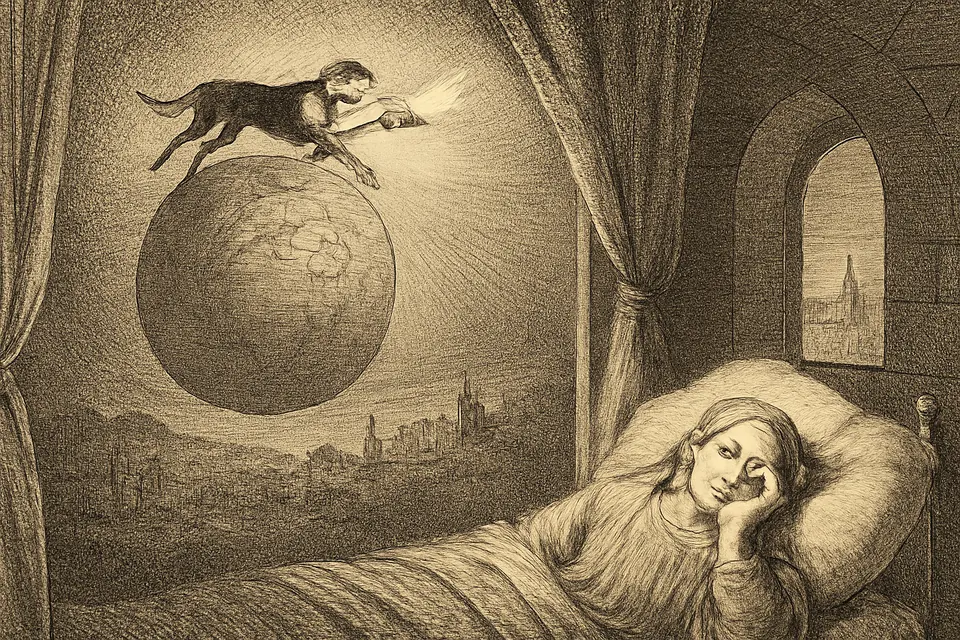
Before the child was born, she dreamed that she carried in her womb a black and white dog holding a burning torch in its mouth, and that it ran out and set the whole world on fire. Blessed Jordan of Saxony tells this dream in his life of Dominic, written within a generation of the saint's death. The Church came to read it as a picture of Dominic's preaching. The dog and torch became the badge of the Order, helped along by a Latin pun: Domini canes, the hounds of the Lord.
Dominic was born at Caleruega around 1170. When he was seven, she sent him to be taught by her brother, the archpriest of Gumiel de Izán.
The miracle of the wine cask
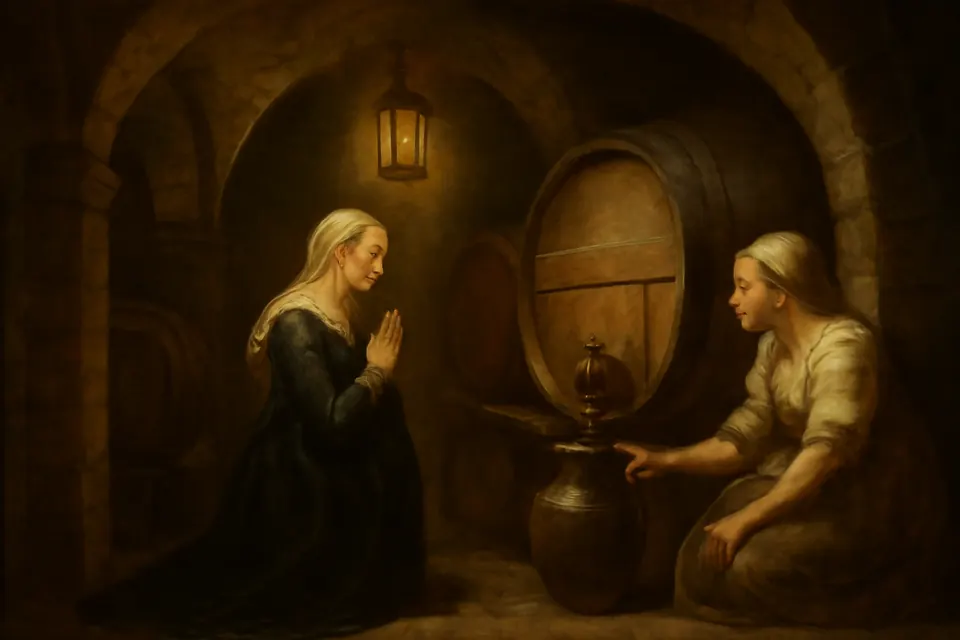
A traditional story from the same years tells that Joan gave away to the poor the whole contents of a cask of fine wine. Afraid her husband would be upset, she knelt in the cellar and prayed: "O Lord Jesus, though I do not deserve to be heard, I beseech Thee, nevertheless, to take pity upon me in the name of Thy servant, the dear little child whom I bear in my womb and whom I have consecrated to Thee." When she finished, the cask was full again.
Death and burial
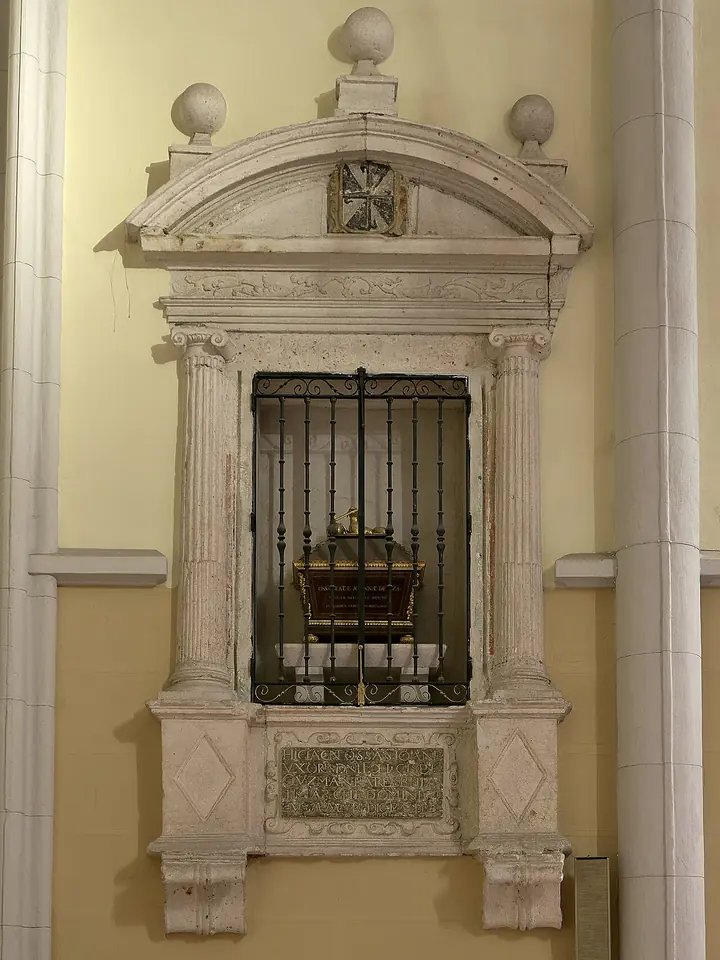
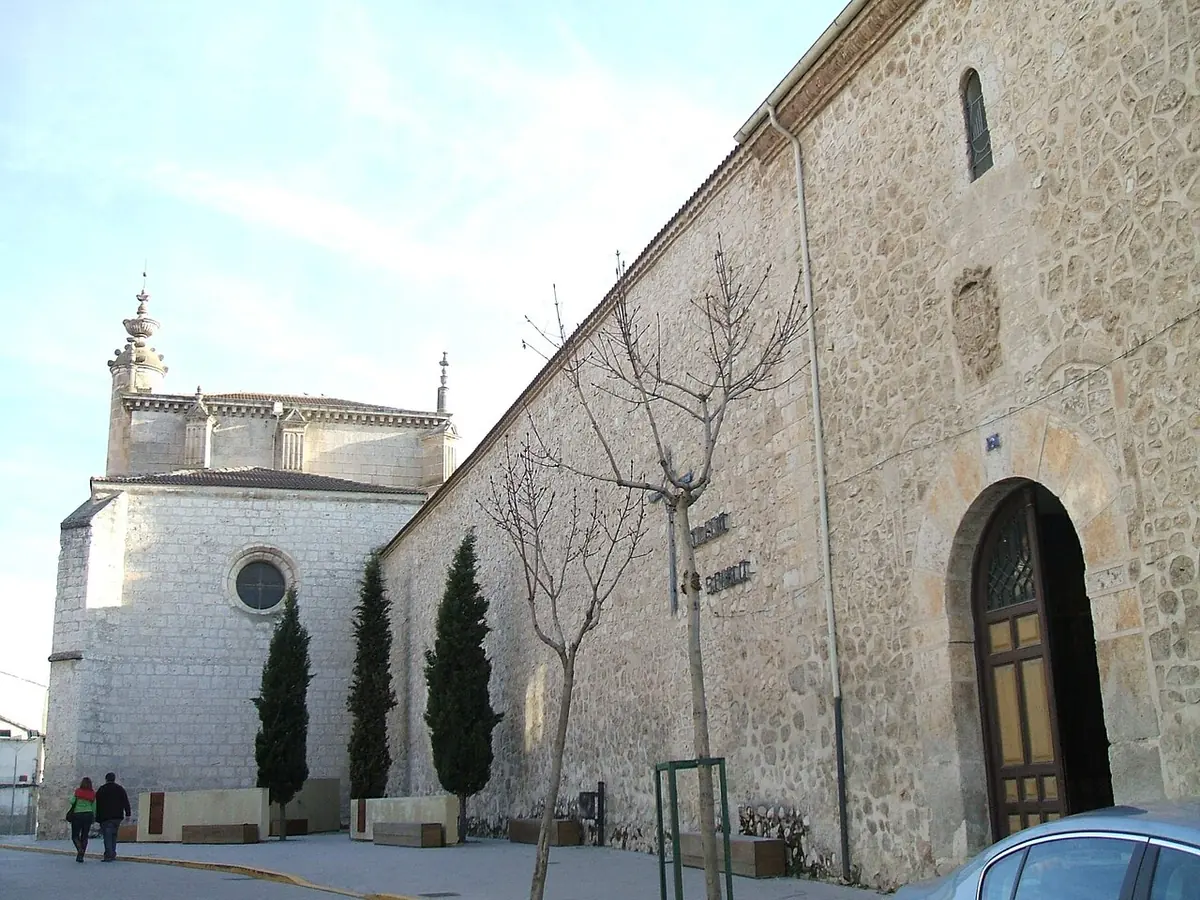
The date of her death is uncertain. The 1901 Short Lives places it between 1185 and 1194, while Dominic was studying at Palencia. Spanish Dominican sources today give dates between 1202 and 1205. She was buried at Caleruega, and her remains were later moved to the Guzmán family burial place at Gumiel de Izán and then to the Dominican convent of San Pablo at Peñafiel, where they rest in an urn today.
Leo XII beatified her in 1828, confirming a devotion that had lasted since the Middle Ages.
Symbols of Blessed Joan of Aza in art
Spanish artists show her as a noblewoman in a gown and veil, often with these signs:
- A dog with a lighted torch, from her dream before Dominic's birth.
- The child Dominic, the son she prayed for.
- A book, for her life of prayer.
- A wine cask, now and then, for the cellar miracle.

The statue in Valladolid's Dominican church of San Pablo dates from about 1730 and shows her holding her book and looking up to heaven.
Feast day and prayer
We keep the feast of Blessed Joan of Aza on August 2, just before her son's feast. See other feasts of early August on our feast days page.
The Short Lives of the Dominican Saints gives this prayer, the collect of her feast in the Dominican rite:
O God, who didst wonderfully make known to Thy handmaid, Blessed Jane, the grace of the heavenly calling of her son, Dominic, we beseech Thee that, imitating her and her son thus foreshown to her, we may, by the loving intercession of them both, receive everlasting rewards. Through Christ our Lord. Amen.
Let us ask Blessed Joan of Aza to pray for mothers who are expecting a child, and for all parents who long to see their children serve God.
Frequently asked questions
Who was Joan of Aza?
A Castilian noblewoman of the twelfth century, born at Aza near Aranda de Duero, who married Félix de Guzmán of Caleruega and was the mother of Antonio, Blessed Manés and St. Dominic, the founder of the Order of Preachers.
What was Joan of Aza's dream?
Before St. Dominic was born, she dreamed that she would give birth to a dog carrying a burning torch in its mouth that set the whole world on fire. The story was read as a sign of the preaching her son would carry through the world, and the dog with a torch became a symbol of St. Dominic and the Dominicans.
When is the feast of Blessed Joan of Aza?
August 2, in the Dominican calendar, a few days before the feast of her son St. Dominic on August 8.
Where is Joan of Aza buried?
Her remains rest in an urn in the Dominican convent church of San Pablo at Peñafiel, in the province of Valladolid. She was first buried at Caleruega and later moved to the Guzmán family burial place at Gumiel de Izán before coming to Peñafiel.
Keep exploring
Sources
- Short Lives of the Dominican Saints, ed. John Procter, O.P. (London: Kegan Paul, 1901), August 2: Blessed Jane of Aza, Internet Archive. Her family, the Silos novena, the dream, the wine cask and her prayer, the date of her death, the translations of her body, her beatification and the collect quoted on this page
- St. Dominic, Catholic Encyclopedia (1909). Her solemn beatification by Leo XII in 1828
- Beata Juana y Familia, Dominicos (Orden de Predicadores, Spain). The description of her in the Life of St. Dominic of 1272, the family's hospitality at Caleruega and the later dates given for her death