St. Albert Chmielowski

St. Albert Chmielowski (1845–1916), known in Poland as Brother Albert, lost a leg fighting in the January Uprising of 1863, became a gifted painter, and then gave up art to live among the homeless of Kraków. He founded the Albertine Brothers and Sisters to serve the poorest of the poor. His feast is June 17.
Who was St. Albert Chmielowski?
St. Albert Chmielowski, whom Poles simply call Brother Albert, was a soldier, a painter and finally a beggar for Christ's sake. He gave his leg for his country at seventeen, gave up a promising career in art in his forties, and gave the rest of his life to the homeless of Kraków, sleeping where they slept and eating what they ate. Pope John Paul II, who canonized him, called him the "gray brother" of the poor, "not only one who does charity," but their brother.
He was born Adam Hilary Bernard Chmielowski on August 20, 1845, at Igołomia near Kraków, the eldest of four children in a gentry family that had fallen on hard times. By fourteen he had lost both his parents.
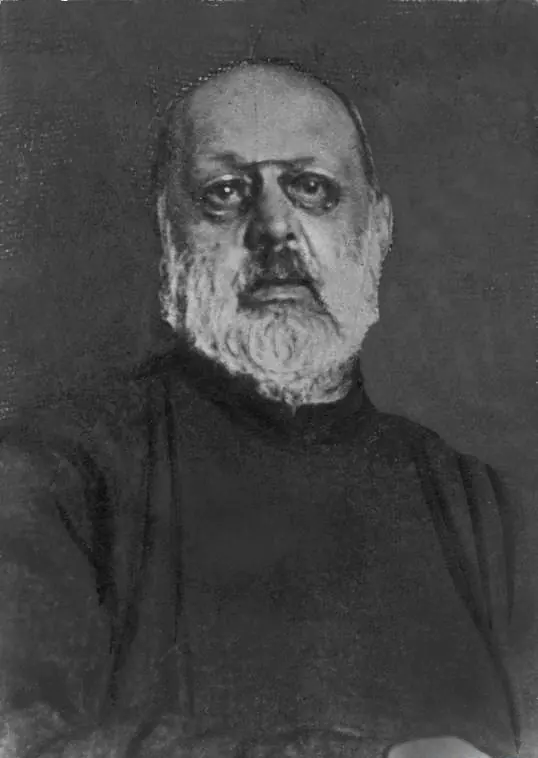
The life of St. Albert Chmielowski
Insurgent and painter
As a seventeen-year-old student of agriculture, Adam joined the January Uprising of 1863 against Russian rule. In the fighting that autumn he was badly wounded, and his leg had to be amputated. He walked on an artificial leg for the rest of his life. After the uprising was crushed he left Poland to escape reprisals and, after other studies abroad, enrolled at the Academy of Fine Arts in Munich. There he became friends with some of the best Polish painters of the age, among them Aleksander Gierymski, Józef Chełmoński and Stanisław Witkiewicz. He was counted among the most gifted of them.

The struggle for his vocation
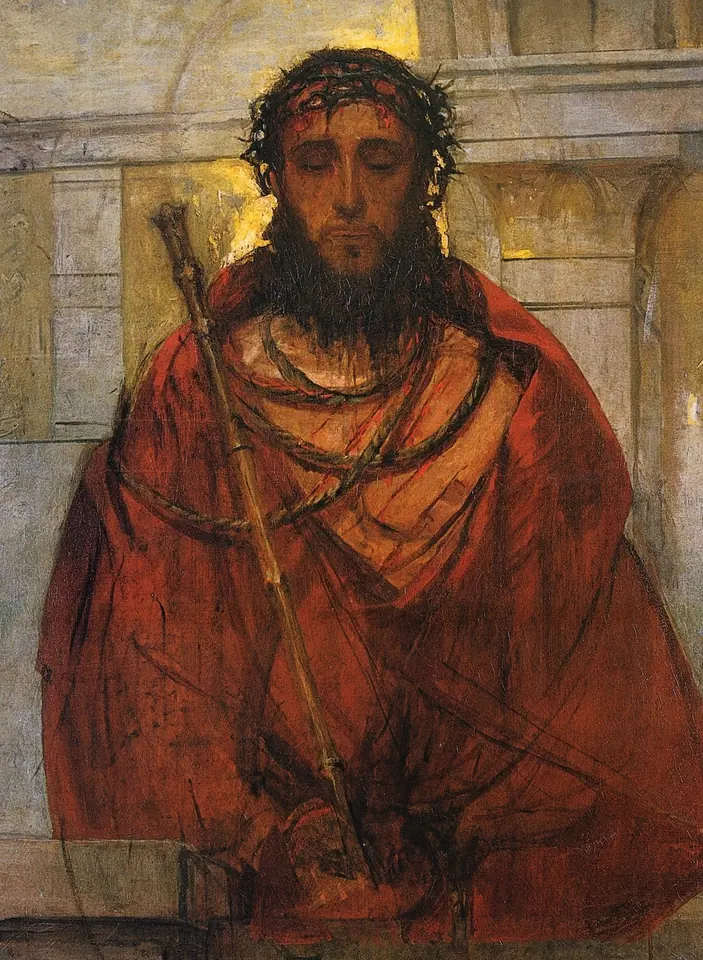
Religious subjects slowly took over his painting. In 1879, in Lviv, he began his best-known work, Ecce Homo, Christ crowned with thorns and mocked. On September 24, 1880, he entered the Jesuit novitiate, but it was not his path. He suffered a severe breakdown and left. He found peace again, Vatican News notes, through an experience of God's mercy, and discovered the Third Order of St. Francis.
In Kraków he began to visit the city's warming houses, the bare municipal shelters where the homeless spent the night. Then he moved in. On August 25, 1887, he put on a rough gray habit as a Franciscan tertiary and took the name Albert. That day he wrote, "Adam has died; Brother Albert is born."
Brother of the poor
He did not preach at the poor from a full stomach. He explained:
To prop up a lame table, you cannot press on it from above. You have to bend down and support it from below. It is the same with human misery. If you want to save the destitute, do not burden them with reproaches or lecture them about morals while you are well fed and well dressed. You have to become poorer than the poorest in order to lift him up.
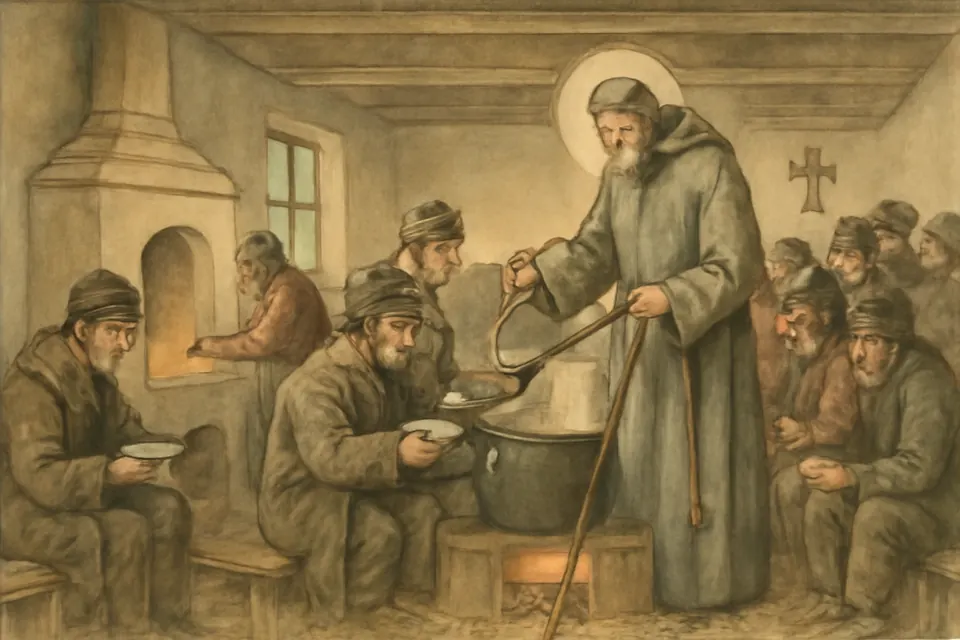
The first brothers joined him in 1888, the beginning of the Albertine Brothers, and on January 15, 1891, the first seven sisters received the habit, the beginning of the Albertine Sisters. Together they ran shelters for the homeless, homes for orphans, the disabled, the elderly and the incurably sick, and soup kitchens across Poland. Brother Albert served them for nearly thirty years.
His death
In his last illness, a stomach cancer, he could take no food. The man who had fed thousands died hungry. He kept saying, "Why weep? We must accept God's will and thank God for everything, for illness and for the death He sends; we must say the Magnificat." He died in his shelter in Kraków at noon on Christmas Day, 1916, as the church bells were ringing the Angelus.
Beatification and canonization
Karol Wojtyła wrote a play about him, Our God's Brother, while still a seminarian, and later said, "He was an outstanding figure for me, and I was spiritually very close to him." As Pope John Paul II, he beatified Brother Albert in Kraków on June 22, 1983, and canonized him in St. Peter's Basilica on November 12, 1989, together with St. Agnes of Bohemia. As for every saint who was not a martyr, the Church approved a miracle through his intercession before each step.
Why St. Albert Chmielowski is the patron of the homeless
He is the patron of the two congregations he founded, the Brothers and the Sisters Serving the Poor, and Poland turns to him for the homeless because he became one of them. His words on bread are still read in his shelters:
One ought to be good as bread. One ought to be like bread that lies on the table for everyone, from which anyone can cut a piece and feed himself if he is hungry.
Symbols of St. Albert Chmielowski in art
- The gray habit and rope belt: the coarse habit of his brothers, a sign of Franciscan poverty.
- The wooden leg and stick: the wound of 1863, shown in many statues.
- Bread: his saying "be good as bread" and the soup kitchens he founded.
- A homeless child in his arms: as in Leon Wyczółkowski's portrait of his old friend.
- The Ecce Homo: the painting through which, in his own life, Christ called him.
Feast day, shrine and prayer
We keep the memorial of St. Albert on June 17. His relics lie under the main altar of the Ecce Homo sanctuary of the Albertine Sisters in Kraków, beneath the painting he left unfinished in his own eyes. The painting was lost from view in Lviv after World War II and came home to Kraków on July 21, 1978.

There is no single traditional prayer to him in English. We ask his intercession in our own words, and we honor him best by feeding someone who is hungry. Let us ask St. Albert to pray for all who sleep outside tonight, and to teach us to be good as bread.
Frequently asked questions
Who was St. Albert Chmielowski?
Born Adam Chmielowski near Kraków in 1845, he fought as a teenager in the Polish uprising of 1863 and lost a leg. He studied painting in Munich and became a respected artist, but after a long spiritual struggle he took the gray habit of a Franciscan tertiary in 1887, as Brother Albert, and spent the rest of his life serving the homeless. He died on Christmas Day, 1916.
When is the feast day of St. Albert Chmielowski?
June 17. He died on December 25, so his memorial is kept in June rather than on Christmas Day.
What is the Ecce Homo painting of Brother Albert?
His painting of Christ crowned with thorns and mocked, begun in 1879. It stayed in Lviv for decades, was lost from view after World War II, and was brought back to Kraków by the Albertine Sisters on July 21, 1978. It now hangs above the main altar of the Ecce Homo sanctuary in Kraków, over his relics.
What was the connection between Brother Albert and Pope John Paul II?
As a young man, Karol Wojtyła wrote a play about him, Our God's Brother, and said that Brother Albert's example helped him leave the theater for the seminary. As Pope, he beatified Brother Albert in Kraków in 1983 and canonized him in Rome in 1989.
Keep exploring
Sources
- Pope John Paul II, Homily for the canonization of Agnes of Bohemia and Albert Adam Chmielowski, November 12, 1989 (Italian)
- Albertine Sisters: St. Brother Albert. Dates of birth, the founding of the Brothers (1888) and Sisters (January 15, 1891), beatification and canonization; location of the relics
- Albertine Sisters: Ecce Homo, History. The painting's history and its return to Kraków on July 21, 1978
- Vatican News (Polish): Patron dnia, Święty Brat Albert Chmielowski, ojciec ubogich. Source of the quotations from Brother Albert on this page (our translation from the Polish)
- JP2 Documentation Center: The embodiment of the Church of the poor. John Paul II's words about Brother Albert in Rise, Let Us Be on Our Way