St. Pedro Poveda Castroverde

St. Pedro Poveda Castroverde (1874–1936) was a Spanish priest who opened schools for the cave families of Guadix and founded the Teresian Association, a movement of Catholic lay educators. He was shot at the start of the Spanish Civil War on July 28, 1936. Pope John Paul II canonized him in 2003, and we keep his feast on July 28.
Who was St. Pedro Poveda Castroverde?
St. Pedro Poveda Castroverde was a Spanish priest who believed that the way to bring Christ into schools was through good teachers. He began by opening schools for the poorest families of Guadix, who lived in caves dug into the hills, and went on to found the Teresian Association, a movement of Catholic lay educators that spread across Spain and then around the world. On July 28, 1936, in the first days of the Spanish Civil War, he was arrested in Madrid and shot for being a priest.
At his canonization in Madrid on May 4, 2003, Pope St. John Paul II said that Poveda, "grasping the importance of the role of education in society, undertook an important humanitarian and educational task among the marginalized and the needy. He was a master of prayer, a teacher of the Christian life and of the relationship between faith and knowledge." The Pope ended simply: "His life ended with the crown of martyrdom."
His life
Linares and the seminary
Pedro was born on December 3, 1874, in Linares, a mining town in the province of Jaén. He felt called to the priesthood as a boy and entered the seminary of Jaén at fifteen, in 1889. In 1894 he moved on a scholarship to the seminary of Guadix, near Granada, and was ordained a priest on April 17, 1897. By 1900 he had finished degrees in theology and in teaching, while serving in the diocesan curia and the seminary.
The caves of Guadix
Prosperous Guadix had a hidden district: the hills around the town were full of caves where poor families lived, cut off from the town below. Beginning in 1902, the young priest climbed up to them. The Teresian Association describes how he looked at the whole person, caring that people had food and clothing as well as the Gospel. He built schools for boys and girls, the Schools of the Sacred Heart, and set up evening classes and workshops for adults.
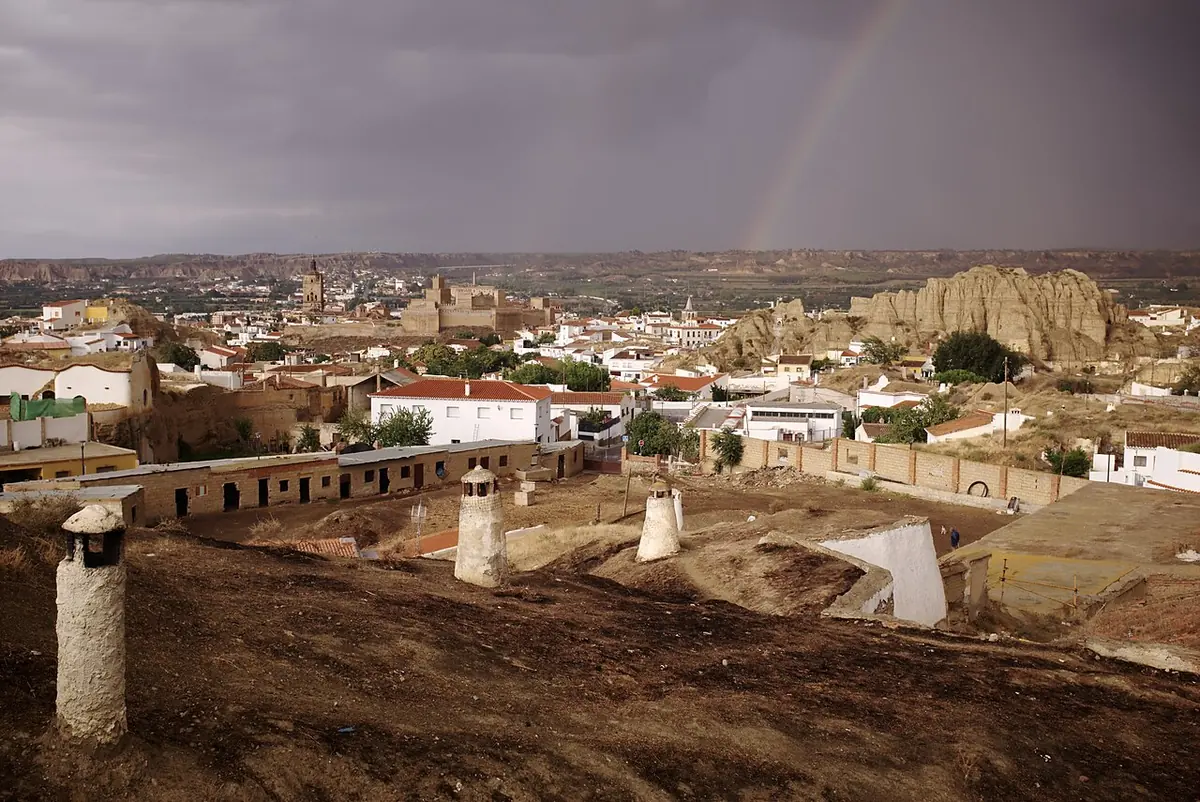
Not everyone welcomed this. People in the town saw his work as a threat, and the conflict eventually forced him to leave Guadix.

Covadonga and the Teresian Association
In 1906 he was named a canon of the basilica of Covadonga in Asturias, where he looked after the Christian formation of pilgrims. There he thought hard about the state of education in Spain. Rather than join the battle between Catholic and secular schools, he put his hope in the teacher: Christian men and women, trained well, who would work in the public schools and live their faith there.
Between 1911 and 1914 he opened his first academies, centers that supported and trained teachers, beginning in Oviedo and then at Jaén, where the young teacher Josefa Segovia directed the academy. These became the Teresian Association. Poveda named it for St. Teresa of Ávila, who, in his words as Santi e Beati quotes them, lived "a fully human life and all of God."
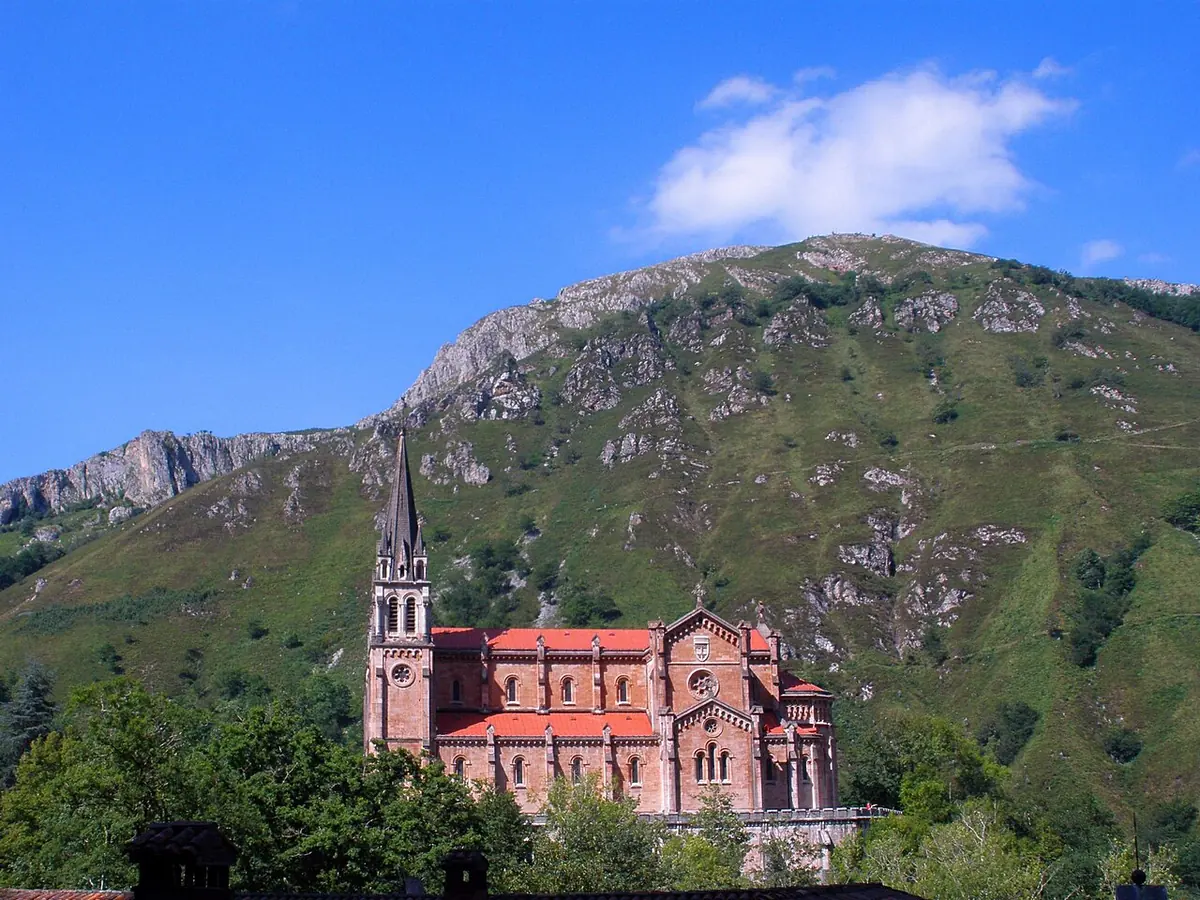
From 1913 to 1921 he was a canon of the cathedral of Jaén, and in 1921 he moved to Madrid. Pope Pius XI approved the Teresian Association in 1924. Josefa Segovia had become its director general in 1919, and in 1928 a group of its members went to Chile, the start of its work outside Spain. In Madrid Poveda also opened the city's first university residence for women students, worked against illiteracy and helped care for the homeless.
Martyrdom
After 1931 the Church in Spain suffered growing hostility, and Poveda saw where it was heading. He urged gentleness and nonviolence. Santi e Beati quotes his counsel for those years: now is the time to redouble prayer, to suffer better, to abound in charity, to speak less, to live closely united to the Lord, to console our neighbor, to encourage the fainthearted, to be lavish with mercy, to trust in Providence, and to have peace and give it.
On July 27, 1936, just after he had said Mass in the oratory of his home on the Calle Alameda in Madrid, militiamen came to arrest him. Santi e Beati records that he told them at once, "I am a priest of Jesus Christ." His brother Carlos tried to go with him and was sent away. As they parted, Poveda said: "It seems that the Lord, who wanted me to be a founder, wants me also to be a martyr."
Early the next morning, July 28, he was shot near the cemetery of La Almudena. Two members of the Teresian Association found his body that day, and he was buried on July 29 in the cemetery of San Lorenzo.

His cause and canonization
St. Pedro Poveda was declared a saint as a martyr, killed out of hatred for the faith. No miracle is needed for the beatification of a martyr, and the Church's decision rests on his death and his life. His cause opened in Madrid in 1955, and Rome approved his writings in 1960. Santi e Beati explains that Pope St. Paul VI held back the Spanish martyr causes for a time, fearing they would be used for political ends, though he was convinced of Poveda's holiness. Pope John Paul II beatified him in Rome on October 10, 1993, and canonized him in Madrid on May 4, 2003.
Symbols of St. Pedro Poveda in art
As a modern saint, Poveda is known from photographs, and pictures of him follow them: a priest in a black cassock, often with round glasses. Devotional images add the martyr's palm. A book or children at school recall his life as an educator and writer on education. You will find his image in the houses, schools and colleges of the Teresian Association, some of which carry his name.
Feast day and where he is honored
We keep the feast of St. Pedro Poveda on July 28, the day of his martyrdom. In Spain he is also celebrated on November 6 with the other Spanish martyrs of the twentieth century. His relics are kept at the Teresian Association's Casa de Espiritualidad Santa María at Los Negrales, near Madrid. See the feast day calendar for other saints of the day, and our page on St. Joseph Calasanz, another Spanish priest who gave his life to schooling the poor.
Prayer to St. Pedro Poveda
We know of no traditional English prayer to St. Pedro Poveda. We can ask his intercession for teachers and students, for all who work in public schools and universities, and for the poor who are shut out of a good education. Let us pray, with his own counsel, for the grace to have peace and to give it: St. Pedro Poveda, pray for us.
Frequently asked questions
Who was St. Pedro Poveda?
A Spanish priest from Linares who worked among the poor cave dwellers of Guadix, became a canon of Covadonga and Jaén, and founded the Teresian Association in 1911 to form Christian teachers. He was killed for the faith in Madrid in 1936.
What is the Teresian Association?
The Teresian Association, or Institución Teresiana, is the lay Catholic association Poveda founded beginning in 1911 to support and form teachers and educators. Pope Pius XI approved it in 1924, and it spread from Spain to Chile in 1928 and then to other countries.
When is the feast of St. Pedro Poveda?
July 28, the day of his martyrdom in 1936. In Spain he is also remembered on November 6 with the Spanish martyrs of the twentieth century.
When was St. Pedro Poveda canonized?
Pope John Paul II beatified him on October 10, 1993, and canonized him in Madrid on May 4, 2003.
Keep exploring
Sources
- San Pietro Poveda Castroverde, Sacerdote, fondatore, martire (Santi e Beati), with the Roman Martyrology entry. Life by Antonio Borrelli and Emilia Flochini; arrest, death and burial; history of the cause; relics at Los Negrales
- San Pedro Poveda (Institución Teresiana)
- Homily of Pope John Paul II, Mass and canonization at Plaza de Colón, Madrid, May 4, 2003 (Holy See)