St. John Kemble, the Eighty-Year-Old Martyr of Hereford
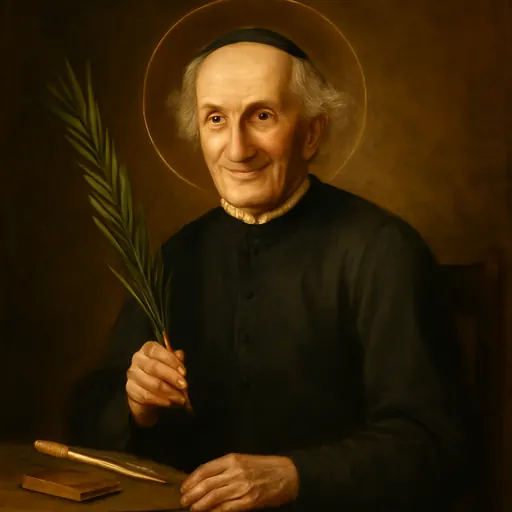
St. John Kemble (1599–1679) was a Catholic priest from Herefordshire who served the Catholics of the Welsh border for fifty-four years and was hanged at Hereford on August 22, 1679, at about eighty years old, during the panic over the false Popish Plot. Before he went to his death he finished his prayers and smoked a last pipe, which gave Herefordshire the phrase "a Kemble pipe." Pope Paul VI canonized him in 1970 among the Forty Martyrs of England and Wales.
Who was St. John Kemble?
St. John Kemble was a country priest of the Welsh border who gave fifty-four years to his people and then, at about eighty, gave his life. He was hanged at Hereford on August 22, 1679, one of the innocent priests swept up in the panic over Titus Oates's invented Popish Plot. We keep his feast on that day.
He was born in 1599 at Rhydicar Farm in the parish of St. Weonards, Herefordshire, into an old Catholic family. He studied at the English College at Douai, was ordained priest there on February 23, 1625, and was sent back to England on June 4 of that year. He spent the rest of his long life in the countryside where he grew up.
Fifty-four years on the Welsh border
Herefordshire and Monmouthshire held on to the old faith more stubbornly than almost anywhere in England. Many landowning families sheltered priests, and Kemble moved among them saying Mass and bringing the sacraments. Dom Bede Camm, who walked these lanes in the early 1900s and gathered local memories, called his life "for the most part uneventful," which is a high compliment for a hunted priest: for more than fifty years he was simply there.
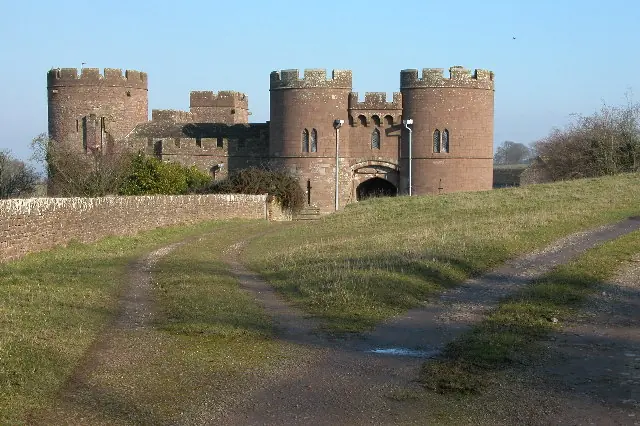
In old age he lived with his nephew, Captain Richard Kemble, at Pembridge Castle in the parish of Welsh Newton. Camm saw the large upstairs room shown as the martyr's, and a seat on the staircase outside it known as "Father Kemble's seat," where the old man is said to have rested on his way up. Mass was said in a chapel at the top of the house.
Arrest and the journey to London
When the Popish Plot scare broke out in 1678, Kemble was warned that men were coming to take him. According to the account Challoner received from people who had known him, he answered that by the course of nature he had only a few years to live, that it would be an advantage to him to suffer for his religion, and that he would not hide. Captain John Scudamore of Kentchurch arrested him at Pembridge, and in November 1678 he was lodged in Hereford jail. At the end of March 1679 he was condemned as a priest.
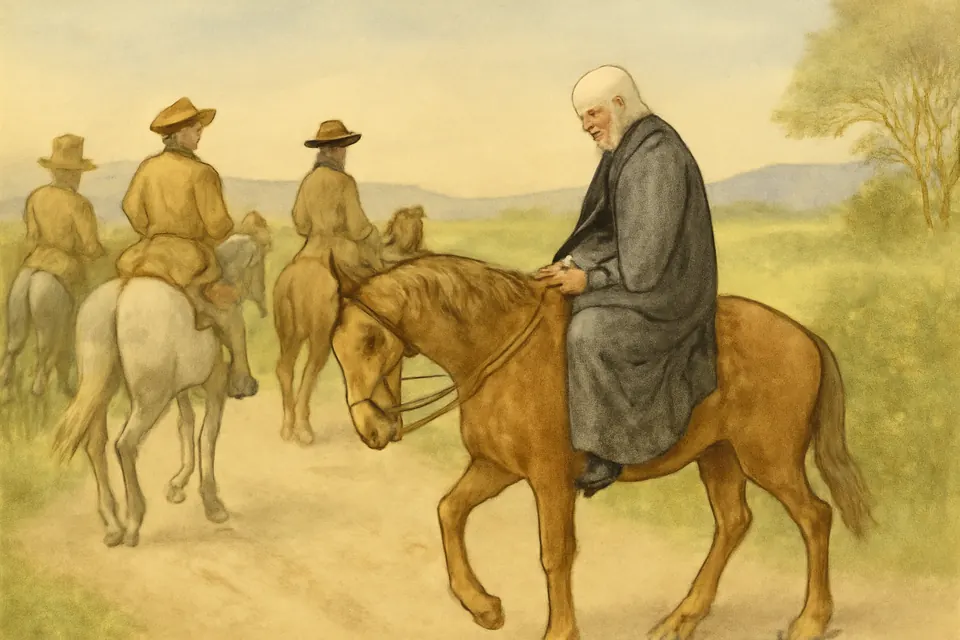
He was then ordered to London to be questioned about the plot. The journey was agony for him. He had an illness that made it impossible to ride except sideways, and he was made to go on horseback for at least much of the way. In Newgate, Titus Oates and the other informers examined him and could charge him with nothing. He was sent back to Hereford to wait.
In prison his captor's children often came to see him, and he shared with them whatever good food his friends sent in. Asked why, he said it was "because their father was the best friend he had in the world."
The last pipe
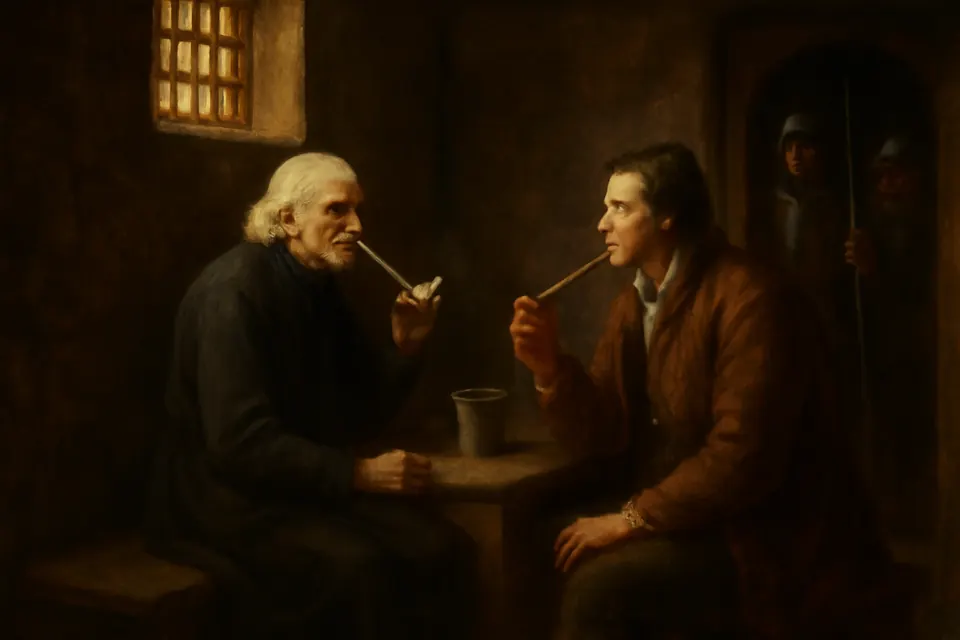
On August 22, 1679, he was told the hour had come. He asked for time to finish his prayers. Then he smoked a pipe and drank a cup of sack with the under-sheriff, and said he was ready. The Catholic Encyclopedia notes that this gave Herefordshire two old sayings: a "Kemble pipe" and a "Kemble cup," meaning a parting pipe or a parting drink.
He was drawn on a hurdle to Widemarsh Common outside the city. His last speech was printed soon after:
It will be expected I should say something, but as I am an old man, it cannot be much, not having any concern in the plot, neither indeed believing there is any.
He said he died "only for professing the old Roman Catholic religion," and forgave all who had worked for his death. Then he took the hangman by the hand: "Honest Anthony, my friend Anthony, be not afraid; do thy office, I forgive thee with all my heart." He prayed three times, "Into thy hands, O Lord, I commend my spirit." Challoner records that the Protestants watching said they had never seen anyone die "so like a gentleman, and so like a Christian."
Miracles at his grave
His nephew buried him in the churchyard at Welsh Newton under a flat stone. Challoner prints two cures reported to a bishop by people who knew the family:
- Reported: Captain Scudamore's daughter, the daughter of the man who had arrested him, had a violent and dangerous sore throat. A Catholic who had kept the cord used at the execution put it to her neck, and she was cured at once.
- Reported: Mrs. Catherine Scudamore, who had been very deaf for some time, stayed praying at the tomb on his feast day after the other pilgrims had gone to the inn. When she joined them she cried out that she could hear, and she heard as well as anyone there.
Neither cure was formally investigated.
Canonization
Pope Pius XI beatified John Kemble in 1929. Pope Paul VI canonized him on October 25, 1970, as one of the Forty Martyrs of England and Wales.
Symbols of St. John Kemble in art
Dom Bede Camm, drawing on Bromage's life of 1902, wrote that the governor of Hereford jail made a pen-and-ink sketch of his prisoner and that the family had an oil portrait painted, then kept by a Catholic descendant. Most images today are modern. He is shown as a frail, white-haired old priest, since he died at about eighty. Look for:
- The palm: the sign of a martyr.
- A clay tobacco pipe: his last pipe, the best-known story about him.
- The rope: the manner of his death, in group images of the Forty Martyrs.
In windows and paintings of the Forty Martyrs he is often the oldest face in the group.
Feast day, grave and prayer
We keep his feast on August 22, the same day St. John Wall died at Worcester. Catholics were already visiting his grave at Welsh Newton on that day in Challoner's time, and pilgrims still come, and his hand is kept at St. Francis Xavier's Church in Hereford. See the feast day calendar for the other martyrs of 1679.

We know of no traditional prayer composed for St. John Kemble alone. Let us ask him, who served one small corner of the Church faithfully for a lifetime, to pray for elderly priests, for country parishes, and for the grace to forgive those who wrong us. St. John Kemble, pray for us.
Frequently asked questions
Who was St. John Kemble?
A priest born in 1599 at Rhydicar Farm, St. Weonards, Herefordshire. He was ordained at Douai on February 23, 1625, came home that June and ministered secretly in Herefordshire and Monmouthshire for over half a century, living in old age with his nephew at Pembridge Castle. He was executed at Hereford on August 22, 1679.
What is a Kemble pipe?
Before he was taken to execution, the old priest smoked a pipe and drank a cup of sack with the under-sheriff. The Catholic Encyclopedia notes that this gave rise to the Herefordshire expressions "Kemble pipe" and "Kemble cup," meaning a parting pipe or a parting drink.
When is the feast of St. John Kemble?
August 22, the day of his martyrdom in 1679, the same day St. John Wall died at Worcester. He is also honored with the Forty Martyrs of England and Wales, canonized by Pope Paul VI on October 25, 1970.
Where is St. John Kemble buried?
In the churchyard of St. Mary's, Welsh Newton, Herefordshire, under a flat stone his nephew Captain Richard Kemble set over him. One of his hands is kept at St. Francis Xavier's Church in Hereford. Pilgrims still visit the grave.
Keep exploring
Sources
- Catholic Encyclopedia (1910): Ven. John Kemble. His family, ordination date, arrest by Captain Scudamore, the Kemble pipe and cup, his hand at Hereford and grave at Welsh Newton
- Richard Challoner, Memoirs of Missionary Priests (1924 ed.), pp. 555–557, at archive.org. The account from those who knew him, the two cures, and his printed last speech
- Bede Camm, Forgotten Shrines (1910), pp. 333–345, at archive.org. Pembridge Castle, his journey to London, the execution site on Widemarsh Common, his tomb and left hand
- Holy See: Paul VI, Canonization of forty martyrs from England and Wales, October 25, 1970