St. Albinus of Angers (St. Aubin)
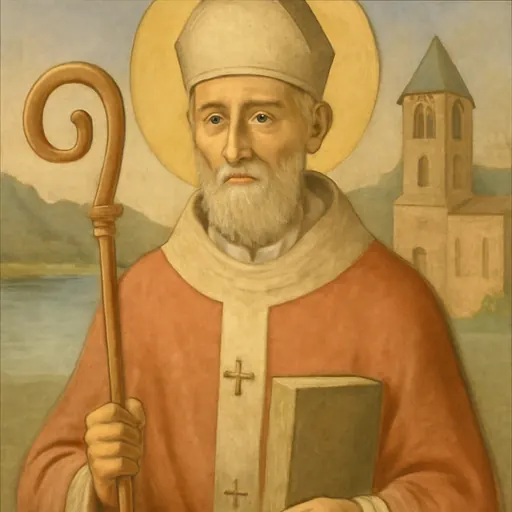
St. Albinus of Angers, called St. Aubin in France, was a Breton monk who served as abbot for twenty-five years and then as bishop of Angers from 529 until his death around 550. He fought incestuous marriages among the powerful, and his life was written by the poet Venantius Fortunatus. We keep his feast on March 1.
Who was St. Albinus of Angers?
St. Albinus of Angers, St. Aubin to the French, was a monk, abbot and bishop of the sixth century who spent nearly his whole life near the Loire. He came from an old noble family of Brittany, entered a monastery near Angers as a young man, governed it as abbot for a quarter century, and was made bishop of Angers in 529. Alban Butler, writing in the eighteenth century from the ancient Life, sums him up as a man "powerful in works and miracles" who thought himself the most useless of God's servants. He died on March 1, around 549 or 550, and within a few years a great abbey rose over his grave.
Monk and abbot of Tintillac
We know Albinus mainly through one book: the Life written by St. Venantius Fortunatus, the Italian poet who later became bishop of Poitiers. Fortunatus came to Angers for Albinus's feast about seven years after his death and wrote while people who had known him were still alive.
His family was Breton, and Butler adds a curious note: the antiquary John Leland, in his Itinerary, traced the saint's ancestors to Great Britain and found two branches of the family still living there in his own day, one in Cornwall and one in Somerset. Many Bretons of that age did descend from Britons who had crossed the Channel, so the claim is plausible, though it cannot be checked.
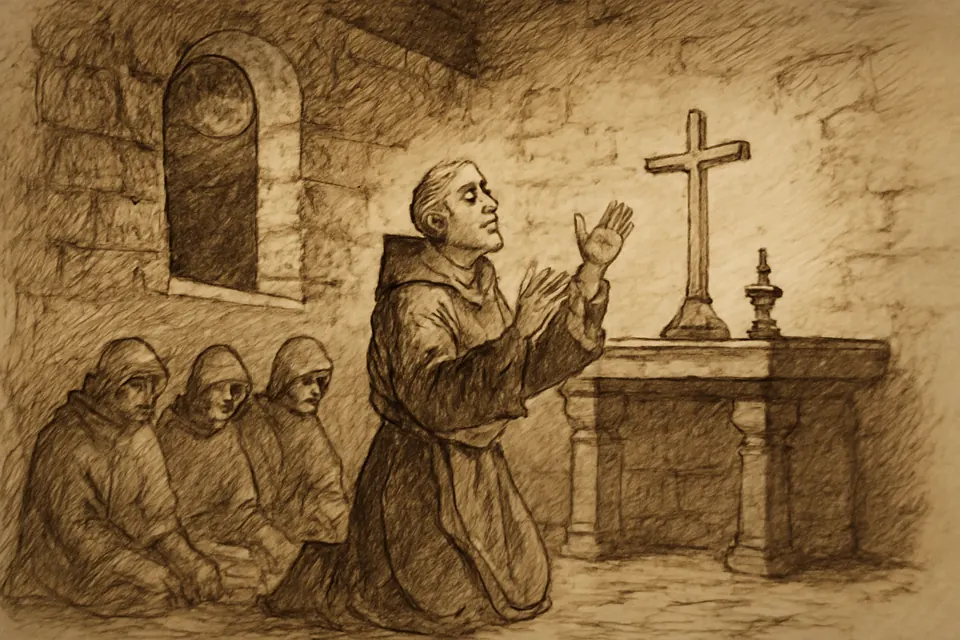
From childhood, says Butler's summary of the Life, Albinus was drawn to prayer and to freedom from earthly things. He took the monastic habit at a house called Cincillac, later Tintillac, somewhere near Angers. There he was known for long prayer, night watches, mortification and an obedience so complete that he seemed to have no will of his own. At thirty-five, in 504, the monks chose him as abbot.
Bishop of Angers
After twenty-five years as abbot he was chosen bishop of Angers, in 529. Butler notes that the honor changed nothing in his way of life: he kept his fasts and his recollection, restored discipline everywhere, and was never puffed up by the respect of kings.
His firmness shows in one fact we can date. At the Third Council of Orléans in 538, Albinus pressed for the renewal of the thirtieth canon of the Council of Epaone, which excommunicated those who married within the first or second degree of blood relationship or marriage. Such unions were common among the Frankish nobility, and opposing them made enemies. Baring-Gould, who found the rest of the Life thin on incident, singled this out as the clearest event of his episcopate.
Death and the abbey of Saint-Aubin
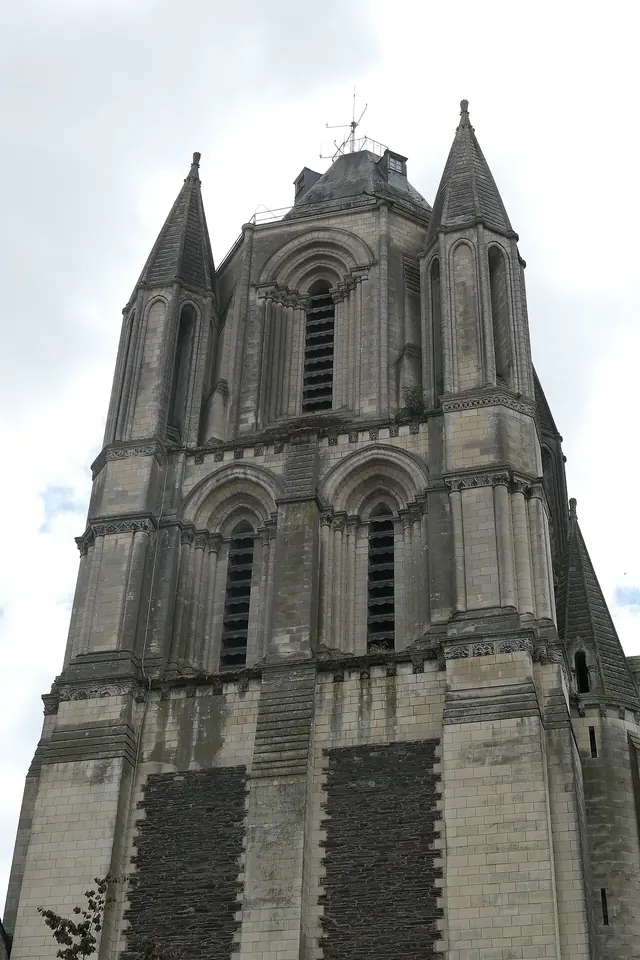
Albinus died on March 1, around 549 (Butler's date) or 550. In 556 his relics were raised and enshrined at Angers by St. Germanus of Paris, with a council of bishops and Albinus's successor Eutropius. King Childebert had a church built over his grave, and the Benedictine Abbey of Saint-Aubin grew up around it. For more than a thousand years it was one of the great houses of Anjou.
The miracles of St. Albinus
The miracles of St. Albinus are traditional: they come from Fortunatus's Life and from later collections, and none was ever formally examined. St. Gregory of Tours mentions his cult in his book on the glory of the confessors. Two scenes became favorites of artists:
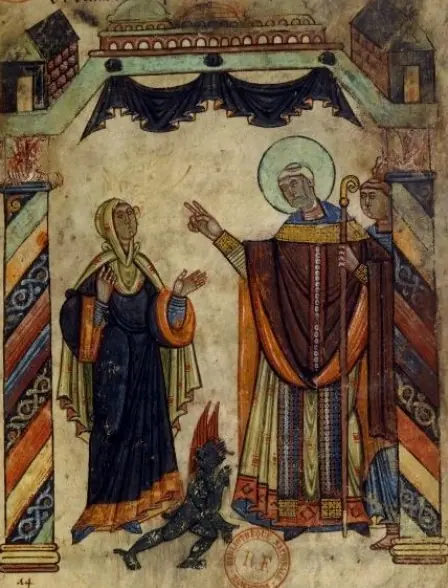
- Delivering the possessed. The illuminated Life made at Angers around 1100 shows him driving a demon out of a woman.
- Freeing prisoners. Tradition tells that captives were set free from a prison tower through his prayer. A Dutch engraving of the 1630s places this small scene behind his figure.
Butler adds that he was "honored by many miracles, both in his life-time and after his death."
Symbols of St. Albinus in art
- Miter and crozier, as bishop of Angers.
- A tower or prison with captives leaving it, for the freeing of prisoners.
- A woman delivered from a demon, in the medieval Life.
- A book, for the Gospel he preached.
- A palm, in some later prints, as a general sign of victory in holiness, though he was not a martyr.
To recognize him, look for a bishop with a prison scene nearby, or for the name Aubin in a French church.
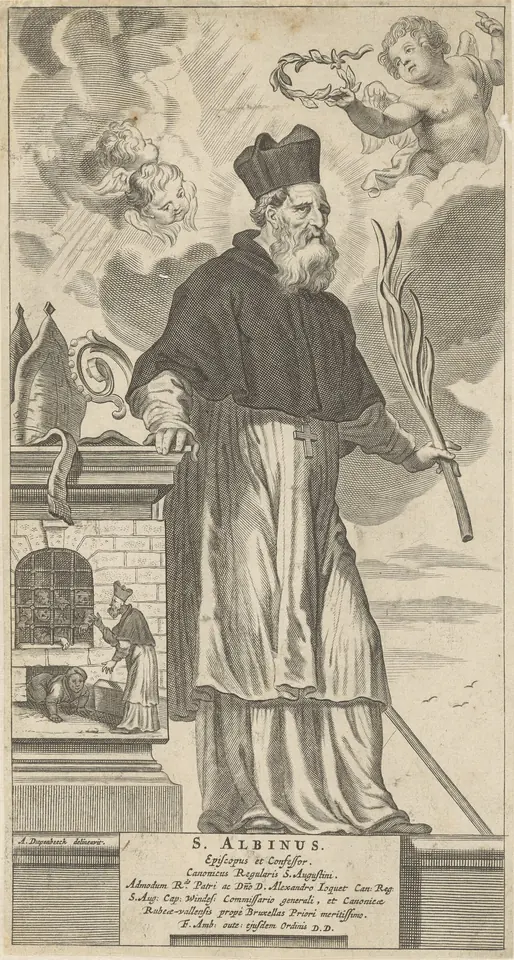
Feast day and where he is honored
We keep his feast on March 1. Baring-Gould found that it was celebrated with special rank at Angers, in Brittany and even at Gniezno in Poland, and his name is in the martyrologies of Usuard and Hrabanus Maurus. Many French towns and parishes are called Saint-Aubin, and so is St. Aubin in Jersey. See the feast day calendar.
Praying with St. Albinus
No traditional prayer to St. Albinus is in common use outside the old proper offices of Angers. Let us ask him to pray for prisoners and captives, for families, and for pastors who must speak the truth to powerful people.
Frequently asked questions
Who was St. Albinus of Angers?
A sixth-century monk from a noble family of Brittany who was abbot of Tintillac near Angers from 504 and bishop of Angers from 529. He was known for prayer, humility, charity and firmness in Church discipline, and he died on March 1 around 549 or 550.
Is St. Aubin the same as St. Albinus?
Yes. Aubin is the French form of Albinus. The many French towns and churches called Saint-Aubin, and St. Aubin in Jersey, are named for him. He should not be confused with St. Alban of Mainz or St. Alban of England.
When is St. Albinus's feast day?
March 1, the day he died.
What miracles are told of St. Albinus?
His Life by Venantius Fortunatus is full of healings and wonders. Medieval and later art shows him delivering a woman from a demon and freeing prisoners from a tower by his prayer. These are traditional accounts; none was formally investigated.
Keep exploring
Sources
- Alban Butler, Lives of the Fathers, Martyrs and Other Principal Saints, March 1: St. Albinus, Bishop of Angers (Project Gutenberg). Abbot in 504 at thirty-five; bishop 25 years later; the Third Council of Orleans, 538, and the Epaone canon; death March 1, 549; enshrinement by St. Germanus of Paris and Eutropius in 556; Fortunatus came to Angers for his feast
- S. Baring-Gould, The Lives of the Saints, vol. 3, March (1914), March 1: S. Albinus, B. of Angers. His feast kept at Angers, in Brittany and at Gniezno; listed by Usuard and Hrabanus
- Venantius Fortunatus, Vita S. Albini, ed. Bruno Krusch, Monumenta Germaniae Historica, Auctores antiquissimi 4.2 (1885). The Life written by his near contemporary
- Rijksmuseum, H. Albinus van Angers (print RP-P-OB-23.296). Seventeenth-century print showing Albinus freeing prisoners by his prayer