St. Teresa Margaret Redi of the Sacred Heart

St. Teresa Margaret Redi (1747–1770) was a young noblewoman from Arezzo who became a Discalced Carmelite in Florence. She spent her short life in hidden prayer and in nursing her sick sisters and died at 22; her body is still incorrupt. Her feast is March 7; the Carmelites keep it on September 1.
Who was St. Teresa Margaret Redi?
St. Teresa Margaret Redi was a young Discalced Carmelite nun of Florence who died in 1770 at the age of 22. Nothing about her life looked remarkable from outside. She prayed, she kept the Rule, she swept the sacristy and nursed the sick. Inside, she was consumed by one truth: God is love. Pope Pius XI, canonizing her in 1934, called her "neve ardente," burning snow.
Her religious name was Teresa Margaret of the Sacred Heart. Her body has been preserved incorrupt since her death, and it lies today in the church of the Carmelite nuns in Florence.
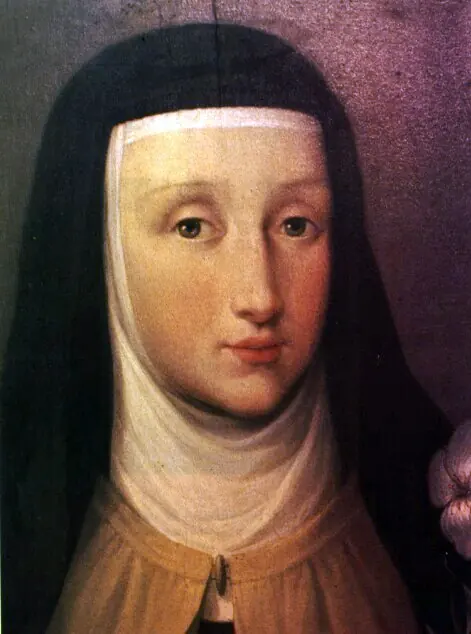
The life of St. Teresa Margaret Redi
A daughter of Arezzo
Anna Maria Redi was born at Arezzo on July 15, 1747, the eve of the feast of Our Lady of Mount Carmel, to Ignazio Redi and Camilla Ballati. The family was noble and well known; the famous physician and poet Francesco Redi had been one of them. At nine she was sent to board with the nuns of St. Apollonia in Florence, who admired her, says her 1848 Life, for "a rare docility."
The call of St. Teresa
When a former pupil came to say goodbye before entering the Carmel of St. Teresa in Florence, Anna Maria felt a sudden and strong inner movement. According to the old Life, she seemed to hear the words: "I am Teresa of Jesus, and I will have thee amongst my daughters." She went to pray before the Blessed Sacrament, and heard again: "I am Teresa of Jesus, and I tell thee that ere long thou shalt be in my convent." Her doubts were gone.
Her father brought her home in 1764, and on September 1 of that year she asked to enter the Carmel. She received the habit in March 1765 and made her vows in March 1766.
"God is charity"
The great moment of her inner life came on a Sunday after Pentecost in 1767. In choir, at the hour of Terce, the nuns read the short chapter from St. John: "God is charity; and he that abideth in charity, abideth in God, and God in him." The Life says she was so inflamed by those words that "for some days she remained almost abstracted and out of herself," repeating them under her breath. From then on, "God is charity" was her motto, and it was later written on her portraits.
She did not answer that love with visions or long writings. She answered it with work done quietly for others, above all for the sick.
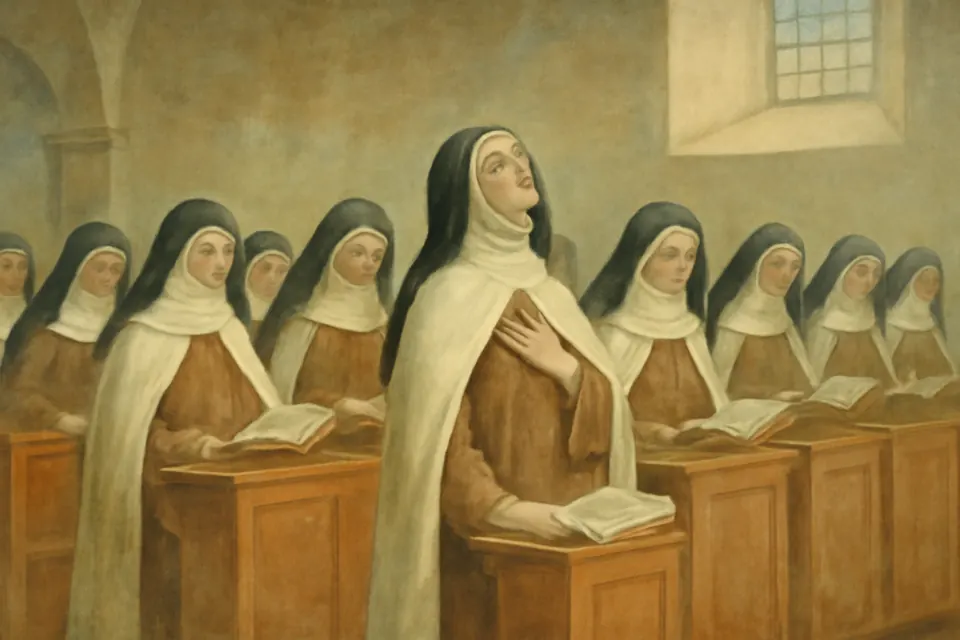
Sacristan and infirmarian
She served as sacristan and as infirmarian. Her biographer notes how strictly she kept the fasts while carrying these "laborious employments."
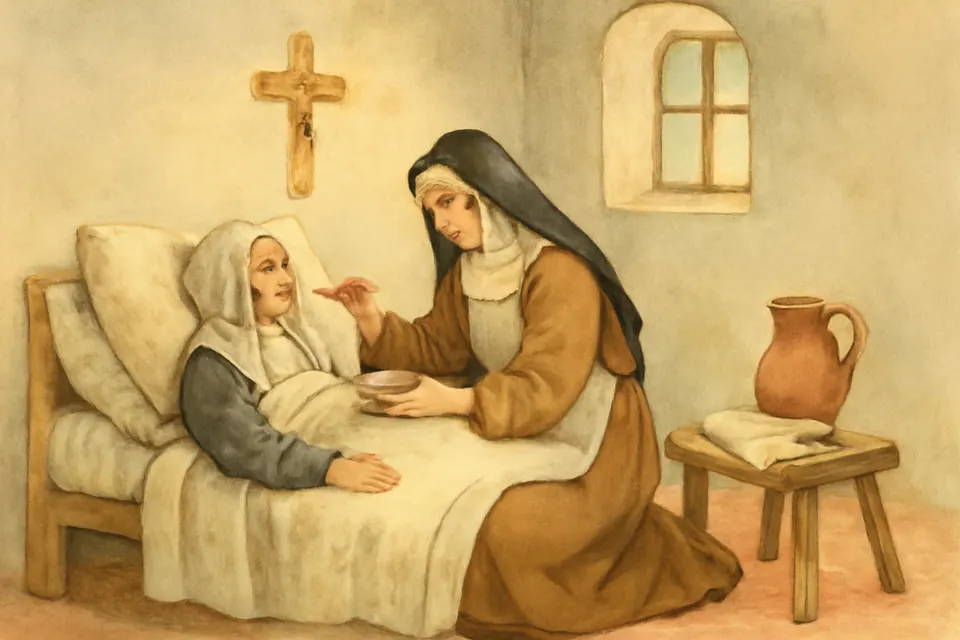
A swift death
Early in March 1770 she was struck by sudden, violent pain; the Dicastery for the Causes of Saints gives the cause as peritonitis. She received the last sacraments and suffered through the night with her eyes on her crucifix, calling on the names of Jesus and Mary. She died on March 7, 1770, at about three in the afternoon, which her biographer notes was the hour Christ died on the cross.
The miracles of St. Teresa Margaret
Her incorruption is a reported wonder with unusually careful early records. The 1848 Life describes how her body, swollen and livid at death, grew pale and then took on a natural color, so that the nuns delayed her burial; for fifteen days it became, in the old book's words, "constantly more wonderful," while crowds came to the convent. The physicians who examined it declared its preservation beyond natural explanation. The Dicastery confirms that her body is still preserved incorrupt. Healings through her intercession were examined for her beatification in 1929 and her canonization in 1934, in the usual way; our sources do not describe them.
Why St. Teresa Margaret is a patron
She is a Carmelite saint first, beloved by her order as a model of hidden love. Because she spent her strength nursing sick sisters, nurses and all who care for the sick can rightly take her as a friend in heaven. See more on our patron saints page.
Symbols of St. Teresa Margaret Redi in art
- Carmelite habit, white mantle and black veil: her life as a Discalced Carmelite.
- Sacred Heart: her religious name, "of the Sacred Heart."
- The words "God is love" (Deus caritas est): her motto, often written beside her.
- Lily: purity, and her early death.
- Crucifix: which she held as she died.
She is easy to confuse with other young Carmelite saints. Look for the Sacred Heart and the motto from St. John.
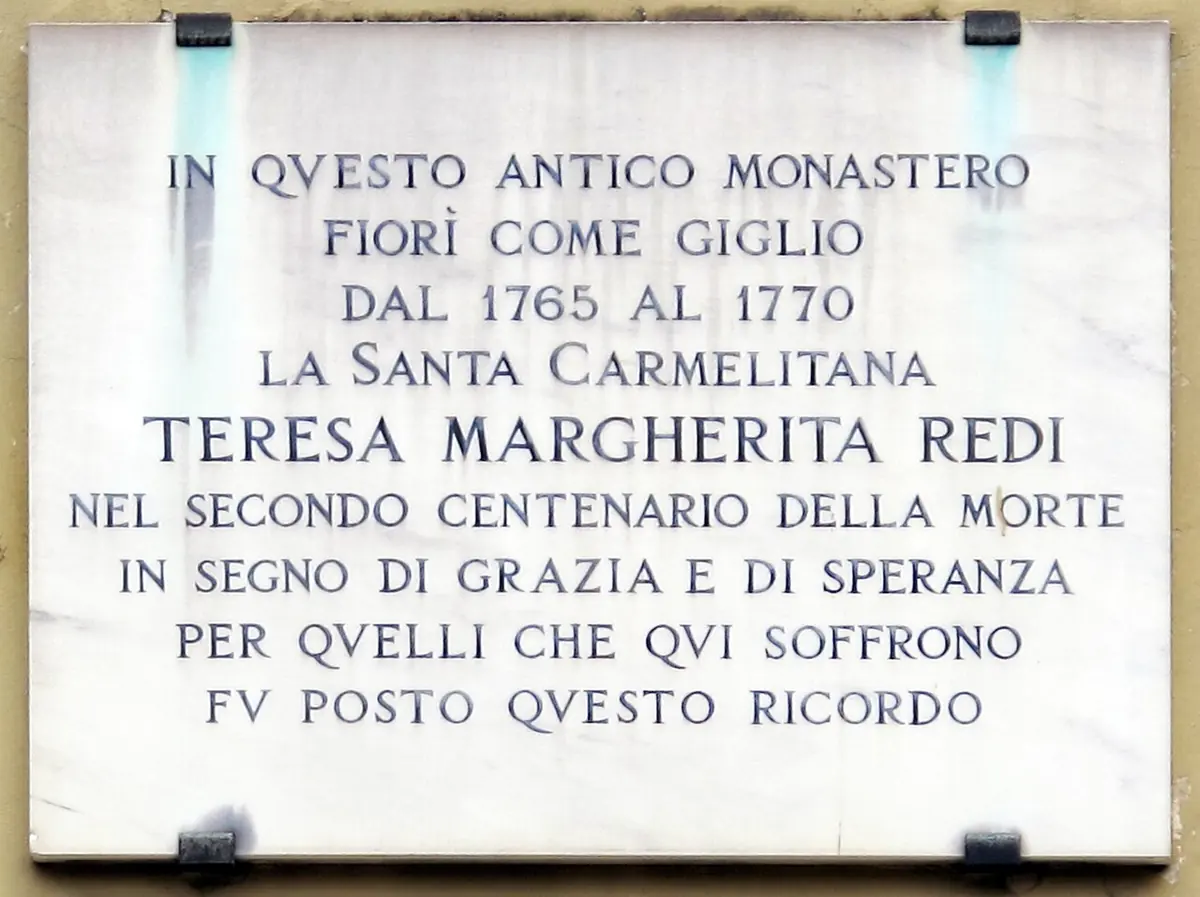
Feast day
The Roman Martyrology remembers her on March 7, the day of her death. The Discalced Carmelites keep her feast on September 1, the anniversary of the day she asked to enter Carmel. See other saints of these days on our feast days page.
Prayer to St. Teresa Margaret Redi
Let us pray with her the words that set her heart on fire, from the First Letter of St. John (4:16, Douay-Rheims): "God is charity: and he that abideth in charity, abideth in God, and God in him." St. Teresa Margaret, teach us to love God in the hidden work of every day, and pray for the sick and for all who care for them.
Frequently asked questions
Who was St. Teresa Margaret Redi?
Anna Maria Redi, born in Arezzo in 1747 to a noble family, entered the Carmel of St. Teresa in Florence in 1764 and took the name Teresa Margaret of the Sacred Heart. She served as sacristan and infirmarian and died on March 7, 1770, aged 22. Pius XI canonized her in 1934.
What is St. Teresa Margaret Redi known for?
For a hidden life of love summed up in the words of St. John, "God is love," which she repeated constantly after hearing them at the Office in 1767, for her devoted care of the sick, and for her body, which has remained incorrupt since 1770.
When is the feast of St. Teresa Margaret Redi?
March 7 in the Roman Martyrology, the day she died. The Discalced Carmelites celebrate her on September 1.
Is St. Teresa Margaret Redi incorrupt?
Yes. The Dicastery for the Causes of Saints states that her body is preserved incorrupt in the church of the Carmelite monastery in Florence. Its preservation after death was examined by physicians at the time and counted among the signs of her holiness.
Keep exploring
Sources
- Teresa Margherita Redi, Dicastero delle Cause dei Santi. Dates, cause of death, beatification and canonization, and her incorrupt body in Florence
- The Life of Sister Margaret Teresa Redi, of the Heart of Jesus (London: Richardson, 1848), Internet Archive. Translated from the Italian compendium of 1806; her call to Carmel, the reading of 1767, her death and the physicians' account of her body
- Santa Teresa Margherita (Anna Maria Redi) del Cuore di Gesù, Santi e Beati. Pius XI's phrase "neve ardente" and the Carmelite feast of September 1
- 1 John 4:16, Douay-Rheims 1899 American Edition, Bible Gateway. Text of the verse quoted in the prayer section