St. Piran, Patron Saint of Cornwall and the Tinners
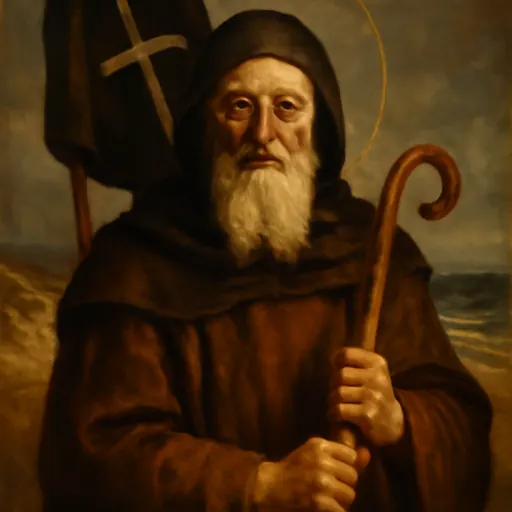
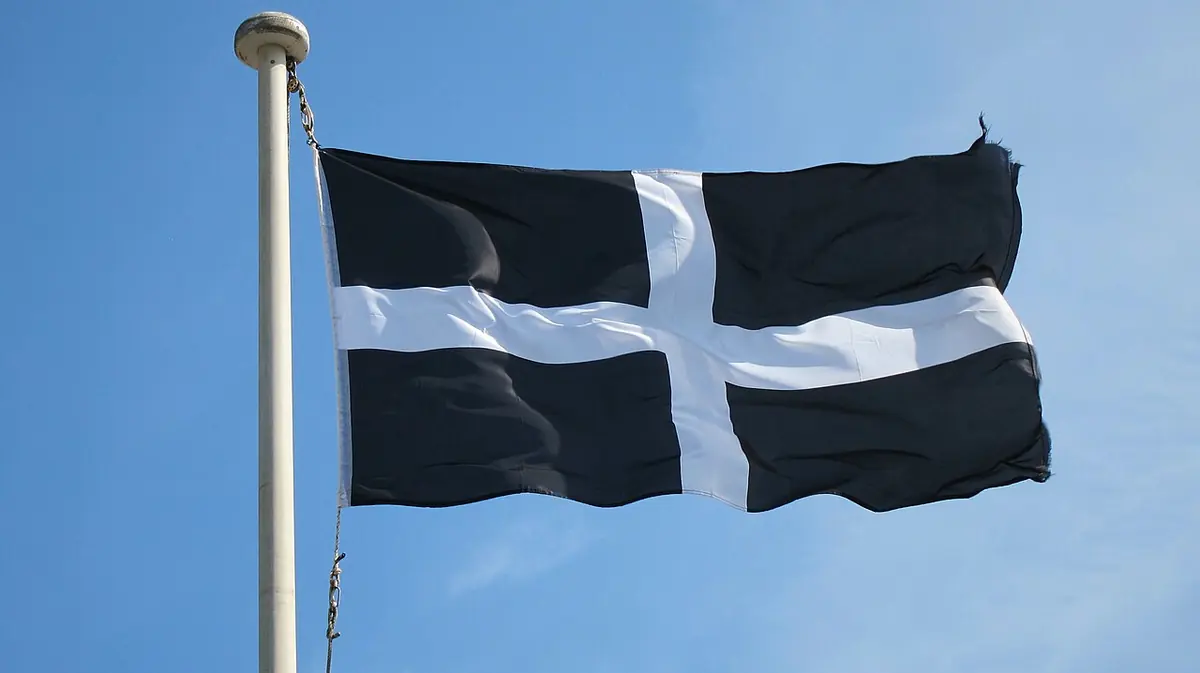
St. Piran (Cornish Peran) was an early abbot, probably of the fifth or sixth century, who founded a monastery in the sand dunes at Perranzabuloe. He is the patron saint of Cornwall and of its tin miners, and St. Piran's flag, a white cross on black, is the flag of Cornwall. His feast, St. Piran's Day, is March 5.
Who was St. Piran?
St. Piran is the patron saint of Cornwall, an early Christian abbot who lived, prayed and was buried in the sand dunes of Perranzabuloe on Cornwall's north coast, probably in the fifth or sixth century. His Cornish name is Peran, and three parishes still carry it: Perranzabuloe ("Piran in the sands"), Perranuthnoe and Perranarworthal. The tinners of Cornwall took him as their patron, and his black banner with a white cross is now the flag of the whole county. We keep his feast, St. Piran's Day, on March 5.
We know a community of canons served his shrine long before the Norman Conquest; the Domesday Book of 1086 records the "Canonici S. Pierani" holding land at Lanpiran. Almost everything else told of him is legend, and much of it is borrowed.
The life of St. Piran: what the sources say
The medieval Life
The only medieval Life of St. Piran comes from the Nova Legenda Anglie, a collection of English saints' lives built on the work of John of Tynemouth in the 1300s and printed in 1516. It opens: "The blessed Piran, who by some is called Keranus, is called Piran in Cornwall, where he rests." It makes him an Irishman from Ossory, the son of Domuel and Wingella, a bishop consecrated in Rome and one of the twelve chief bishops of St. Patrick. Wild animals, it says, became his first monks.
Near the end, the old saint tells his monks that God is sending him to Cornwall to await his death there. He sails across, builds himself a house, works many miracles, and when he falls ill orders his grave dug, climbs down into it and dies. The Life says he "rests in Cornwall above the sandy sea, fifteen miles from Petrokstowe" (Padstow).
St. Piran and St. Ciarán of Saighir
That Life has a problem, and it is best faced plainly. Apart from its last paragraphs, it is the Irish life of St. Ciarán of Saighir, founder of Seirkieran and first bishop of Ossory, with the name changed. Roger Pearse, who translated it in 2022, compared the texts and concluded that a writer, probably at Exeter, copied Ciarán's life and dropped the parts saying he was buried in Ireland. The 1910 Catholic Encyclopedia notes that Ciarán of Saighir was "venerated in England, Brittany, Wales, and Scotland, on 5 March," the same day as Piran.
So were they one man? Some Cornish writers say yes, or that Piran was Ciarán's disciple. The French Celtic scholar Joseph Loth argued in 1930 that the two names could not come from the same original, and the historian G. H. Doble thought Piran was a Welshman. We simply don't know. What we do know is that a holy man named Piran was buried in these dunes and that the Cornish have asked his prayers for well over a thousand years.

The miracles and legends of St. Piran
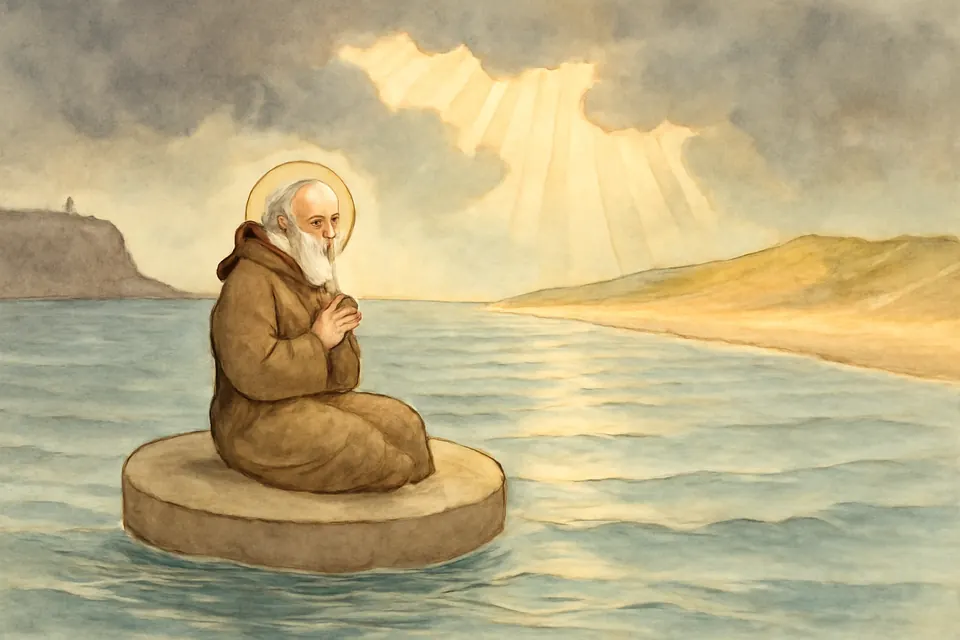
- The millstone: traditional. Cornish legend, written down by Robert Hunt in 1865, says jealous Irish kings chained Piran to a millstone and rolled him off a cliff in a storm. The sea fell calm, the stone floated, and he drifted to the sands that bear his name, landing on March 5. This story is not in the medieval Life.
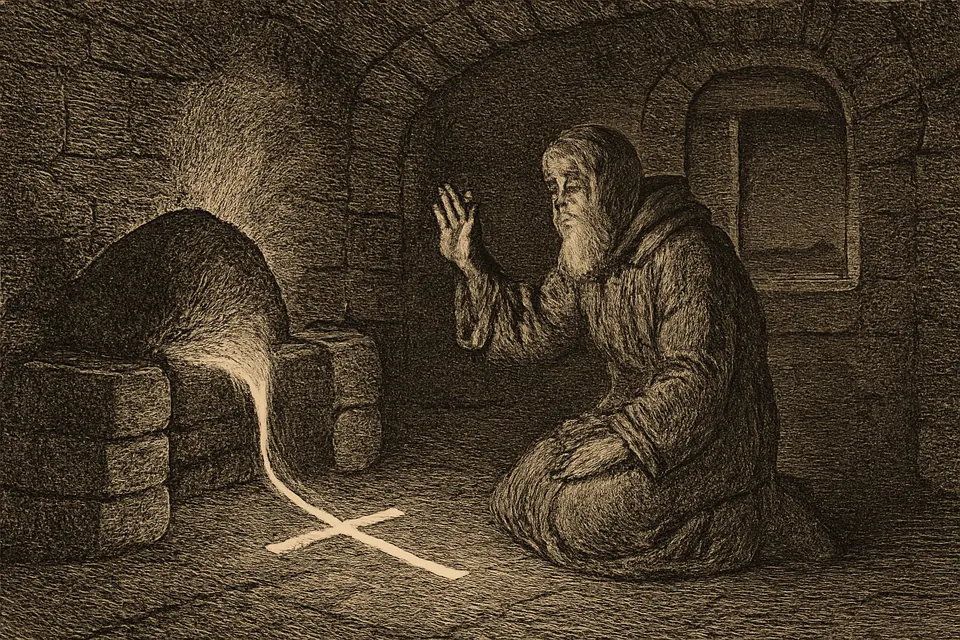
- The discovery of tin: traditional. Hunt also gives the legend that a black stone in Piran's hearth grew so hot that "a stream of beautiful white metal flowed out of the fire." Later tellings say the tin formed a white cross on the black stone, the image on his flag.
Why St. Piran is the patron saint of Cornwall and tin miners
Piran was the saint of the tinners long before he was the saint of the county. Writing in 1844, William Haslam, curate of Perranzabuloe, says he was "called their patron saint" and that his day had been kept by the tinners as a festival "up to no remote period." In the twentieth century, as the Cornish revival grew, his feast and flag became a sign of Cornish identity, and today he is honored as patron of all Cornwall, a title he shares in older tradition with St. Michael the Archangel. See more on our patron saints page.
Symbols of St. Piran in art
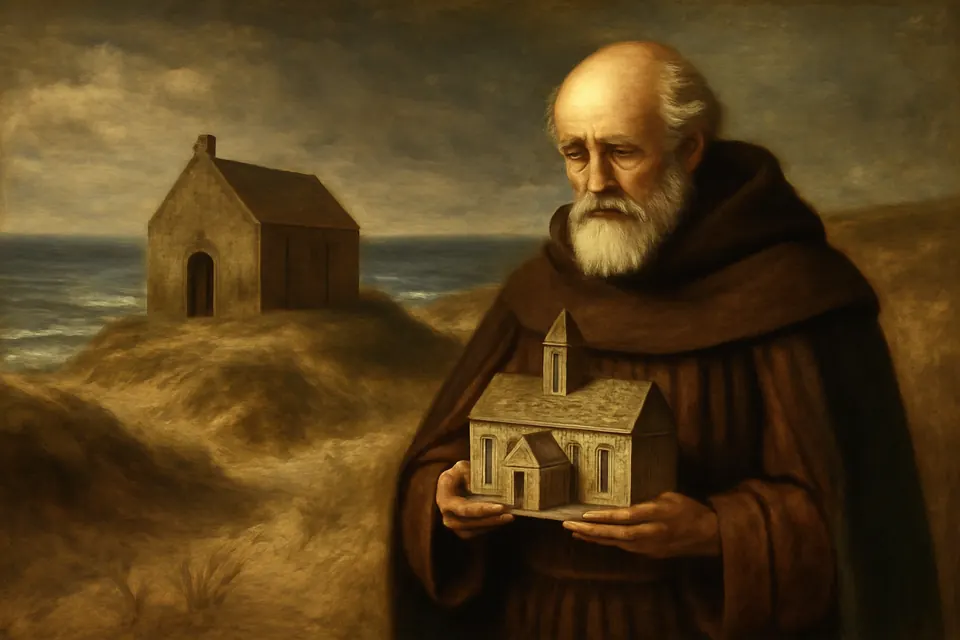
He usually appears as a monk or abbot with a tonsure and a plain habit, or as a bishop with miter and crozier, because his Life calls him one. He may hold a model of a church, as in the Truro Cathedral window, for the monastery he founded. A millstone points to the legend of his crossing from Ireland. Fire or a stream of molten metal recalls the tin legend. The animals of the Life, a badger, fox and boar, sometimes sit at his feet. Above all he is known by his flag, a white cross on a black field. The Flag Institute records it as a traditional Cornish flag from the nineteenth century, and the old explanation is white tin flowing from black ore.
St. Piran's Oratory, his cross and his relics
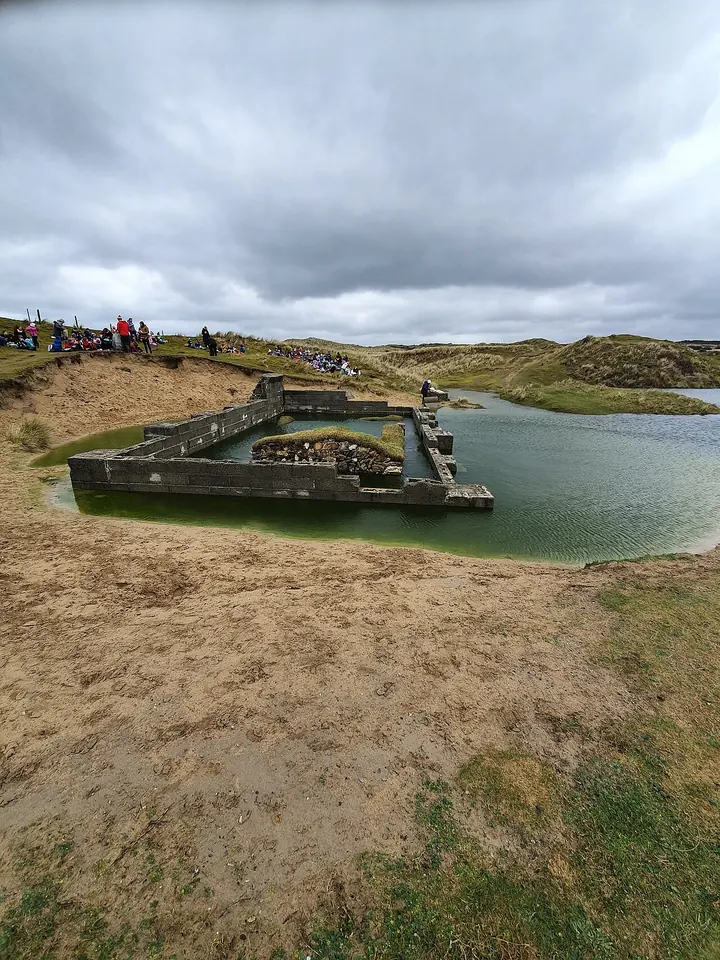
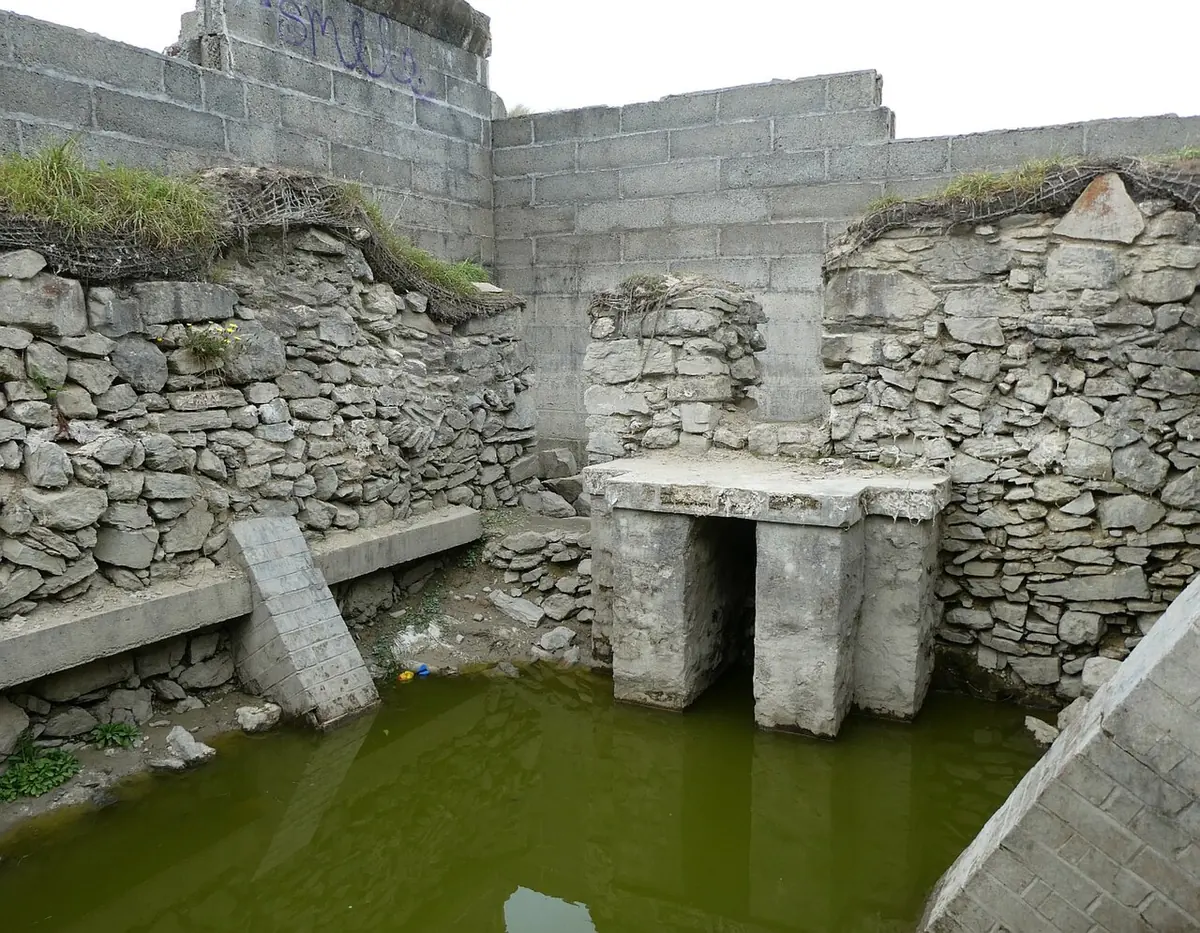
The heart of his cult is Penhale Sands, about a mile and a half east of Perranporth. There, half buried in the dunes, stands St. Piran's Oratory, a tiny chapel with a nave, a chancel and a stone bench around the walls. The sand swallowed it, and nothing pre-Reformation mentions it; John Leland first noted it in 1540. When it was dug out in 1835, three headless skeletons were found beneath the altar, which Haslam took to be the saint's own remains. A concrete shelter was built over it in 1910, the parish reburied it in sand in 1980, and the St Piran Trust uncovered it again in 2014.
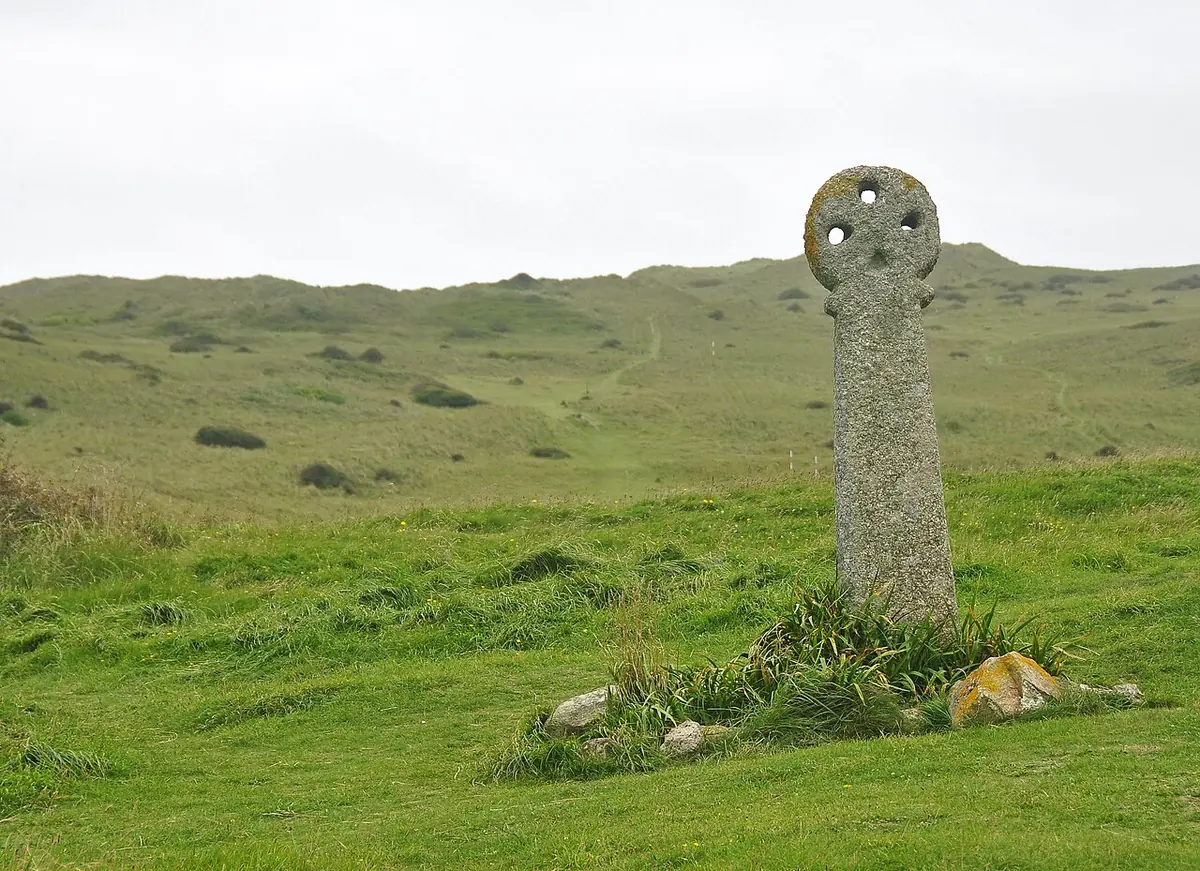
Nearby are the ruins of St. Piran's Old Church, the medieval church that replaced the oratory, with walls from the late 1100s, and St. Piran's Cross, which the St Piran Trust believes is the oldest standing cross in Cornwall. Pilgrims came "in great numbers," Haslam says. In 1433 Sir John Arundell of Trerice left forty shillings "ad claudendum capud S. Pierani honorifice," to enclose St. Piran's head with honor. The head was lost after the Reformation, and in 1804 the sand finally drove the parish to build a new church inland.
Where the relics of St. Piran are kept: see them on the relics map →
St. Piran's Day
On March 5 Cornwall fills with black-and-white flags. Towns hold parades, schools dress children in St. Piran tabards, and many people walk across the dunes to his cross and oratory to pray. Find other early-March saints on our feast days page.

Prayer to St. Piran
No traditional prayer to St. Piran has come down in the standard Catholic prayer books. On his day Cornish Christians ask his intercession in their own words, for Cornwall, for miners and for all who work the land and sea. Let us ask St. Piran, who left his home for a strange shore, to pray for us when God calls us somewhere new.
Frequently asked questions
Who was St. Piran?
An abbot of the early British church, probably of the fifth or sixth century, who lived and was buried at Perranzabuloe ("Piran in the sands") on the north coast of Cornwall. Almost nothing about his life is certain. The Domesday Book of 1086 already records the canons of St. Piran at Lanpiran, and his tomb was a place of pilgrimage through the Middle Ages.
When is St. Piran's Day?
March 5. His medieval Life gives the day of his death as the third day before the Nones of March, which is March 5. Cornish people mark it with processions, flags, music and a walk across the dunes to his cross and oratory near Perranporth.
Is St. Piran the same as St. Ciarán (Kieran) of Saighir?
Possibly, but it is unproven. His only medieval Life, from the 1300s, is a copy of the Irish life of St. Ciarán of Saighir with the names changed, and opens by saying he "is called Keranus by some." Both are kept on March 5. Some scholars, among them the philologist Joseph Loth, held that the two names cannot belong to the same man, and the Cornish historian G. H. Doble thought Piran came from Wales.
Why is St. Piran the patron saint of tin miners?
A Cornish legend says Piran discovered tin when a black stone in his hearth grew so hot that white metal ran out of it in the shape of a cross. The story is traditional and late, but the Cornish tinners kept his day as their holiday, as William Haslam noted in 1844.
Keep exploring
Sources
- The Life of St Piran, Latin text from the Nova Legenda Anglie with English translation by Roger Pearse (2022)
- William Haslam, Perran-Zabuloe: With an Account of the Past and Present State of the Oratory of St. Piran in the Sands (1844)
- Robert Hunt, Popular Romances of the West of England, Second Series (Project Gutenberg)
- Catholic Encyclopedia (1910): Sts. Kieran
- St Piran Trust: St Piran's Oratory (archived 2018)
- St Piran Trust: St Piran's Church (archived 2018)
- The Flag Institute: Cornwall