St. Angela of the Cross, Mother of the Poor of Seville
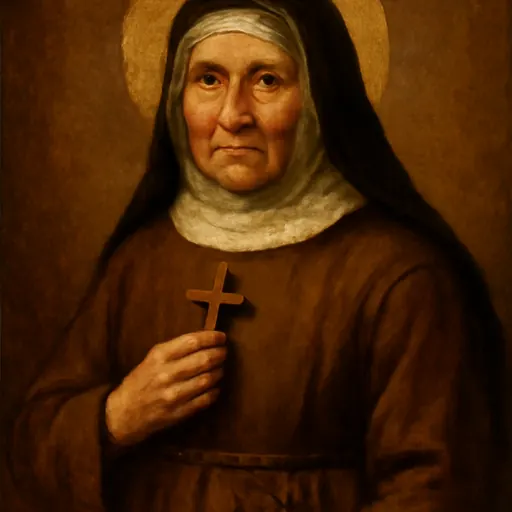
St. Angela of the Cross (1846–1932), born María de los Ángeles Guerrero in Seville, was a shoemaker's apprentice who founded the Sisters of the Company of the Cross in 1875 to be "poor with the poor" and nurse the sick and dying. Pope John Paul II canonized her in 2003, and we keep her feast on March 2.
Who was St. Angela of the Cross?
St. Angela of the Cross was a poor girl from Seville who founded a religious family to be, in her own words, "poor with the poor in order to bring them to Christ." Born María de los Ángeles Guerrero González in 1846 and called Angelita all her life, she learned shoe repair as a child, was refused by two convents for poor health, and in 1875 began the Sisters of the Company of the Cross with three companions in one rented room. The sisters lived as contemplatives at home and went out day and night to nurse the sick and dying poor. Seville called her the Mother of the Poor. She died on March 2, 1932, and St. John Paul II canonized her in 2003.
The life of St. Angela of the Cross
A cook's daughter in Seville
Angelita was born in Seville on January 30, 1846. Her father was a cook at the convent of the Trinitarian Fathers, and her mother did the convent's laundry. They had fourteen children, and only six lived to adulthood. The Vatican's biography tells of a home where the family prayed the Rosary together and set up a little altar to Our Lady every May. She made her First Communion at eight and was confirmed at nine.
She had little schooling. As a young girl she went to work in a shoe shop run by Antonia Maldonado, a devout woman who had her workers pray the Rosary and read the lives of the saints each day. Through her, at sixteen, Angelita met Canon José Torres Padilla of Seville, a priest known for "forming saints," who became her spiritual director.
Two closed doors
At nineteen she asked to enter the Discalced Carmelites and was refused because of her health. On Father Torres's advice she nursed poor cholera patients during an epidemic. In 1868 she tried again with the Daughters of Charity, who accepted her and sent her to Cuenca and Valencia to recover her strength. It did not work, and she left during the novitiate and went back to the shoe shop.
The empty cross
On November 1, 1871, kneeling before a crucifix, she made a private vow to live poverty, chastity and obedience. Two years later, in prayer, she saw something she never forgot: facing Christ on His cross stood a second cross, empty. She understood that God was asking her to hang on that empty cross beside Him, to be poor with the poor. Under obedience to Father Torres she wrote out in a spiritual diary the way of life she was being shown.

The Company of the Cross
On August 2, 1875, three women joined her in a rented room in Seville, and the Company of the Cross began. The sisters prayed in silence when at home, and went out whenever they were called, to wash, feed and sit with the sick poor in their own houses. Mother Angela saw her sisters as angels sent to those who would otherwise die alone. New houses opened in Utrera in 1877 and Ayamonte the next year. By her death there were twenty-three more convents.
Her own idea of humility was blunt. The Vatican's biography quotes her:
The nothing keeps silent, the nothing does not want to be, the nothing suffers all.... The nothing does not impose itself, the nothing does not command with authority, and finally, the nothing in the creature is practical humility.

Mother Angela died in Seville on March 2, 1932, at eighty-six. John Paul II beatified her in Seville on November 5, 1982, and canonized her in Madrid on May 4, 2003. In his homily he said that love for the poor led her to found the Company of the Cross "with a charitable and social dimension that made an enormous impact on the Church and society of Seville in her day."
Miracles and graces
The vision of the empty cross is a reported private grace, recorded in her own diary and in the Vatican's biography. The miracles accepted for her beatification and canonization are not described in the sources we have checked, so we leave them out here rather than guess. The great sign of her holiness was the community itself: sisters who, a century later, still go to the poor without asking anything in return.
Symbols of St. Angela of the Cross in art
Statues and holy cards of St. Angela are easy to recognize in Andalusia, where they stand in many churches.
- Brown habit and white coif: the coarse habit of the Sisters of the Cross, with a starched white coif framing the face and a dark veil.
- The cross: often an empty cross, or a crucifix in her hand, recalling the vision that founded her work.
- Rosary: a long wooden rosary at her belt, the prayer of her childhood home.
- A book: her rule and her spiritual writings.
In Seville you will also find her on painted tiles, the city's traditional azulejos, set in the walls of houses and confraternity buildings, and on the banners carried in processions.
Feast day and where she rests
We keep the feast of St. Angela of the Cross on March 2, the day she died. Seville celebrates her again on November 5, the day she was beatified in the city. Her body lies in the chapel of the mother house on the street that now bears her name, Calle Santa Ángela de la Cruz. See the feast day calendar for other saints of March.
Prayer to St. Angela of the Cross
We ask St. Angela's help in our own words, as the people of Seville have done since her death. Let us ask St. Angela of the Cross to pray for the sick who have no one to care for them, for the poor of our own neighborhoods, and for every young person turned away from the life they hoped for. May she obtain for us something of her "practical humility," and the courage to stand beside Christ on the empty cross.
Frequently asked questions
Who was St. Angela of the Cross?
A Spanish religious sister, born in Seville in 1846 to a convent cook and a laundress. She worked in a shoe shop, was turned away by two convents because of poor health, and in 1875 founded the Sisters of the Company of the Cross to serve the poor and the dying in their own homes. She died in Seville in 1932.
When is the feast of St. Angela of the Cross?
March 2, the day she died in 1932. Seville also celebrates her on November 5, the anniversary of her beatification in the city in 1982.
When was St. Angela of the Cross canonized?
Pope John Paul II beatified her in Seville on November 5, 1982, and canonized her at the Plaza de Colón in Madrid on May 4, 2003, together with four other Spanish saints.
Where is St. Angela of the Cross buried?
Her body rests in the chapel of the mother house of the Sisters of the Cross on the Seville street now named for her, Calle Santa Ángela de la Cruz.
Keep exploring
Sources
- Ángela de la Cruz Guerrero González (1846–1932), biography (vatican.va). Her family, the shoe shop, Canon Torres Padilla, the refusals by two convents, the vision of the empty cross, the founding in 1875, the growth of the institute, the 1982 beatification and her words on "the nothing"
- Pope John Paul II, Homily at the Mass and canonization at the Plaza de Colón, Madrid, May 4, 2003 (vatican.va). The canonization and the Pope's words on the Company of the Cross