St. Barbatus of Benevento
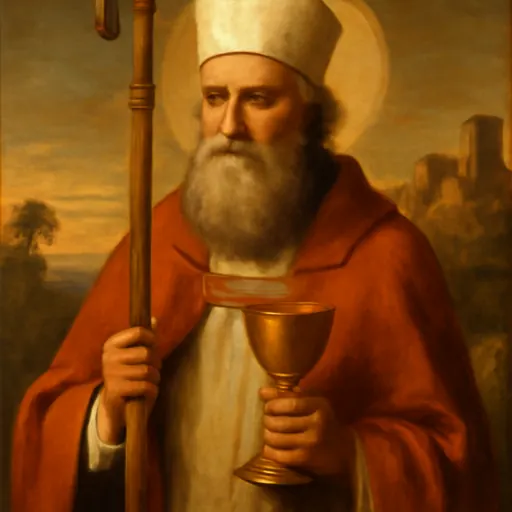
St. Barbatus of Benevento (about 610–682) was bishop of Benevento. He preached against the Lombards' idol worship, and when the city was saved from an imperial siege in 663 he felled their sacred tree and melted their golden serpent into a vessel for the altar. His feast is February 19, and he is a patron of Benevento.
Who was St. Barbatus of Benevento?
St. Barbatus of Benevento was a seventh-century Italian priest who became bishop of Benevento and led its Lombard rulers away from the last of their pagan customs. He was born near Benevento about 610, toward the end of the pontificate of St. Gregory the Great, and he died there in 682. We keep his feast on February 19.
Our main account of his life is the one Alban Butler drew in the eighteenth century from "two authentic lives" printed by the Bollandists. Butler gives his name as "Barbatus, or Barbas"; in Italy he is San Barbato.
The life of St. Barbatus
A hard first parish
Barbatus was raised a Christian and was ordained a priest as soon as the canons allowed. His bishop put him to preaching, for which Butler says he "had an extraordinary talent," and then made him parish priest of St. Basil's at Morcone, a town near Benevento.
It went badly. His parishioners did not want to be woken from their sins, Butler writes, and when his patience outlasted their hostility they turned to slander. He had to withdraw from the parish and return to Benevento, where people who knew him received him gladly. Butler saw this failure as the fire that freed his heart from earthly attachments.
The golden serpent and the sacred tree
Benevento was then the seat of a Lombard duchy. Its people were partly Christian, partly Arian and partly pagan, and even the Christians held on to old superstitions, with their duke Romuald leading by example. Butler describes two of them. They venerated a golden viper and bowed down before it. They also honored a tree, on which they hung the skin of a wild beast, and held games in which archers shot arrows over their shoulders at the skin.
Barbatus preached against these practices for a long time with no result. He added fasting and prayer. Then he warned the city that it would suffer at the hands of the Emperor Constans II, and soon afterward the emperor landed in Italy and laid siege to Benevento in 663.
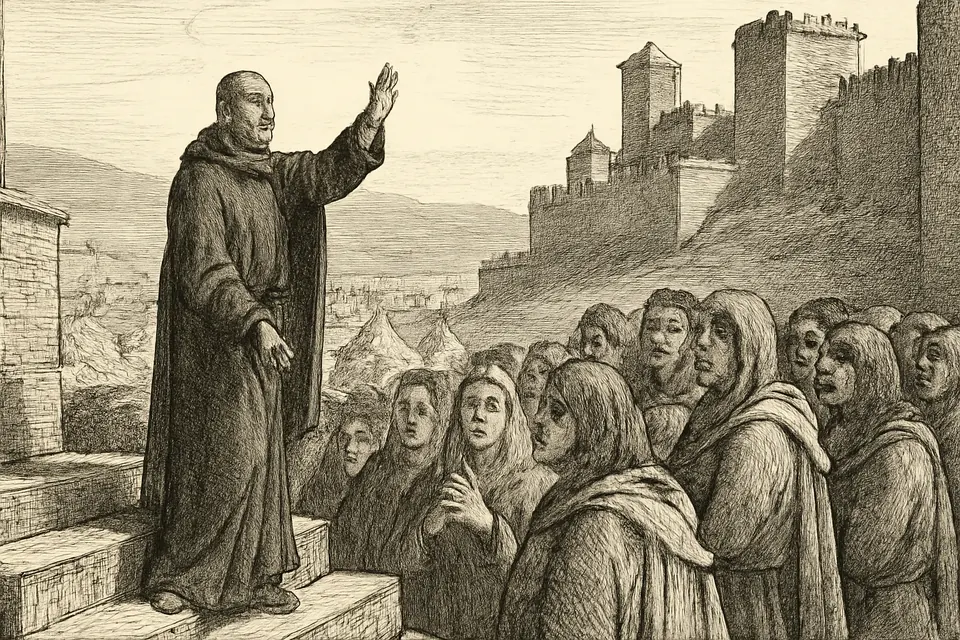
In their fear, the people listened. They renounced their idols, and Barbatus promised them that the siege would be lifted and the emperor beaten, which happened as he said. Butler counts this among the saint's prophecies; we label it traditional, drawn from his early lives.
Barbatus then cut down the sacred tree with his own hands. Italian tradition remembers it as a walnut tree, the famous noce of Benevento.

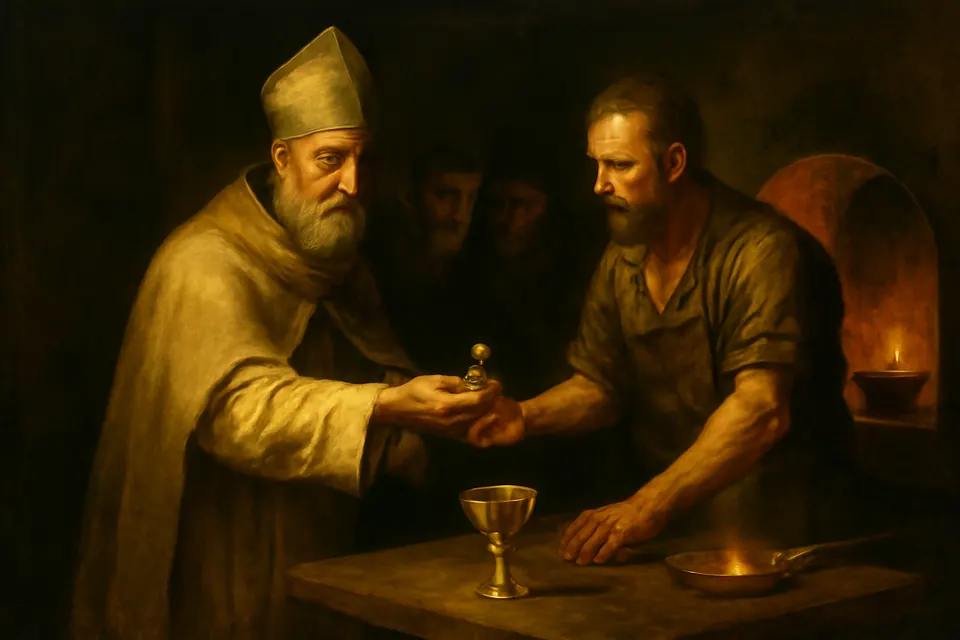
He melted down the golden viper too. Butler says he made it into a chalice; the Catholic Encyclopedia calls it a paten and adds that this sacred vessel was kept in Benevento until the French invasion of 1799.
Bishop of Benevento
Bishop Ildebrand died during the siege, and once peace returned Barbatus was consecrated bishop on March 10, 663. He finished the work he had begun, Butler writes, and rooted out every trace of superstition, from the prince's private rooms to the whole state.
In 680 he took part in the council Pope Agatho held in Rome, and the next year in the Sixth Ecumenical Council at Constantinople, which condemned the Monothelite heresy. He did not long survive it. He died in 682, about seventy years old, after nearly nineteen years as bishop.
The miracles of St. Barbatus
His early lives credit him with foretelling both the siege and its end. These are traditional accounts. The documented fruit of his life is the conversion of a city's rulers and the end of the cult of the serpent and the tree, which the Church of Benevento remembered for centuries.
Why St. Barbatus is the patron of Benevento
Butler says he is "honoured at Benevento among the chief patrons of that city." He was the bishop who brought its Lombard rulers fully into the Christian faith, and the city's Christian identity was in large part his work.
Symbols of St. Barbatus in art
- Bishop's miter and crozier: his office as bishop of Benevento.
- Axe or a felled tree: the sacred walnut tree he cut down.
- Serpent: the golden viper the Lombards venerated, sometimes shown beneath his feet.
- Chalice: the vessel he made from the melted idol.
In southern Italian churches, look for a bearded bishop with a snake or a tree beside him. In the old engraving on this page, demons fly out of the tree as it falls, a way of showing that the worship of the idol had ended.

Feast day and prayer
We keep his feast on February 19, the day the Roman Martyrology names him. The Archdiocese of Benevento keeps it as the feast of one of its patrons.
There is no traditional prayer to St. Barbatus in standard English prayer books. Butler drew a lesson from his life: many people turn to God in fear and forget him when the danger passes, so Barbatus took care that his people's first repentance would grow into a real change of heart. Let us ask him to pray that our own conversions last, and that we let go of whatever idols we still keep. St. Barbatus, pray for us.
Frequently asked questions
Who was St. Barbatus of Benevento?
He was a priest of the seventh century, born near Benevento, who became its bishop in 663. He is remembered for converting the Lombards of the city from their lingering pagan customs and for taking part in the Sixth Ecumenical Council at Constantinople in 680–681.
What did St. Barbatus do with the golden serpent?
Butler says the people of Benevento, including their Lombard duke Romuald, venerated a golden viper. After they repented, Barbatus melted it down and made a chalice for the altar. The Catholic Encyclopedia calls it a paten and says it was kept until the French invasion of 1799.
When is the feast of St. Barbatus?
February 19, the day of his death in 682. It is in the Roman Martyrology and kept in Benevento, but it is not on the General Roman Calendar.
Is St. Barbatus the same as St. Barbas?
Yes. Butler gives his name as "Barbatus, or Barbas," and in Italy he is San Barbato.
Keep exploring
Sources
- Alban Butler, The Lives of the Fathers, Martyrs, and Other Principal Saints, vol. 2 (1866), February 19. His early ministry at Morcone, the golden viper and the sacred tree, the siege by Constans, his consecration on March 10, 663, and the councils of 680 and 681
- Catholic Encyclopedia (1907): Archdiocese of Benevento. The golden serpent made into a paten, kept until the French invasion of 1799