St. Papias of Hierapolis, Apostolic Father
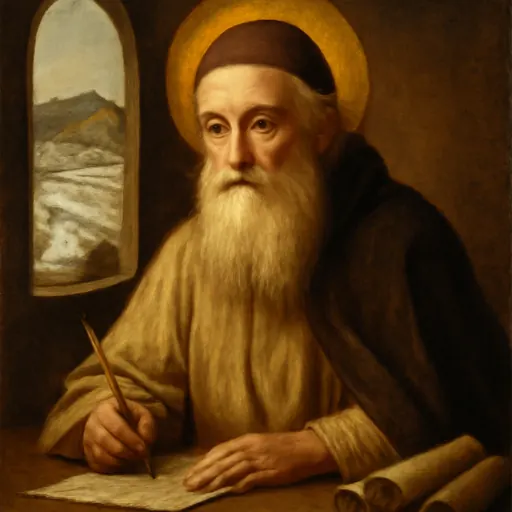
St. Papias of Hierapolis was a bishop of Hierapolis in Phrygia in the early second century and one of the Apostolic Fathers. St. Irenaeus called him "a hearer of John and a companion of Polycarp." His five books, now lost except for fragments, preserve the oldest surviving words on how St. Mark and St. Matthew wrote their Gospels. His feast is February 22.
Who was St. Papias of Hierapolis?
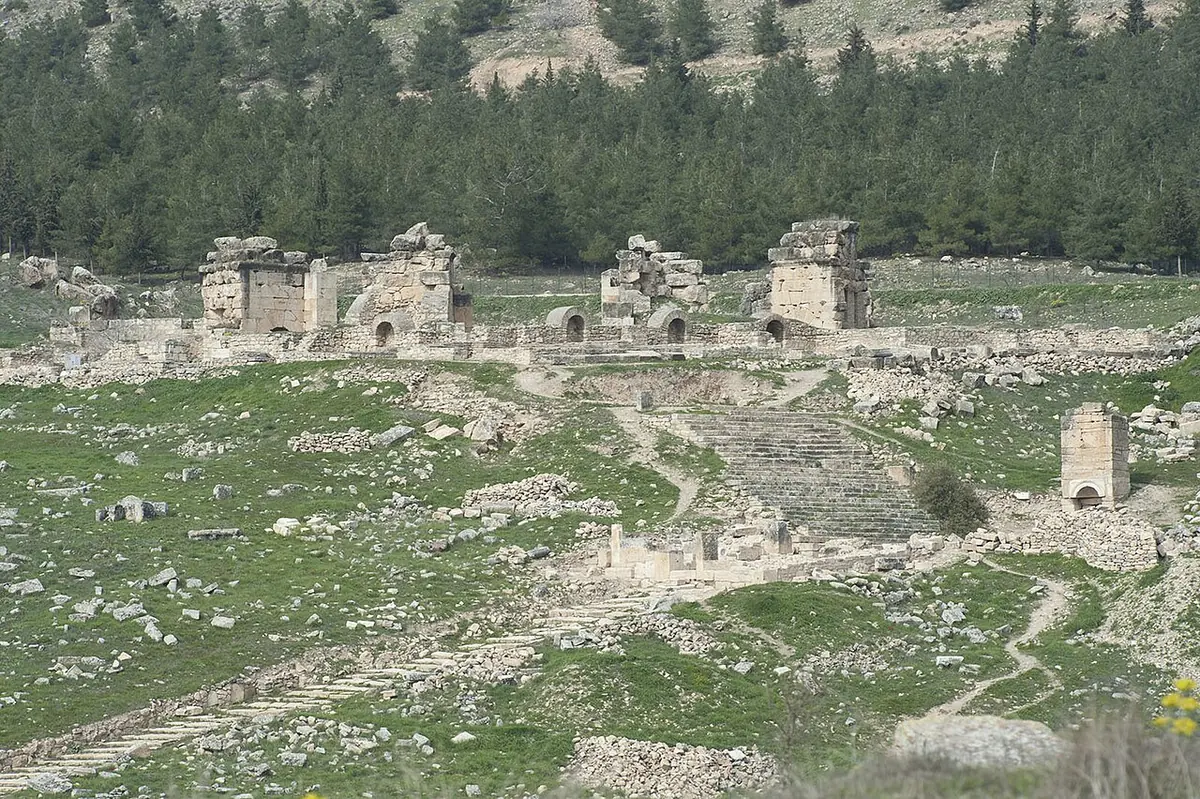
St. Papias of Hierapolis was a bishop in Asia Minor in the generation after the apostles, one of the men the Church calls the Apostolic Fathers. He lived at Hierapolis in Phrygia, a spa city on white mineral terraces above the Lycus valley, near today's Pamukkale in Turkey. He spent his life gathering what the first disciples of Jesus had said, and wrote it down in five books. We keep his feast on February 22.
Those books are lost. What we have are short quotations kept by later writers, above all St. Irenaeus of Lyons, who knew the work around 180, and the historian Eusebius of Caesarea, who read it a century and a half later. Small as they are, these fragments include the oldest words we possess about who wrote the Gospels of St. Mark and St. Matthew.
A hearer of the elders
Irenaeus calls Papias "an ancient man who was a hearer of John and a companion of Polycarp." Eusebius places him alongside St. Polycarp of Smyrna and St. Ignatius of Antioch, the bishops who carried the faith from the apostles into the second century. The Catholic Encyclopedia dates his writing to his old age, somewhere between about 115 and 140.
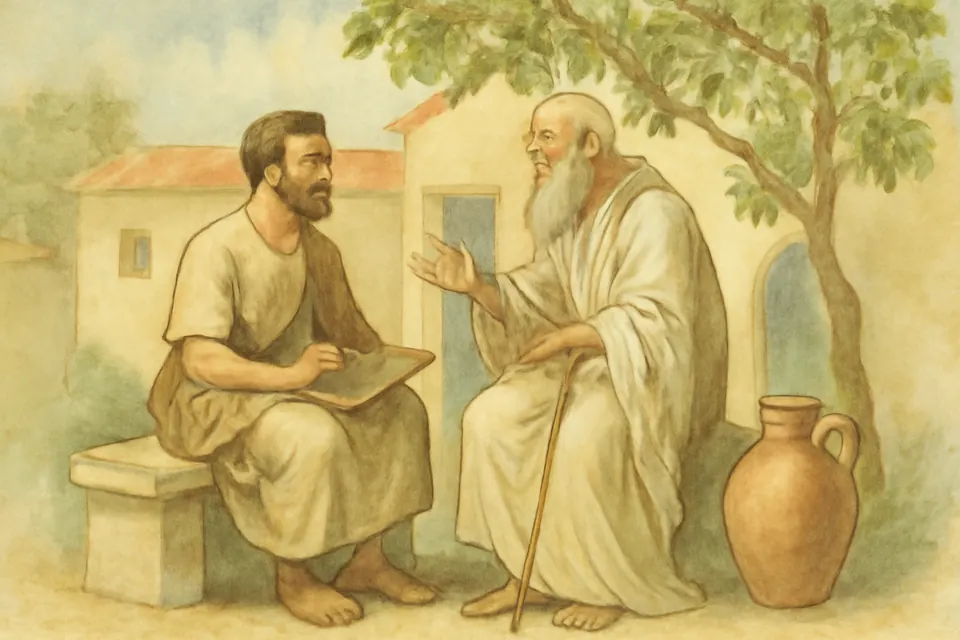
His own preface, which Eusebius copied out, shows us the man at work. He did not trust talkers. "I did not, like the multitude, take pleasure in those that speak much, but in those that teach the truth," he wrote. Whenever a follower of the elders came through Hierapolis, which sat on a main road of the province of Asia, Papias questioned him:
I questioned him in regard to the words of the elders — what Andrew or what Peter said, or what was said by Philip, or by Thomas, or by James, or by John, or by Matthew, or by any other of the disciples of the Lord, and what things Aristion and the presbyter John, the disciples of the Lord, say. For I did not think that what was to be gotten from the books would profit me as much as what came from the living and abiding voice.
Eusebius noticed that the name John appears twice in that list, once among the apostles and once beside Aristion as "the presbyter," and he concluded that Papias meant two different men. Irenaeus had understood Papias to mean the apostle St. John. The question has been argued ever since; we can say only that Papias stood one step from the apostles, close enough to hear their disciples speak.
The daughters of Philip
Hierapolis had its own link with the apostles. Eusebius, citing older writers, says that Philip and his daughters were buried there, and that Papias, "their contemporary," heard "a wonderful tale from the daughters of Philip": that in his time one rose from the dead. Papias also told of Justus Barsabbas, the disciple put forward with Matthias in the Acts of the Apostles, who "drank a deadly poison, and yet, by the grace of the Lord, suffered no harm." Early Christian tradition identified Philip of Hierapolis with St. Philip the Apostle, and a fifth-century shrine to him still stands in ruins on the hill above the city.
What Papias said about the Gospels
These two short passages are why every student of the New Testament knows the name of Papias. On Mark, he passed on what "the presbyter" used to say:
Mark, having become the interpreter of Peter, wrote down accurately, though not in order, whatsoever he remembered of the things said or done by Christ.
On Matthew he wrote: "Matthew wrote the oracles in the Hebrew language, and every one interpreted them as he was able." Scholars have debated for centuries exactly what Papias meant by "oracles" and "Hebrew," but his witness that the Gospel of Mark rests on the preaching of St. Peter has been part of the Church's memory ever since.
The thousand-year kingdom
Papias also taught, from what he took to be the Lord's own words handed down by the elders, that after the resurrection Christ would reign on earth for a thousand years in a renewed, astonishingly fruitful creation. Irenaeus repeats his picture of vines with ten thousand branches and clusters that cry out to be picked. Eusebius disliked this teaching and wrote unkindly that Papias "appears to have been of very limited understanding." The Church did not adopt a literal earthly millennium, and that may be one reason Papias's books were allowed to disappear. Yet Eusebius kept copying from him, because no one else had what Papias had gathered.
Miracles and death
- Reported: the raising of a dead person in Papias's time and Justus Barsabbas's escape from poison, both stories Papias heard and recorded. They are not miracles attributed to Papias himself.
- Traditional: a late tradition says Papias died a martyr. The Catholic Encyclopedia judges it unreliable; the date of his death is unknown.

Symbols of St. Papias in art
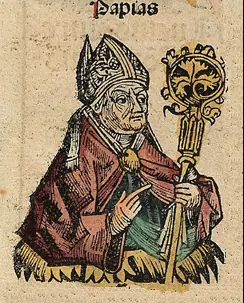
Papias is rarely painted. When he appears, as in the woodcut of the Nuremberg Chronicle (1493), he is a bishop with miter and crosier, sometimes with a book or scroll for the five books he wrote. Eastern icons show him as a gray-bearded bishop in the omophorion holding the Gospel. Look for:
- A book or scroll and pen: the Expositions of the Oracles of the Lord.
- The bishop's vestments: his office at Hierapolis.
Be careful in Rome: the St. Papias in Rubens's altarpiece at the Chiesa Nuova is a Roman soldier martyr, not the bishop of Hierapolis.
Feast day and prayer
We keep the feast of St. Papias on February 22. See the feast day calendar for the other saints of February.
We have not found a traditional prayer to St. Papias. Let us ask his intercession for all who study and teach the Scriptures, that like him we may prefer the truth to fine talk and listen closely to the living voice of the Church. St. Papias, pray for us.
Frequently asked questions
Who was St. Papias of Hierapolis?
A bishop of Hierapolis in Phrygia (near today's Pamukkale, Turkey) in the early second century. He collected the sayings and memories of those who had known the apostles and wrote five books called Expositions of the Oracles of the Lord.
When is the feast of St. Papias?
February 22. He should not be confused with St. Papias the Roman soldier martyr, remembered with St. Maurus on January 29.
What did Papias say about the Gospel of Mark?
Quoting "the presbyter," he wrote that "Mark, having become the interpreter of Peter, wrote down accurately, though not in order, whatsoever he remembered of the things said or done by Christ." Eusebius preserves the passage.
Did Papias know the apostle John?
Irenaeus says Papias was "a hearer of John." Eusebius read Papias's preface and thought Papias meant a second John, "the presbyter," a disciple of the Lord distinct from the apostle. Scholars still debate the point.
Keep exploring
Sources
- Catholic Encyclopedia (1911): St. Papias. Dating of his work, the five books, the presbyters, and the doubtful martyrdom fragment
- Eusebius, Church History, Book III, ch. 39: The Writings of Papias. The preface, the daughters of Philip, Justus Barsabbas, and the passages on Mark and Matthew
- Irenaeus, Against Heresies, Book V, ch. 33. "An ancient man who was a hearer of John"; the saying on the fruitful vines
- Fragments of Papias (Ante-Nicene Fathers, vol. 1)