St. Anne Line: English Martyr Who Sheltered Priests

St. Anne Line (about 1565 to 1601) was an Englishwoman who became a Catholic and spent her widowhood keeping safe houses for priests. She was hanged at Tyburn on February 27, 1601, for harboring a priest, saying she wished she could have sheltered a thousand. She is one of the Forty Martyrs of England and Wales, canonized in 1970.
Who was St. Anne Line?
St. Anne Line was an English widow who kept safe houses for hunted Catholic priests in Elizabethan London and was hanged at Tyburn for it on February 27, 1601. She was frail, often ill and poor, and she was fearless. Her last words on the scaffold are among the most loved sayings of the English martyrs: where she had sheltered one priest, she wished she could have sheltered a thousand.
Pope Paul VI canonized her on October 25, 1970, as one of the Forty Martyrs of England and Wales. In England we keep her memorial on August 30, together with two other laywomen who gave their lives for helping priests, St. Margaret Clitherow and St. Margaret Ward.
A convert, disinherited
She was born Anne Heigham at Dunmow in Essex around 1565, the daughter of William Heigham, a gentleman of means and, the Catholic Encyclopedia says, "an ardent Calvinist." When Anne and her brother told their father they meant to become Catholics, he disowned and disinherited them both.
In 1585 she married Roger Line, a convert who had also been cut off by his family. Soon after the wedding he was arrested for attending Mass. After a short imprisonment he was allowed to go into exile in Flanders, where he died in 1594. Anne was left a young widow with nothing, and, by the Liturgy Office's account, supported herself by teaching and embroidery.
Keeper of a house for priests
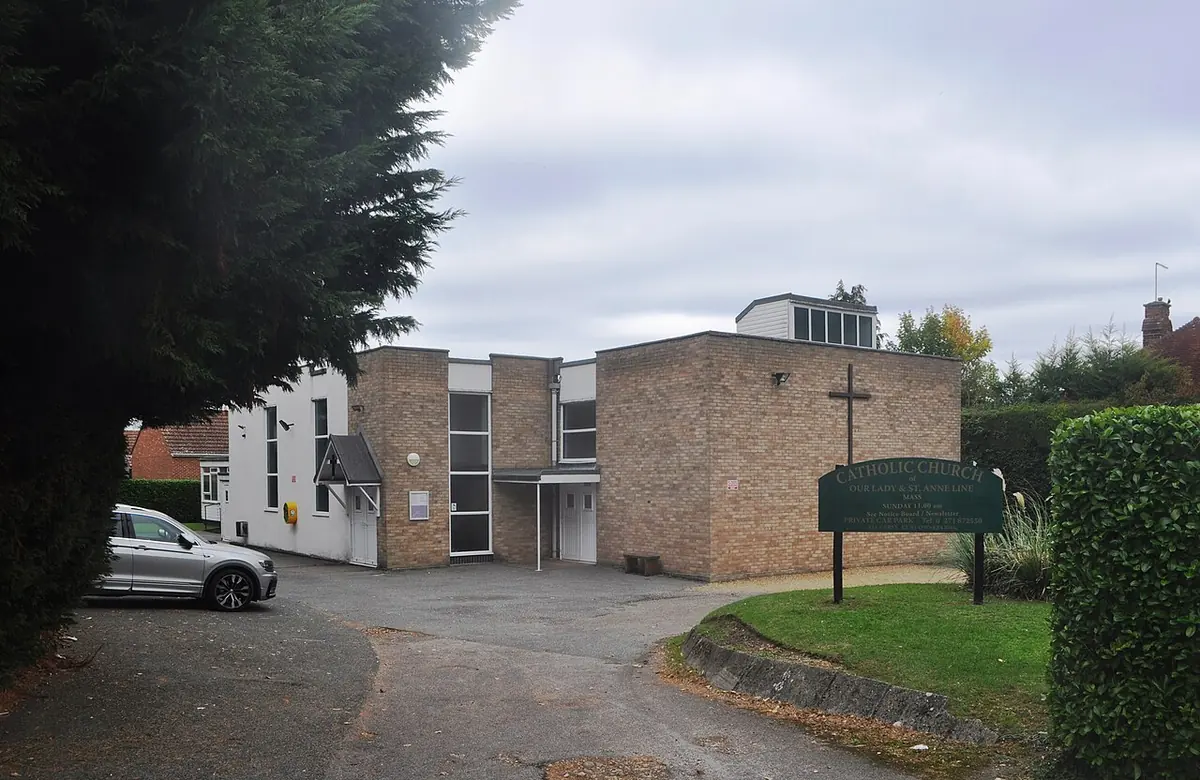
Priests trained abroad were landing secretly in England, and to shelter one was a felony punishable by death. The Jesuit Fr. John Gerard set up a house of refuge for priests in London and put Mrs. Line in charge of it. When Gerard made his famous escape from the Tower of London in 1597, the authorities began to suspect her, so she moved to another house and made it a meeting place for Catholics in the neighborhood.
Bishop Richard Challoner, writing in the eighteenth century from older manuscripts, describes her as a woman "of an infirm constitution of body, troubled with almost continual headaches," so sick each spring and fall that her friends feared for her life. Her soul, he says, was strong. She received Communion at least once a week, always with tears. She longed for martyrdom and envied the priests who seemed closer to it. A priest who had been her confessor, a martyr of 1586, had promised to pray that she would receive that grace too. She also told her confessor of a vision of our Lord in the Blessed Sacrament carrying his cross and inviting her to follow him. These accounts of her inner life are reported: they come from people who knew her, written down by Challoner from Champney's manuscript history.
Arrested at Candlemas
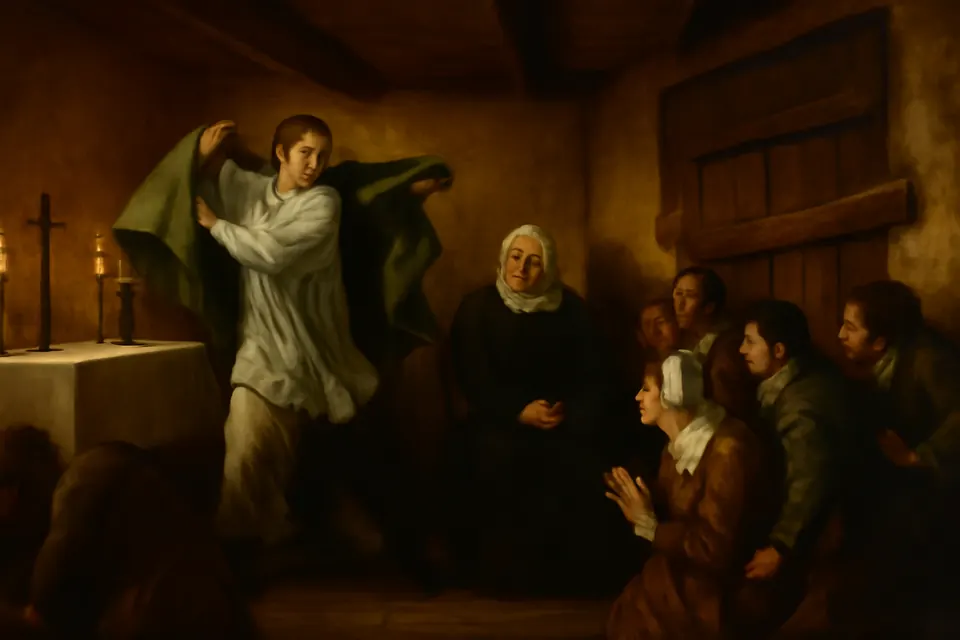
On Candlemas Day, February 2, 1601, Fr. Francis Page, a Jesuit, was about to begin Mass in Anne's rooms when the priest-hunters arrived. The door was strongly barred, and while they forced it, Fr. Page took off his vestments and slipped away among the others. But the altar prepared for Mass was evidence enough. Anne was taken to prison.
She was tried at the Old Bailey on February 26 before Lord Chief Justice Popham. She was so weak, Challoner writes, that she had to be carried into court in a chair. The only evidence was a witness who claimed to have seen a man dressed in white in her house. The jury found her guilty of harboring a priest, and she was condemned to death. Back in Newgate she said that on the day before she was condemned, while she was reading her hours in her prayer book, a light and delightful brightness had shone on and around it. She took it as a sign of what was coming.
Martyrdom at Tyburn
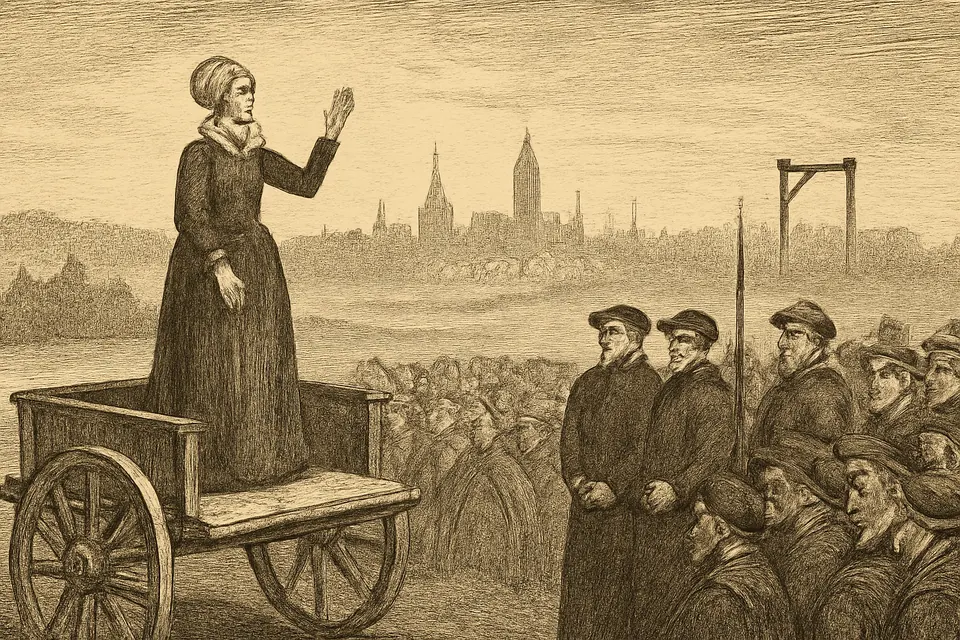
She was taken to Tyburn on the morning of February 27, 1601, without the least sign of fear. There, Challoner records, she said aloud to the people standing by:
I am sentenced to die for harbouring a Catholic priest, and so far I am from repenting for having so done, that I wish, with all my soul, that where I have entertained one, I could have entertained a thousand.
She was hanged before the two priests condemned with her. One of them, Blessed Mark Barkworth, a Benedictine, embraced her body and said, "O blessed Mrs. Line, who hast now happily received thy reward!" Then he and Blessed Roger Filcock, a Jesuit who had often been her confessor, died after her.
Why St. Anne Line is a patron
Anne knew widowhood young and lived it in poverty and faith, so widows ask her prayers. She was a convert who lost her inheritance and her family for the Catholic faith, so converts claim her too. Many Catholics also remember her when they welcome priests and keep their parishes alive in hard times. See our patron saints index.
Symbols of St. Anne Line in art
No portrait of Anne Line survives, so artists give her the look of an Elizabethan gentlewoman:
- Plain dark dress, white ruff and coif: a widow of the 1590s.
- Martyr's palm: the victory of her death.
- Rope or noose: she was hanged, and some images show it gently, around her neck or in her hand.
- An altar or Mass set: the altar found in her rooms on Candlemas Day, the evidence that condemned her.
- Needle and embroidery: the work by which she supported herself, which also suggests the vestments and altar cloths Catholic women made in secret.
Statues of her stand in churches and schools named for her in Essex and East London.
Feast day and places of devotion
Her date in the Roman Martyrology is February 27, the day she died. In England she is celebrated on August 30, and with all the martyrs of the English Reformation on May 4; in Wales, with the Forty Martyrs on October 25. Tyburn Convent near Marble Arch keeps a shrine to the martyrs who died at Tyburn. See our feast day calendar.
Prayer to St. Anne Line
There is no traditional prayer to St. Anne Line by herself. The Church in England and Wales prays the Mass of the English Martyrs on her feast. Let us ask St. Anne Line, in our own words, to pray for widows, for converts who have paid a price for the faith, for priests, and for all who open their homes so that Christ may be present there.
Frequently asked questions
Who was St. Anne Line?
Anne Heigham, the daughter of a Calvinist gentleman of Dunmow in Essex, became a Catholic as a young woman with her brother, and both were disinherited. She married Roger Line, another convert, who was arrested for hearing Mass and died in exile in Flanders in 1594. As a widow she ran houses of refuge for priests in London, the first of them set up by the Jesuit Fr. John Gerard. She was arrested at Candlemas 1601 and hanged at Tyburn on February 27.
What did St. Anne Line say before she died?
Bishop Challoner records her words at Tyburn: "I am sentenced to die for harbouring a Catholic priest, and so far I am from repenting for having so done, that I wish, with all my soul, that where I have entertained one, I could have entertained a thousand."
When is St. Anne Line's feast day?
February 27 in the Roman Martyrology. In England she is celebrated on August 30 together with Sts. Margaret Clitherow and Margaret Ward, and with all the English Martyrs on May 4; in Wales, with the Forty Martyrs on October 25.
Who was executed with St. Anne Line?
Two priests died at Tyburn the same morning: Blessed Mark Barkworth, a Benedictine, and Blessed Roger Filcock, a Jesuit who had often been her confessor. Anne died first, and Barkworth embraced her body before his own death.
Keep exploring
Sources
- Catholic Encyclopedia (1910): St. Anne Line (Stanley Quinn). Her family and conversion, her husband's exile and death in 1594, Fr. Gerard's house, the Candlemas raid, the trial of February 26, 1601, and the two priests executed with her
- Richard Challoner, Memoirs of Missionary Priests (1924 edition), Ann Line, Gentlewoman (archive.org). Her poor health, weekly Communion, desire for martyrdom, the vision and the light on her primer, the trial before Popham, her words at Tyburn and Barkworth's farewell
- Liturgy Office of England and Wales: National Calendar for England, Part II (August 30). Her birth at Dunmow about 1565, her marriage in 1585, her teaching and embroidery, and the shared memorial on August 30