Blessed Maria Adeodata Pisani, Benedictine Nun of Mdina, Malta
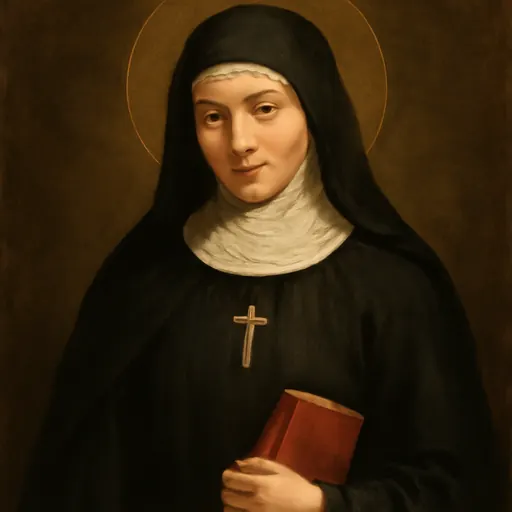
Blessed Maria Adeodata Pisani (1806–1855) was born in Naples to a Maltese baron, came to Malta at nineteen and spent her whole religious life as a Benedictine nun in St. Peter's Monastery at Mdina, serving as sacristan, nurse, portress, novice mistress and abbess. Pope John Paul II beatified her in Malta on May 9, 2001, and her feast is February 25, the day she died.
Who was Blessed Maria Adeodata Pisani?
Blessed Maria Adeodata Pisani was a Benedictine nun of Mdina, the old walled capital of Malta, who lived twenty-seven quiet years in the enclosure of St. Peter's Monastery and was beatified by Pope John Paul II in 2001. Born in Naples to a Maltese baron and a Neapolitan mother, she came to Malta at nineteen, gave up her inheritance and a place in society, and served her sisters in nearly every office of the house, ending as abbess.
At her beatification the Pope summed up her life in a few words: "Prayer, obedience, service of her Sisters and maturity in performing her assigned tasks: these were the elements of Maria Adeodata's silent, holy life."
The life of Blessed Maria Adeodata Pisani
A hard childhood in Naples
Maria Teresa Pisani was born in Naples on December 29, 1806. Her father, Baron Benedetto Pisani Mompalao Cuzkeri, was a Maltese landowner; her mother came from a Neapolitan family. The marriage failed, and the little girl was raised by her paternal grandmother, the Baroness Pisani, at Pizzofalcone. When her grandmother died, Maria Teresa was ten, and she was sent to a Catholic boarding school, where she made her First Communion and was confirmed. The Vatican biography notes that she kept the memory of that Christian schooling all her life.
In 1820–1821 her father took part in the armed rising in Naples. He was arrested and condemned to death; the sentence was changed to exile, and he went to Malta. Maria Teresa lived with her mother in Naples until 1825, when the two moved to Rabat, the town just outside the walls of Mdina.
A call before Our Lady
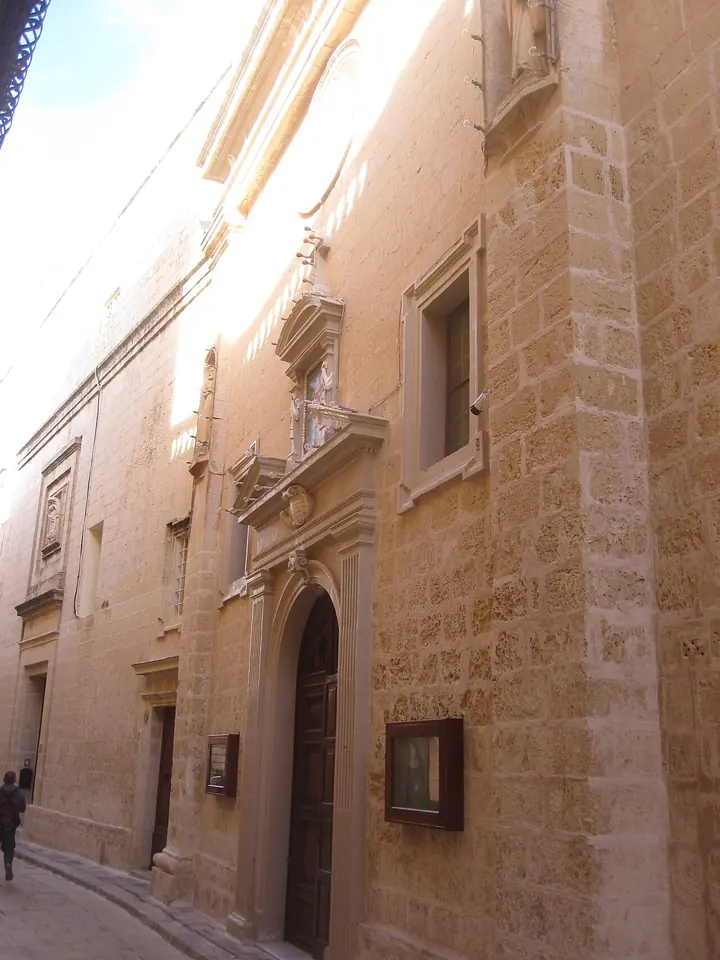
In Malta she kept away from the social life her family led and went out mostly for daily Mass. One day a sermon on the Last Judgment struck her deeply, and while praying before an image of Our Lady of Good Counsel she understood that God was calling her to religious life. Her parents opposed it. On July 16, 1828, she entered the Benedictine monastery of St. Peter in Mdina, near her home, and took the name Maria Adeodata, "given by God."

The nuns found her "fully instructed in spirit," and only eight days after she arrived the novice mistress asked her to help teach the girls being educated in the house. On March 4, 1830, she renounced the property she had inherited from her grandmother, and on March 8 she made her solemn profession.
Every office in the house
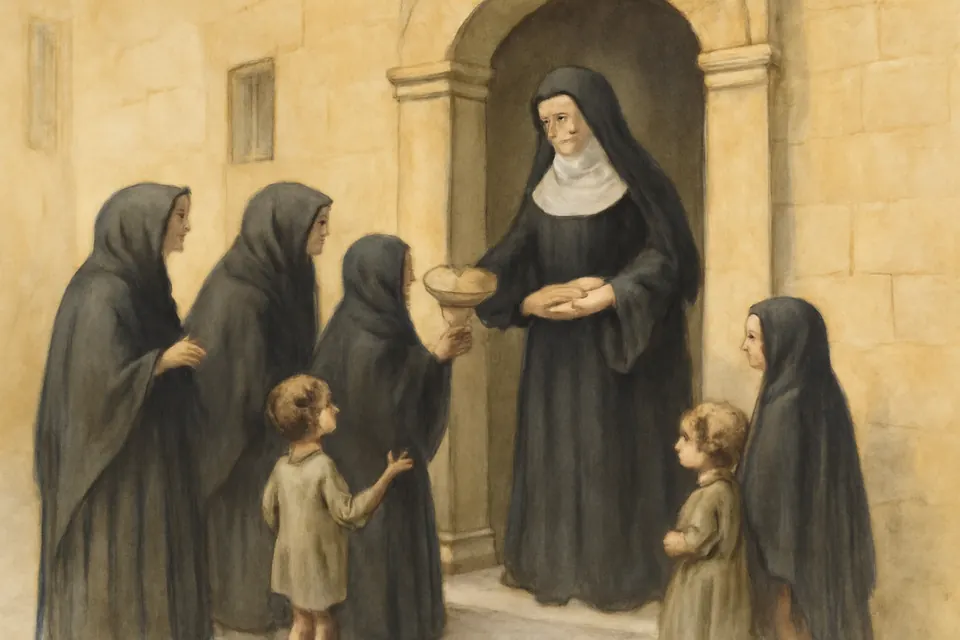
She never sought office, but over twenty-five years she held almost all of them. Three times she was sacristan and three times infirmarian, the two she loved best: one kept her near the Lord in the chapel, the other let her serve the sick sisters. She also took her turn as portress, though it took her from silence. At the door she met the poor of Mdina, and with permission she gathered them, fed them and taught them the faith.
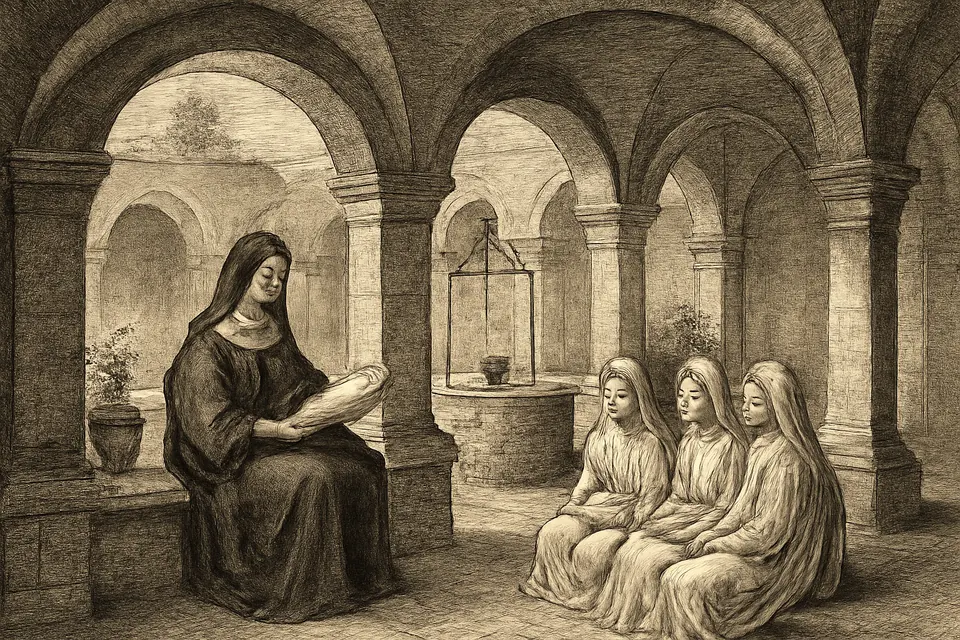
On June 30, 1847, she was elected novice mistress, and she formed the young sisters for four years. On June 30, 1851, the community elected her abbess. In her two years she brought in nothing new; she taught by example, recalling the sisters to the Rule. In 1853 she was elected to the council, but heart disease, made worse by her fasts and penances, kept her from finishing the term.

Her writings and her death
Maria Adeodata left spiritual writings, above all a treatise known as The Mystical Garden, which bear witness to her prayer. After a long illness she died on February 25, 1855, at the age of forty-eight.
The miracle and the beatification
Her cause opened in 1893 but stood still from 1913 to 1989, the Vatican biography says, for lack of funds. The miracle examined for her beatification is old: in 1897 Mother Maria Giuseppina Damiani, then abbess of the Benedictine monastery at Subiaco, the place where St. Benedict began his monastic life, was extraordinarily healed after prayer to Sister Adeodata. This healing is an approved miracle, recognized by the decree promulgated before John Paul II on April 24, 2001, together with the decree on her heroic virtues.
On May 9, 2001, at the Granaries of Floriana, the Pope beatified her together with two great Maltese teachers of the faith, Father George Preca and Ignatius Falzon. Like Mary of Bethany, he said, "she sat at the Lord's feet and listened to his teaching." He commended to her intercession the renewal of religious life.

Symbols of Blessed Maria Adeodata Pisani in art
Her images are portraits rather than scenes, and they are recent; she lived in the time of painted portraits, and no photograph of her is known to us. They show:
- Benedictine habit: black habit and veil with a white wimple.
- Book: for her spiritual writings and for the novices she taught.
- Crucifix: for her life of penance and prayer.
- Crozier: sometimes added for her two years as abbess.
Feast day and where she is honored
We keep her feast on February 25. She is honored in Malta, above all at St. Peter's Monastery in Mdina, her community. See our feast days calendar.
Praying with Blessed Maria Adeodata Pisani
We have not found a traditional English prayer to Blessed Maria Adeodata, so we do not print one. Let us ask her, as John Paul II did, to pray for men and women in religious life, and for children from broken homes, for those who care for the sick, and for all who serve God in hidden, ordinary tasks. Blessed Maria Adeodata Pisani, pray for us.
Frequently asked questions
Who was Blessed Maria Adeodata Pisani?
Maria Teresa Pisani, born in Naples in 1806, the daughter of a Maltese baron. She moved to Malta in 1825, entered St. Peter's Benedictine Monastery in Mdina in 1828 as Sister Maria Adeodata, and served her community in almost every office, including abbess from 1851 to 1853. She died in 1855.
When is the feast of Blessed Maria Adeodata Pisani?
February 25, the anniversary of her death at Mdina in 1855.
What miracle led to her beatification?
The extraordinary healing in 1897 of Mother Maria Giuseppina Damiani, then abbess of the Benedictine monastery of Subiaco in Italy, after prayer to the Servant of God. It was approved in 2001.
Was Blessed Maria Adeodata Pisani an abbess?
Yes. After serving as sacristan, infirmarian, portress and novice mistress, she was elected abbess of St. Peter's Monastery in Mdina on June 30, 1851, and served two years.
Keep exploring
Sources
- "Maria Adeodata Pisani (1806–1855)," biography for the beatification, Holy See (vatican.va). Her offices in the monastery with their dates, her care for the poor at the door, profession on March 8, 1830, the cause begun in 1893 and halted 1913–1989, and the 1897 healing of Mother Damiani of Subiaco
- John Paul II, homily at the Mass of beatification, Floriana, Malta, May 9, 2001 (vatican.va). The Pope's words on her life
- "Bł. Maria Adeodata Pisani," from L'Osservatore Romano, Polish edition, 7–8/2001 (Opoka). Her father's exile after 1821, the sermon on the Last Judgment and the image of Our Lady of Good Counsel, entry on July 16, 1828, renunciation of her inheritance on March 4, 1830, and the decrees of April 24, 2001