St. Oswald of Worcester
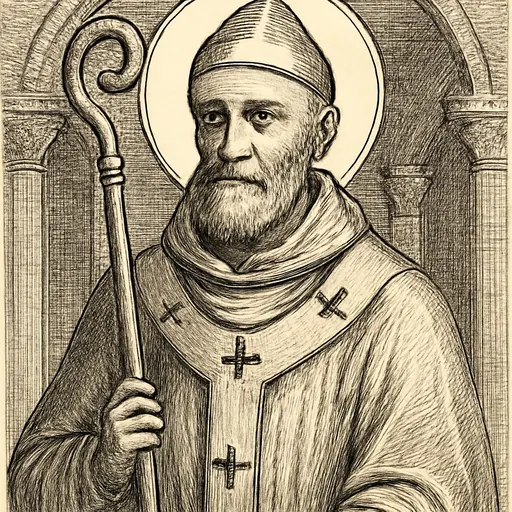
St. Oswald of Worcester (died 992) was an English monk of Danish family who became bishop of Worcester in 962 and archbishop of York in 972. With St. Dunstan and St. Ethelwold he led the revival of Benedictine life. He died on February 29, 992, while washing the feet of the poor. His feast is February 28.
Who was St. Oswald of Worcester?
St. Oswald of Worcester was a tenth-century English monk who became bishop of Worcester and then archbishop of York, and who, with St. Dunstan and St. Ethelwold of Winchester, brought the Rule of St. Benedict back to life in England after the Viking wars. He founded Ramsey Abbey, filled his dioceses with monks and scholars, and died on February 29, 992, on his knees, washing the feet of the poor.
He is a different man from the warrior-king St. Oswald of Northumbria, who died three centuries earlier. We keep the feast of the bishop on February 28.
The life of St. Oswald of Worcester
A Danish family and a monastic calling
Oswald was born in England to a family of Danish descent. His uncle Odo, archbishop of Canterbury, raised him and had him taught by the scholar Fridegode. For a time Oswald was dean of a house of secular canons at Winchester, but he wanted a stricter life. He crossed to France and entered the Benedictine abbey of Fleury on the Loire, where Odo himself had received the monastic habit. He was ordained priest there.
Bishop of Worcester
In 959 he came home and joined his kinsman Oskytel, archbishop of York. St. Dunstan noticed him and had him named bishop of Worcester, and Dunstan consecrated him in 962. With the support of King Edgar, Oswald and Dunstan worked to replace lax clerics with monastic communities. The Catholic Encyclopedia lists the houses where he established monks: Westbury, Pershore, Winchcombe and Worcester itself, and he restored the ancient monastery of Ripon.
Ramsey Abbey
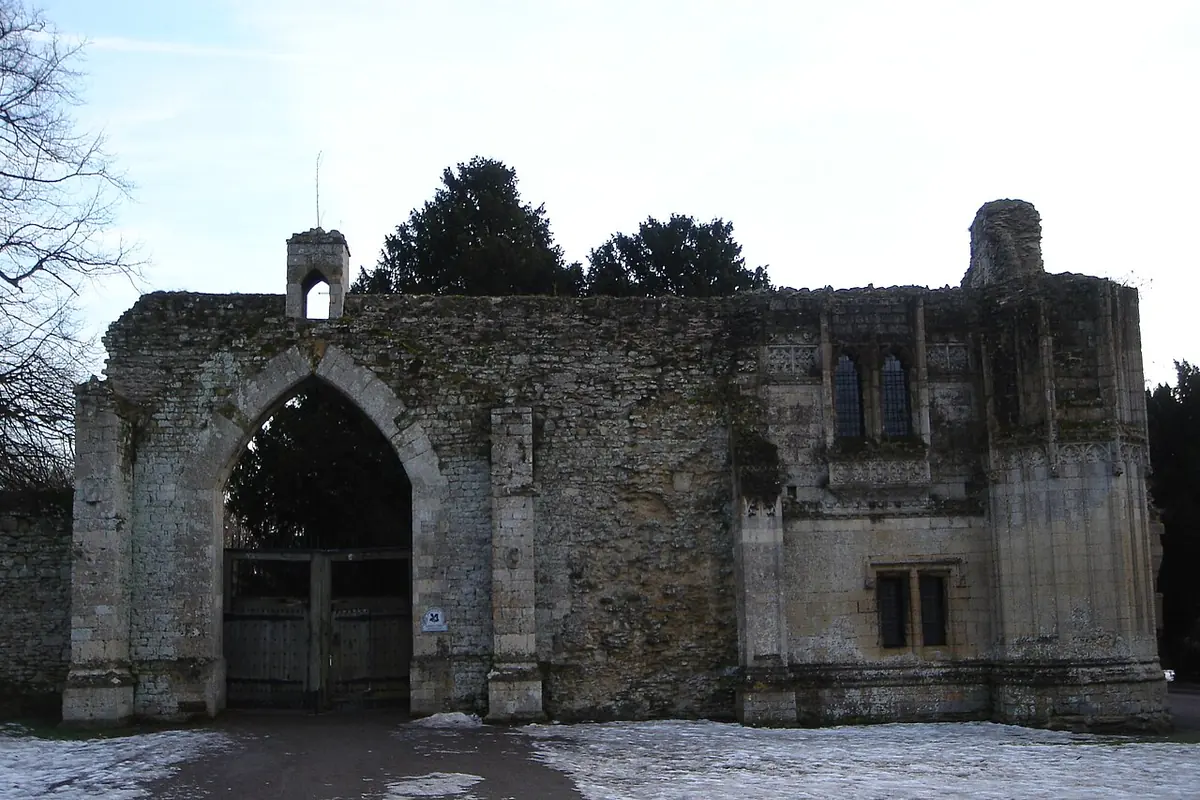
His best-loved foundation was Ramsey, on an island in the fens of Huntingdonshire. Its church was dedicated in 974 and, after an accident to the building, again in 991. Oswald invited scholars from Fleury to Ramsey, and it became one of the great schools of late Anglo-Saxon England. The anonymous life written by a monk of Ramsey who knew him is still, with Eadmer's later life, the best source for him.
Archbishop of York
In 972, by the joint action of Dunstan and King Edgar, Oswald was made archbishop of York. He traveled to Rome to receive the pallium from Pope John XIII. With the pope's approval he kept the diocese of Worcester as well and often lived there to care for his monks. At York he gathered the relics of the saints from the ruins of Ripon and sent some to Worcester.
When Edgar died in 975, Ælfhere, ealdorman of Mercia, broke up many of the new monastic communities. Ramsey survived because Æthelwine, ealdorman of East Anglia, protected it. The Catholic Encyclopedia notes that Oswald "used a gentler policy than his colleague Ethelwold and always refrained from violent measures."
His death
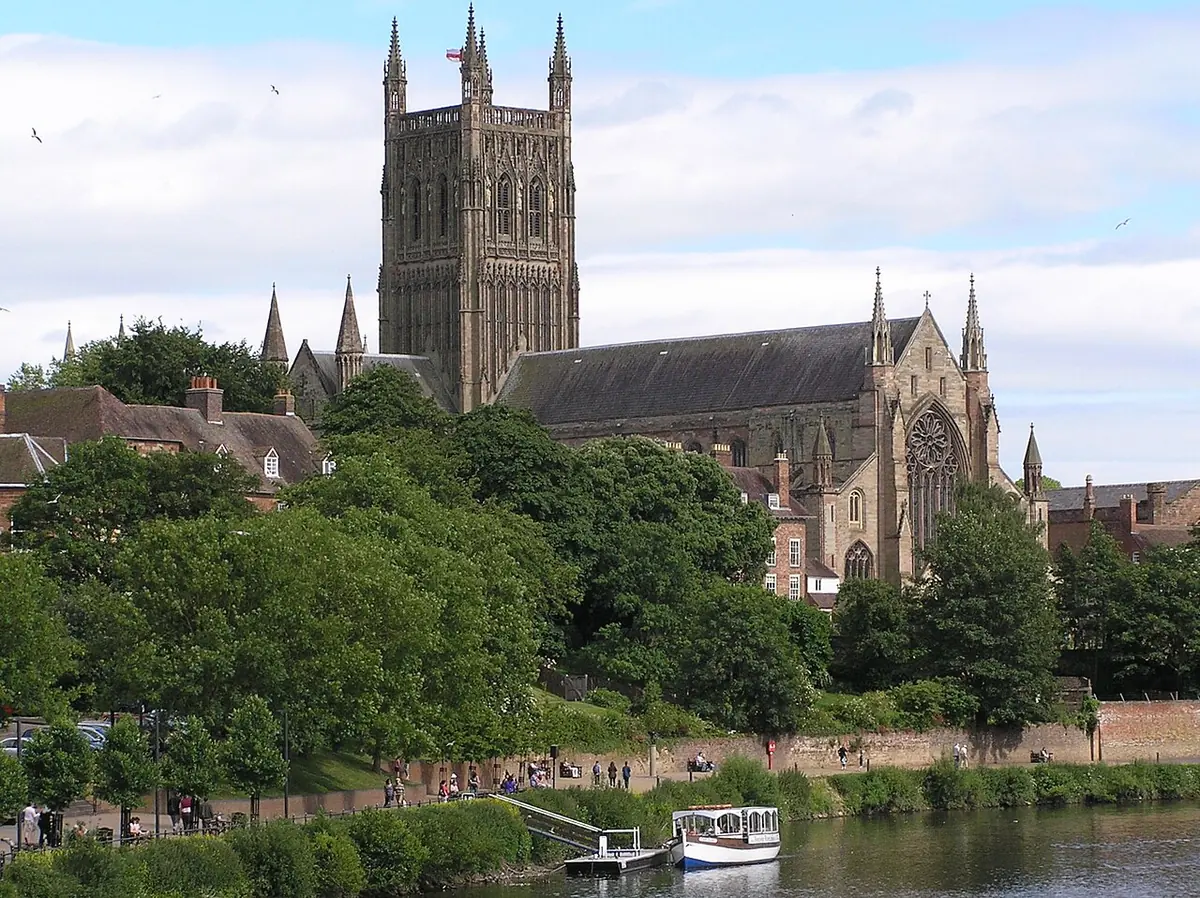
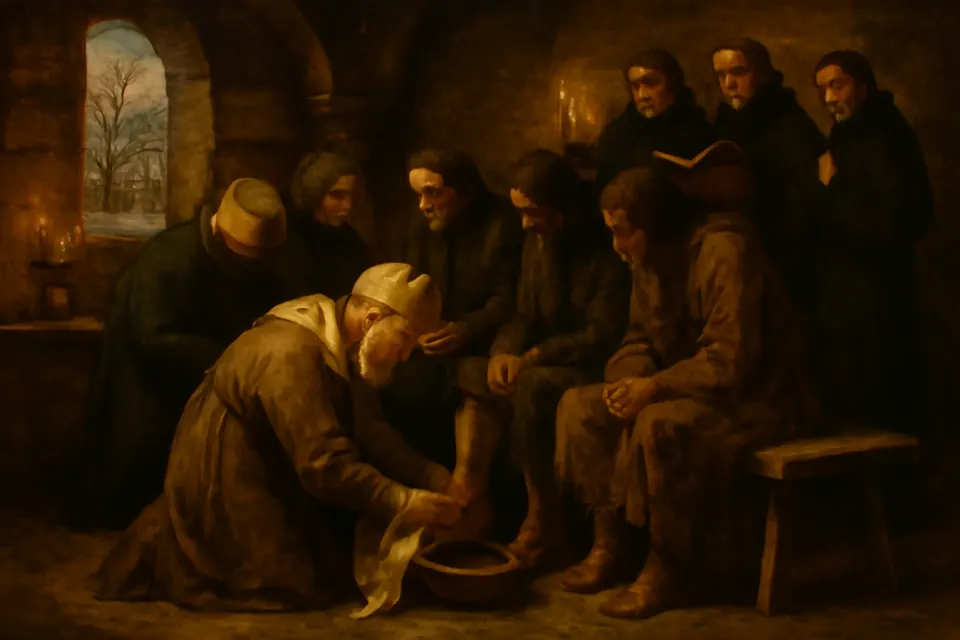
Every day in Lent, Oswald washed the feet of a group of poor men and served them. On February 29, 992, he died in the very act of washing their feet. He was buried in the church of St. Mary at Worcester, the church that grew into the present cathedral.
Miracles of St. Oswald
Eadmer of Canterbury, writing about a century after his death, gave his work the title Life and Miracles of Oswald, recording the wonders told of him. These are reported miracles from medieval monastic writers; none was examined by a formal process, since Oswald was honored as a saint long before the modern procedures of canonization.
Symbols of St. Oswald of Worcester in art
St. Oswald is shown as a Benedictine bishop. Look for:
- Miter, crozier and pallium: his rank as bishop and, with the pallium, as archbishop of York.
- A basin and towel: recalling the way he died, serving the poor.
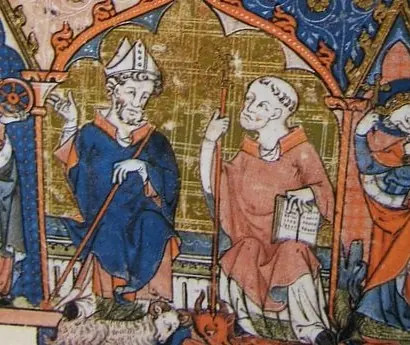
- A ram: in the Ramsey Psalter he stands above a ram, a picture-pun on the name of his abbey of Ramsey, as Abbot Eadnoth stands above a bull.
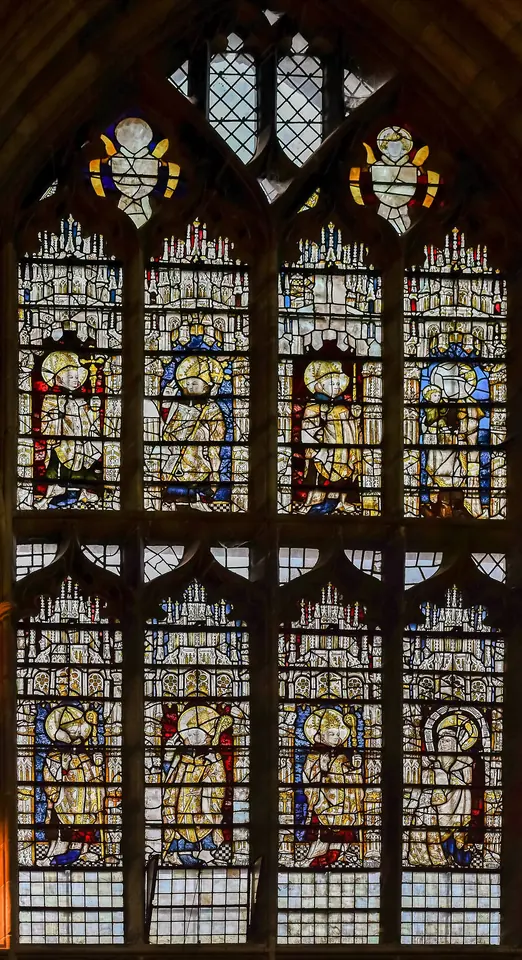
He appears among the bishop saints in the late-medieval glass of Great Malvern Priory in Worcestershire, in the lower row, second from the left. Because he shares a name with the crowned king of Northumbria, check for a crown: the king carries a scepter and often a ciborium or a raven; the bishop never wears a crown.
Feast day and prayer
We keep his feast on February 28. His shrine at Worcester did not survive the Reformation, but the cathedral that grew from his church still stands by the Severn. See our feast days calendar for the other saints of February.
No traditional prayer to St. Oswald survives in common use. Let us ask his intercession in the spirit of his last day: St. Oswald, faithful bishop and servant of the poor, pray for bishops and priests, for monks and all who keep a rule of prayer, and for those who serve the poor with their own hands. St. Oswald, pray for us.
Frequently asked questions
When is the feast day of St. Oswald of Worcester?
February 28. He died on February 29, 992, and some calendars keep his feast on February 29 in leap years.
How did St. Oswald of Worcester die?
During Lent he washed the feet of poor men every day, and he died in the act of doing so, on February 29, 992, according to the Catholic Encyclopedia.
Is St. Oswald of Worcester the same as St. Oswald of Northumbria?
No. St. Oswald of Northumbria was a Christian king killed in battle in 642. St. Oswald of Worcester was a monk-bishop who lived three centuries later.
What monasteries did St. Oswald found?
His most famous foundation was Ramsey Abbey in Huntingdonshire, dedicated in 974. He also placed monks at Westbury, Pershore, Winchcombe and Worcester, and restored Ripon.
Keep exploring
Sources
- Catholic Encyclopedia (1911): St. Oswald, Archbishop of York. His uncle Odo, Fleury, his consecration by Dunstan in 962, his foundations and their dates, the pallium from John XIII, the reaction after 975, the relics of Ripon, his death and burial, and his feast
- The Historians of the Church of York and its Archbishops, vol. 1, ed. James Raine (1879), on archive.org. The anonymous life of Oswald by a monk of Ramsey, the earliest source
- The Historians of the Church of York and its Archbishops, vol. 2, ed. James Raine, on archive.org. Eadmer's Life of St. Oswald and his Miracles