St. Cyril of Constantinople, Carmelite Hermit of Mount Carmel
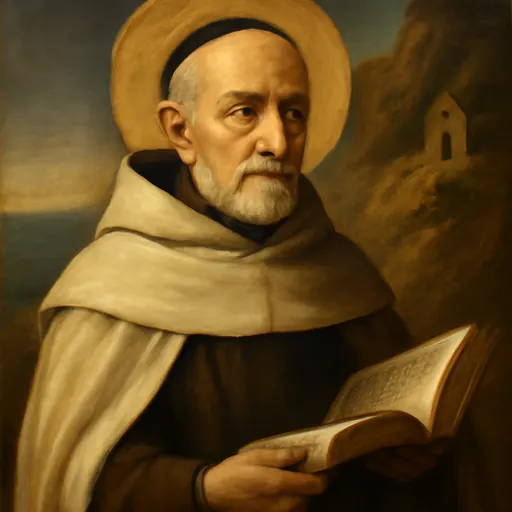
St. Cyril of Constantinople is a thirteenth-century hermit and priest of Mount Carmel, remembered as an early prior of the Carmelites who died about 1235. Almost nothing about him is certain; the Carmelite Order honored him as a saint from 1399 and kept his feast on March 6 until the liturgical reform after Vatican II. A famous medieval prophecy, the Angelic Oracle, was attributed to him, wrongly.
Who was St. Cyril of Constantinople?
St. Cyril of Constantinople is one of the shadowy first saints of the Carmelite Order, a priest and hermit of Mount Carmel in the early thirteenth century. The Catholic Encyclopedia sums up the history in one line: "All that is known is that he was prior of Mount Carmel, some say for twenty-seven, others, more correctly, for three years, and that he had the reputation of being a prophet." He died about 1235.
The Carmelite historian Adrian Staring went further and called him "a purely literary figure," a name that lived in books and liturgy more than in any record of his own time. We honor him here as the Carmelite family honored him for nearly six centuries, and we are honest that his story is mostly traditional.
The life of St. Cyril, as tradition tells it
A hermit on Mount Carmel
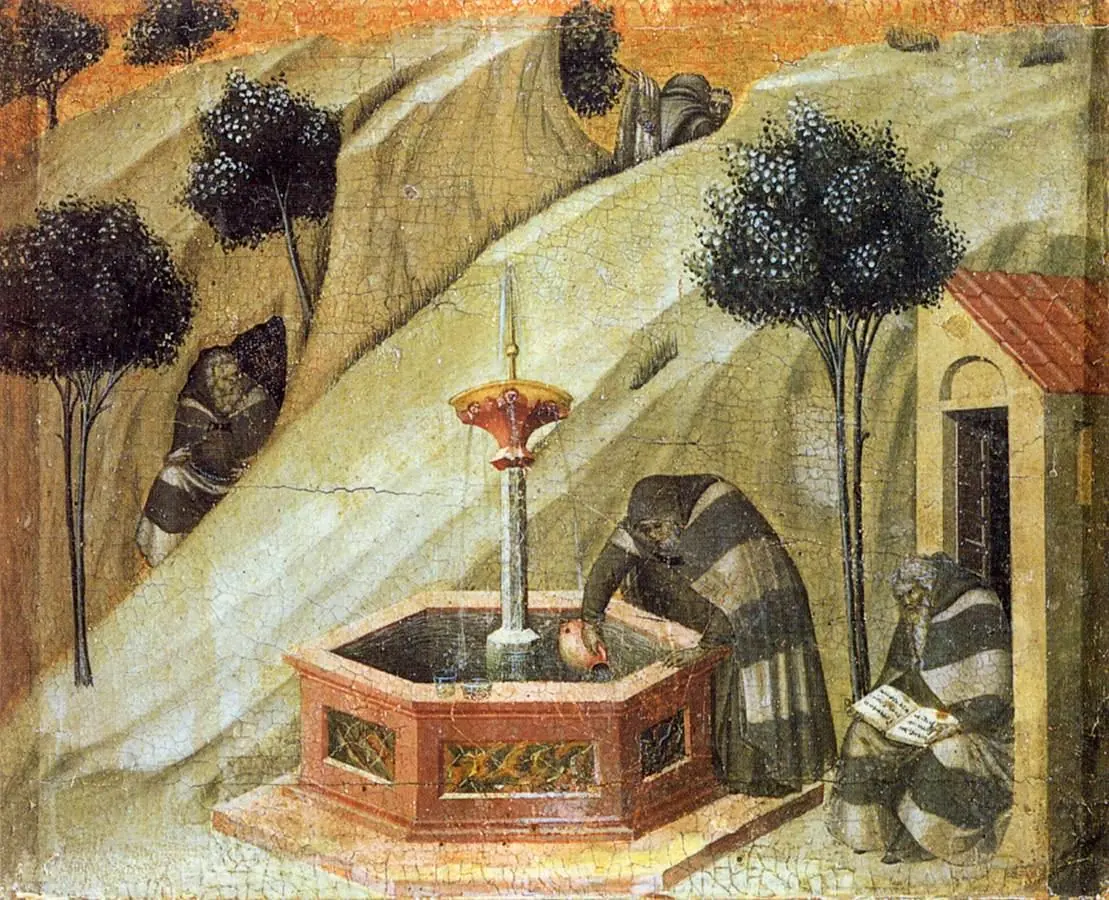
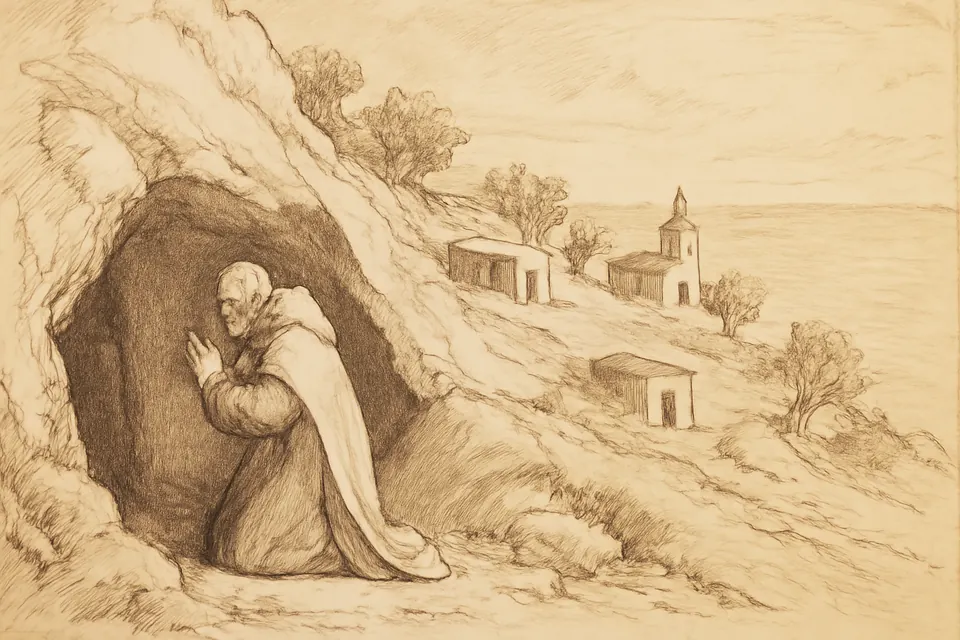
In the late twelfth century, Latin hermits settled on the slopes of Mount Carmel, near the spring the Bible links with the prophet Elijah. They became the Order of the Brothers of the Blessed Virgin Mary of Mount Carmel, the Carmelites. According to the Carmelite chronicler John Grossi, writing about 1400, Cyril was one of their early leaders; Grossi listed him second among the order's generals in one book and third in another.
Born in Constantinople?
His name links him to Constantinople, and later writers built a whole life on it: that he was born there about 1126, was sent by the Byzantine emperor Manuel Komnenos to the pope to work for the reunion of the churches, converted a sultan, and preached in Armenia. Staring calls these details "completely legendary." The German Ökumenisches Heiligenlexikon notes that the Carmelite lists of generals made about 1362 and 1395 do not mention him at all, while the Carmelite Philip Ribot, about 1370, speaks of him as a prophet and hermit of Mount Carmel.
The Angelic Oracle
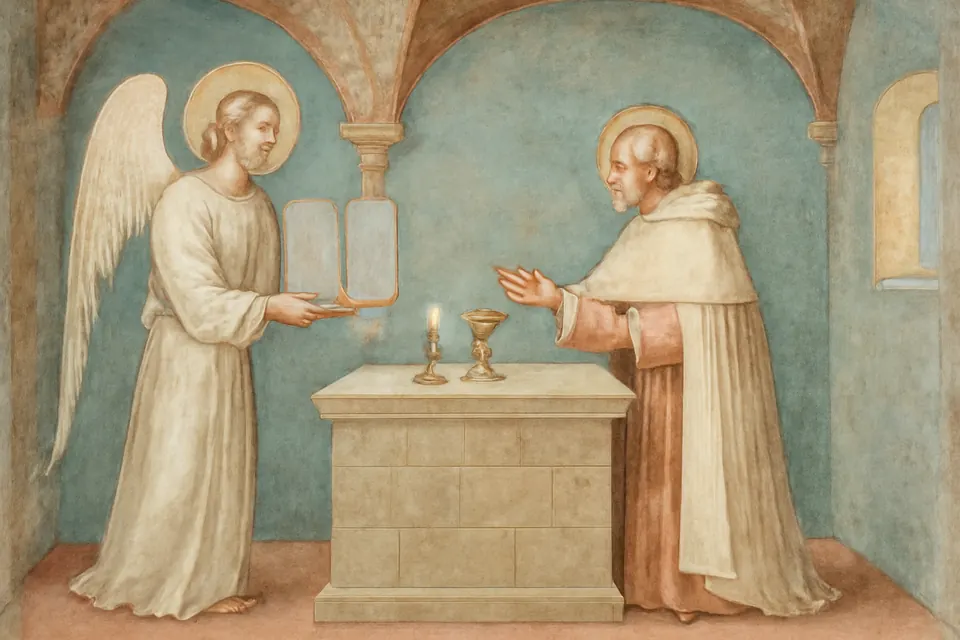
The legend that made Cyril famous says that an angel appeared to him while he was offering Mass and gave him two silver tablets inscribed in Greek with prophecies. Cyril translated them into Latin and sent them to the abbot Joachim of Fiore, who answered with a commentary.
The text itself is real, but it is not his. The Oraculum angelicum is a long document in eleven chapters "in incomprehensible language," first mentioned by Arnold of Villanova about 1295. It was prized by the Franciscan Spirituals; Telesphorus of Cosenza later applied it to the Western Schism. The Catholic Encyclopedia explains that this pseudo-prophecy had first been attributed to St. Cyril of Jerusalem; when Carmelites at Paris came across it, they ascribed it to their own former prior. A letter on the history of the order, supposedly from Cyril to a prior named Eusebius, was likewise written by someone else.
All of this belongs to legend. No miracle connected with Cyril was ever examined, and we label the vision of the angel traditional.
How the Carmelites honored him
In 1399 the Carmelite general chapter proposed Cyril for veneration as a confessor and a doctor. That second title came from a mistake. Many fifteenth- and sixteenth-century Carmelite breviaries mixed him up with St. Cyril of Alexandria, even claiming he had won approval of the order's name at the Council of Ephesus in 431. When the error was noticed in 1430, the title of doctor was defended by crediting him with a lost book on the procession of the Holy Spirit, of which no trace exists. The confusion lingered in the Venice Breviary of 1542.
After 1585 the breviary lessons for his feast took in the Oracle and the other legends. Staring records that "before the actual liturgical reform, the saint's feast was celebrated on March 6." His feast is no longer kept. The Carmelite family today honors other early saints of the order, among them St. Simon Stock, St. Angelus and St. Peter Thomas.
Symbols of St. Cyril of Constantinople in art
Because his cult hardly spread outside the Carmelite Order, images of him are rare. Mary Clare Celletti, writing on his iconography, describes him in a Carmelite habit, of mature age, with a short white beard. In the frescoes of Gherardo Starnina in the Carmelite church of Florence, he holds an open book inscribed in Latin with the words "The poor Cyril, a priest and hermit of Mount Carmel." In Rome, at the Carmelite church of San Martino ai Monti, a seventeenth-century fresco by Jan Miel shows him baptizing a sultan, from the legend of his mission to the East.
The best-known image is by Francisco de Zurbarán, now in the Museum of Fine Arts in Boston. He paints Cyril in the white cloak the Carmelites wore over their brown habit, holding a book and looking up toward heaven.

Mount Carmel today
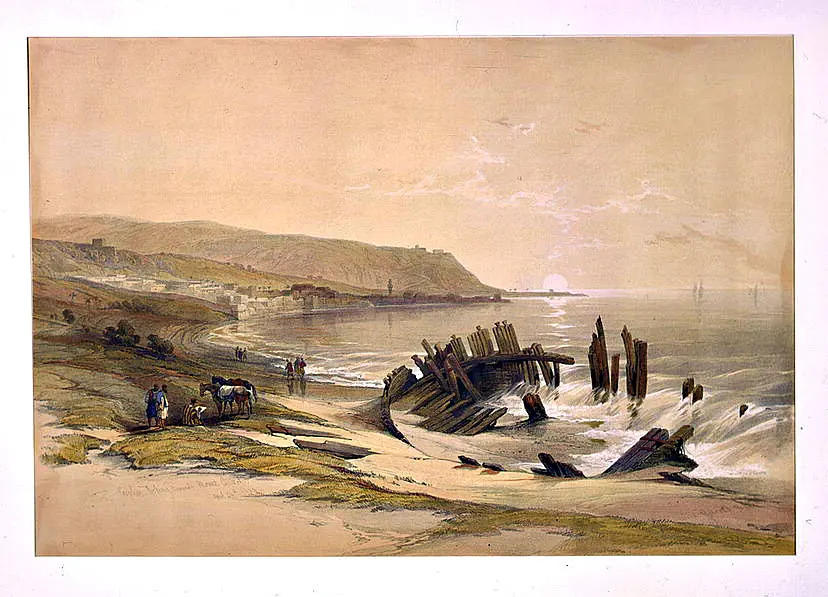
The Heiligenlexikon places his grave on Mount Carmel, but no shrine or relic of his is known today. The mountain itself rises above Haifa in the Holy Land, and the Carmelites still keep their mother house there, the monastery of Stella Maris. Pilgrims who honor Our Lady of Mount Carmel walk the same slopes where the first hermits prayed.
Prayer to St. Cyril of Constantinople
We have not found a prayer to St. Cyril in a source we could verify, so we do not print one. With him, let us ask the Lord for the gift Carmel prizes most: to live in his presence in silence and prayer. And let us ask for the honesty to love the saints as they truly were.
St. Cyril of Constantinople, pray for us.
Frequently asked questions
Who was St. Cyril of Constantinople?
A Carmelite priest and hermit on Mount Carmel in the early thirteenth century, said to have been prior there and to have died about 1235. Later legends made him a Greek from Constantinople and a prophet. Historians consider his life almost entirely legendary.
When is the feast of St. Cyril of Constantinople?
The Carmelites kept it on March 6 until the reform of their calendar after the Second Vatican Council. He is not in the current General Roman Calendar.
What is the Angelic Oracle of St. Cyril?
A long, obscure prophetic text in eleven chapters, said to have been written on two silver tablets that an angel gave Cyril during Mass. It was circulating by about 1295 among the Franciscan Spirituals and was later applied to the Western Schism. The Catholic Encyclopedia calls it a pseudo-prophecy; Cyril did not write it.
Is St. Cyril of Constantinople the same as St. Cyril of Alexandria?
No. Cyril of Alexandria was the fifth-century patriarch and Doctor of the Church. Fifteenth- and sixteenth-century Carmelite breviaries confused the two, which is how the Carmelite Cyril was once honored as a doctor.
Keep exploring
Sources
- Benedict Zimmerman, "St. Cyril of Constantinople," Catholic Encyclopedia, vol. 4 (1908). Prior for three years; the feast introduced in 1399; the confusion with Cyril of Alexandria; the Oraculum, Arnold of Villanova and Telesphorus of Cosenza
- Adrian Staring, O.Carm., and Mary Clare Celletti, "Cyril of Constantinople (XIII cent.)," Carmelnet (archived). The silver tablets, John Grossi's lists, the feast on March 6 before the reform, and his iconography
- Joachim Schäfer, "Cyrillus von Konstantinopel," Ökumenisches Heiligenlexikon. The February 14 date, and that Carmelite lists of generals before about 1395 do not know him