St. John Theristus, the Harvester Monk of Stilo

St. John Theristus (San Giovanni Theristis, "John the Harvester") was a Greek-rite monk of the 11th century in Calabria, southern Italy. Born in Muslim Palermo to a Christian mother, he fled as a boy to Calabria, became a monk near Stilo and was remembered for a miraculous harvest that gave him his name. His feast is February 23.
Who was St. John Theristus?
St. John Theristus was a monk of the Greek rite who lived in Calabria, the toe of Italy, in the 11th century. In Italian he is San Giovanni Theristis, and his surname means "the Harvester." He was born a Christian in Muslim Sicily, crossed the sea alone as a boy to be baptized, and spent his life in the monasteries in the hills around Stilo. He is one of the saints of the old Greek Church of southern Italy, honored by Catholics and Orthodox alike, and we keep his feast on February 23.
Almost everything we know comes from two Greek Lives, called "Life A" and "Life B." They were written around 1200, about a century after his death, and survive only in copies from the late 16th century onward. The 19th-century historian Michele Amari dismissed the story as romance built on an anachronism, but later scholars defended its core. Elia Fiorenza, writing in 2018, sets aside the more fanciful details and places his birth in Palermo between 1040 and 1045.
Escape from Palermo
Sicily was then ruled by Muslim emirs. According to the Lives, John's mother was a Christian from Calabria, taken captive in a Saracen raid, and she gave birth to him in Palermo and raised him secretly in the faith. When he was fourteen she sent him back to her homeland to be baptized.
- Traditional: the Lives say he crossed the sea alone in a small boat, holding up the cross his mother had given him, and that a Saracen galley chasing him was wrecked. He came ashore near Stilo dressed as a Muslim, and the local people, suspicious, brought him to the bishop.
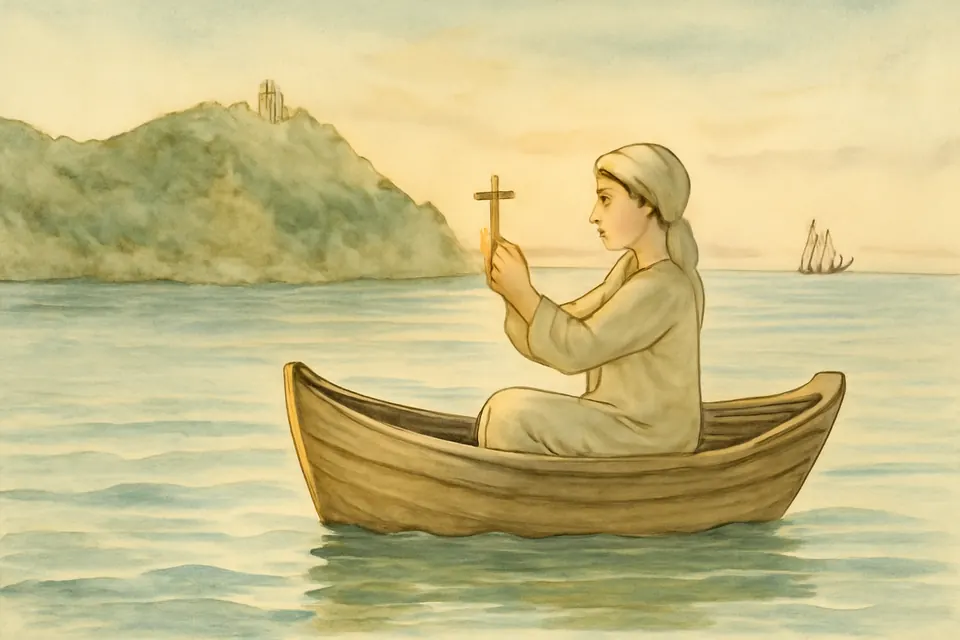
The bishop was moved by the boy's sincerity and baptized him, giving him the name John. He then sent him to the monastery of Santa Maria del Maestro, whose monks at first tried to discourage him with the hardships of their life. He would not be turned away.
The monk of Stilo
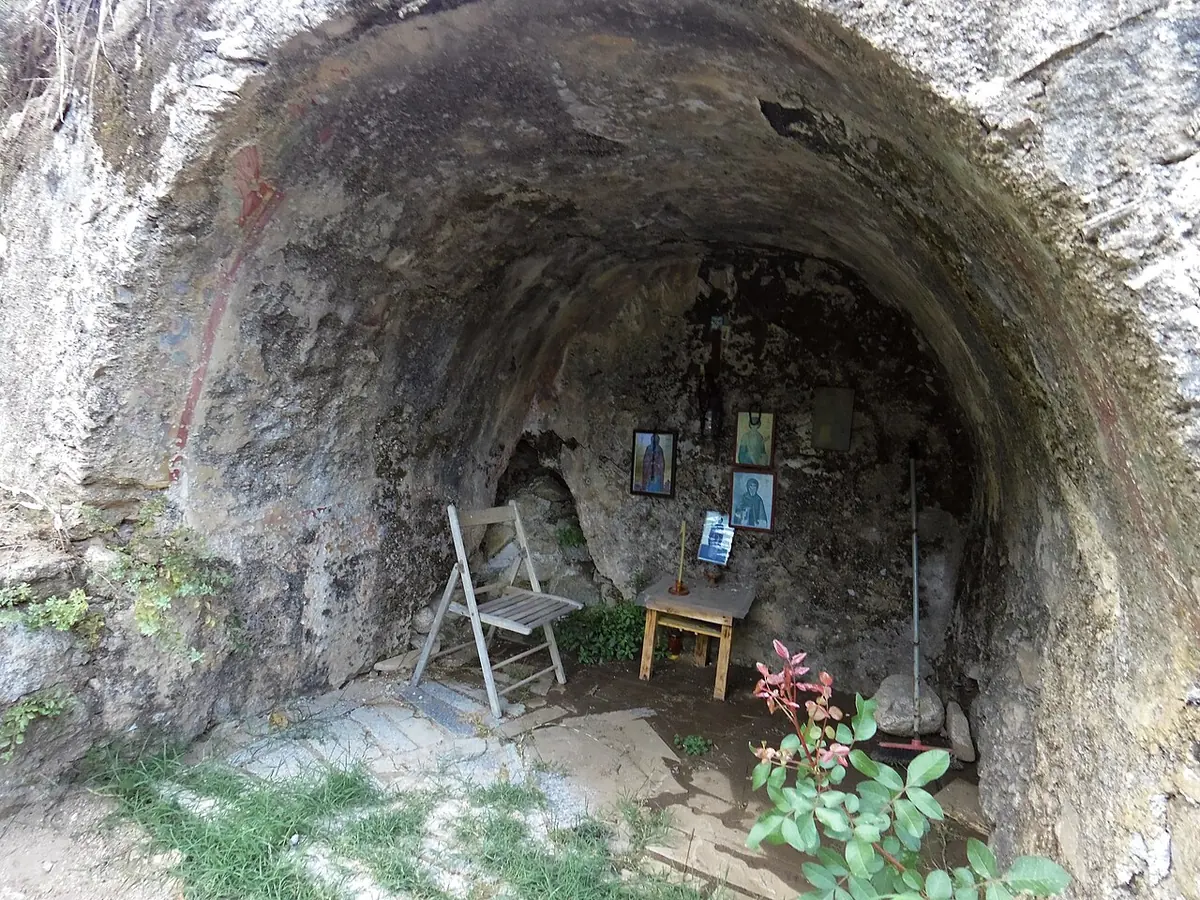
The hills of Stilo were full of Greek-rite hermits and small monasteries, many founded by monks who had fled Sicily. John lived among them as a monk and became known for his charity and his prayer. A rock cave near Bivongi is still pointed out as his hermitage.
The miracle of the harvest
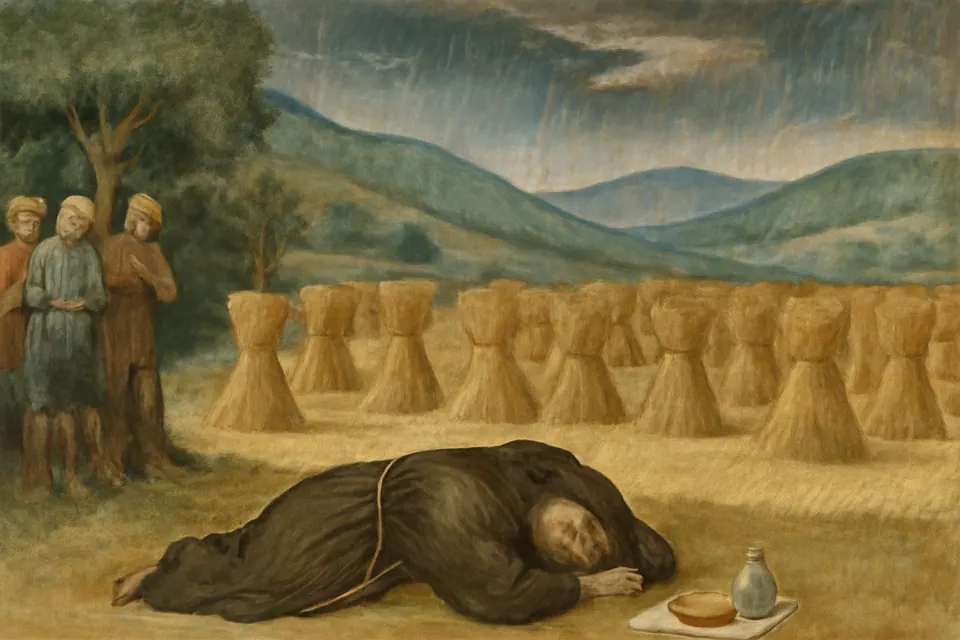
The story that gave him his name comes from Life A. One June day John set out to visit a benefactor of the monastery, carrying bread and a flask of wine. Passing the fields of Maturavolo and Marone, he met harvesters who mocked him. He stopped and shared his food with them, and as they ate, the bread and wine did not run out. John threw himself on the ground to thank God. A heavy rain came, and the laborers left the field. When John at last raised his head, the whole field had been reaped and the grain stood bound in sheaves.
- Traditional: the miraculous harvest. The owner of the land, the Life says, gave the two fields to the monastery, which still held them when the Life was written.
Death and the Norman counts
John died at about fifty, mourned by the whole countryside. The Life tells that Count Roger of Sicily came to Stilo seeking his prayers for his son, the future King Roger, whose face was disfigured by a sore no doctor could heal. John had already died, so the monks brought out the habit he had worn, and when the boy touched it to his face the sore vanished.
- Traditional: the healing of the young Roger with John's habit. The Normans became generous patrons of the monastery afterward, and a document of 1096 already names the abbey of St. John at Stilo. Its church was consecrated in 1122.
His relics and his monastery today
The abbey was later abandoned to brigands, and in the 1660s, with the consent of Pope Alexander VII, the monks moved to Stilo with John's relics and those of two earlier hermits, Ambrose and Nicholas. They laid them in a church the Minim friars had built about 1625, which passed to the Redemptorists in 1791. The relics are still venerated there, and another relic is kept in Palermo Cathedral.
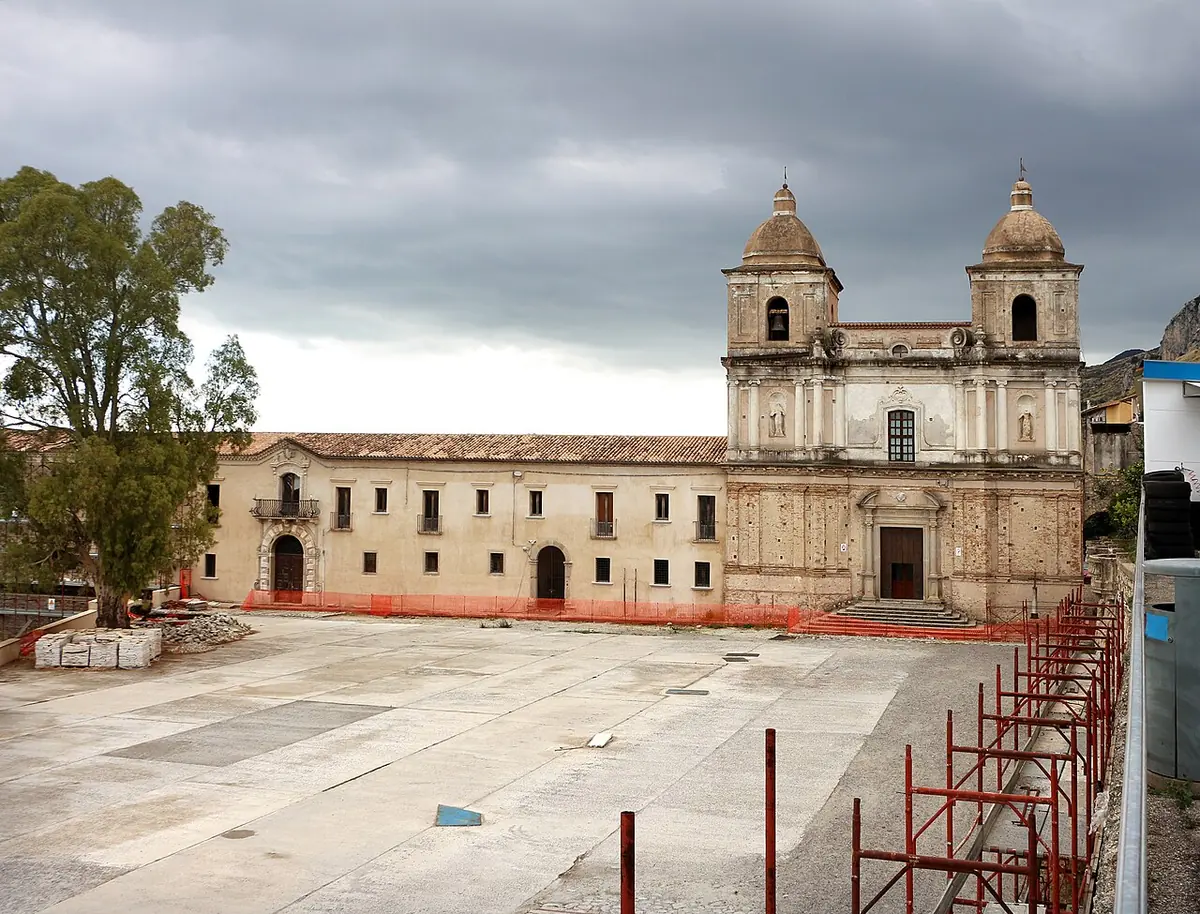
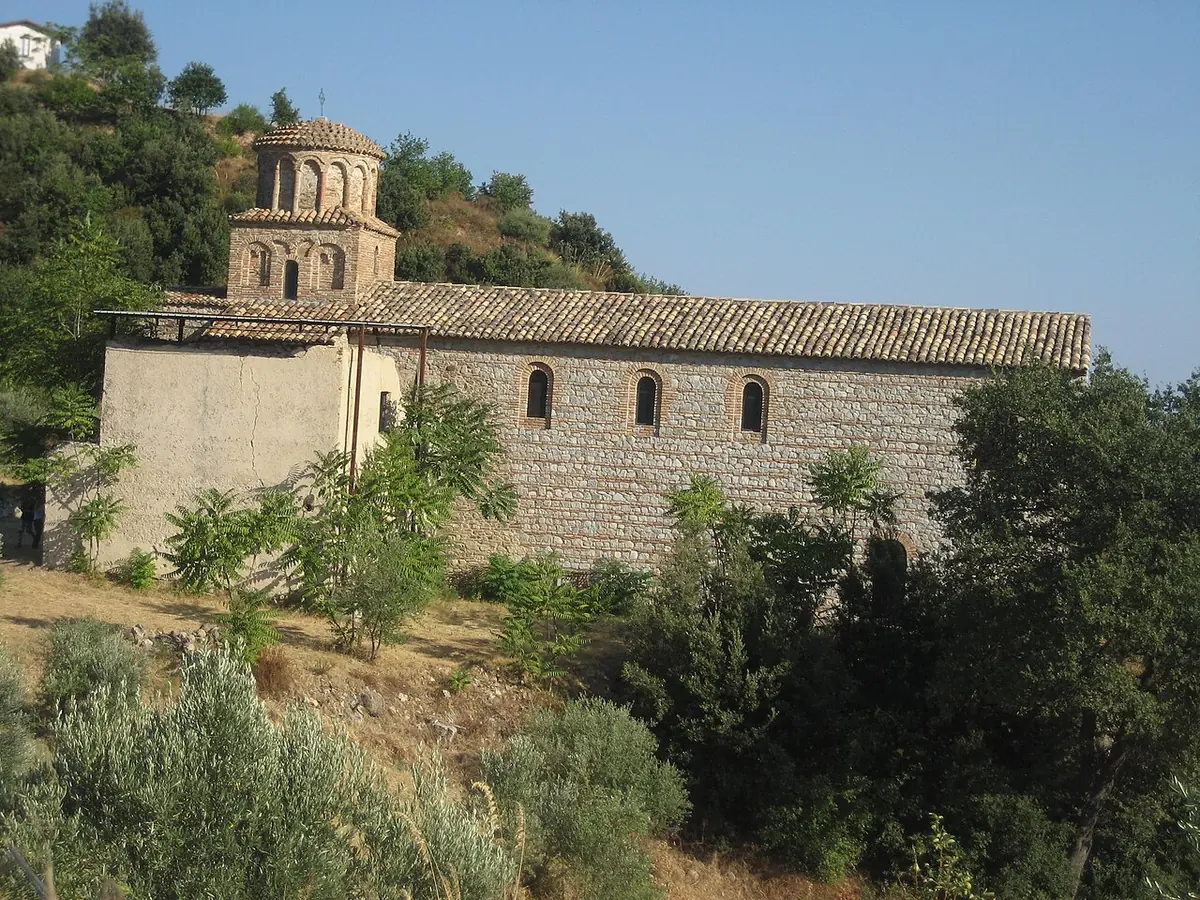
The old monastery church near Bivongi, a Norman-era basilica built in the Byzantine tradition, has been restored and is again a home of Orthodox monks, "a center of Orthodox spirituality nearly a thousand years after its first foundation," in Fiorenza's words.
Where the relics of St. John Theristus are kept: see them on the relics map →
Symbols of St. John Theristus in art
John is shown as a monk in a dark Greek-style habit. Look for:
- Sheaves of wheat or a sickle: the miracle of the harvest that named him.
- A small cross: the cross his mother gave him for the crossing from Palermo.
- A boat: the voyage from Palermo to Calabria as a boy.
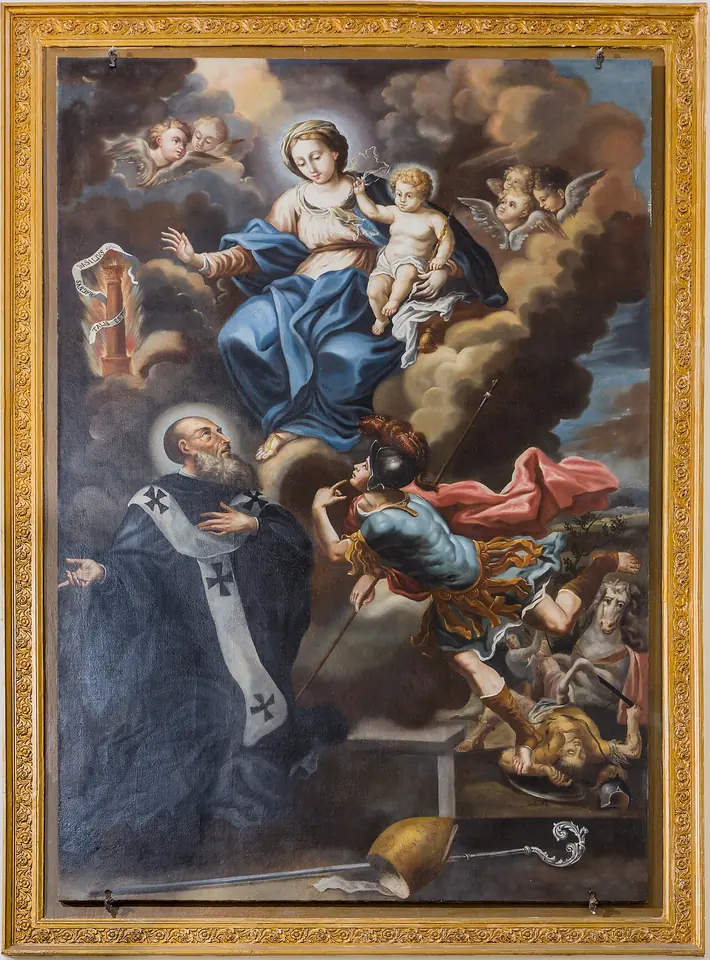
In the 18th-century altarpiece at Stilo he kneels in his habit before the Virgin and Child, with St. George beside him.
Prayer to St. John Theristus
We know of no traditional English prayer to him. Let us ask St. John the Harvester to pray for farmers and all who work the land at harvest time, for refugees who cross the sea, and for the unity of the Churches of East and West that both honor him. St. John Theristus, pray for us.
Frequently asked questions
Why is St. John called Theristus?
Theristes is Greek for "reaper" or "harvester." His Life tells how he shared his bread and wine with laborers in a wheat field near Monasterace, and while he lay in prayer during a storm the whole field was found reaped and bound in sheaves.
Is St. John Theristus a Catholic or an Orthodox saint?
Both. He lived in the Greek monastic tradition of southern Italy in the years around the schism of 1054, and he is remembered in the Greek service books and by the Catholic Church. His relics are in a Catholic church at Stilo, and his old monastery near Bivongi is an Orthodox monastery today.
Where are the relics of St. John Theristus?
In the church of San Giovanni Theristi in the town of Stilo, Calabria, where the monks brought them in the 1660s. Another relic is kept in Palermo Cathedral.
When is the feast of St. John Theristus?
February 23.
Keep exploring
Sources
- Elia Fiorenza and Nicola Giudice, "San Giovanni Theristis. Una basilica bizantina in epoca normanna," Humanities 7, no. 13 (2018): 47–80. The two Lives and their late date, his birth about 1040–1045, the harvest and the healing of Roger, the 1096 and 1122 documents, the move to Stilo and the relic in Palermo
- GCatholic: Santuario di San Giovanni Theristi, Stilo