St. Caesarius of Nazianzus, Physician and Brother of St. Gregory
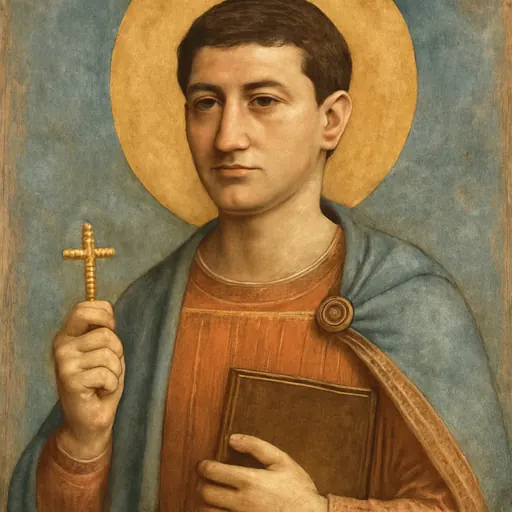
St. Caesarius of Nazianzus (about 330 to 369) was a Christian physician at the imperial court in Constantinople and the younger brother of St. Gregory the Theologian. He refused to give up his faith when Emperor Julian the Apostate argued with him in person. The Roman Martyrology keeps him on February 25; the Eastern churches on March 9.
Who was St. Caesarius of Nazianzus?
St. Caesarius of Nazianzus was a fourth-century Christian doctor, a man of the imperial court, and the younger brother of St. Gregory of Nazianzus, the great "Theologian." He was born about 330 into a family of saints in Cappadocia, in what is now central Turkey. His father, St. Gregory the Elder, was bishop of Nazianzus; his mother was St. Nonna; his sister was St. Gorgonia.
Caesarius never became a priest or a monk. He spent his short life in public service, as a physician and later as a treasury official, and that is what makes him worth knowing. He shows us a layman who kept the faith in the middle of a world that rewarded giving it up.
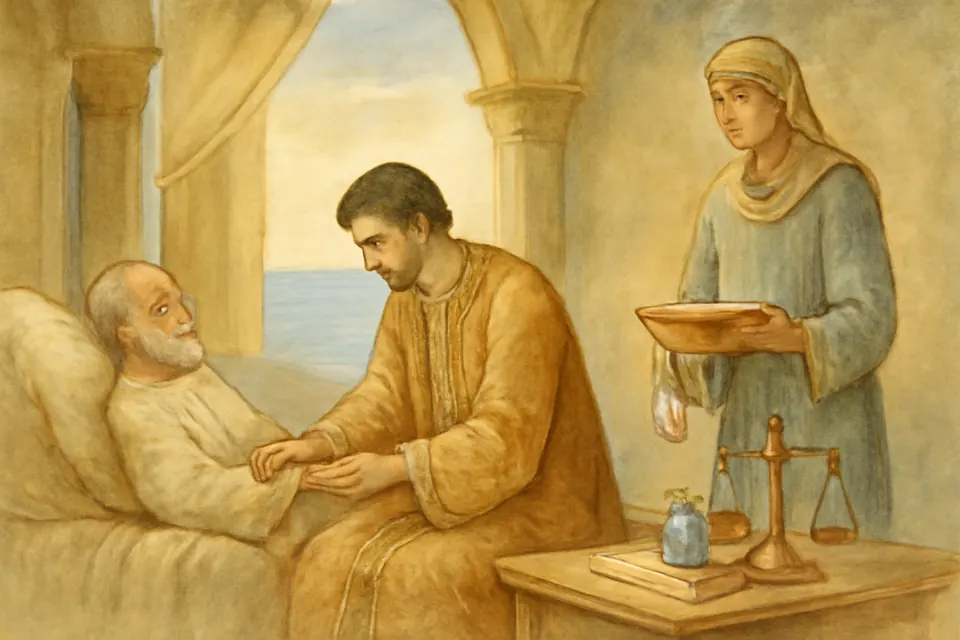
Nearly all we know of him comes from one text: the funeral oration Gregory preached at his burial, probably in the spring of 369. Gregory loved him and admits his grief, but he also says plainly that he wished Caesarius had left the court sooner.
The life of St. Caesarius
A brilliant student
The two brothers studied first at home. Then Gregory went to the schools of Palestine and Athens, and Caesarius went to Alexandria, the great center of learning in the Roman East. Gregory says he mastered geometry, astronomy and arithmetic, and above all "the wonderful art of medicine." He adds that Caesarius studied the stars without falling into astrology, "referring, as is reasonable, the motion of these bodies, and all other things besides, to God."
Their mother had prayed that her two sons, sent out together, would come home together. Gregory tells us that, without any plan between them, one arriving by sea from Alexandria and the other by land from Greece, they reached Constantinople at the same time. Gregory took it as an answer to Nonna's prayer.
Physician at court
Constantinople wanted to keep Caesarius. Gregory writes that the city offered him public honors, a seat in the council and a good marriage, and sent a petition to the emperor asking that he stay as its physician. For a while Gregory persuaded him to come home to Nazianzus instead. Later Caesarius went back to court, against his brother's advice, and became one of the best-known doctors of the capital. Gregory notes that he treated officials without charging them.
Standing firm before Julian
In 361 Julian became emperor. He had been raised a Christian and turned back to the old gods, and he set out to win Christians away from the Church with honors, money and argument rather than open persecution. In time he turned to Caesarius.
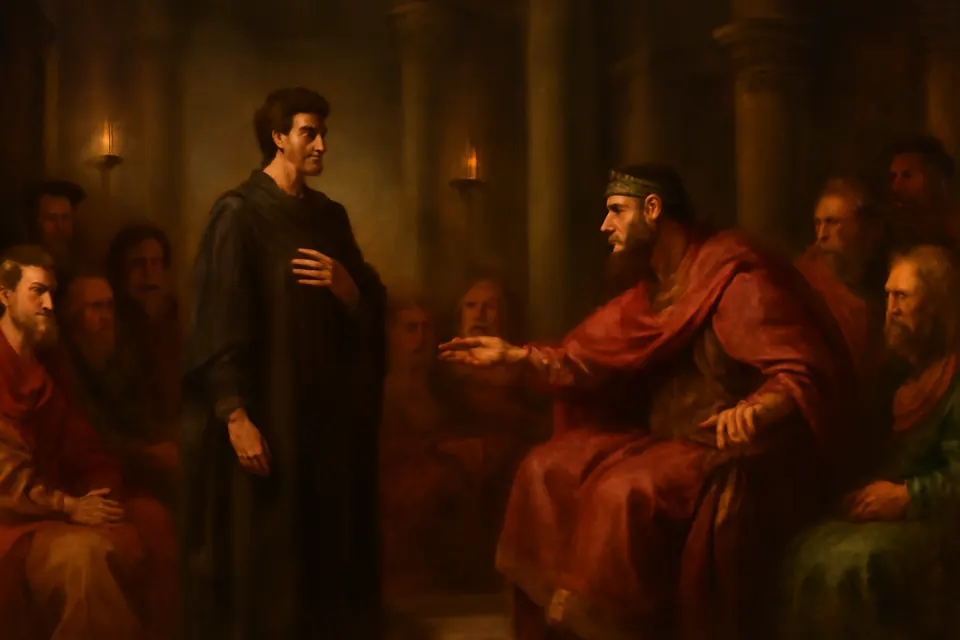
Gregory describes the scene as a contest in an arena, with the court looking on. Caesarius answered the emperor's arguments one by one, and then "in a loud clear voice declared that he was and remained a Christian." Julian, who had known Gregory as a fellow student in Athens, is said to have exclaimed:
O happy father, O unhappy sons!
Caesarius left the court and went home to Cappadocia. Gregory praises him for not rushing into danger, but not denying Christ either. After Julian was killed in Persia in 363, the Christian emperors who followed brought Caesarius back with honor.
The earthquake and his baptism
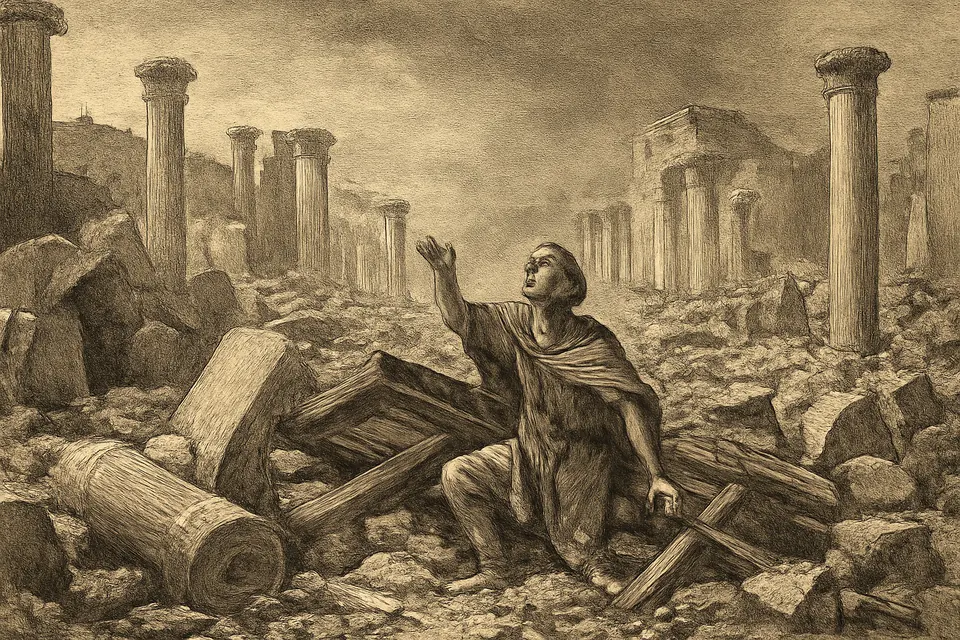
Under Valens, Caesarius was made treasurer in Bithynia. On October 11, 368, an earthquake destroyed most of the city of Nicaea. Gregory writes that Caesarius was "shielded by the very falling ruins in his incredible escape." He took it as a call. Like many Christians of his time, he had put off baptism; now he was baptized and resolved to leave public life and give himself to God.
He did not live to do it. He fell ill and died within a few months, still young. His body was carried home to Nazianzus with hymns and laid in the tomb his parents had prepared for themselves. His mother, Gregory says, put away her mourning clothes and "lulled to sleep lamentations by psalmody."
The miracles of St. Caesarius
No miracles worked through his intercession are recorded. Gregory saw two signs of God's care in his life: the brothers' unplanned meeting in Constantinople, an answer to their mother's prayer, and his escape at Nicaea. Both are best called traditional, since they rest on Gregory's account and his reading of them. Neither was ever examined as a miracle.
Symbols of St. Caesarius in art
No early portrait of Caesarius survives, and pictures of him are rare even in the East. When he is painted, the artist gives him the dress of what he was: a young layman in the long robe and cloak of a Roman official, not the vestments of a bishop or the habit of a monk. A book or scroll recalls his learning, and a small cross recalls his confession before Julian.
To recognize him, look for the name written beside him. Without it, a young layman in court robes could be any of several lay saints of the early Church. His brother is far easier to spot: Gregory the Theologian appears as a bishop with a thin beard and a high forehead, in the white omophorion marked with crosses.
Feast day
The Roman Martyrology names him on February 25: "At Nazianzus, St. Caesarius, whom his brother blessed Gregory the Theologian, says he saw among the hosts of the Blessed." The Orthodox and Byzantine Catholic churches keep his memory on March 9. See our feast days page for other saints of the season.
A prayer from St. Gregory for his brother
No traditional prayer to St. Caesarius has come down to us. The oldest prayer connected with him is the one Gregory spoke at the end of his funeral oration, asking God to receive his brother and, in time, the rest of the family:
Do Thou now receive Cæsarius, the firstfruits of our pilgrimage; and if he who was last is first, we bow before Your Word, by which the universe is ruled; yet do Thou receive us also afterwards, in a time when You may be found, having ordered us in the flesh as long as is for our profit.
Let us ask St. Caesarius to pray for Christian doctors and nurses, and for everyone whose work places them where faith is mocked, that they may say as plainly as he did that they are and remain Christians.
Frequently asked questions
Who was St. Caesarius of Nazianzus?
The younger brother of St. Gregory of Nazianzus and son of Sts. Gregory the Elder and Nonna. He studied medicine in Alexandria, served as a physician at the court in Constantinople, and stood firm as a Christian before Emperor Julian.
When is the feast day of St. Caesarius?
February 25 in the Roman Martyrology. The Orthodox Church and the Byzantine Catholic churches keep him on March 9.
Was St. Caesarius a martyr?
No. He confessed Christ before Julian and lost his place at court for it, but he died of illness in 368 or 369. He is honored as a confessor and a holy layman.
How do we know about St. Caesarius?
Almost everything comes from the funeral oration his brother Gregory preached over him, Oration 7, probably in 369. It is one of the earliest Christian funeral sermons we have.
Keep exploring
Sources
- Gregory Nazianzen, Oration 7: Panegyric on His Brother S. Caesarius (New Advent). The main source: his studies, the court, the debate with Julian and Julian's words, the Nicaea earthquake, his baptism and burial, and Gregory's closing prayer
- Saint Caesarius, brother of Saint Gregory the Theologian (Orthodox Church in America). March 9 in the Orthodox calendar; his offices under Valentinian and Valens
- The Roman Martyrology (1916 English translation), on archive.org. February 25 entry quoted on this page