Blessed Robert Drury, Priest and Martyr of Tyburn

Blessed Robert Drury was an English priest who served the Catholics of London for fourteen years. Condemned for his priesthood under James I, he was offered his life if he took the Oath of Allegiance, which the Pope had forbidden. He refused and was hanged at Tyburn on February 26, 1607. John Paul II beatified him in 1987.
Who was Blessed Robert Drury?
Blessed Robert Drury was an English priest who served the hidden Catholics of London for fourteen years and died at Tyburn because he would not swear an oath he believed was false. Condemned for being a priest, he was told he could live if he took King James I's new Oath of Allegiance. He chose death instead and was hanged on February 26, 1607. We keep his feast on February 26.
His case shows something easy to miss about the English martyrs. Drury was not a rebel. He had publicly promised loyalty to the Crown in every civil matter. What he would not do was deny the spiritual authority of the Pope.
The life of Blessed Robert Drury
From Buckinghamshire to Reims and Valladolid
Robert Drury was born into a gentleman's family in Buckinghamshire. Like many young English Catholics of his generation, he crossed to the Continent to study for a priesthood that was a capital crime at home. He took his course of philosophy at the English College, then living at Reims. In 1590 he was among the students sent from Reims to Valladolid in Spain, to the college King Philip II had just founded there for English clergy. He finished his studies, was ordained, and was sent back to England in 1593.

A priest in London
For the rest of his life Drury worked mainly in and around London, where Bishop Challoner says "his learning and virtue made him considered amongst his brethren." When Queen Elizabeth's proclamation of November 1601 hinted at favor for priests who could assure her of their loyalty, thirteen leading secular priests drew up and signed a protestation of allegiance. Drury was one of them. They promised to obey the queen in all civil matters and to defend her against any invasion, whatever excommunication might be pronounced. They also declared that they acknowledged the Bishop of Rome as successor of St. Peter, and that they would give their lives rather than violate the lawful authority of the Church.
The Oath of Allegiance
Elizabeth died in 1603. In 1606, after the Gunpowder Plot, a new Oath of Allegiance was imposed on Catholics under James I. It did not stop at loyalty. It required them to abjure as "damnable and heretical" a doctrine about the Pope's power that neither Scripture nor the Church had condemned. Some priests took it. Most refused. Pope Paul V forbade it in two briefs to the Catholics of England.


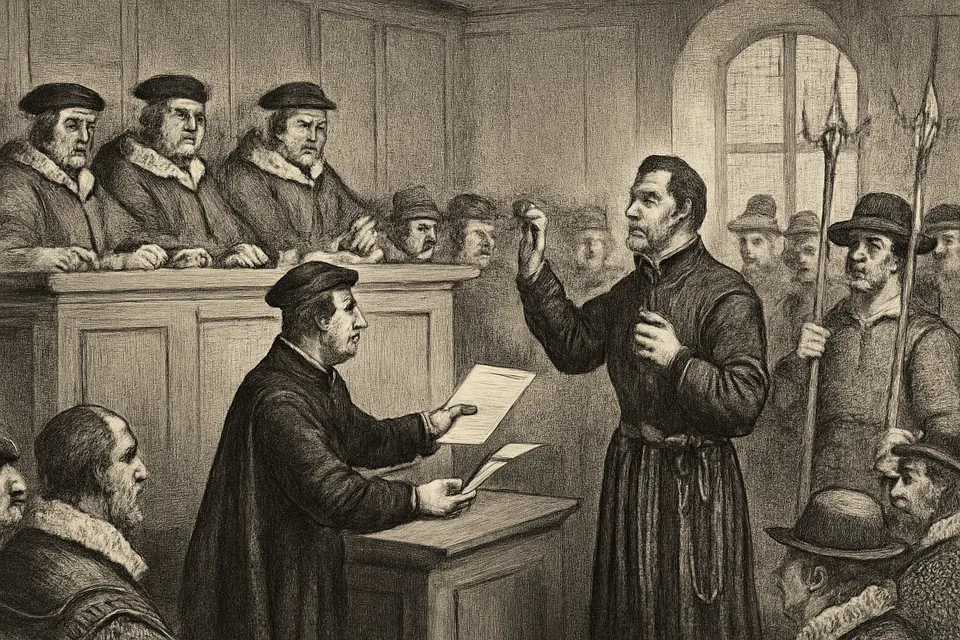
About the time the oath appeared, Drury was arrested. He was tried under the statute of 1585 that made it treason for an English-born priest ordained abroad to remain in the realm, and he was condemned. Challoner is careful about what happened next. Drury was not put to death for refusing the oath, but once he was condemned for his priesthood, his life was offered to him if he would take it. He would not swear to what he judged a falsehood.
The martyrdom of Robert Drury
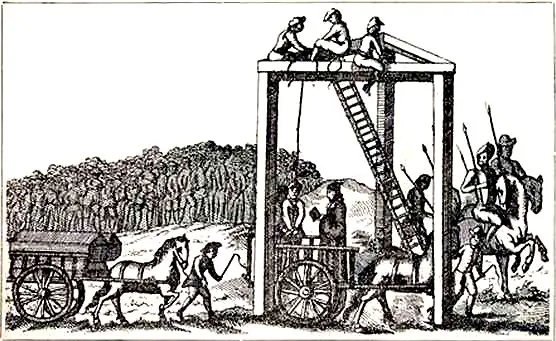
Robert Drury "suffered with great constancy at Tyburn," as Challoner writes, on February 26, 1607, at the age of thirty-nine and in the fourteenth year of his mission. As the Catholic Encyclopedia notes, from 1606 to the end of that reign the martyrs could have saved their lives by taking the oath. No grave or relic is known.
Beatification
Drury was declared Venerable in the first English cause. On November 22, 1987, Pope John Paul II beatified him with George Haydock and 83 others, the martyrs of England, Wales and Scotland who died between 1584 and 1679. In his homily the Pope said these martyrs "gave their lives for their loyalty to the authority of the Successor of Peter."
- Approved: as a martyr he was beatified without a miracle. No miracle has yet been approved for his canonization.
Symbols of Blessed Robert Drury in art
There is no known portrait of Robert Drury. As a priest martyr he is fittingly shown with the martyr's palm, the rope, and a priest's stole or a chalice, signs of the Mass he risked his life to offer. A rolled or refused document can stand for the oath he would not swear.
Feast day and prayer
We keep his feast on February 26. In England and Wales he is also honored with all the martyrs of the Reformation on May 4. See the feast day calendar.
We know of no traditional prayer to Blessed Robert Drury. Let us ask him to pray for priests, for all who must choose between their conscience and their safety, and for the unity of the Church under the Successor of Peter. Blessed Robert Drury, pray for us.
Frequently asked questions
Who was Blessed Robert Drury?
A secular priest born to a gentleman's family in Buckinghamshire, educated at the English College at Reims and the new English College at Valladolid, and sent to England in 1593. He worked mostly in and around London until his arrest about 1606, and was executed at Tyburn on February 26, 1607, at the age of 39.
Why did Robert Drury refuse the Oath of Allegiance?
He had already declared his loyalty to the Crown in civil matters. The new oath of 1606 went further and required Catholics to abjure as "damnable and heretical" a teaching about the Pope's authority that the Church had never condemned. Pope Paul V forbade Catholics to take it, and Drury would not swear what he judged to be false, even to save his life.
When was Robert Drury beatified?
On November 22, 1987, when Pope John Paul II beatified George Haydock and 84 companions, the martyrs of England, Wales and Scotland. Drury is number 20 on the list in the decree of martyrdom.
When is the feast of Blessed Robert Drury?
February 26, the day he died. He is also honored with all the martyrs of England and Wales on May 4.
Keep exploring
Sources
- Richard Challoner, Memoirs of Missionary Priests, ed. John Hungerford Pollen (1924 edition), pp. 291–293. His family, studies at Reims and Valladolid (sent 1590), the mission from 1593, the 1603 protestation of allegiance and its thirteen signers, the new oath and Paul V's two briefs, his condemnation under 27 Elizabeth, the offer of life, and his death at Tyburn on February 26, 1606/7, aged 39, in the fourteenth year of his mission
- Congregation for the Causes of Saints, decree on the martyrdom of George Haydock and 84 companions, Acta Apostolicae Sedis 79 (1987), pp. 607–609. No. 20: Drury Robertus, sacerdos dioecesanus
- John Paul II, homily at the beatification of 85 martyrs of England, Wales and Scotland, November 22, 1987
- Catholic Encyclopedia (1909): English Confessors and Martyrs (1534–1729). Lists "1607: Robert Drury p., 26 Feb., Tyburn" and notes that from 1606 the martyrs could have saved their lives by taking the condemned oath