St. Walpurga (Walburga), Abbess of Heidenheim
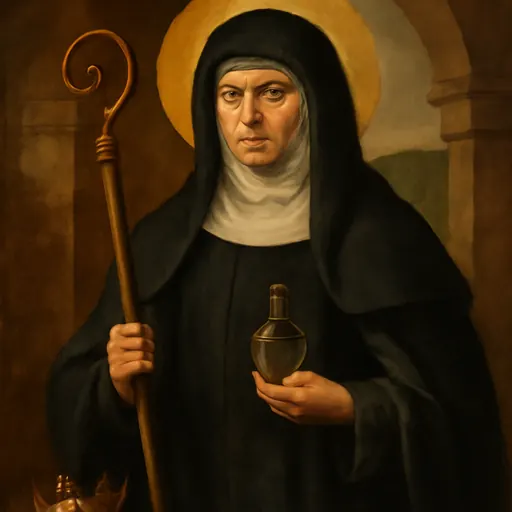
St. Walpurga (also St. Walburga) was an English Benedictine nun of the 700s who joined her uncle St. Boniface's mission to Germany and became abbess of the double monastery of Heidenheim in Bavaria. Her relics rest at Eichstätt, where a clear liquid called Walburga oil is collected from them each year. Her feast day is February 25.
Who was St. Walpurga?
St. Walpurga, often spelled Walburga, was an English nun who left her homeland in the 700s to help bring the Gospel to Germany. She belonged to a family of saints: her brothers were St. Willibald, the first bishop of Eichstätt, and St. Wunibald, founder of the abbey of Heidenheim, and her mother's brother was St. Boniface, the apostle of Germany. She became abbess of Heidenheim and ruled its nuns and its monks together. After her death, her relics were taken to Eichstätt in Bavaria, and they rest there still, in the care of Benedictine nuns.
She is not the Walpurgis of witches' tales. Her name became attached to the night before May 1 only because her feast was once kept on that day, as we will see. Let us come to know the real woman: a learned, gentle abbess who spent her life in prayer and in the care of others.
The life of St. Walpurga
A girl at Wimborne
Walpurga was born in Wessex around 710, the daughter of a West Saxon nobleman remembered as St. Richard. When she was about eleven, her father set out on pilgrimage to Rome with her two brothers and left her in the care of the abbess of Wimborne, in Dorset. He died on the way, at Lucca in Italy. Wimborne was a large double monastery known for strict discipline and solid learning, and Walpurga spent some twenty-six years there, first as a pupil and then as a nun.
The voyage to Germany
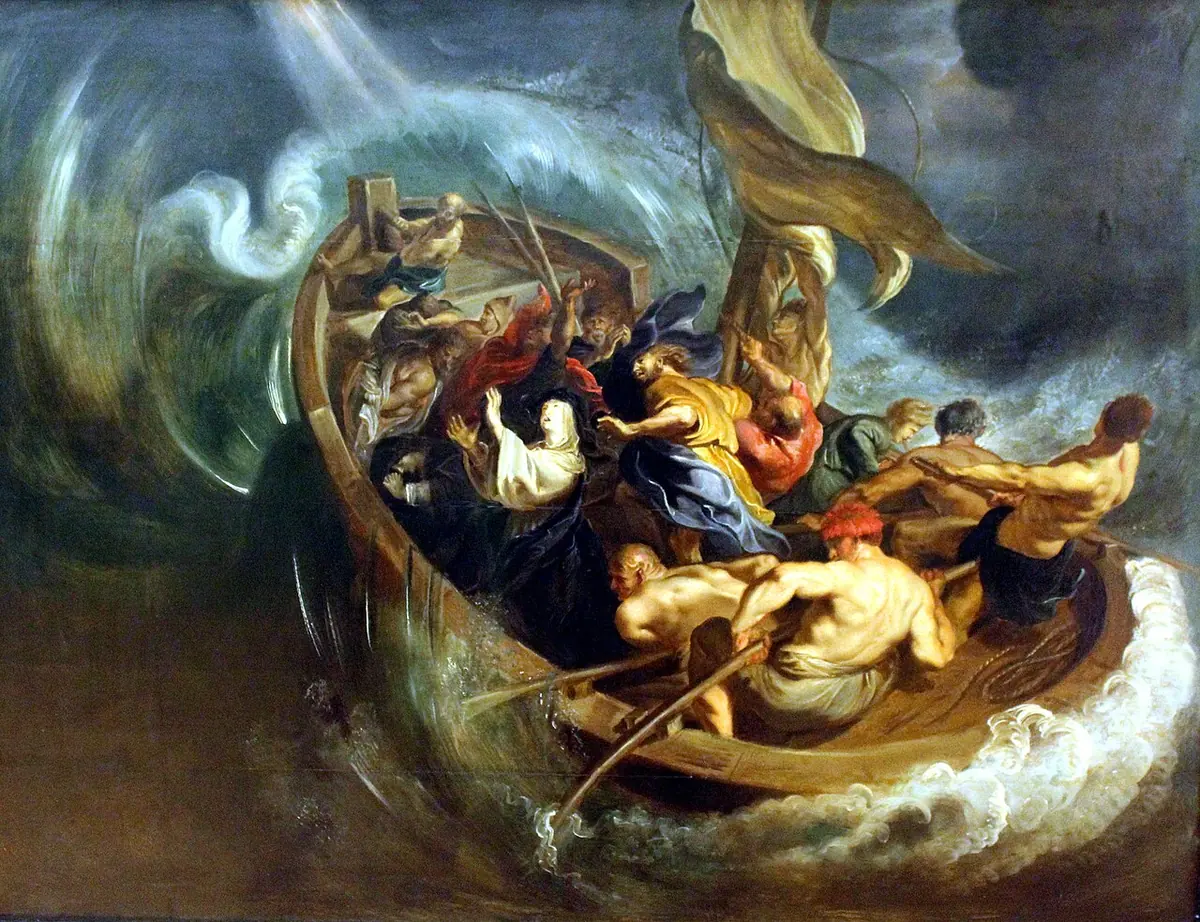
Boniface, organizing the young Church in Germany, asked the English monasteries for nuns as well as monks. Around 748 Abbess Tetta of Wimborne sent a group of sisters, among them St. Lioba and Walpurga. The Catholic Encyclopedia tells the story that a violent storm broke over their ship, and that Walpurga knelt on the deck and prayed until the sea grew calm; the sailors spread the news when they landed. That story is traditional, and it is why sailors call on her.
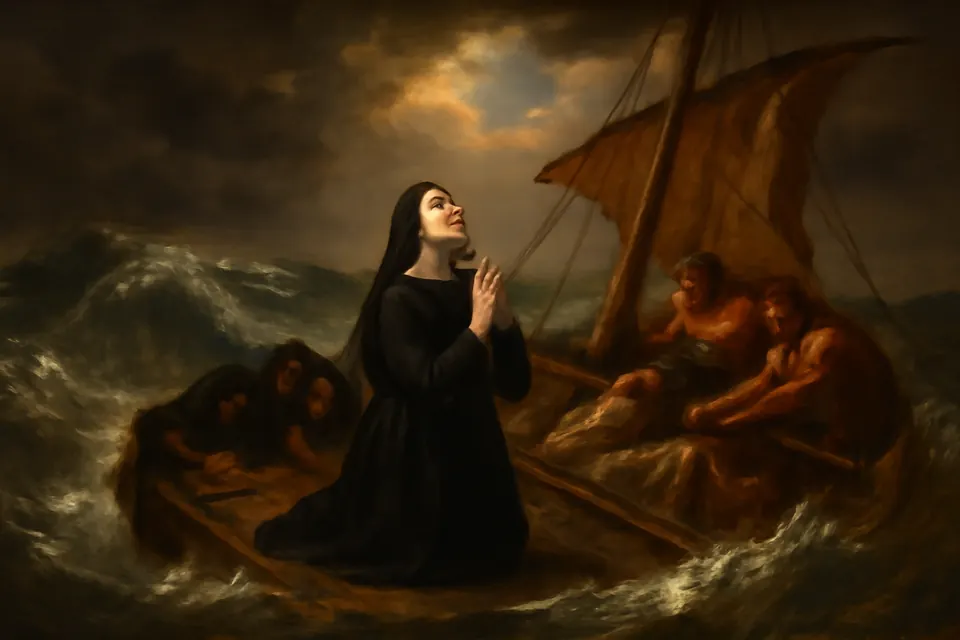
Antwerp kept a tradition that she stopped there on her way, and its oldest church bears her name. Rubens painted the ship miracle about 1610.
Abbess of Heidenheim
After some time under Lioba at Tauberbischofsheim, Walpurga went to Heidenheim, in the hills of Franconia, where her brother Wunibald had founded a monastery. When he died, she governed the whole house, a double monastery of monks and nuns, with her brother Willibald, the bishop of Eichstätt, nearby. The legend of her life, written down in the tenth century, speaks of her gentleness, her humility and her charity, and of her power to heal the sick through prayer. These healings are traditional.
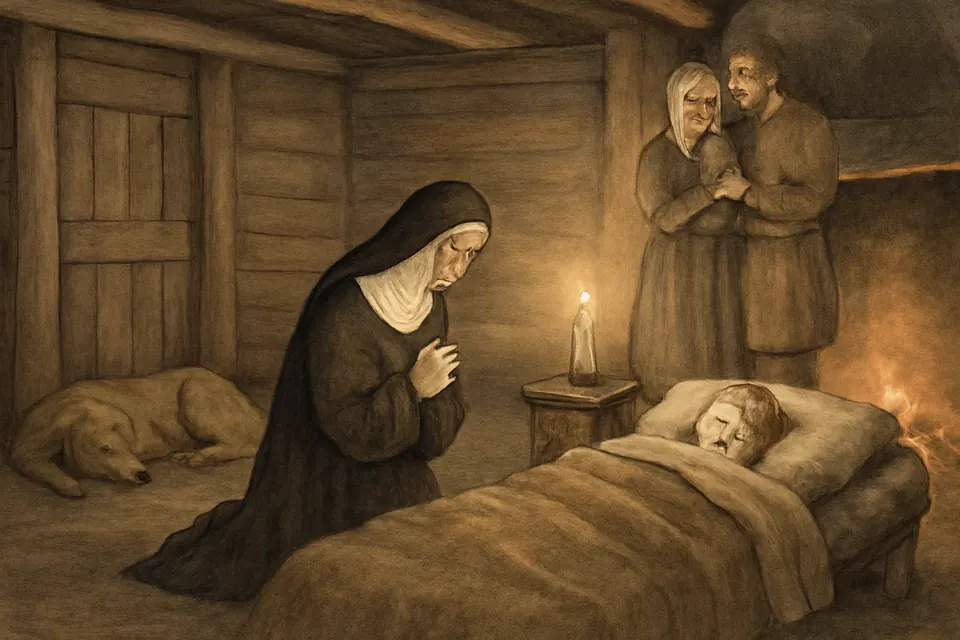
Older writers, including the Catholic Encyclopedia, credit Walpurga with writing Latin lives of her brothers and an account of Willibald's travels to the Holy Land. Scholars now know that these were the work of another nun of Heidenheim, Huneberc: Bernhard Bischoff found her name hidden in a cipher in the oldest manuscript. Walpurga's house was still the place where that writing was done.
She died at Heidenheim on February 25, in 777 or 779, with Willibald at her side, and was buried near Wunibald.
Walburga oil and the relics at Eichstätt
Around a century later, between 870 and 879, her relics were carried to Eichstätt. The Catholic Encyclopedia relates that Bishop Otkar had begun rebuilding Heidenheim, that workmen disturbed her grave, and that she appeared to him in a dream to rebuke him, after which he moved her body with honor. In 893, when the shrine was opened to give some relics to the abbess of Monheim, the bones were found moist with a clear liquid. A Benedictine abbey was founded at her tomb in 1035, and it stands today as the Abtei St. Walburg.
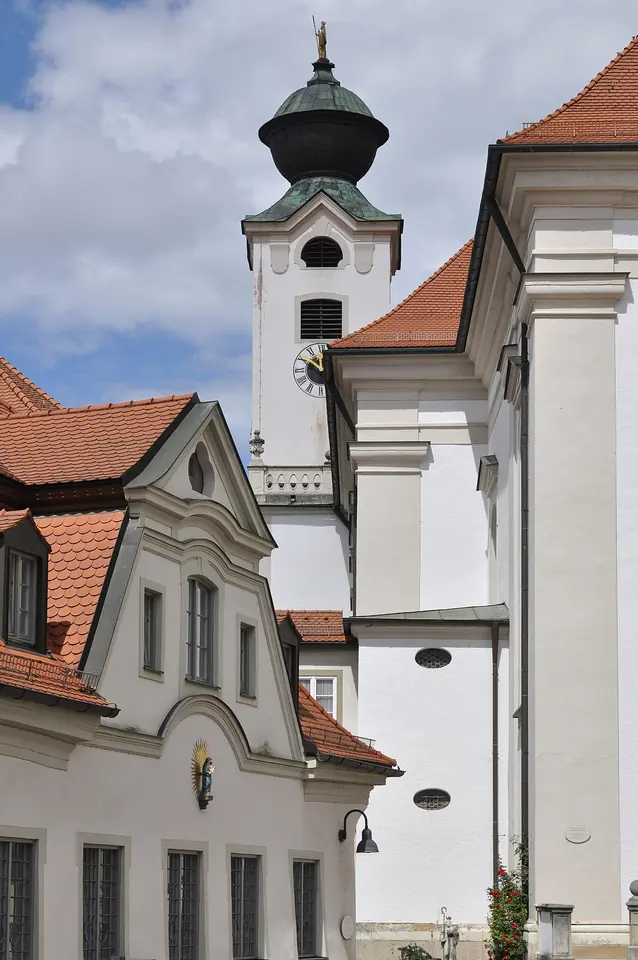
The liquid still gathers. According to the Benedictine sisters of the Abbey of St. Walburga in Colorado, a daughter house of Eichstätt, it seeps through a thick stone slab beneath her relics, usually from about October 12 to February 25, and the nuns collect it and send it out in small vials. Scientifically tested, they write, it has the properties of spring water. Countless people have used it with prayer for the sick. This is a reported wonder, and the Church has never formally ruled on it.
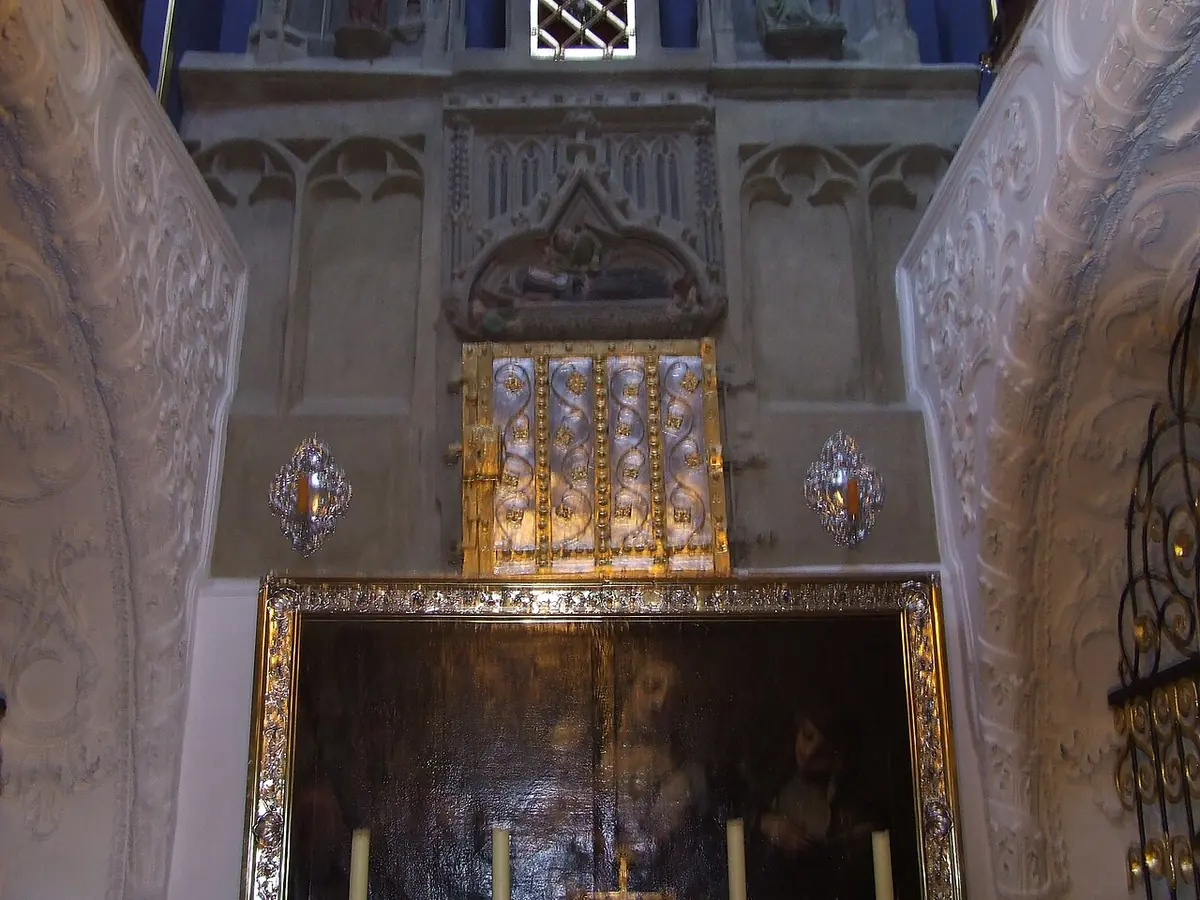
Where the relics of St. Walpurga are kept: see them on the relics map →
Why St. Walpurga is a patron saint
The Catholic Encyclopedia lists her as patroness of Eichstätt, Oudenaarde, Furnes, Antwerp, Groningen, Weilburg and Zutphen. She is invoked by sailors and in storms, because of her voyage, and against rabies, a patronage old enough that its origin is not recorded.
Symbols of St. Walpurga in art
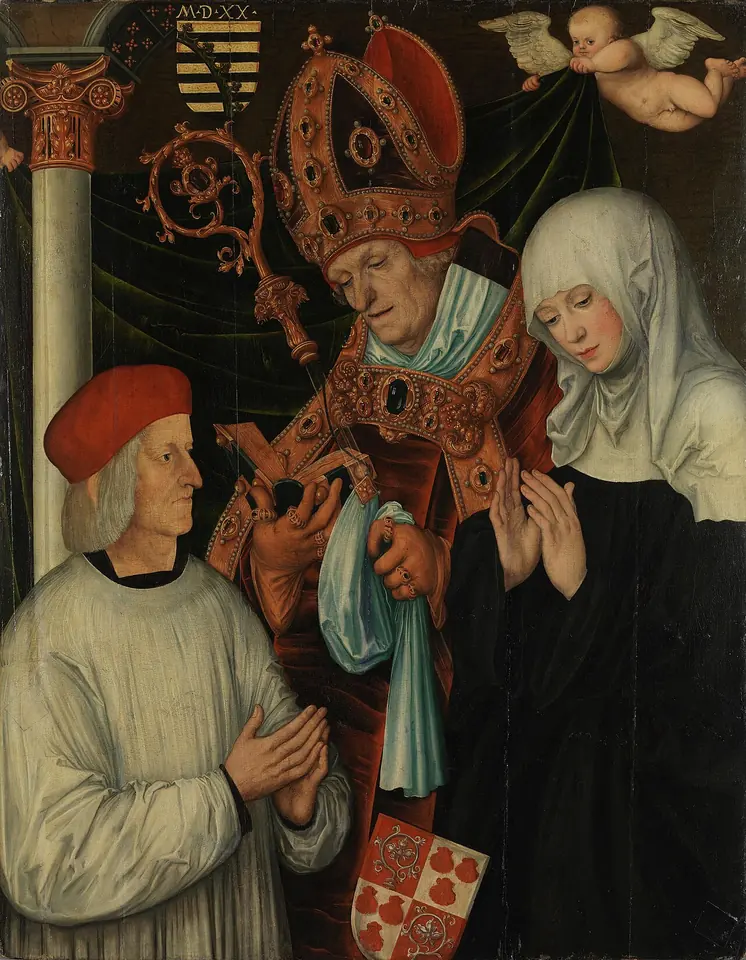
- A small flask or phial: the Walburga oil, her most distinctive sign. Cranach puts it in her hand.
- A crozier: her rule as abbess.
- The Benedictine habit: black, with a white wimple.
- A crown at her feet: her royal or noble birth, set aside for Christ.
- A ship or stormy sea: the miracle of her crossing.
She sometimes appears with her brothers Willibald, as a bishop, and Wunibald, as an abbot, as in Maulbertsch's painting of 1749.
Feast day and the name Walpurgis
We keep her feast on February 25, the day she died. The older Roman Martyrology listed her on May 1, the day tradition gives for her canonization by Pope Adrian II, though the Catholic Encyclopedia notes that the date cannot be squared with every account. Because of that May 1 date, the night before it took her name in German, Walpurgisnacht. Folk belief later filled that night with tales of witches on the Brocken mountain, which have nothing to do with her. Find her on our feast days calendar.
Prayer to St. Walpurga
The Benedictine nuns of the Abbey of St. Walburga in Colorado pray a novena prayer to her. It trusts in Jesus's promise that the one who believes in him will do his works and greater ones, recalls God's gift of healing to Walburga, and asks her to help us in our need, to bring our petition to Christ, and to help us know his love and presence in whatever he has in store.
Let us ask St. Walpurga to pray for the sick, for travelers at sea, and for every nun and missionary who leaves home to serve Christ in a strange land.
Frequently asked questions
Who was St. Walpurga?
An Anglo-Saxon nun, born in Wessex around 710, the sister of Sts. Willibald and Wunibald and niece of St. Boniface. She was trained at the abbey of Wimborne in Dorset, went to Germany around 748 to help Boniface's mission, and became abbess of Heidenheim, ruling both its nuns and its monks. She died on February 25, 777 or 779.
What is Walburga oil?
A clear liquid that gathers on the stone slab beneath her relics in the crypt of St. Walburg Abbey in Eichstätt, usually from about October 12 to February 25 each year. The nuns collect it in small vials and send it to the sick with prayers. The Benedictine sisters of the Abbey of St. Walburga in Colorado note that, scientifically tested, it has the properties of spring water. The Church has never formally ruled on it.
Is St. Walpurga connected with Walpurgis Night?
Only by her name. The older Roman Martyrology listed her on May 1, the day tradition gives for her canonization, so the night before May 1 came to be called Walpurgis Night. Later German folklore filled that night with tales of witches, which have nothing to do with the saint. Christians kept the date by asking her protection.
What is St. Walpurga the patron saint of?
According to the Catholic Encyclopedia, she is invoked against rabies, in storms and by sailors, and she is the patroness of Eichstätt, Oudenaarde, Furnes, Antwerp, Groningen, Weilburg and Zutphen.
Keep exploring
- Patron saint pages
- Sailors
- Feast-day calendar
- Saints remembered in FebruarySaint of the dayWhat saint is my birthday?
- Relics
- Where the relics are kept (map)
- More
- Saints A to ZPatron saints A to ZExplore every section
Sources
- Catholic Encyclopedia (1912): St. Walburga. Her family, Wimborne, the voyage of 748, Heidenheim, the translation to Eichstätt, the oil first found in 893, patronages and symbols
- Abbey of St. Walburga (Benedictine nuns, Colorado): St. Walburga, Our Patroness. The translation between 870 and 879, the canonesses and the abbey of 1035, the oil from about October 12 to February 25, its properties, and the novena and oil prayers
- Huneberc of Heidenheim, The Hodoeporicon of St. Willibald, with C. H. Talbot's introduction (Internet Medieval Sourcebook). Bernhard Bischoff's discovery that a nun of Heidenheim, Huneberc, wrote the life of Willibald