Blessed Leonid Feodorov, Exarch of the Russian Catholics

Blessed Leonid Feodorov (1879–1935) was a Russian convert from Orthodoxy who became, in 1917, the first exarch of the Russian Greek Catholic Church. Tried in Moscow in 1923, he spent years in prison and the Solovki camp and died in exile. John Paul II beatified him as a martyr in Lviv on June 27, 2001. His feast is March 7.
Who was Blessed Leonid Feodorov?
Blessed Leonid Feodorov was a Russian priest who gave his life for the unity of the Church. Raised Russian Orthodox in St. Petersburg, he became a Catholic in 1902 without giving up the Byzantine liturgy of his people. In 1917 he was named the first exarch, or head, of the small Russian Greek Catholic Church. The Soviet state tried him in Moscow in 1923, and he spent most of his remaining years in prisons, camps and exile. He died in Viatka, now Kirov, on March 7, 1935.
The life of Blessed Leonid
From St. Petersburg to Rome
Leonid Ivanovich Feodorov was born in St. Petersburg on November 4, 1879, into a Russian Orthodox family. He entered the Orthodox theological academy there to prepare for the priesthood. The writings of the philosopher Vladimir Soloviev, who longed for the reunion of the Orthodox and Catholic churches, moved him deeply. In the summer of 1902 he left the academy and went to Rome, and on July 31, 1902, he was received into the Catholic Church at the Church of the Gesù. Metropolitan Andrey Sheptytsky of Lviv, head of the Ukrainian Greek Catholics, blessed his path.
Converts from Orthodoxy faced suspicion from the Russian police, so he studied for the priesthood abroad under an assumed name. He had first promised to adopt the Latin rite, but he came to see that he should keep the liturgy and customs of the Christian East, and Pope St. Pius X gave him full permission. Bishop Mikhail Mirov of the Bulgarian Greek Catholic Church ordained him a priest in Constantinople on March 25, 1911, the feast of the Annunciation. On March 12, 1913, he was tonsured a monk with the name Leontiy.
Exarch of the Russian Catholics
He went home to St. Petersburg, and during the First World War the imperial government exiled him to Siberia. The February Revolution of 1917 freed him, and Metropolitan Andrey named him exarch of the Russian Catholics. He led a tiny flock in a country about to turn against every church.
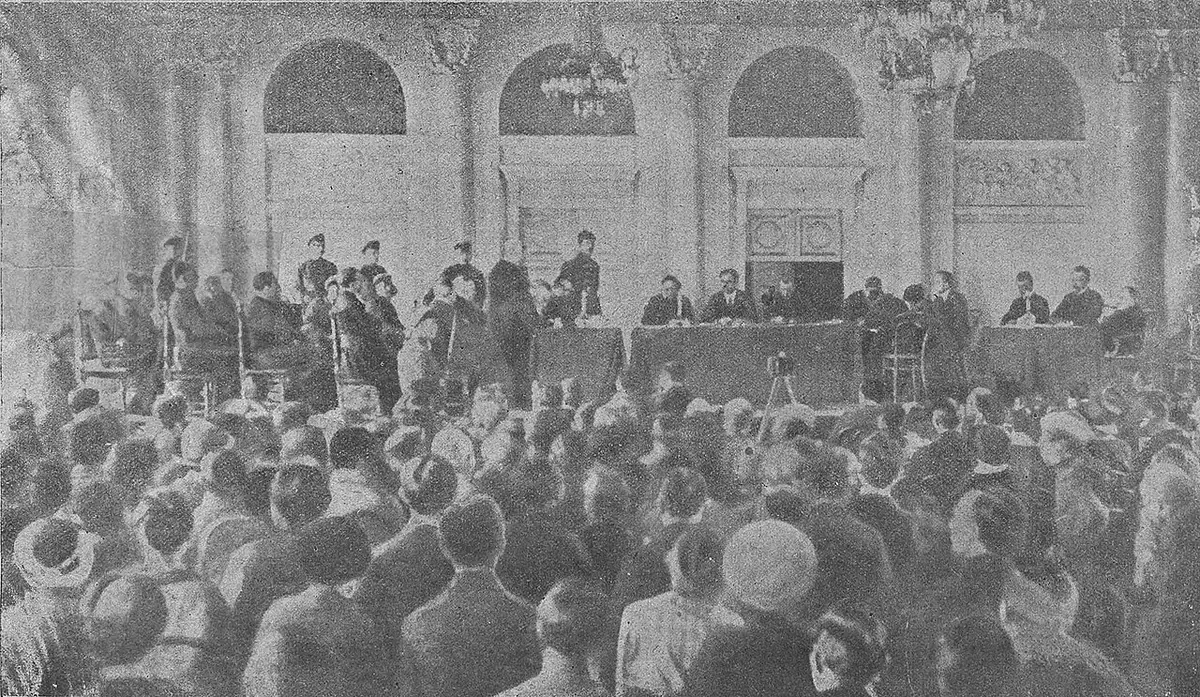
The Moscow trial
In 1922 the Soviet government ordered churches to hand over their sacred vessels, supposedly for famine relief. Exarch Leonid and Archbishop Jan Cieplak, the Latin-rite leader, refused. In the spring of 1923 they were tried with other Catholic clergy before a revolutionary tribunal in Moscow. Leonid acted as his own lawyer. He told the court that Russian Catholics were feeding some 120,000 children every day, and in his final words he said: "Our hearts are full, not of hatred, but of sadness. You cannot understand us, we are not allowed liberty of conscience." Archbishop Cieplak and Msgr. Konstanty Budkiewicz were sentenced to death. Leonid received ten years.


Butyrka, Solovki and exile
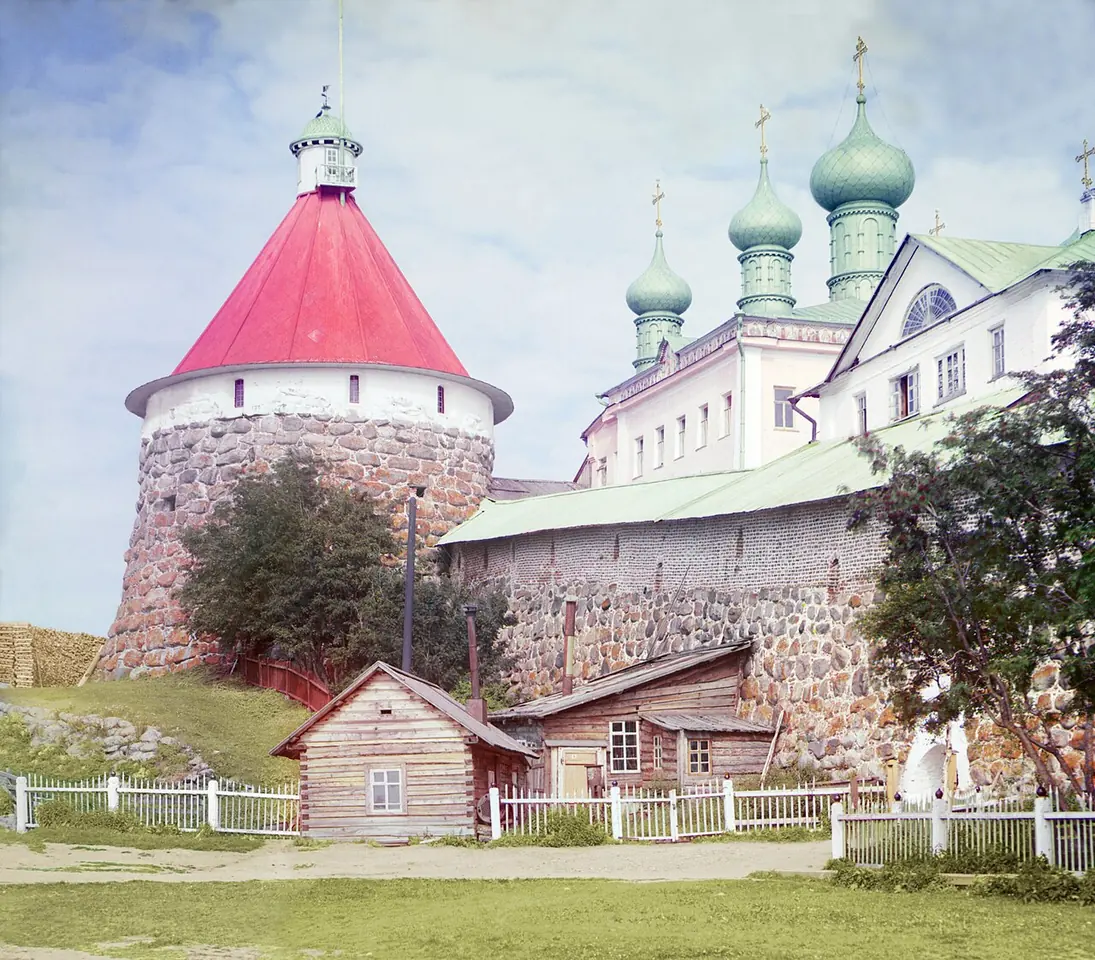
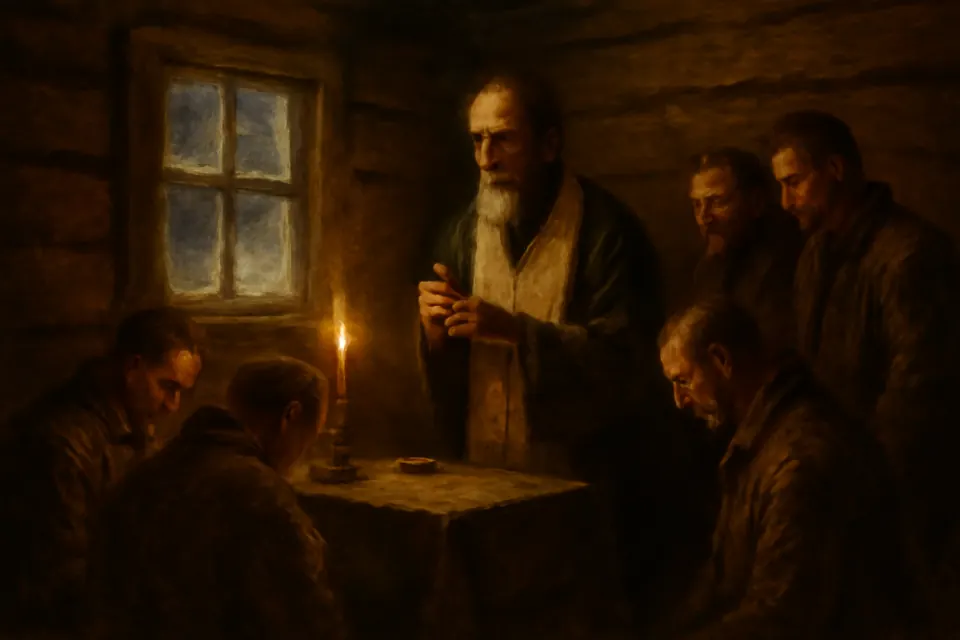
He spent three years in Moscow's Butyrka prison and in 1926 was sent to the prison camp on the Solovetsky Islands in the White Sea, set up in an old monastery. There he was at first allowed to celebrate the Divine Liturgy every other Sunday, and when the camp clamped down in 1929 the Liturgy went on in secret. Released into exile on August 6, 1929, he was sent to Pinega in the far north and moved again before his sentence ended in 1932. He settled in Viatka, and he died there on March 7, 1935, at fifty-five.
Beatification as a martyr
John Paul II beatified Leonid Feodorov at a Byzantine-rite Divine Liturgy in Lviv, Ukraine, on June 27, 2001, together with other victims of the Soviet persecution of the Ukrainian Greek Catholic Church. As a martyr he needed no approved miracle. Santi e Beati calls him the first Russian blessed of modern times. Graces received through his prayers are reported until one is examined for a canonization.
Symbols of Blessed Leonid in art
He is painted in the manner of an Eastern icon, with a long beard and a halo.
- Byzantine priestly vestments: red and gold vestments mark him as a priest of the Eastern rite he chose to keep.
- Hand cross: the blessing cross of an Eastern priest, and a sign of his martyrdom.
- Model of a church: in some icons, for the Russian Catholic Church he led as exarch.
- Monastic habit and Gospel book: for his tonsure as the monk Leontiy.
Look for him in Ukrainian Greek Catholic churches and monasteries and in Russian Catholic chapels, often with Cyrillic lettering naming him "Blessed Martyr Leonid."
Feast day and prayer
We keep his feast on March 7, the day of his death, as the Roman Martyrology lists it. The martyrs beatified with him in Lviv are also remembered together on June 27. See more on our feast days page.
We have not found an official English prayer to Blessed Leonid, so we do not print one. Let us ask him to pray for the Catholics of Russia, for the unity of the Eastern and Western churches he loved, and for all who are imprisoned for their faith.
Frequently asked questions
Who was Blessed Leonid Feodorov?
A priest of St. Petersburg, raised Russian Orthodox, who became Catholic in 1902 while keeping the Byzantine liturgy of his people. He led the small Russian Greek Catholic Church as exarch from 1917 and suffered prison and exile under the Soviets.
When is the feast of Blessed Leonid Feodorov?
March 7, the day he died in 1935. He was beatified on June 27, 2001, with the new martyrs of the Ukrainian Greek Catholic Church.
Is Leonid Feodorov a saint?
He is a blessed. John Paul II beatified him as a martyr in Lviv, Ukraine, on June 27, 2001. Santi e Beati calls him the first Russian blessed of modern times.
What was the Cieplak trial?
A 1923 show trial in Moscow of Archbishop Jan Cieplak and other Catholic clergy who resisted Soviet seizures of church property. Exarch Leonid defended himself there and was sentenced to ten years.
Keep exploring
Sources
- Bl. Leonid Feodorov, The Conception of the Immaculate Mother of God Ukrainian Greek Catholic Church. Reception at the Gesù on July 31, 1902, ordination on March 25, 1911, tonsure on March 12, 1913, his words at the trial, the Liturgy at Solovki, release on August 6, 1929, and death on March 7, 1935
- Beato Leonida Fedorov, vescovo e martire, Santi e Beati (Italian). The Roman Martyrology entry for March 7 and his beatification with 24 other Ukrainian martyrs
- Dawn Beutner, Martyrs of Communism: Blessed Leonid Feodorov, Catholic World Report, March 7, 2022. Soloviev's influence, his studies under a pseudonym, the 1922 seizures of church goods, and the 120,000 children fed daily