St. Corbinian of Freising: The Bishop and the Bear
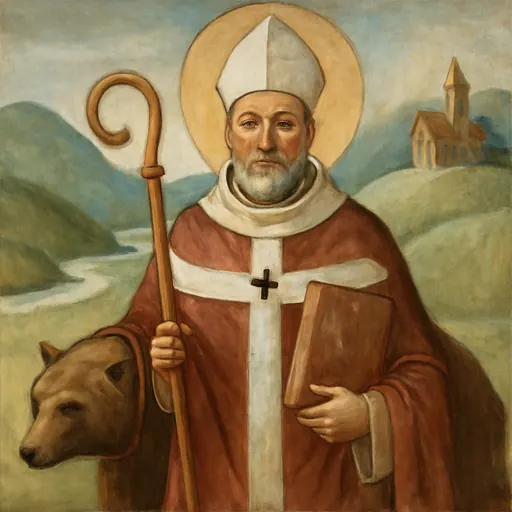
St. Corbinian (about 680 to 730) was a Frankish hermit, made a bishop in Rome, who founded the Church of Freising in Bavaria. Legend says a bear that killed his packhorse had to carry his baggage to Rome, and the bear of St. Corbinian appeared in the coat of arms of Pope Benedict XVI. His feast is September 8.
Who was St. Corbinian?
St. Corbinian was a Frankish hermit and missionary bishop who founded the Church of Freising in Bavaria in the early eighth century. Freising grew into today's Archdiocese of Munich and Freising, and Corbinian is its patron and spiritual father. He died at Freising on September 8, 730, which is his feast in the Roman Martyrology.
Most people meet him through his bear. The story of the bear that carried his baggage to Rome made it into the coat of arms of Joseph Ratzinger, who was Archbishop of Munich and Freising before he became Pope Benedict XVI.
Hermit of Châtres
Corbinian was born around 680 at Châtres, near Melun in France, the town now called Arpajon. The Catholic Encyclopedia notes that nothing is known of his youth, except that his father, Waldekiso, died before he was born, and that his mother's name was Corbiniana. After her death he lived as a hermit by the church of St. Germain at Châtres.
Alban Butler writes that he spent fourteen years in that cell. The fame of his holiness, and some reported miracles, drew so many people to him for advice that a little religious community gathered around him. Wanting solitude again, and devoted to St. Peter, he went to Rome to find a cell near the apostle's tomb.
A bishop sent by the pope
The pope had other plans. In Butler's words, he told Corbinian "he ought not to live for himself alone, whilst many nations, ripe for the harvest, were perishing for want of strenuous labourers." He consecrated him a bishop, gave him the pallium and sent him out to preach. Corbinian was afraid of the charge, Butler says, "but being taught to obey," went home and preached with great fruit in France.
Some years later he went back to Rome, hoping to resign. The pope would not hear of it. On the road home, at Mais in the Tyrol, messengers from Duke Grimoald of Bavaria persuaded him to come to Freising. The dates of the two Roman journeys are confused in the sources, the Catholic Encyclopedia admits, but the people of Freising have long counted 724 as the year he arrived. In 2024 the city celebrated 1,300 years since his coming.
The miracle of the bear
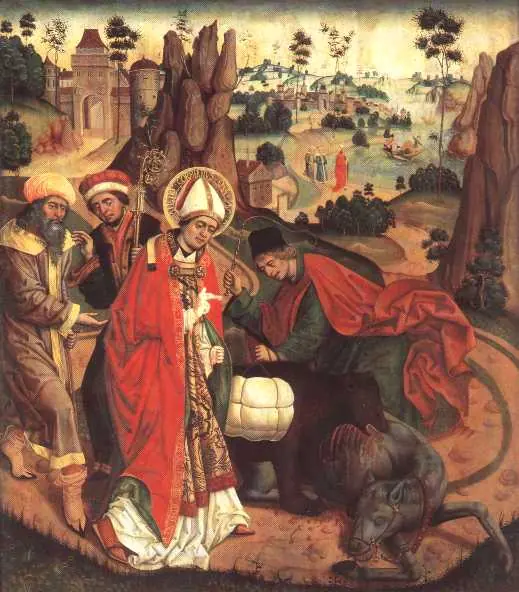
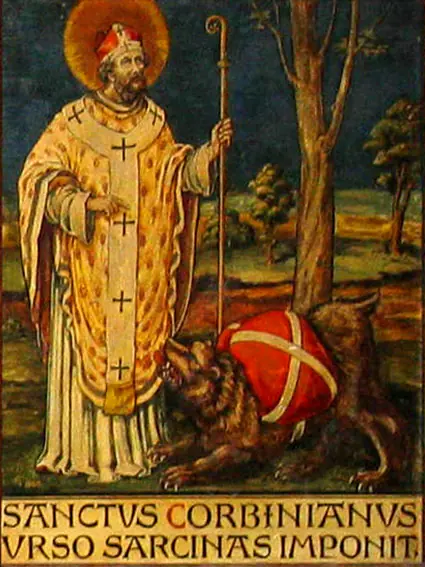
The best-known story about him is traditional, told in his Life and in centuries of Bavarian art. As Corbinian crossed the Alps on the way to Rome, a bear attacked and killed the horse that carried his baggage. The bishop calmly ordered the bear to take the horse's place. It bore the load all the way to Rome, where Corbinian released it, and in some tellings it went home to Bavaria.
Bavarians have always read the story as a picture of what the Gospel did for their land. The explanation of Benedict XVI's arms puts it this way: Christianity "tamed and domesticated the ferocity of paganism." It adds a second meaning that the Pope took to heart, the bear as God's beast of burden carrying the weight of office.
Rebuking the duke
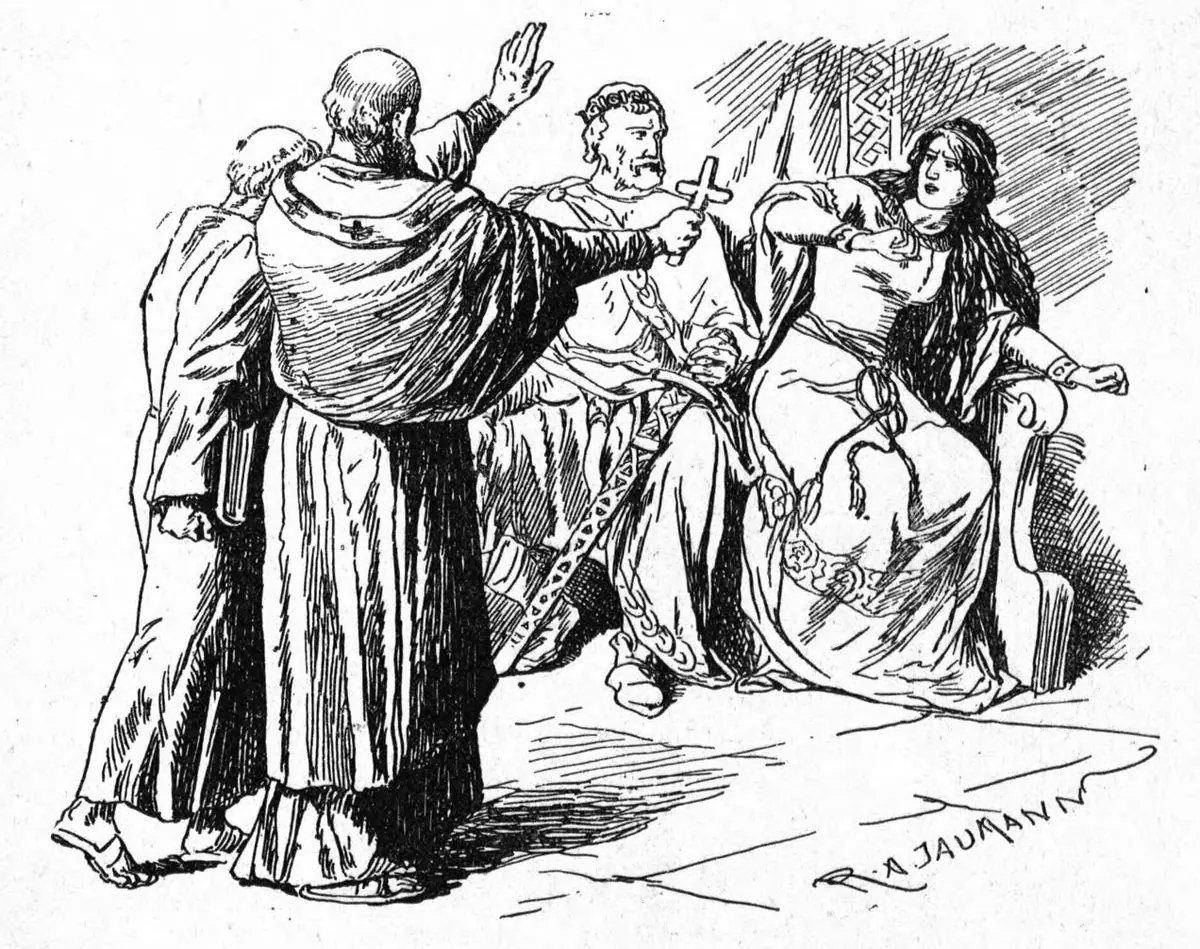
At Freising, Corbinian found a ruler who was a Christian in name. Duke Grimoald had married Biltrude (Pilitrud), the widow of his own brother, a marriage the Church forbade. Like St. John the Baptist before Herod, Corbinian told him plainly that it was wrong. The Catholic Encyclopedia speaks of the duke's "apparent repentance, and subsequent relapse." Butler adds that Biltrude hired assassins to murder the bishop. Corbinian left Freising and hid.
Grimoald and Biltrude came to a bad end soon after. Under Grimoald's successor, Hugbert, Corbinian returned to Freising and took up his work again until his death in 730. The Catholic Encyclopedia sums him up as "a man of zeal, and of strong feeling, not to say temper," with great influence over everyone he met.
Why St. Corbinian is the patron of Freising and Munich
Corbinian was the first bishop at Freising, and every bishop of Freising, and later every Archbishop of Munich and Freising, has been his successor. That makes him the spiritual father of the archdiocese, and of the Catholic faith in much of Upper Bavaria. Our patron saints index lists more patrons of places.
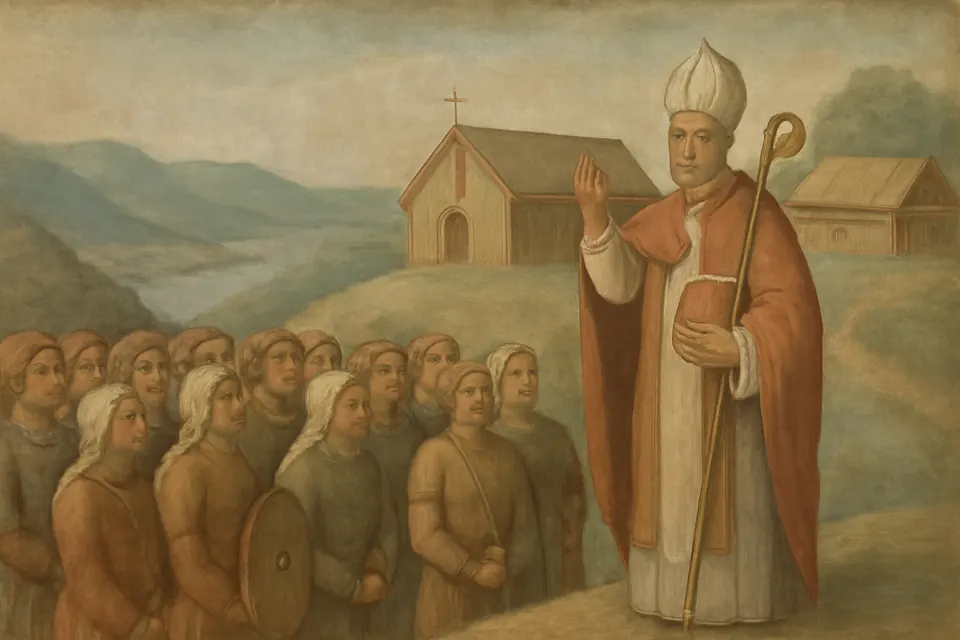
Symbols of St. Corbinian in art
Look for these in Bavarian churches:
- The bear with a pack: his unmistakable sign, often with a saddlebag or bundle strapped to its back.
- Miter, crosier and pallium: he was a bishop, and the pope gave him the pallium.
- A Gospel book: the missionary who preached to the Bavarians.
- A model of Freising Cathedral: the church that grew from his foundation.
In Freising you meet the "Korbinian bear" in statues and emblems all over town. It also stood in the arms of Archbishop Joseph Ratzinger from 1977 and in his papal arms from 2005.
Feast day, relics and the Freising pilgrimage
His date in the Roman Martyrology is September 8. Because that day is the Nativity of the Blessed Virgin, Freising celebrates him chiefly on November 20, the anniversary of the translation of his relics. His body was first buried at Freising, then carried to Mais in the Tyrol, and brought back to Freising in 769 by Bishop Arbeo, who also wrote his Life.
His relics rest in the crypt of the Cathedral of St. Mary and St. Corbinian in Freising. In 2006, Pope Benedict XVI recalled the processions of St. Corbinian from his years as archbishop. It was the custom then to open the reliquary, he said, and from the bishop's place behind it he had a direct view of the saint's skull: "I saw myself taking part in the procession of centuries walking the way of the faith."
See our feast day calendar for other saints of September.
Where the relics of St. Corbinian are kept: see them on the relics map →
Prayer to St. Corbinian
The Archdiocese of Munich and Freising prays to its patron in German in the liturgy of his feast, and we won't invent an English prayer in his name. Let us ask St. Corbinian, in our own words, to pray for the Church in Bavaria and for all bishops and priests who carry a load heavier than they would choose, that they may carry it, like his bear, all the way to Rome and home again.
Frequently asked questions
Who was St. Corbinian?
A Frank born about 680 at Châtres near Melun who lived for fourteen years as a hermit, was consecrated a bishop in Rome, and settled at Freising in Bavaria about 724 at the invitation of Duke Grimoald. He clashed with the duke over his unlawful marriage, went into hiding, returned under Grimoald's successor and died at Freising on September 8, 730.
What is the story of St. Corbinian's bear?
Tradition from his Life says a bear killed his packhorse as he crossed the Alps to Rome. Corbinian ordered the bear to carry the horse's load, and it did, all the way to Rome, where he released it. The story is traditional.
Why is St. Corbinian's bear in Pope Benedict XVI's coat of arms?
Joseph Ratzinger took the bear as Archbishop of Munich and Freising in 1977, since Corbinian is the patron of that archdiocese, and kept it as pope. The explanation of his arms says the tamed bear stands for Christianity taming the ferocity of paganism, and, as God's beast of burden, for the burden of office.
When is St. Corbinian's feast day?
September 8 in the Roman Martyrology, the day of his death. Freising and the Archdiocese of Munich and Freising celebrate him on November 20, the feast of the translation of his relics.
Keep exploring
Sources
- Catholic Encyclopedia (1908): St. Corbinian (Francis Mershman). His birth, parents' names, years as a hermit, journeys to Rome, settlement at Freising, the dispute with Grimoald, the translation of his body to Mais and back in 769, and his feast and translation dates
- Alban Butler, Lives of the Fathers, Martyrs and Other Principal Saints, vol. 9 (1842), September 8: St. Corbinian (archive.org). Fourteen years as a recluse, the pope's charge to preach, Biltrude's hired assassins, and his habits of prayer
- Benedict XVI, Address in the Cathedral of St. Mary and St. Corbinian, Freising, September 14, 2006 (vatican.va). The processions of St. Corbinian and the opening of the reliquary with his skull
- EWTN: Benedict XVI, Coat of Arms. The bear of Corbinian in the papal arms and its meaning