Blessed Alfredo Ildefonso Schuster, Benedictine Cardinal of Milan

Blessed Alfredo Ildefonso Schuster (1880–1954) was a Roman-born Benedictine monk, abbot of St. Paul Outside the Walls and, from 1929 until his death, Cardinal Archbishop of Milan. A scholar of the liturgy and a tireless pastor, he guided Milan through fascism and war. Pope John Paul II beatified him in 1996, and we keep his feast on August 30.
Who was Blessed Alfredo Ildefonso Schuster?
Blessed Alfredo Ildefonso Schuster was a Benedictine monk from Rome who became one of the great archbishops of Milan. He entered the Abbey of St. Paul Outside the Walls as a boy, rose to be its abbot, and in 1929 was sent by Pope Pius XI to lead the largest diocese in Italy. For twenty-five years, through the fascist years, the Second World War and the hard peace that followed, he governed Milan as a monk would: from the altar outward.
When Pope John Paul II beatified him in 1996, he quoted the words of Schuster's successor, Giovanni Battista Montini, the future St. Paul VI, who called him a "man of prayer, of study and of action," concerned with nothing but the spiritual salvation of his people. We keep his feast on August 30.

The life of Blessed Ildefonso Schuster
A tailor's son in a Roman abbey
Alfredo Ludovico Schuster was born in Rome on January 18, 1880, and baptized two days later in the Basilica of St. John Lateran. His father, Johann, was a Bavarian who served as chief tailor to the Papal Zouaves; his mother, Maria Anna Tutzer, came from the South Tyrol. Johann died when the boy was eight.
At eleven Alfredo went to school at the Benedictine Abbey of St. Paul Outside the Walls, the great basilica over the Apostle's tomb. He began his novitiate there on November 13, 1898, taking the name Ildefonso, and made his vows two years later to the day. He earned doctorates in philosophy and theology in 1903 and was ordained a priest at the Lateran on March 19, 1904, the feast of St. Joseph.
Abbot and scholar of the liturgy
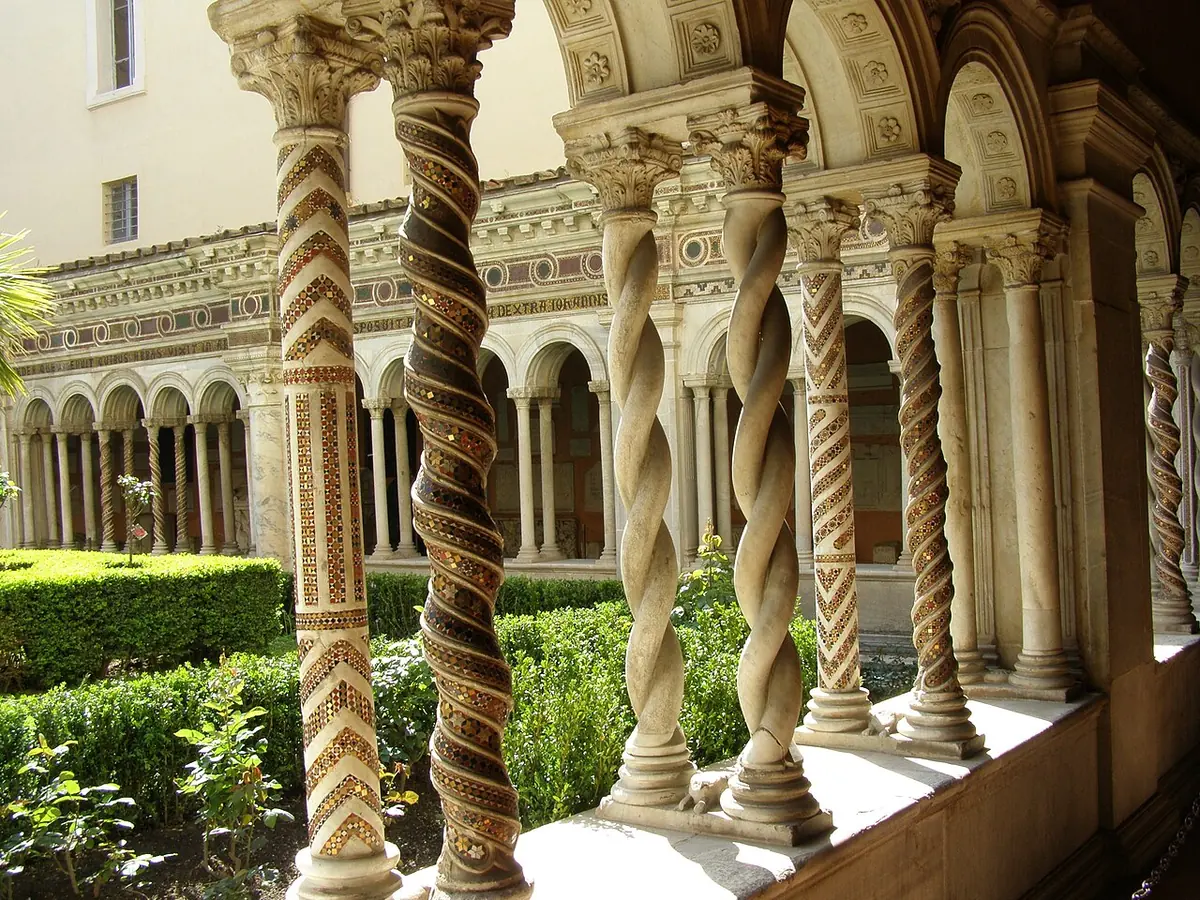
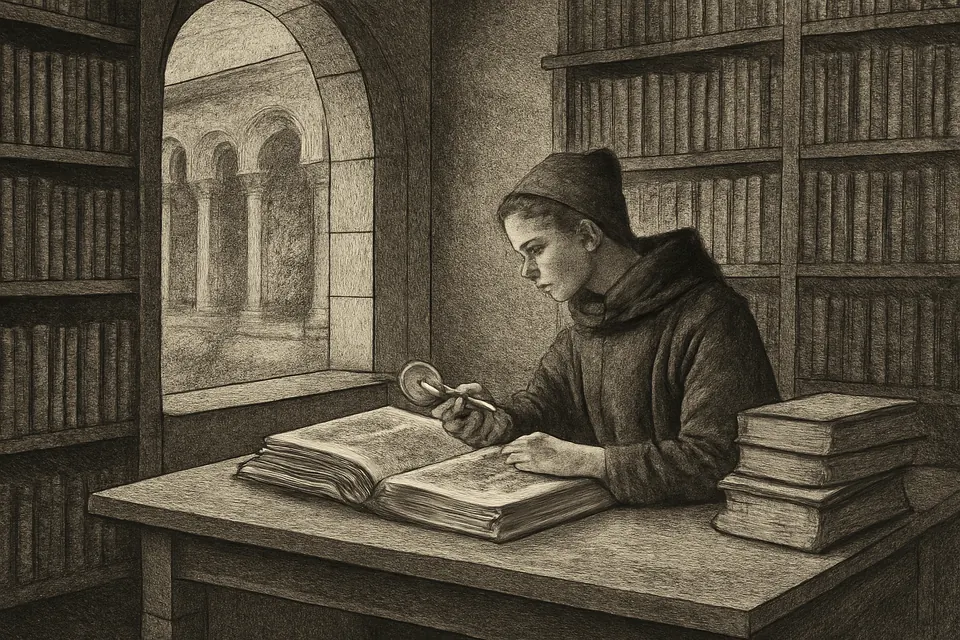
Dom Ildefonso became a teacher, novice master and scholar. On April 6, 1918, his brothers elected him abbot of St. Paul's. In the same years he wrote the work he is best known for outside Italy, the Liber Sacramentorum, nine volumes on the Church's year and the Roman Missal, published in Turin from 1919 to 1929 and in English as The Sacramentary. "It may even be said that the very source of the holiness of the Church is fully contained in her Liturgy," he wrote. For him, Benedictine spirituality was simply the spirituality of the Church: praying the sacred liturgy.
Archbishop of Milan
On June 26, 1929, Pius XI named him Archbishop of Milan. He was created a cardinal on July 15 and consecrated bishop in the Sistine Chapel on July 21. He entered Milan on September 8, the Nativity of Our Lady, chosen because the cathedral is dedicated to her.
He was a thin, frail-looking man with enormous energy. Like St. Charles Borromeo before him, he visited the parishes of his vast archdiocese again and again. He loved and studied the Ambrosian rite, the ancient liturgy of Milan that bears the name of St. Ambrose, and he celebrated it with great care. The Ambrosian Missal, in the preface for his memorial, praises him for building up his people "with the assiduous and devout celebration of the Sacred Mysteries and the example of a clear and consistent life."
Through the war
Schuster's years in Milan were the years of Mussolini. In 1938 he condemned Italy's anti-Jewish racial laws as born of heresy. During the German occupation of Lombardy from 1943 to 1945, a Jesuit who ran his office of religious assistance directed a rescue network for Jews in Milan, with the cardinal's support. As the war ended, he tried to negotiate between the retreating Germans and the partisans to spare the city further bloodshed. On April 25, 1945, he received Mussolini in the archbishop's palace and urged him, without success, to surrender to the Allies and to make his peace with God.
His death and his last words
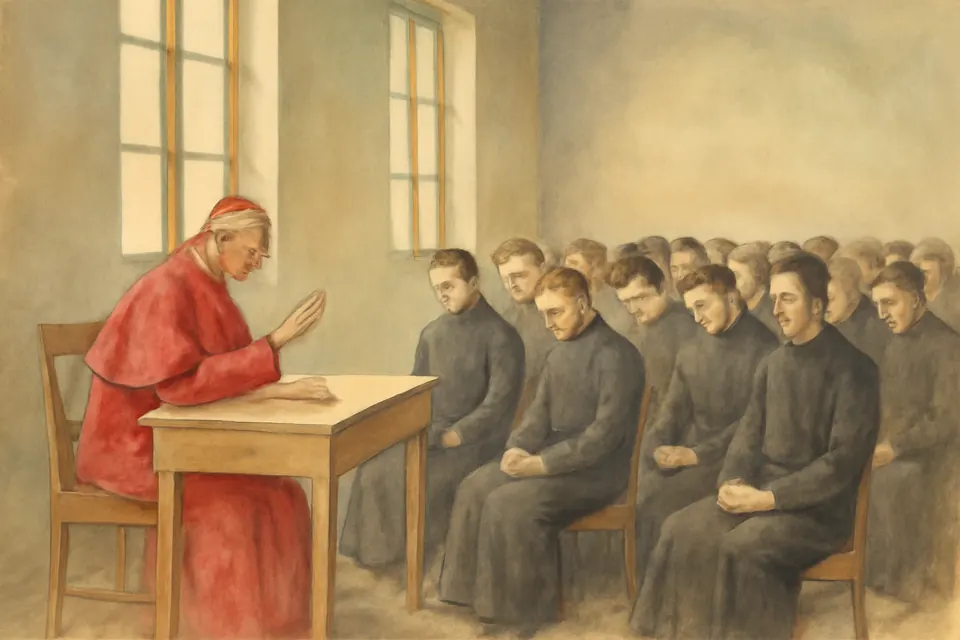
In the summer of 1954 the cardinal, worn out and ill with heart disease, went to the archdiocesan seminary at Venegono. About two weeks before he died he spoke to the seminarians. As Adoremus renders his words:
You want something to remember me by. I have nothing to give you but an invitation to holiness.
He added that the devil is not afraid of our sports fields and our cinemas, but of our holiness. He died at the seminary on August 30, 1954. Cardinal Angelo Roncalli, the future St. John XXIII, celebrated his funeral, and he was buried in Milan Cathedral.
Beatification and the reported preservation of his body
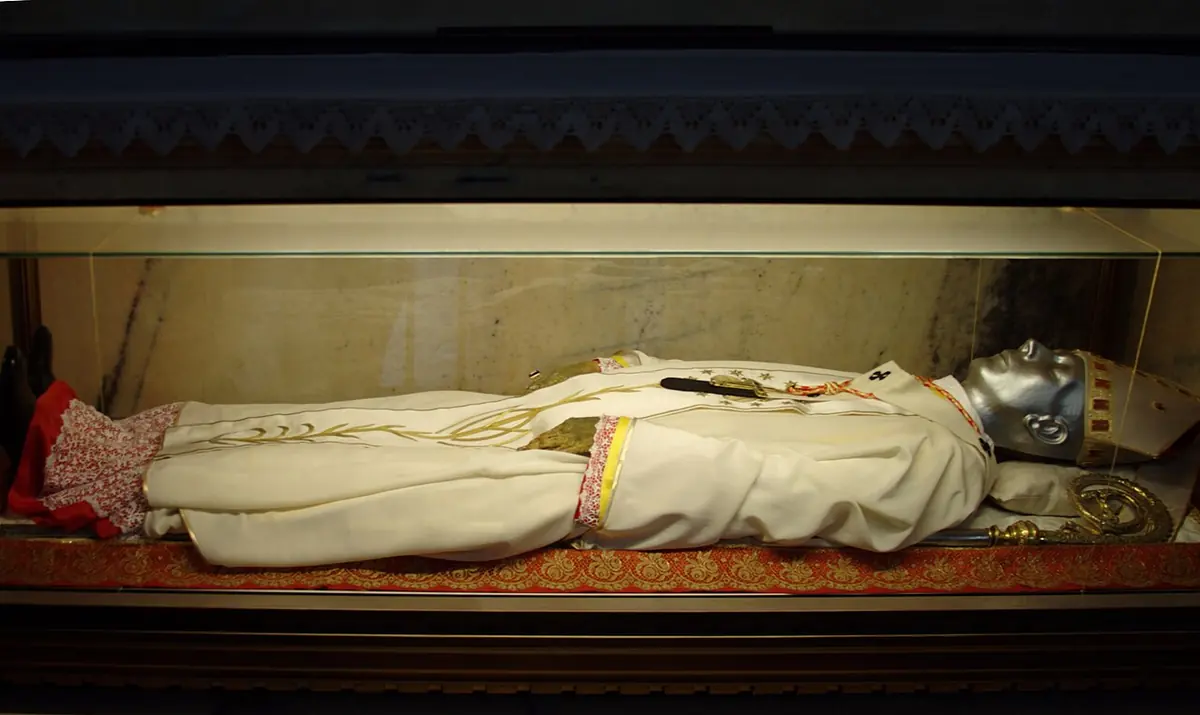
When his tomb in the cathedral was opened in 1985, his body was found intact. This is reported: a documented fact noted at the opening, but not a sign the Church has examined or declared miraculous. Today the body lies in a glass case in the Duomo, the face covered with a silver mask, and the people of Milan still stop there to pray.
Pope John Paul II beatified him in St. Peter's Square on May 12, 1996. In his homily the Pope held him up to every priest as an example of how contemplation and pastoral work can live together, and quoted a line from his writings: "In the end, what counts for the true greatness of the Church and of her children is love."
His cause continues, and the Church awaits a further approved miracle before he can be canonized.
Symbols of Blessed Ildefonso Schuster in art
Schuster lived in the age of photography, and most images of him follow the photographs. Look for:
- A very thin cardinal in red, often seated, with a pale, gentle face; this is how Milan remembers him.
- The black Benedictine habit, in images of his years at St. Paul's, recalling that he never stopped being a monk.
- Miter and crozier, for the archbishop on his pastoral visits.
- A missal or breviary, for the scholar of the liturgy who said the Church's holiness is found in her prayer.
In the Duomo, the easiest way to find him is to look for the glass case with a bishop in white vestments and a silver face.
Feast day and prayer
We keep the feast of Blessed Ildefonso Schuster on August 30, the day of his death, in the Archdiocese of Milan and among the Benedictines. See the feast day calendar.
We know of no traditional prayer to him that we can quote. Let us ask Blessed Ildefonso to pray for bishops and priests, that their work may flow from prayer; for seminarians, that they may take up his invitation to holiness; and for the Church of Milan, which he served to the end. Blessed Alfredo Ildefonso Schuster, pray for us.
Frequently asked questions
Who was Blessed Ildefonso Schuster?
A Benedictine monk born in Rome in 1880, who became abbot of St. Paul Outside the Walls in 1918 and Archbishop of Milan and cardinal in 1929. He led the archdiocese for twenty-five years, wrote a large study of the liturgy, and died at his seminary in Venegono on August 30, 1954.
When was Cardinal Schuster beatified?
Pope John Paul II beatified him in St. Peter's Square on May 12, 1996, together with five others, among them Filippo Smaldone and Gennaro Maria Sarnelli.
Is Cardinal Schuster's body incorrupt?
His body rests in a glass case in Milan Cathedral. When his tomb was opened in 1985, the body was found intact. The Church has not declared this a miracle, so we call it a reported fact, not an approved sign.
What were Cardinal Schuster's last words to his seminarians?
About two weeks before he died, he told the seminarians at Venegono that he had nothing to leave them but an invitation to holiness, and that the devil fears not our sports fields and cinemas but our holiness.
Keep exploring
Sources
- Pope John Paul II, homily for the beatification of six Servants of God (May 12, 1996), Italian text. The date of beatification, Montini's words "man of prayer, of study and of action" and Schuster's line on love, quoted here in our translation
- Adoremus: Blessed Ildefonso Schuster, Pioneer of the Liturgical Movement in Milan (January 2023). Family, monastic dates, the Liber Sacramentorum, wartime help to Jews, the meeting with Mussolini, the opening of the tomb in 1985 and his last words to the seminarians