St. Finnian of Moville, Teacher of St. Columba
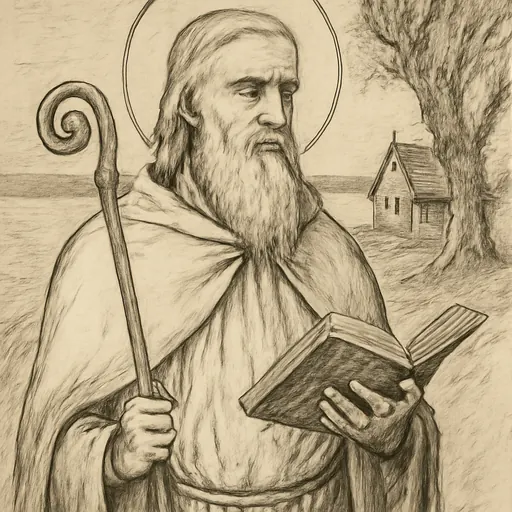
St. Finnian of Moville (died about 579) was an Ulster bishop who founded the monastery of Magh Bile, now Movilla, at the head of Strangford Lough. He taught the young St. Columba, and Adamnan tells how Columba, as his deacon, turned water into wine for Mass. Butler calls him the chief patron of Ulster. His feast is September 10.
Who was St. Finnian of Moville?
St. Finnian of Moville (or Movilla) was a sixth-century Irish bishop who founded the monastery of Magh Bile, "the plain of the ancient tree," at the head of Strangford Lough in County Down. His school there trained some of the great men of the Irish Church, above all St. Columba, who served him as a young deacon. Butler says he is "honoured as chief patron of Ulster." We keep his feast on September 10.
He is easily confused with St. Finnian of Clonard, the other great teacher of the same century. Columba studied under both. The sources also call our Finnian Finnio, Vinnian and even Finnbarr, from his fair hair, and in Scotland he became St. Winning.
The life of St. Finnian of Moville
A prince of Ulster
O'Hanlon, gathering the Irish genealogies, says Finnian was the son of Cairbre, of the Dál Fiatach, the royal family of eastern Ulster. His first teacher was St. Colman of Dromore. Then he went to Caelan, abbot of Nendrum on Strangford Lough, who sent him across the sea to the monastery of St. Ninian at Candida Casa, today's Whithorn in Scotland.
Rome and Magh Bile
His Life says he went on to Rome, studied there for seven years and was ordained a priest. Home again, he founded the monastery of Magh Bile, most probably around 540, and was made a bishop. O'Hanlon, writing in the nineteenth century, tells of old yew trees growing at Movilla, and wonders if one of them descended from the sacred tree that named the place.
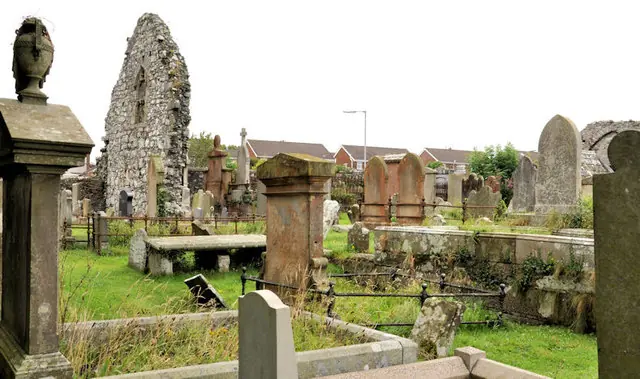
The original monastery has vanished. The ruins at Movilla today belong to a later church on the same site.
The teacher of Columba
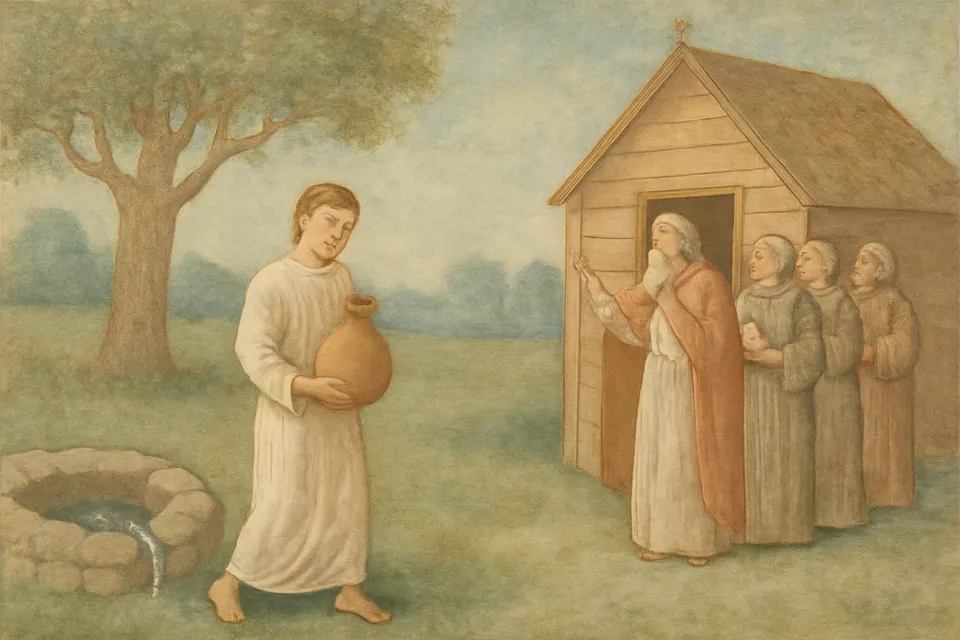
The earliest witness to Finnian is Adamnan's Life of St. Columba, written about a hundred years after his death. Adamnan says Columba, "while the venerable man was yet a youth in Scotia (Ireland) learning the wisdom of the Holy Scripture under St. Findbarr, the bishop," served as a deacon at Mass. One feast day there was no wine. Columba went to the spring and blessed the water, and it became wine. Adamnan adds that "the holy youth ascribed this, not to himself, but to the holy bishop Vinnian."
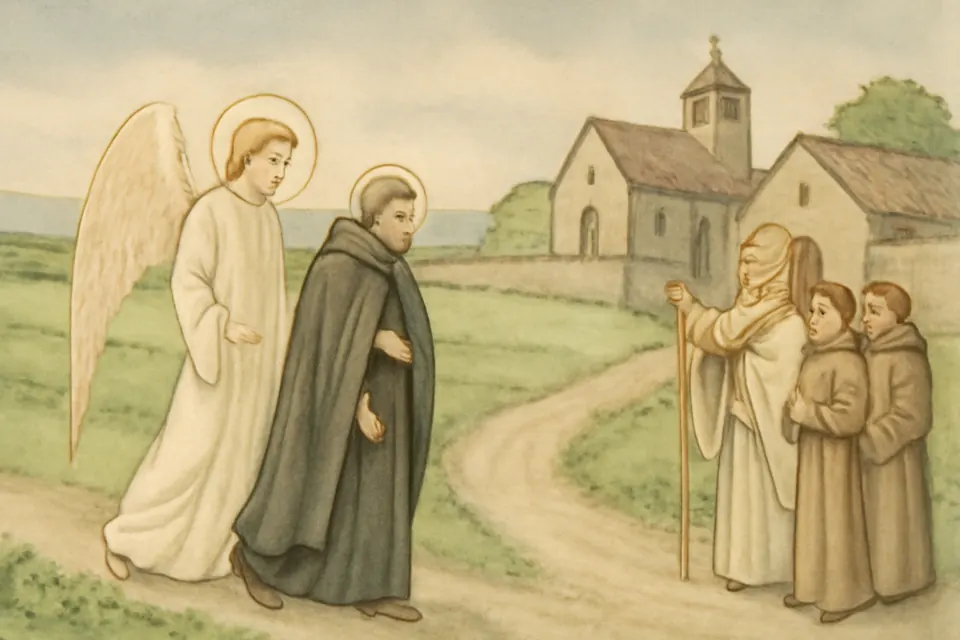
Adamnan also tells of a later visit. When Columba, now a grown man, came to see "the venerable Bishop Finnio, who had formerly been his preceptor," the old bishop saw an angel walking beside him and said to the brothers: "Behold, look now to Columba as he draweth near; he hath been deemed worthy of having an angelic inhabitant of heaven to be his companion in his wanderings."
Both are reported miracles, written by the abbot of Iona from the memories of Columba's community. O'Hanlon takes Adamnan's "Findbarr" to be Finnian of Moville, while admitting that Finnian of Clonard was also a famous teacher of the Scriptures.
The book of the psalms
A later story says Columba secretly copied a psalter belonging to Finnian, that Finnian claimed the copy, and that the high king ruled "to every cow its calf, to every book its copy," and the quarrel is blamed for the battle of Cúl Dreimne. This is traditional, first written down centuries later, and O'Hanlon calls it a fable. The old psalter called the Cathach, kept in Dublin, is linked with the legend.

His death
O'Hanlon says Finnian lay ill for a year before he died. The Life of St. Comgall tells that Comgall, abbot of nearby Bangor, said to his monks one night: "Let us pray, dearly beloved, for the soul of our father Bishop Findbarr. He is now borne to Heaven by the Angels." The annals give his death between 572 and 579.
St. Winning of Kilwinning
In Scotland, Finnian became St. Winning, and the town of Kilwinning in Ayrshire bears his name. The English writers John of Tynemouth and Capgrave even said he was buried there, though the Irish writers place his grave at Movilla. Older writers also tried to make him the same man as St. Frediano of Lucca; O'Hanlon thought them distinct.

Symbols of St. Finnian in art
No early image survives. He is shown as a bishop with a crozier and a book of the Gospels, and sometimes with the young Columba beside him or the angel of Adamnan's story.
Feast day
His feast is September 10, the day the Martyrology of Donegal enters "Finnen, Bishop of Magh-bile." See our feast days calendar and our page on Irish saints.
Prayer to St. Finnian of Moville
We know of no traditional prayer to St. Finnian. We may ask him to pray for the people of Ulster, for teachers, and for young people discerning a call to serve God. St. Finnian of Moville, pray for us.
Frequently asked questions
Is St. Finnian of Moville the same as St. Finnian of Clonard?
No. Both were great Irish teachers of the sixth century, and St. Columba studied under both. Finnian of Clonard taught in Meath and is honored on December 12; Finnian of Moville taught in County Down and is honored on September 10.
When is the feast of St. Finnian of Moville?
September 10, the date in the old Irish martyrologies of Tallaght and Donegal.
Did St. Finnian of Moville quarrel with St. Columba over a book?
A late medieval legend says Columba secretly copied Finnian's psalter and the king ruled "to every cow its calf, to every book its copy." The story is traditional, first written down long after both men died, and O'Hanlon calls it a fable.
Who is St. Winning of Kilwinning?
The Scottish form of Finnian's name. John of Tynemouth and Capgrave said he was buried at Kilwinning in Ayrshire, which takes its name from him. The Irish writers say he was buried at Movilla.
Keep exploring
Sources
- John O'Hanlon, Lives of the Irish Saints, vol. 9 (September 10): St. Finian, Finnia, Finnen, Finnbarr or Finnian, Bishop of Moville. His family, teachers, years at Candida Casa and Rome, the founding of Magh Bile, Comgall's vision, the annal dates of his death and the Scottish cult of St. Winning
- Adamnan, Life of St. Columba (Medieval Sourcebook). Book II, chapter 1 (water changed into wine) and Book III (the angel seen beside Columba), quoted word for word
- Alban Butler, Lives of the Saints, vol. IX (1866): St. Finian, or Winin, Bishop and Confessor in Ireland. "Honoured as chief patron of Ulster"