St. Rose of Viterbo
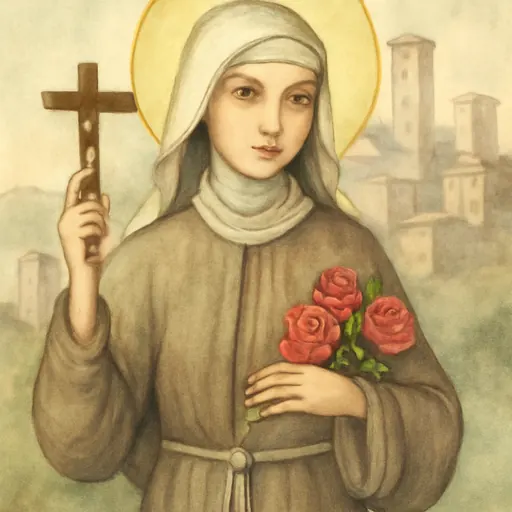
St. Rose of Viterbo (about 1233–1251) was a girl of Viterbo, Italy, who joined the Franciscan Third Order as a child and preached penance in the streets against the emperor Frederick II's rule. Exiled, then refused by the Poor Clares because she was poor, she died at about eighteen. Her body rests incorrupt in Viterbo, and her feast is September 4.
Who was St. Rose of Viterbo?
St. Rose of Viterbo was a poor girl from a hill town north of Rome who preached in the streets as a child, was driven out of her city by the emperor's men, was turned away from the convent she longed to enter, and died at about eighteen. She never became a nun. She lived and died a lay member of the Third Order of St. Francis, in a cell in her father's house. Viterbo has loved her ever since as its patron saint.
The dates of her life are uncertain. The Catholic Encyclopedia notes that the acts of her canonization, the main sources, give no dates at all. Viterbo's own tradition says she was born in 1233 to Giovanni and Caterina, poor farmers, and died on March 6, 1251.

The life of St. Rose of Viterbo
A child of prayer
Even as a small girl Rose prayed for long hours, did penance and helped the poor. The Catholic Encyclopedia records that at seven she was already living as a recluse. When she fell seriously ill, she was cured, tradition says, by the Blessed Virgin, who told her to take the habit of the Third Order of St. Francis and to preach penance to the city.
Preaching against an emperor
Viterbo in the 1240s was torn between the pope and the emperor Frederick II, who held the city, and between rival factions and heretical movements. Rose, still a child, went out into the streets with a crucifix and called her neighbors to repentance and loyalty to the Church. The Viterbo porters' confraternity, which keeps her memory, says she may even have been on the walls when Frederick's army attacked the city in 1243, and that the wound later found on her arm may date from then.

Her preaching worked so well that the imperial authorities banished her. In January 1250 Rose and her parents were expelled and took refuge in Soriano. There, on December 5, 1250, she foretold the emperor's death; Frederick II died on December 13.
Refused by the convent
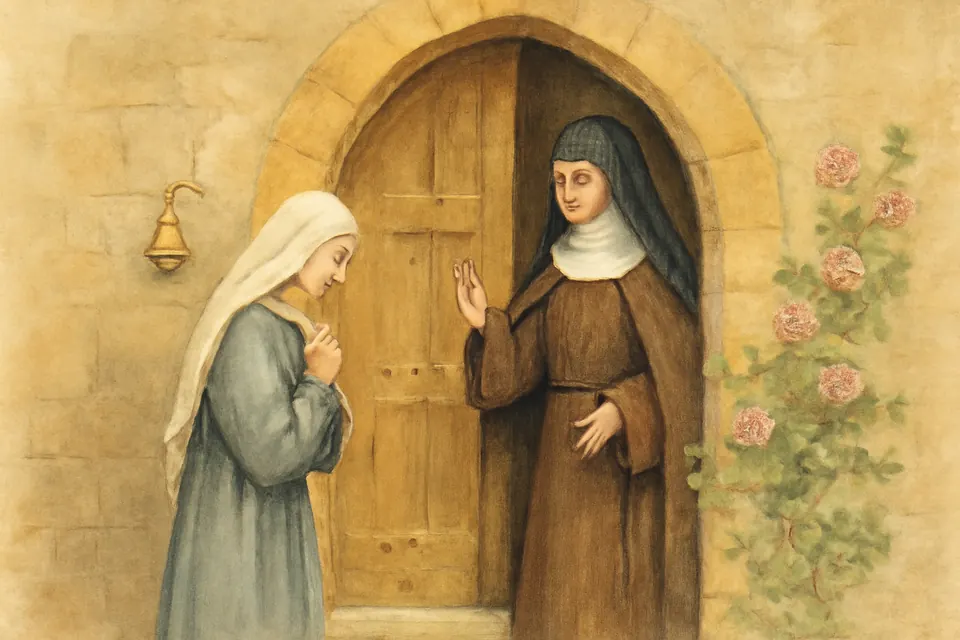
When the papal party regained Viterbo in 1251, Rose came home. She asked to enter the monastery of St. Mary of the Roses, a house of Poor Clares, and was refused because she had no dowry. She accepted it humbly and said, the Catholic Encyclopedia reports, that she would be admitted after her death. She spent her last months in her cell at home and died there on March 6, 1251, at about eighteen. She was buried in the ground beside the little church of Santa Maria in Poggio.
Welcomed at last
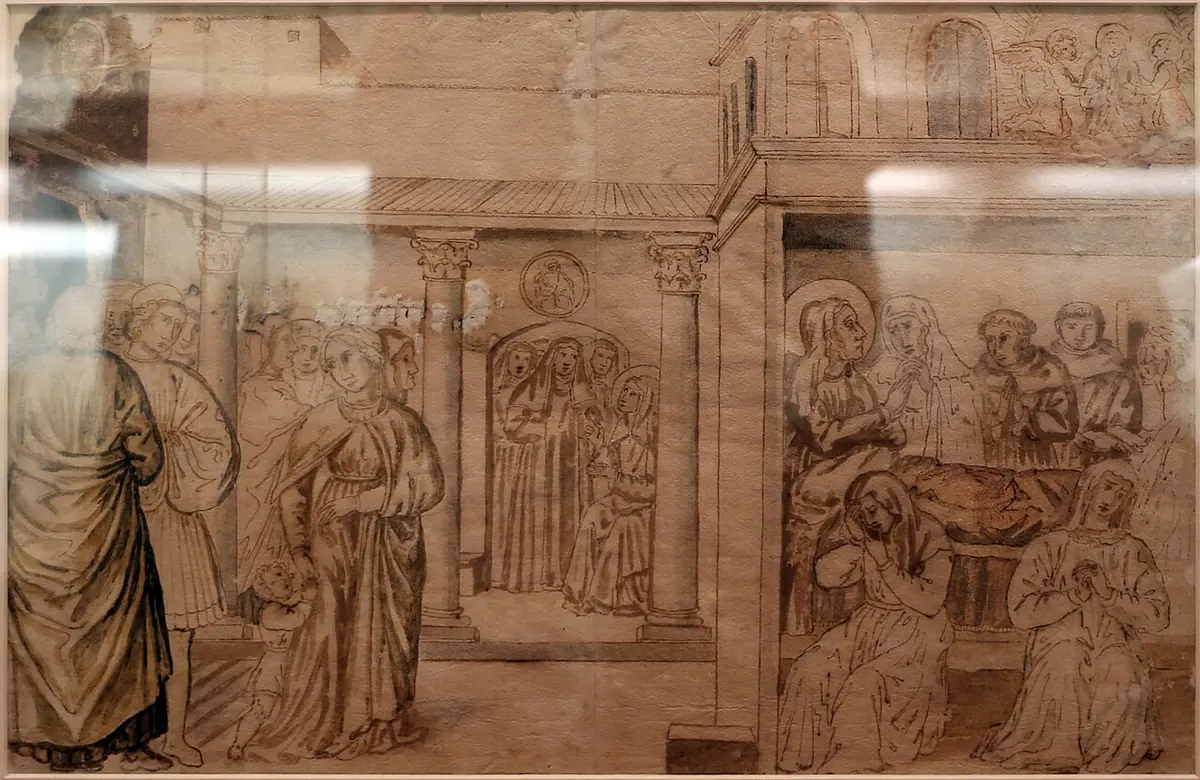
Tradition holds that Rose appeared in dreams to Pope Alexander IV, who had her body exhumed. It was found incorrupt, and on September 4, 1258, it was carried in procession by cardinals and townspeople to the monastery of San Damiano, the very convent that had refused her. The convent took her name. Her prophecy was fulfilled.
The miracles of St. Rose of Viterbo
The canonization process opened under Pope Innocent IV soon after her death and was taken up definitively in 1457. The stories that come down from it are best counted as traditional:
- At three, she is said to have raised her dead aunt to life (traditional).
- At Vitorchiano she converted the townspeople and a sorceress by standing unharmed for three hours in the flames of a pyre. The Catholic Encyclopedia of 1912 calls it "a miracle as striking as it is well attested" (traditional).
- She foretold the death of Frederick II eight days before it happened (traditional).
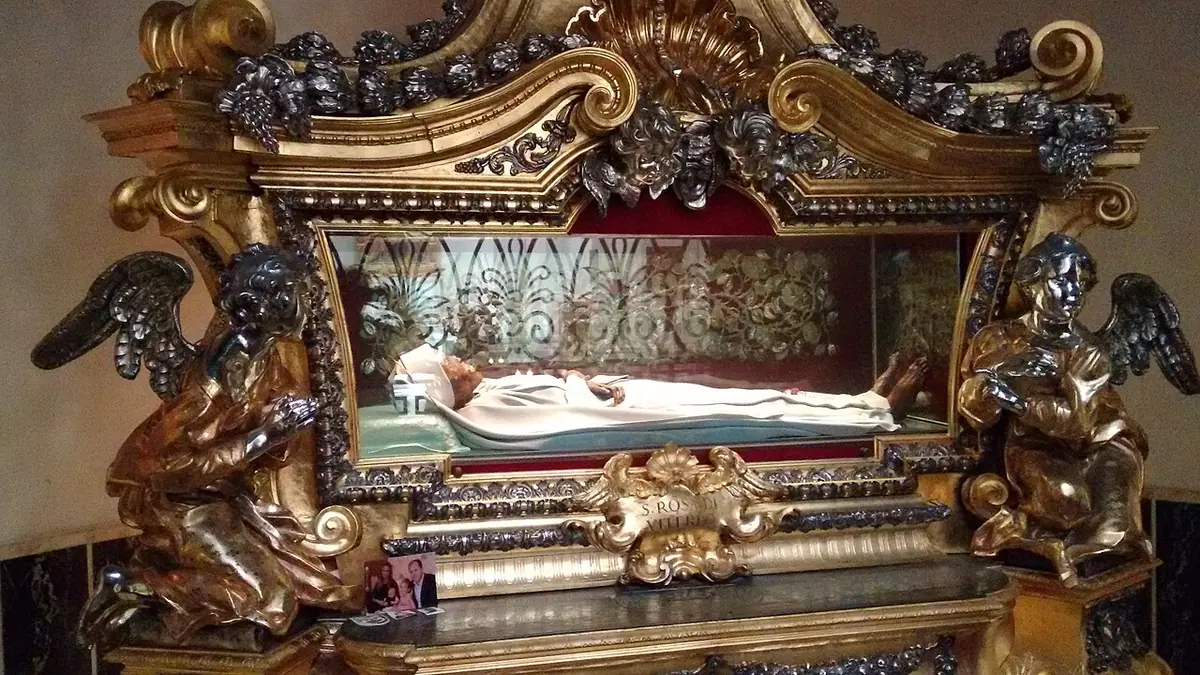
Her body is a sign of its own. In 1921 doctors examined it and found it well preserved; they removed her heart, which is kept in a silver reliquary. A study begun in 1996 confirmed the preservation, found soft tissue still present, and showed that she was born without a sternum, a defect that usually kills in infancy (reported). The scientists spoke of an exceptional body, not a miracle.
Why St. Rose is a patron saint
- Viterbo: her city, which has honored her since the day she died.
- Franciscan tertiaries: she lived and died as a lay Franciscan.
- Exiles: she was banished from her home for her faith.
- People rejected by religious orders: the Poor Clares turned her away, and she accepted it with peace.
Symbols of St. Rose of Viterbo in art
- The gray or brown habit with a knotted cord: the dress of the Franciscan Third Order.
- Roses: for her name, sometimes a crown of roses.
- A crucifix: the cross she held up while preaching.
- Flames: the ordeal by fire at Vitorchiano.
- A young girl: she is always shown as a child or teenager.
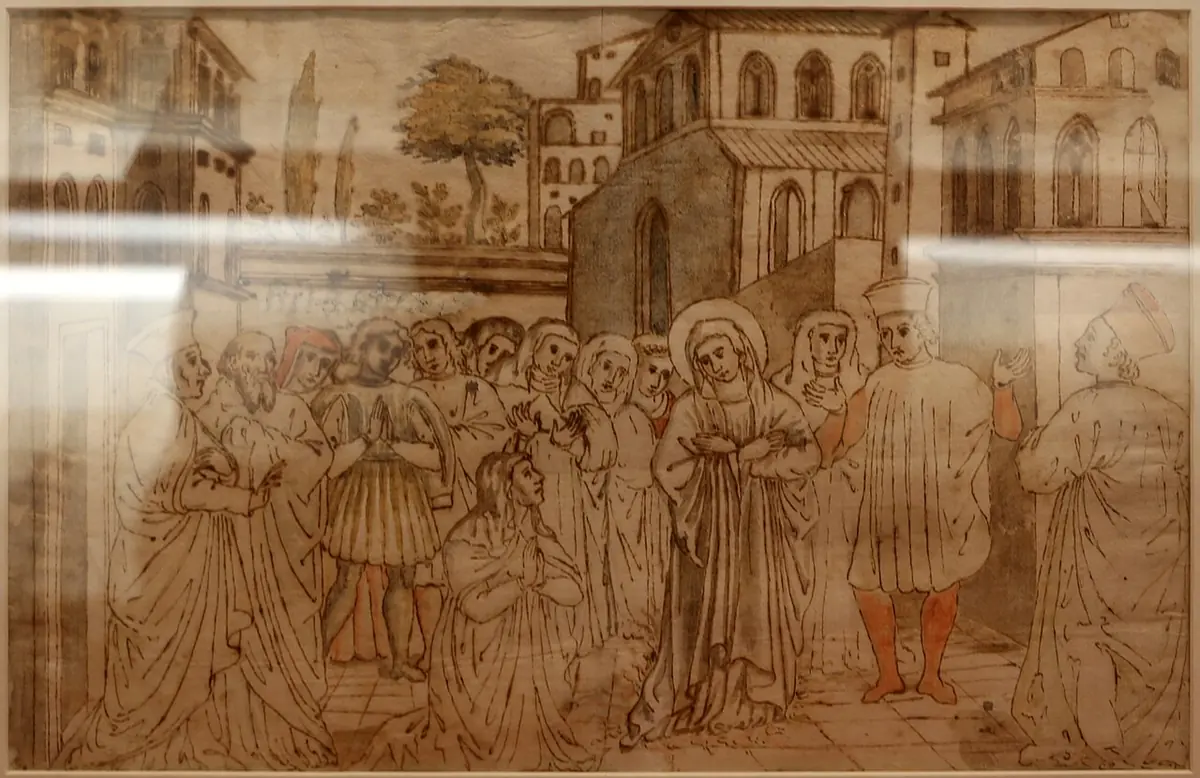
Benozzo Gozzoli painted her life for the Poor Clares' church in Viterbo in the fifteenth century. The frescoes were destroyed in 1632, but Francesco Sabatini copied nine of them that year, and the drawings survive in Viterbo's Museo Civico. Don't confuse her with St. Rose of Lima, who wears the black and white of a Dominican tertiary and a crown of roses.

Feast day and the Macchina di Santa Rosa
We keep her feast on September 4; see the other saints of early September on our feast days page. Viterbo celebrates for three days. On September 2 a procession in costumes from the 1200s to the 1800s carries her heart through the old town. On the evening of September 3, the porters, the facchini, carry the Macchina di Santa Rosa, a lighted tower about thirty meters high topped by her statue, through the darkened streets to her sanctuary. Processional "machines" carried on the shoulders go back to the Middle Ages in Viterbo; by the mid-1600s the whole city's devotion had settled on St. Rose's. UNESCO lists the procession as Intangible Cultural Heritage of Humanity.

Her body lies in a glass urn in the Santuario di Santa Rosa, cared for by the Poor Clares she once hoped to join.
Prayer to St. Rose of Viterbo
There is no traditional prayer to St. Rose of Viterbo with a known author. In Viterbo the faithful greet her with the cry "Evviva Santa Rosa!" Let us ask her, who was refused and did not grow bitter, to pray for all who feel unwanted, and for the grace to accept God's timing as she did. St. Rose of Viterbo, pray for us.
Frequently asked questions
Who was St. Rose of Viterbo?
She was the daughter of poor parents in Viterbo, north of Rome, born around 1233. As a girl she took the habit of the Franciscan Third Order and preached penance and loyalty to the pope in the streets, at a time when the emperor Frederick II held the city. She was exiled with her family in 1250, returned after his death, and died at home on March 6, 1251.
When is the feast day of St. Rose of Viterbo?
September 4, the anniversary of the translation of her incorrupt body in 1258, kept in Viterbo and by the Franciscans. The Roman Martyrology lists her on March 6, the day she died.
Is the body of St. Rose of Viterbo incorrupt?
Her body has been kept in a glass urn in her sanctuary in Viterbo since 1258. Scientific examinations in 1921 and from 1996 found it remarkably well preserved; the 1921 team removed her heart, now kept in a silver reliquary. The scientists spoke of an exceptional body rather than a miracle.
What is the Macchina di Santa Rosa?
It is a lighted tower about thirty meters high, crowned with a statue of St. Rose, that a large team of porters called facchini carry on their shoulders through Viterbo on the evening of September 3. It recalls the translation of her body in 1258, and UNESCO lists it among the Intangible Cultural Heritage of Humanity.
Sources
- St. Rose of Viterbo, Catholic Encyclopedia (1912), New Advent
- La vita di Santa Rosa, Sodalizio Facchini di Santa Rosa
- Il corpo incorrotto, Sodalizio Facchini di Santa Rosa. The examinations of 1921 and 1996
- La processione, Sodalizio Facchini di Santa Rosa
- La Macchina e la sua storia, Sodalizio Facchini di Santa Rosa
- Celebrations of big shoulder-borne processional structures, UNESCO Intangible Cultural Heritage