St. Sergius I, Pope
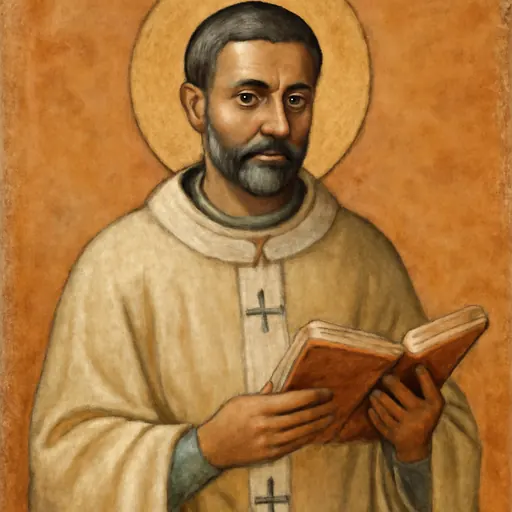
Pope St. Sergius I led the Church from 687 to 701. A priest of Syrian family raised in Sicily, he ordered that the Agnus Dei ("Lamb of God") be sung at every Mass, baptized the English king Caedwalla and refused to sign the canons of the Council in Trullo. We keep his feast on September 8.
Who was St. Sergius I?
Every time we pray "Lamb of God, you take away the sins of the world, have mercy on us" at Mass, we are praying words that Pope St. Sergius I ordered to be sung there more than thirteen centuries ago. He led the Church of Rome from 687 to 701, a hard time when the emperors in Constantinople still claimed to rule Italy and tried to rule the Church too.
Sergius came from a Syrian family of Antioch. His father, Tiberius, settled in Sicily, and the boy was educated there. He came to Rome under Pope Adeodatus, and because he was gifted at music he was handed over to the head of the cantors for training. Pope St. Leo II ordained him a priest on June 27, 683, for the church of St. Susanna on the Quirinal. Horace Mann's history of the early medieval popes notes, from the Liber Pontificalis, that as a priest he loved to say Mass in the catacombs.
This page is about the pope. He is not St. Sergius of Radonezh, the Russian monk, or the soldier martyr St. Sergius whom we honor with St. Bacchus.
His life
A disputed election
When Pope Conon lay dying in 687, the archdeacon Paschal promised the imperial governor at Ravenna, the exarch, a large bribe to make him pope. Another faction chose the archpriest Theodore. The clergy and people of Rome set both men aside and elected Sergius. The exarch still demanded the promised money before he would allow the consecration, which took place on December 15, 687.
Friend of the English
Sergius had warm ties with England. In 689 the young West Saxon king Caedwalla, who had come to Rome to be baptized at the tomb of St. Peter, received baptism from Sergius on Holy Saturday and took the name Peter. He died a few days later, still in his white baptismal robes. St. Bede copied the epitaph Sergius had carved on his tomb in St. Peter's. The Catholic Encyclopedia adds that he ordered St. Wilfrid restored to his see of York, and Mann notes that he even wrote asking for Bede, then a young monk, to be sent to him, though Bede never went.
He consecrated the English missionary St. Willibrord as archbishop for the Frisians in the church of St. Cecilia, on her feast, and gave him the name Clement. Bede dates it to 696; Willibrord himself gives 695. Willibrord noted in the margin of his own calendar that he had been "ordained bishop by the Apostolic Pope Sergius."
Standing firm against an emperor
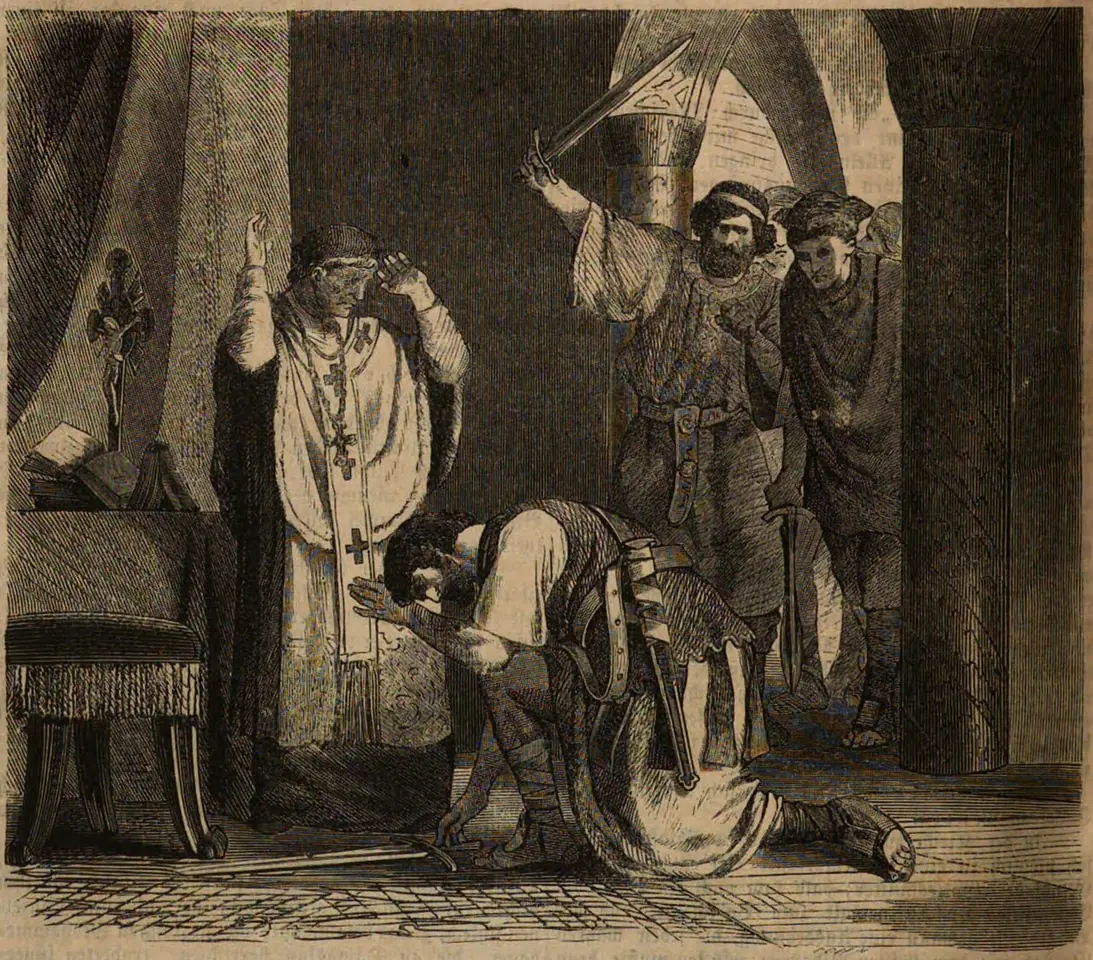
In 692 Emperor Justinian II gathered some 211 Eastern bishops in the domed hall of his palace, the Trullo, to issue church canons. Several went directly against Roman practice: one let married priests and deacons keep living with their wives, another raised Constantinople to equal rank with Rome. The emperor sent the canons to Sergius to sign. Mann quotes the Liber Pontificalis: Sergius rejected them as invalid, "choosing to die rather than consent to the errors of novelties," and would not even let them be read.
Justinian sent an officer named Zacharias to bring the pope to Constantinople by force, as an earlier emperor had done to St. Martin I. This time the soldiers of Ravenna and the Pentapolis marched on Rome to protect him. Zacharias, terrified, hid under the pope's bed in the Lateran, and Sergius went out to calm the crowd and saved the man who had come to arrest him. Justinian was overthrown in 695.
Shepherd of Rome
Sergius repaired and adorned St. Peter's, St. Paul's and other basilicas. In a neglected corner of the St. Peter's sacristy he found a silver box holding a relic of the True Cross set in a jeweled cross; the Catholic Encyclopedia identifies it as a gift from Emperor Justin II to Pope John III. In 688 he found the body of Pope St. Leo the Great and gave it a new tomb inside the basilica. He also helped end the old Schism of the Three Chapters at Aquileia. He died on September 8, 701, and was buried in St. Peter's.

The Agnus Dei and the Marian processions
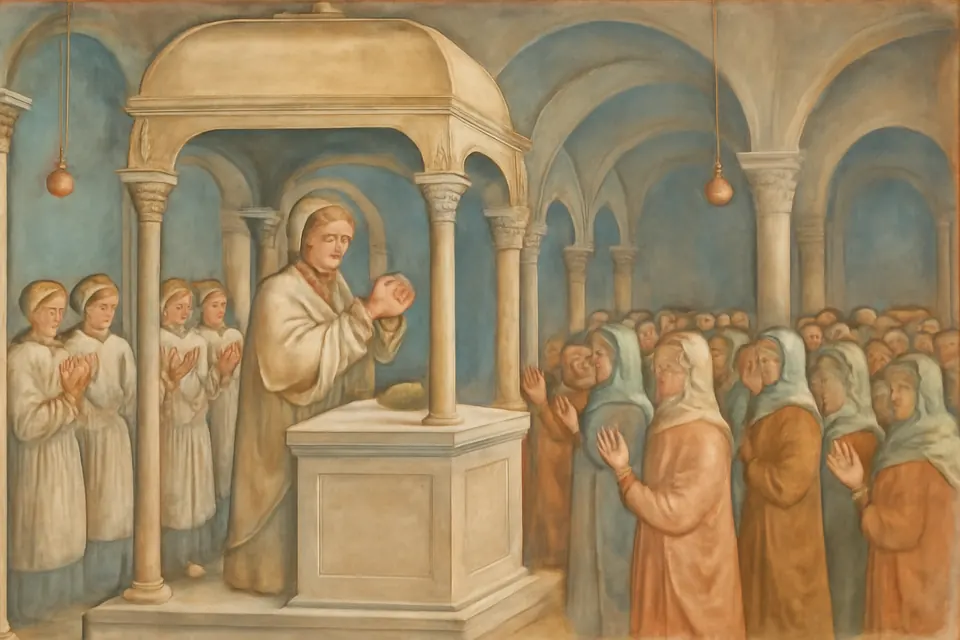
The Liber Pontificalis records his decree in Latin: "Hic statuit ut tempore confractionis dominici corporis Agnus Dei, qui tollis peccata mundi, miserere nobis, a clero et a populo decantetur." That is, at the breaking of the Lord's body, clergy and people were to sing the Agnus Dei. The Catholic Encyclopedia notes that the French scholar Louis Duchesne thought it might have been a quiet answer to canon 82 of the Council in Trullo, which forbade showing Christ as a lamb in art.
He also ordered that on four feasts of Our Lady, the Annunciation, the Dormition (Assumption), her Nativity and the Presentation, the people should walk in procession from the church of St. Adrian in the Forum to St. Mary Major. How fitting that he died on the feast of Mary's Nativity.
Miracles and legends
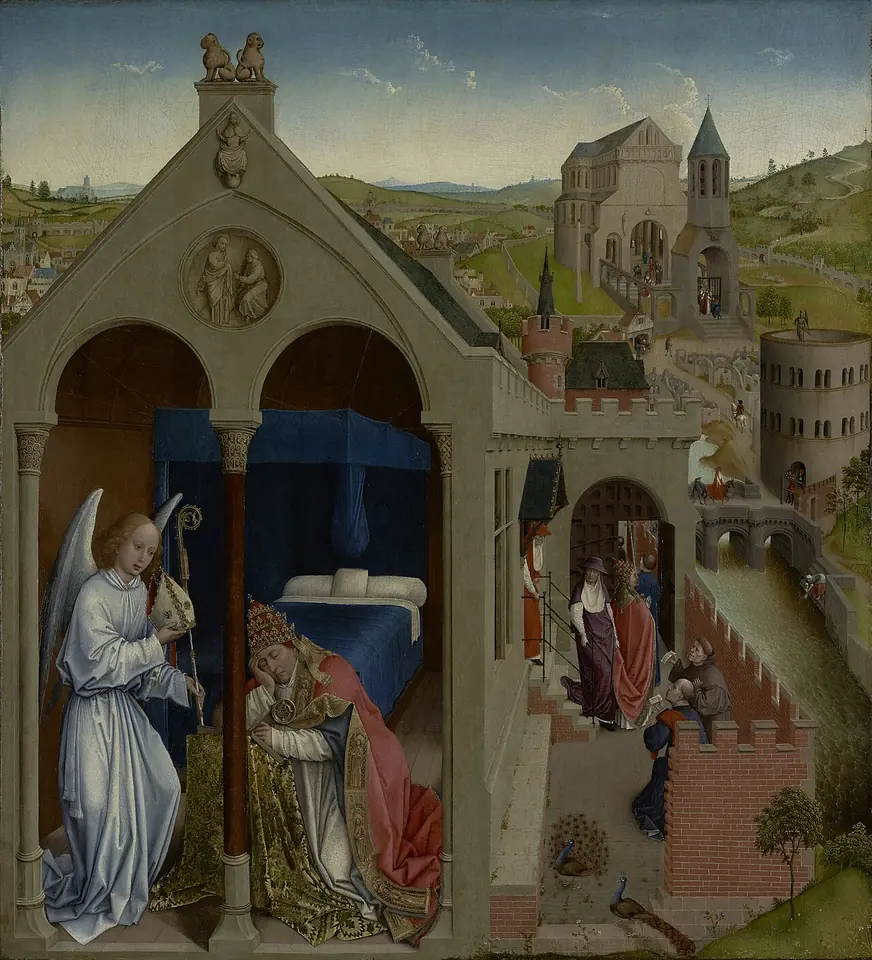
No miracles of Sergius himself are recorded in the early sources. One legend links him to another saint: the traditional story of St. Hubert of Liège says Pope Sergius saw in a dream that the bishop St. Lambert had been murdered and that Hubert should take his place, and that he then consecrated Hubert in Rome. It is a late medieval legend, but it gave Flemish painters a fine subject.
Symbols of St. Sergius I in art
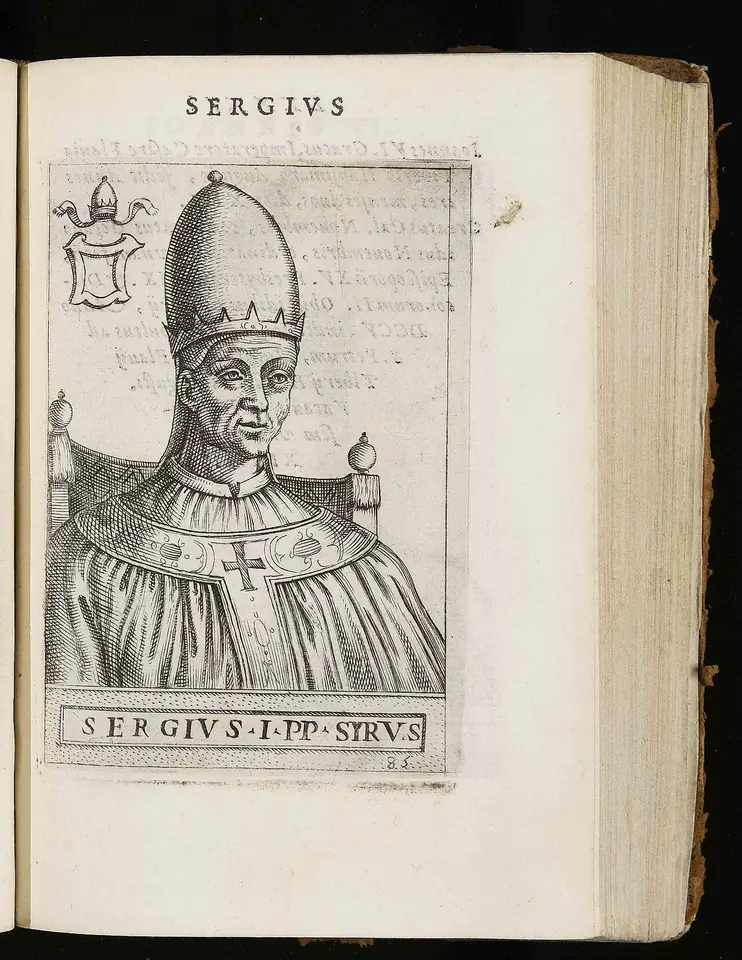
Sergius is shown mostly in series of papal portraits, like Cavalieri's 1580 engravings. Look for:
- Papal vestments, pallium and, in later art, a tiara. The tiara is an anachronism for the 7th century.
- A sleeping pope with an angel, in paintings of the St. Hubert legend, like the Getty panel above.
- The Lamb of God, a natural sign for the pope who brought the Agnus Dei into the Mass, though artists rarely gave it to him.
- A cross reliquary, recalling the True Cross he found.
Prayer and devotion
There is no traditional prayer to St. Sergius I in the standard prayer books. The best way to honor him is the prayer he gave the whole Church. Let us pray it slowly at our next Mass, remembering the pope who would rather die than give up the faith of Rome. In the English of the Roman Missal:
Lamb of God, you take away the sins of the world, have mercy on us.
Lamb of God, you take away the sins of the world, have mercy on us.
Lamb of God, you take away the sins of the world, grant us peace.
In Sergius's decree the plea was simply miserere nobis, "have mercy on us." The closing "grant us peace" (dona nobis pacem) came into use later, as Mann notes.
Frequently asked questions
What did Pope Sergius I add to the Mass?
The Agnus Dei. The Liber Pontificalis, the old book of papal lives, says Sergius decreed that "at the time of the breaking of the Lord's body" the Agnus Dei should be sung by clergy and people. The Catholic Encyclopedia dates the decree to his reign (687–701). We still pray it at every Mass before Communion.
When is the feast of St. Sergius I?
September 8, the day of his death and burial in St. Peter's in 701. It falls on the feast of the Nativity of Mary, a day he helped honor by ordering a procession in Rome for it.
Why did Sergius I refuse the Council in Trullo?
The Council in Trullo of 692, held in Constantinople under Emperor Justinian II, passed canons that went against Roman practice, among them one allowing married priests and deacons to keep living with their wives and one placing Constantinople on an equal footing with Rome. Sergius would not sign the decrees or let them be read, saying he would rather die than consent to the novelties.
Was Pope Sergius I Syrian?
Yes. His family came from Antioch in Syria; his father, Tiberius, moved to Sicily, where Sergius was educated. The current Roman Martyrology calls him "of Syrian origin."
Keep exploring
Sources
- Catholic Encyclopedia (1912): Pope St. Sergius I
- Horace K. Mann, The Lives of the Popes in the Early Middle Ages, vol. 1, part 2 (1903): St. Sergius I. The Trullan crisis, Zacharias hiding under the pope's bed, the True Cross relic, Leo the Great's tomb, the Marian processions and his burial
- Catholic Encyclopedia (1907): Agnus Dei (in Liturgy). The Liber Pontificalis decree on the Agnus Dei
- Bede, Ecclesiastical History, Book V (Caedwalla's baptism and epitaph; Willibrord's consecration)
- Catholic Encyclopedia (1908): The True Cross
- Roman Martyrology 2004, September (GCatholic)