St. Jeanne Jugan

St. Jeanne Jugan (1792 to 1879) was a poor Breton woman who in 1839 carried a blind old woman home and gave her her own bed. From that act grew the Little Sisters of the Poor, who care for the elderly poor worldwide. Patron of the elderly, she was canonized on October 11, 2009; her feast is August 30.
Who was St. Jeanne Jugan?
Jeanne Jugan was a poor, barely schooled Breton woman who founded the Little Sisters of the Poor. In the winter of 1839, in the port town of Saint-Servan, she met a blind, half-paralyzed old woman with no one to care for her, carried her home and gave her her own bed. More old women followed, and so did young women who wanted to help. By the time Jeanne died in 1879, the Vatican's biography records, the congregation counted 2,400 Little Sisters in 177 homes on three continents.
What makes her a saint is less the size of that work than the way she lived inside it. For the last 27 years of her life she was set aside, kept in retirement at the motherhouse while others took the credit, and she accepted it in peace. The young sisters around her often didn't know she was their foundress.
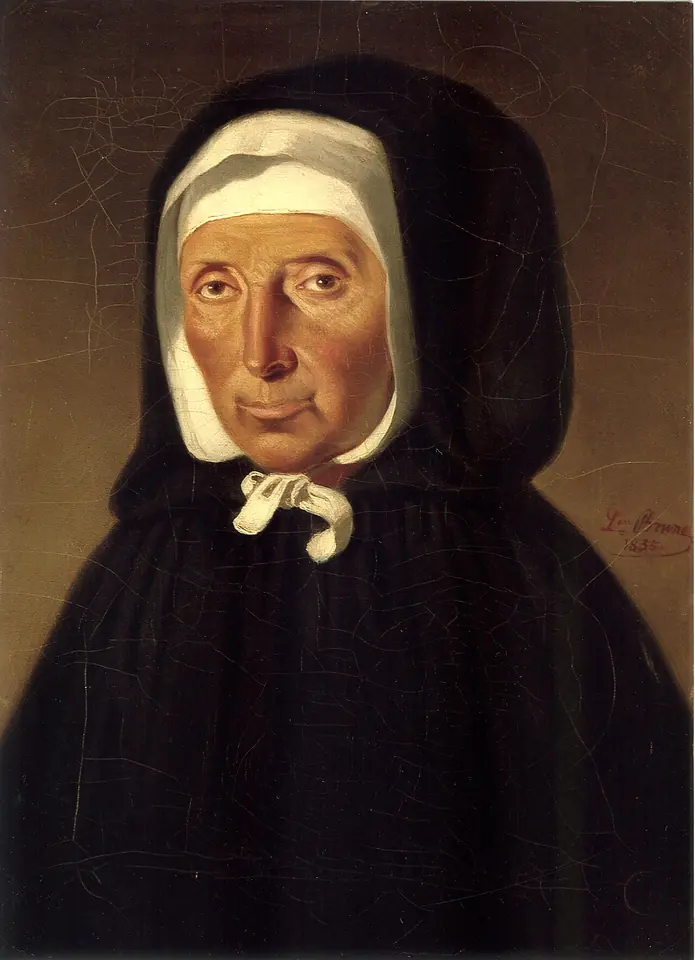
In religion she took the name Sister Mary of the Cross, and the Vatican still lists her that way. Pope Benedict XVI canonized her on October 11, 2009, on the same day as St. Damien of Molokai.
The life of St. Jeanne Jugan
A fisherman's daughter in revolutionary Brittany
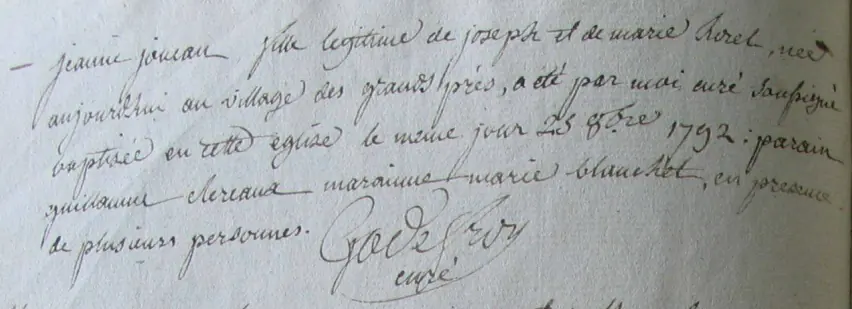
Jeanne was born at Cancale, on the bay of Mont-Saint-Michel, on October 25, 1792, the year the French Revolution turned against the Church. She was baptized the same day in the parish church of Saint-Méen. She was the sixth of eight children, four of whom died in infancy, and her father, a fisherman, was lost at sea when she was four.
The Little Sisters say she received her faith secretly, from her mother and from women of a lay movement, at a time when practicing Catholics risked prison. The Vatican biography names them: members of the Third Order of St. John Eudes, who also taught her to read and write. As a girl she tended cattle on the cliffs above the bay and prayed the Rosary while she watched them. At about 15 or 16 she went into service as a kitchen maid with a well-off family near Cancale, and her mistress took her along on visits to the poor.
"God wants me for himself"
When a young man asked to marry her, she said no. She told her mother, in words the Little Sisters still repeat, "God wants me for himself. He is keeping me for a work which is not yet founded." The Vatican adds that she divided her clothes into two piles and left the prettiest to her sisters.
At about 25 she moved to Saint-Servan and worked for six years as an aide at the town hospital. She joined the Third Order of St. John Eudes there and took up his teaching that Christians should carry on the life of Jesus in their own. Her one desire, the Vatican says, was "to be as humble as Jesus." When her health gave out she became the companion and servant of a fellow tertiary, Mademoiselle Lecoq, for twelve years, until Lecoq's death in 1835.
The winter night of 1839
In 1839 Jeanne was 47 and shared a small attic apartment with two friends: Fanchon, an elderly woman of 71, and Virginie Trédaniel, a 17-year-old orphan. Saint-Servan was in a bad way; by the Vatican's figures, 4,000 of its 10,000 people were reduced to begging.
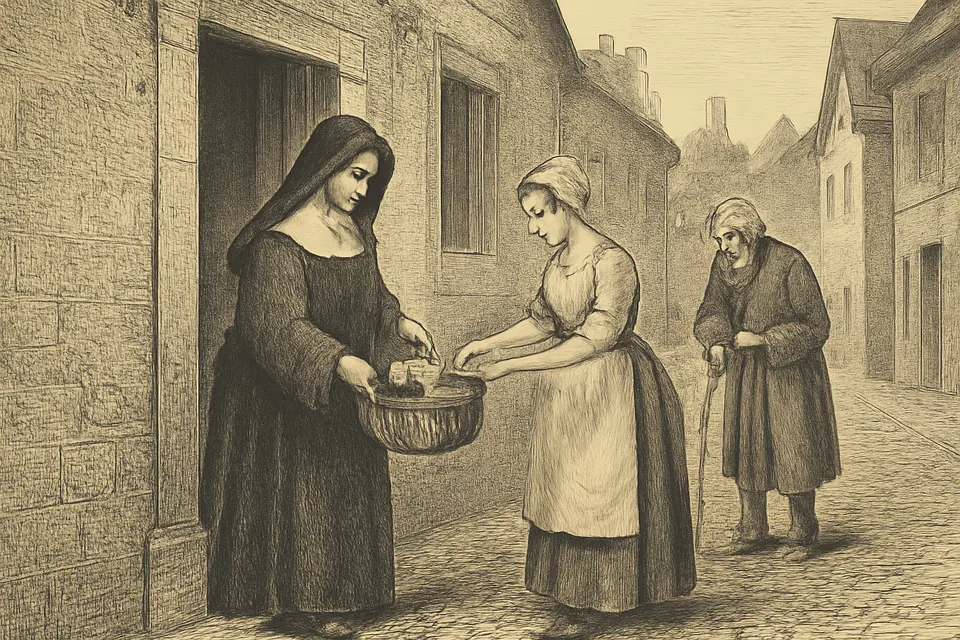
One winter evening Jeanne found Anne Chauvin, an old woman who was blind, infirm and alone. The French Little Sisters tell how Jeanne lifted her onto her shoulders, climbed the narrow wooden stairs to the apartment and put her in her own bed, then went to sleep in the attic. A second old woman came, then a third.

By 1841 Jeanne had rented a large room and was caring for twelve elderly people. In 1842, with no money at all, she bought a run-down former convent and soon housed forty. A Brother of St. John of God encouraged her to beg for them, and she did, going door to door with a basket. The Brothers also gave her the idea for the congregation's fourth vow, the vow of hospitality.
Foundress, then set aside
The young women who joined her called themselves the Servants of the Poor and elected Jeanne their superior. In 1844 they became the Sisters of the Poor, and in 1849 the people's nickname, Little Sisters of the Poor, stuck for good. In 1845 the French Academy gave her the Montyon Prize, awarded each year "to a poor French man or woman for outstandingly meritorious activity." New homes opened at Rennes and Dinan in 1846, Tours in 1847 and Angers in 1850.
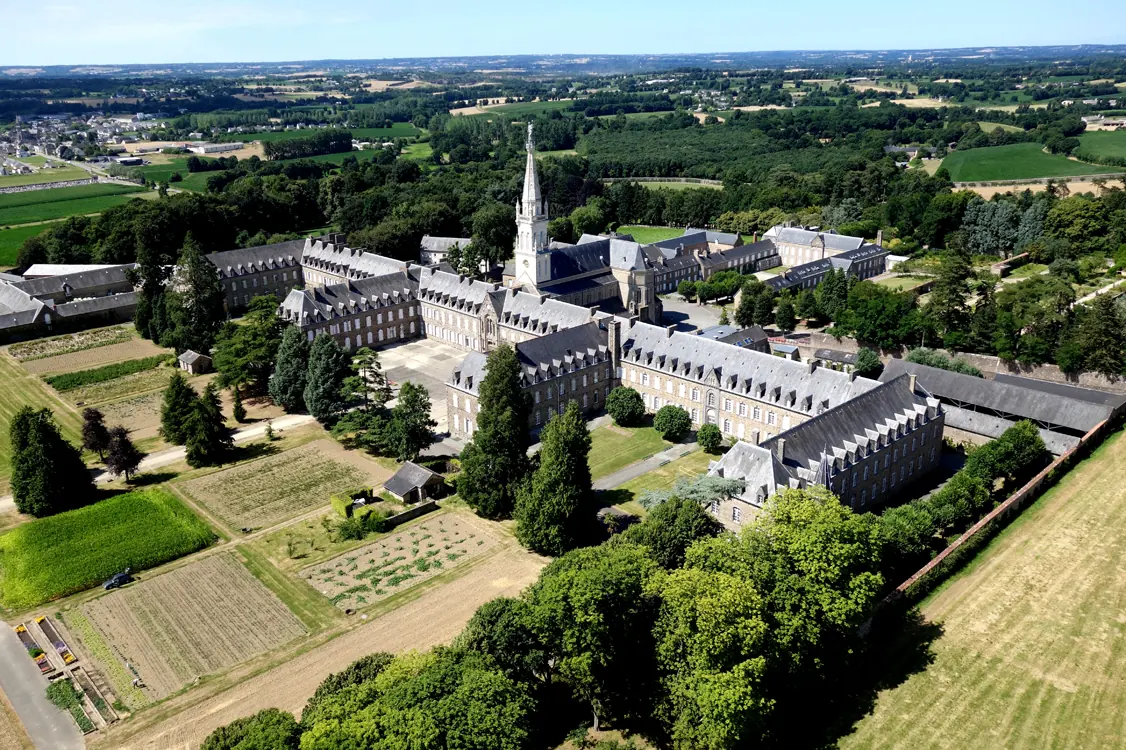
Then came the hardest part of her life. In 1843 the sisters re-elected Jeanne as superior. The priest who guided the young community, Fr. Auguste Le Pailleur, overturned the vote on his own authority and named Marie Jamet, a 21-year-old sister, in her place. Jeanne was sent out to beg. In 1852, when the Bishop of Rennes approved the congregation and made Le Pailleur its superior general, he recalled her to the motherhouse for good. She spent the next 27 years there in obscurity, from 1856 at La Tour Saint-Joseph in Saint-Pern, working with the novices and saying little.
The Vatican sees God's hand in this "total and radical dispossession." Jeanne herself put it this way: "We are grafted into the cross and we must carry it joyfully unto death." She died at the motherhouse on August 29, 1879, aged 86. Her last words, as the Little Sisters record them, were a prayer: "Eternal Father, open your gates today to the most miserable of your children, but one who greatly longs to see you. O Mary, my dear Mother, come to me. You know that I love you and I long to see You."
Restored and raised up
Only after her death did the truth come out. In the 1890s the congregation's superior general asked the motherhouse chaplain to search the archives, and a history of the congregation published in 1902 restored Jeanne as foundress. A diocesan inquiry into her holiness opened in 1935. Pope John Paul II declared her Venerable on July 13, 1979, and beatified her in St. Peter's Basilica on October 3, 1982, saying that "God could glorify no more humble a servant than she."
The miracles of St. Jeanne Jugan
Two miracles worked through her intercession have been approved by the Church.
- Antoine Schlatter, Toulon: the sudden cure of this resident of the Little Sisters' home in Toulon, France, which doctors called "medically inexplicable," was recognized by decree on May 11, 1982, and opened the way to her beatification. Approved.
- Dr. Edward Gatz, Omaha: in January 1989 Gatz, a 51-year-old anesthesiologist from Omaha, Nebraska, was found to have a large adenocarcinoma of the esophagus that had spread; after surgery at the Mayo Clinic his life expectancy was put at about six months. On the day of the diagnosis a Jesuit, Fr. Richard McGloin, a former chaplain to the Little Sisters in Milwaukee, urged his wife, Jeanne Gatz, to pray with him "every day without fail" to Blessed Jeanne Jugan, and gave her the novena prayer. Gatz recovered, a diocesan tribunal met in Omaha in 2005, and Pope Benedict XVI signed the decree approving the miracle on December 6, 2008. Approved.
The Little Sisters still collect reports of favors received through her intercession. Those are reported, not formally examined.
Why St. Jeanne Jugan is the patron of the elderly
Everything Jeanne built was for the aged poor. At her canonization Pope Benedict XVI called her work "a beacon to guide our societies" in valuing old age and prayed, "May St Jeanne Jugan be for elderly people a living source of hope." We ask her prayers for aging parents and grandparents, for the lonely old, and for everyone who cares for them at home, in nursing homes and in hospice. She is also, naturally, the mother of the Little Sisters of the Poor, and you can find other patrons of the sick and the poor on our patron saints page.
She chose St. Joseph as protector of the congregation and turned to him for bread for her old people. Little Sisters' homes around the world are still often named for him.
Symbols of St. Jeanne Jugan in art
Because Léon Brune painted her portrait in 1855, during her lifetime, almost every image of Jeanne Jugan follows his portrait. That makes her easy to recognize:
- The black hooded habit and white cap: the habit of the early Little Sisters as Brune painted it, with a deep black hood over a close white cap tied under the chin.
- A lined, plain, older face: she is almost never shown young. The point is her humility and her long, hidden old age.
- The begging basket: the sign of her years spent going door to door "in place of the poor," as the French Little Sisters put it.
- An elderly person beside her: often a blind or bent old woman leaning on her arm, recalling Anne Chauvin and the night of 1839.
- A rosary or a book: her prayer and the Rule she lived by.
Statues of her stand in Breton churches, among them Saint-Méloir-des-Ondes near Cancale, where she holds a book against her heart. In 2022 a huge granite statue of her was blessed at the Vallée des Saints in Brittany.
Feast day, shrines and the Little Sisters today
We keep her feast on August 30. She died on August 29, the feast of the Passion of St. John the Baptist, and the Little Sisters celebrate her the next day in their homes around the world. See her neighbors on the calendar on our feast days page.
Pilgrims follow her through three places in Brittany:
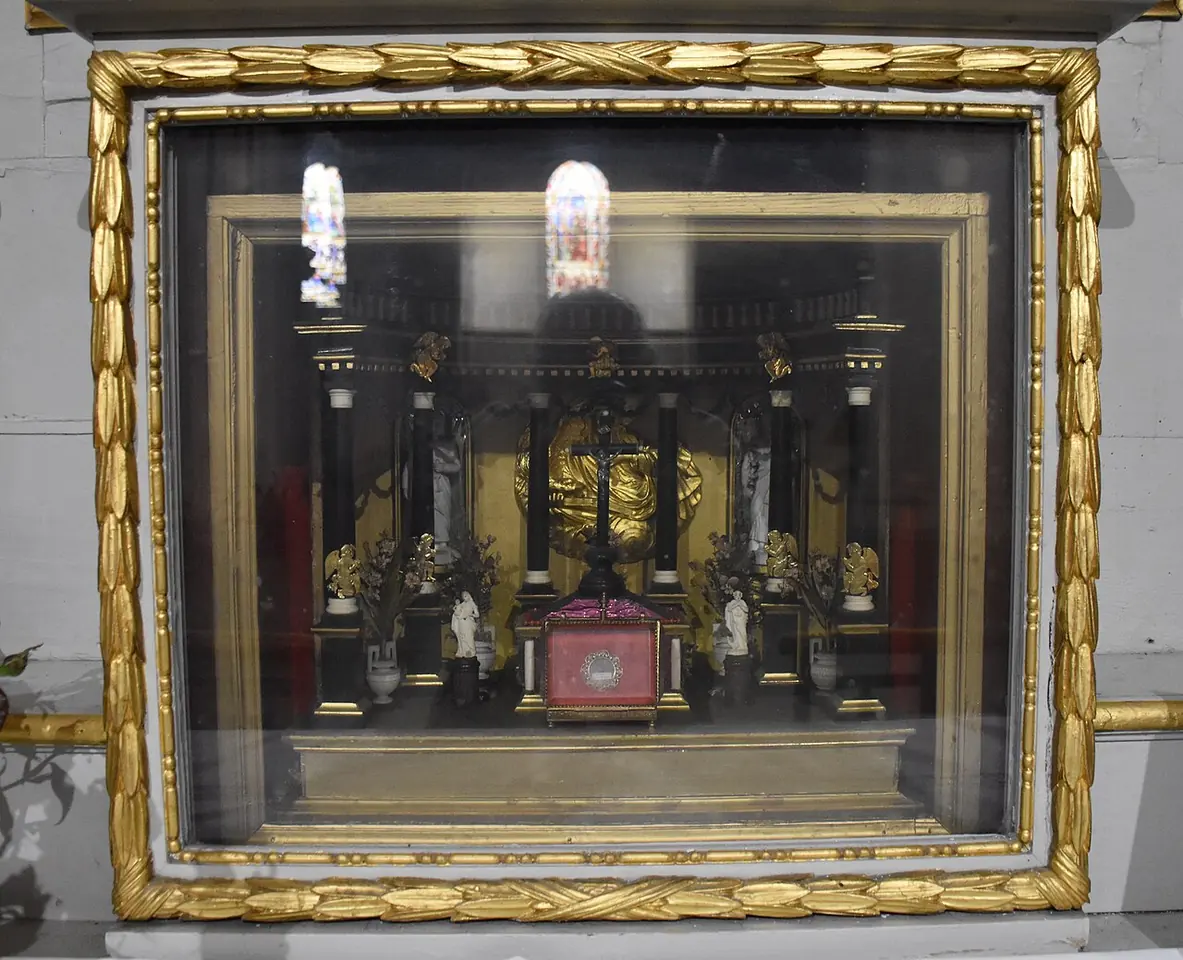
- Cancale, where the Little Sisters welcome pilgrims to her birthplace on the avenue du Général de Gaulle, and Mass is sometimes said there. The parish church of Saint-Méen, where she was baptized, holds a reliquary.
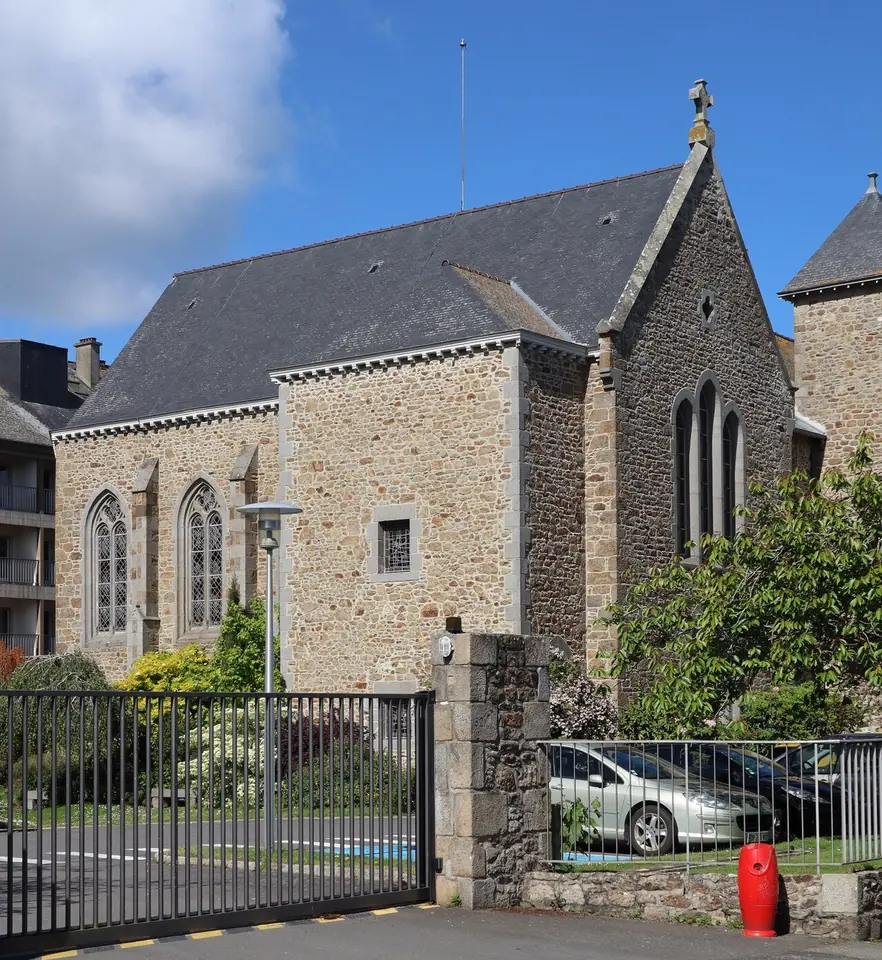
- Saint-Servan, now part of Saint-Malo, where the work began in 1839 and the Little Sisters still have a home and chapel.
- La Tour Saint-Joseph at Saint-Pern, the motherhouse, where she died and where her tomb is. The Little Sisters in the United States send every prayer intention they receive to the motherhouse, where it is placed at her tomb.
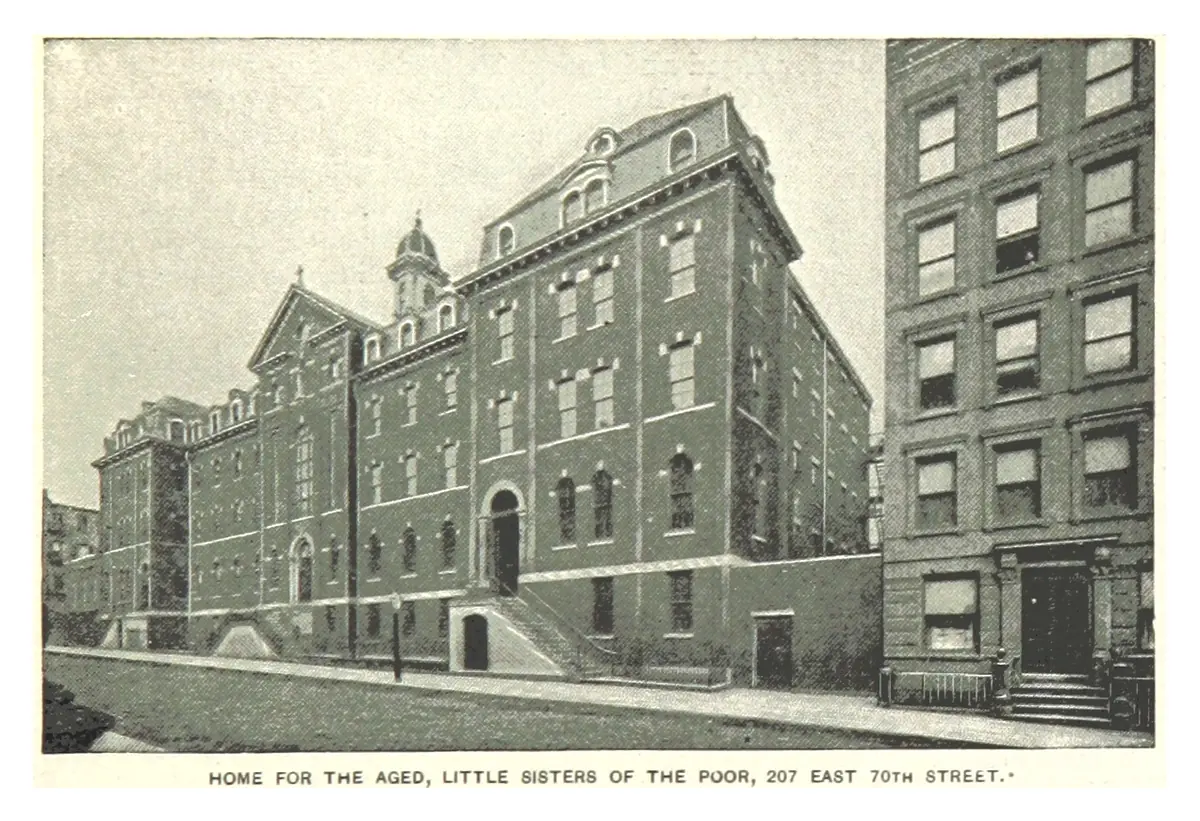
The congregation spread to England in 1851, then to Belgium, Spain, Ireland and North Africa. Jeanne herself said goodbye to the first sisters bound for America when they left the motherhouse on August 28, 1868; they landed in Brooklyn on September 13, and thirteen homes opened in the United States within four years.
Prayer to St. Jeanne Jugan
The Little Sisters of the Poor publish a novena prayer, the one Fr. McGloin gave to Jeanne Gatz in 1989. It praises Jesus for revealing the mysteries of the Kingdom to little ones, thanks him for the graces he gave Jeanne, pauses for your own intentions, and asks the Father of the poor, who never refuses the prayer of the lowly, to hear the petitions she brings on our behalf.
Let us also pray in her own words, which she taught the young sisters for the hard days: "Jesus is waiting for you in the chapel. Go and find him when your strength and patience are giving out, when you feel lonely and helpless. Say to him: 'You know well what is happening, my dear Jesus. I have only you. Come to my aid …' And then go your way."
Frequently asked questions
Who was St. Jeanne Jugan?
A French woman from Cancale in Brittany, born in 1792 during the Revolution, who worked as a kitchen maid and hospital aide before she began taking poor old women into her home in Saint-Servan in 1839. The young women who joined her became the Little Sisters of the Poor. In religion she was Sister Mary of the Cross.
What miracles are attributed to St. Jeanne Jugan?
Two approved miracles. The sudden cure of Antoine Schlatter, a resident of the Little Sisters' home in Toulon, France, was accepted for her beatification in 1982. The cure of Dr. Edward Gatz, an Omaha anesthesiologist diagnosed with advanced cancer of the esophagus in 1989, was approved by Pope Benedict XVI on December 6, 2008, and led to her canonization.
When is the feast of St. Jeanne Jugan?
August 30. She died on August 29, 1879, at the motherhouse of the Little Sisters of the Poor at Saint-Pern, near Rennes, and the Little Sisters keep her feast the next day.
Why was Jeanne Jugan forgotten as the foundress?
In 1843 the community's priest adviser, Fr. Auguste Le Pailleur, overturned her re-election as superior and named a 21-year-old sister in her place. From 1852 she lived in retirement at the motherhouse for 27 years, and many young sisters did not know she had founded the congregation. A history published in 1902 restored her place.
Is there a novena to St. Jeanne Jugan?
Yes. The Little Sisters of the Poor publish a short novena prayer that begins "Jesus, you rejoiced and praised your Father for having revealed to little ones the mysteries of the Kingdom of Heaven." It is said for nine days, with your own intentions named in the pause the prayer provides. The full text is on this page.
Keep exploring
Sources
- Vatican: St Mary of the Cross (Jeanne Jugan), Biography
- Homily of Pope Benedict XVI at the canonization of five new saints, October 11, 2009
- Little Sisters of the Poor: Meet Jeanne Jugan
- Little Sisters of the Poor: Cure of Doctor Edward Erwin Gatz of an Adenocarcinoma of the Esophagus (2009)
- Little Sisters of the Poor: Novena Prayer to Jeanne Jugan
- Little Sisters of the Poor: Coming to America
- Petites Sœurs des Pauvres: Sainte Jeanne Jugan