St. Phoebe, Deaconess of Cenchreae
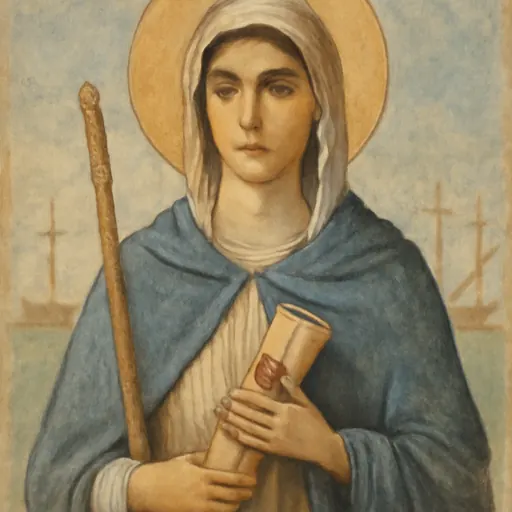
St. Phoebe was a Christian woman of Cenchreae, the eastern port of Corinth, whom St. Paul commends at the start of Romans 16 as "a deaconess of the church" and "a helper of many and of myself as well." She very likely carried Paul's Letter to the Romans to Rome around the year 57. Her feast day is September 3.
Who was St. Phoebe?
St. Phoebe is the woman St. Paul commends to the Christians of Rome in the first two verses of Romans 16. She belonged to the church at Cenchreae, the eastern harbor of Corinth in Greece, and Paul gives her three titles in a single breath: "our sister," a diakonos of that church, and a prostatis, a helper or patroness, "of many and of myself as well." Everything we know of her comes from these two verses, written around the year 57.
Two verses is not much, but few people in the New Testament receive such a careful introduction. St. John Chrysostom, preaching on this passage in Antioch late in the 4th century, noticed how Paul piles honor on her: "See how many ways he takes to give her dignity." She is named first, before Priscilla and Aquila and the long list of friends that follows.

Here is the passage in the Revised Standard Version, Catholic Edition:
I commend to you our sister Phoebe, a deaconess of the church at Cenchreae, that you may receive her in the Lord as befits the saints, and help her in whatever she may require from you, for she has been a helper of many and of myself as well.
St. Phoebe in the Bible: what Romans 16 tells us
"Our sister"
Paul calls her adelphē, sister, the word Christians used for one another. Chrysostom took it as a mark of honor: "it is no slight thing to be called the sister of Paul." Paul doesn't mention a husband or a father, which suggests to many readers that she was a woman of independent means who managed her own household. That fits the next two titles.
A deaconess of the church at Cenchreae
The Greek word is diakonos, the same word used for the deacons of 1 Timothy 3 and for Paul's own service. Translations differ. The Douay-Rheims follows the Latin Vulgate and says she "is in the ministry of the church." The King James Version calls her a "servant." The Revised Standard Version, Catholic Edition, and many other modern versions call her a "deaconess."
The Church Fathers read the word as a real office. Chrysostom says Paul "added her rank, by mentioning her being deaconess." The Catholic Encyclopedia of 1908 is more cautious, noting that the word "may simply mean" service and that a formal order of deaconesses can't be proved from the New Testament alone, though women held recognized offices in the Church well before the 4th century. Pope Benedict XVI, in a general audience in 2007 on women in St. Paul's letters, struck the balance this way: the title "had not yet acquired a specific ministerial value of a hierarchical kind," yet "it expresses a true and proper exercise of responsibility on the part of this woman for this Christian community."
A helper of many
The last title, prostatis, is rarer. In the Greek world it meant a patron or protector, someone with the means and standing to look after others: to host travelers, to speak for them before officials, to pay for what they needed. The Douay-Rheims says simply, "she also hath assisted many, and myself also." Paul doesn't say how she helped him. Cenchreae was a busy port, and a Christian woman with a house there could have given him lodging, money and practical help as he sailed in and out of Corinth.
Chrysostom saw this as "the summit of her good deeds," the reason Paul saved it for last. She had helped "the herald of the world, him who has suffered so much."
The woman who carried the Letter to the Romans
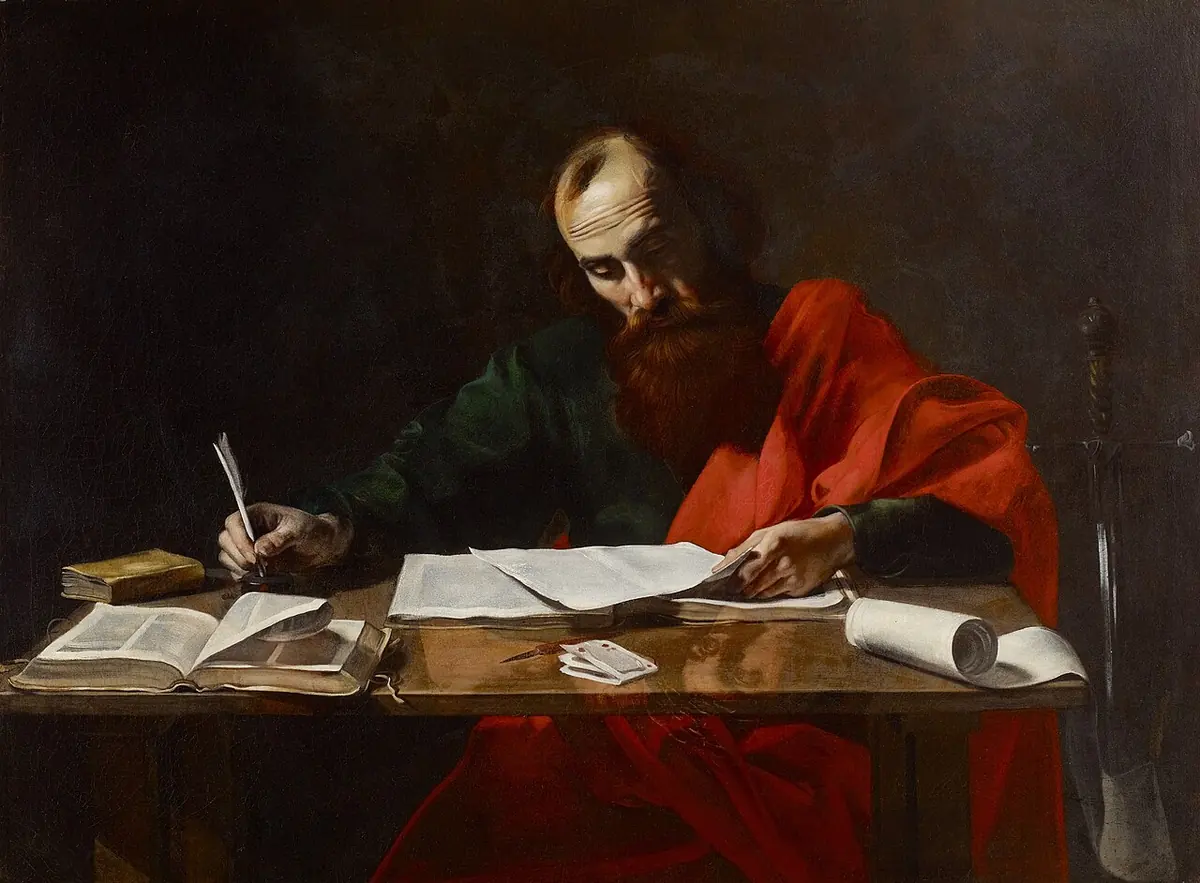
Paul wrote Romans from Corinth. At the end of the letter he sends greetings from Gaius, his host, "and of the whole church," and from Erastus, the city treasurer, both Corinthians, and the scribe Tertius adds his own greeting (Romans 16:22-23). Letters in the ancient world traveled by hand, and a letter of recommendation for the bearer was the normal way to introduce a stranger. That is exactly what Romans 16:1-2 is. Paul asks the Roman Christians to "receive her in the Lord" and to "help her in whatever she may require from you," which makes most sense if she was about to arrive in person.
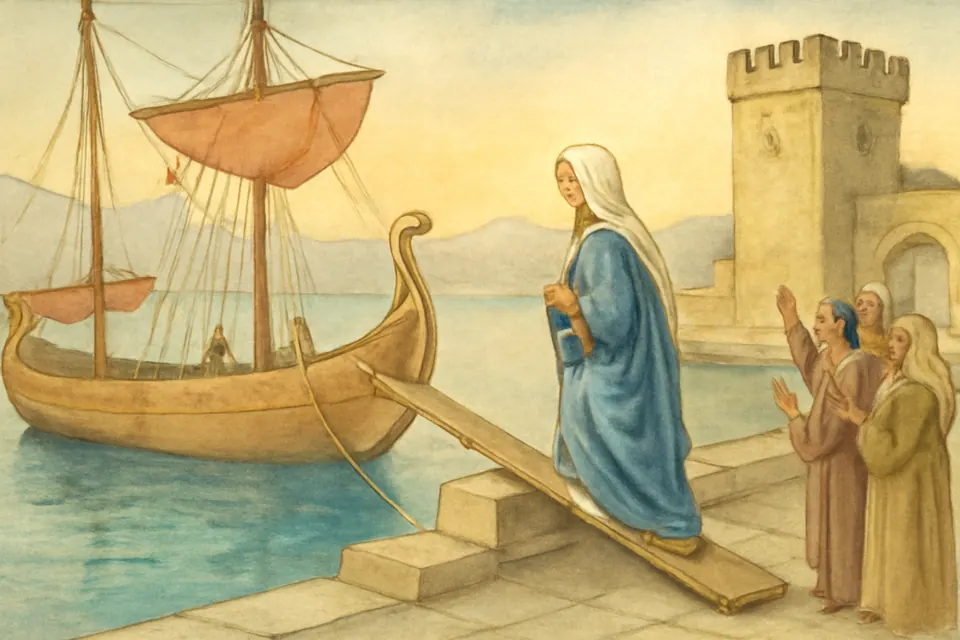
Scripture doesn't say in so many words that she carried the letter, but Christians have believed it for a very long time. Later Greek manuscripts added a short note at the end of Romans, which the King James Bible printed: "Written to the Romans from Corinthus, and sent by Phebe servant of the church at Cenchrea." The Orthodox Church's life of Phoebe says she "may have been the one who delivered this Epistle."
If so, a woman from a Greek harbor town carried the longest and greatest of Paul's letters across the sea to Rome. The bearer of a letter was often expected to read it aloud to those who received it and to answer their questions about it. We can picture the house churches of Rome hearing the words "there is therefore now no condemnation for those who are in Christ Jesus" for the first time, with Phoebe there to explain what Paul meant.

Cenchreae, Phoebe's home
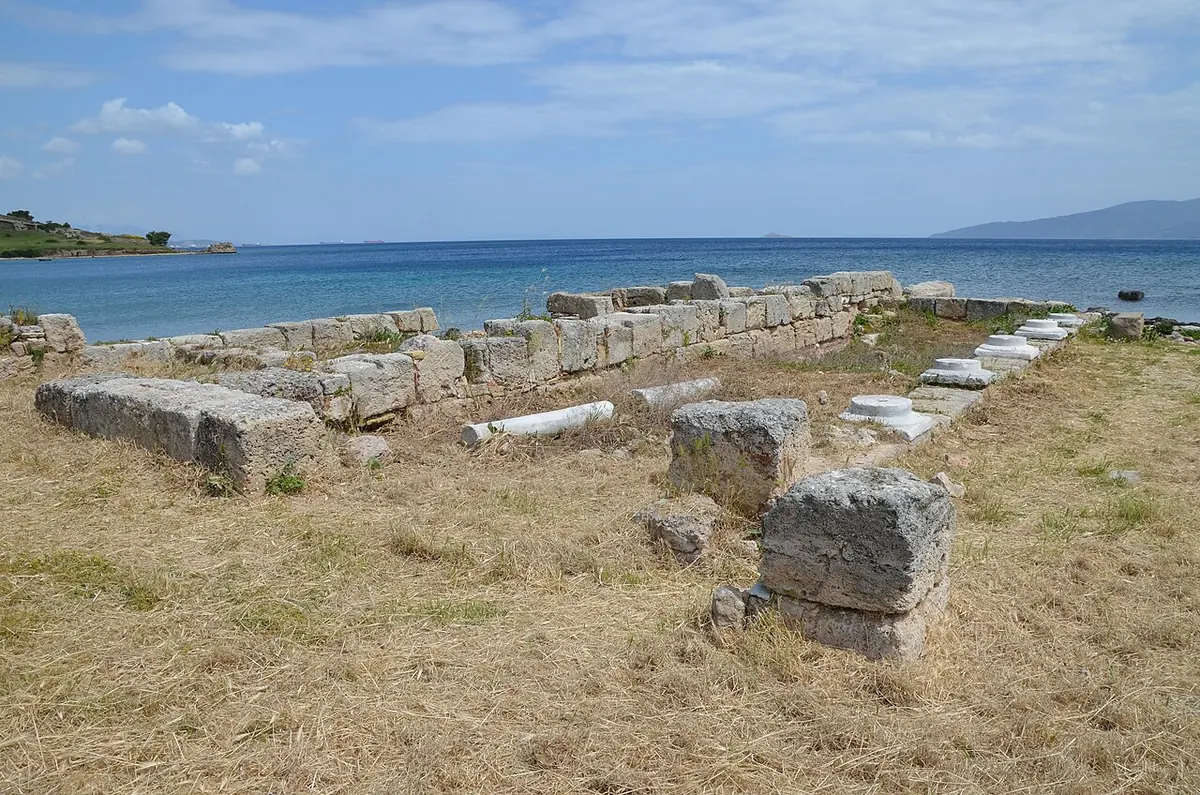
Cenchreae (modern Kechries) lay a few miles east of Corinth on the Saronic Gulf, facing Asia. Ships from Ephesus and the East docked there. Paul knew it well: Acts 18:18 says he had his hair cut at Cenchreae because of a vow before sailing for Syria. Archaeologists have uncovered the ancient harbor, partly under water today, and the remains of an early Christian basilica beside it. Nothing there can be tied to Phoebe herself, but the stones mark the place where her church gathered for centuries after her.

Is Phoebe a saint? Miracles and traditions
Phoebe has never been formally canonized, and she doesn't need to be: most saints of the first thousand years were honored long before the canonization process existed, and Paul's own commendation stands in Scripture. The Roman Martyrology, the Church's official list of saints, commemorates her on September 3 as a "handmaid of the Lord among the faithful of Cenchreae, who stood by blessed Paul the Apostle and many others, as he testified in his Epistle to the Romans."
No miracles are attributed to her, and there is no ancient life of St. Phoebe with legends attached. The one tradition about her is the traditional belief that she carried the Letter to the Romans. We don't know when or where she died, and no church claims her relics.
Why St. Phoebe is honored by women who serve the Church
The Church has given Phoebe no formal patronage. Still, she is the first woman in Scripture called by a ministerial title, and deaconesses in the Eastern churches have long looked to her as their model, as have the many women who serve their parishes in catechesis, charity, hospitality and care for the sick. You'll find other models of service on our patron saints page.
Her example is simple and very practical. She used what she had, a house, money, standing in her town, to help others "in the Lord," and she was trusted with the most important letter an apostle ever wrote.
Symbols of St. Phoebe in art
Phoebe is rarely painted, and there is no fixed tradition for her image. When she does appear, look for these attributes:
- A scroll or letter: the Letter to the Romans, her most common attribute. Medieval Bibles sometimes show Paul handing it to her, as in the illuminated initial near the top of this page, where she carries it to the gate of a city marked "Roma."
- A traveler's cloak or staff: her voyage from Cenchreae to Rome.
- A veil, sometimes with a deacon's stole: in modern Orthodox icons, which show her as a deaconess, often holding a scroll or a small cross.
- A purse or alms: in a few Western windows, for her help to "many."
In English parish churches she sometimes appears in rows of New Testament women. At St. Mary's Church in Henbury, near Bristol, she stands beside Mary of Bethany, Dorcas and Eunice.

St. Phoebe's feast day
The Church keeps St. Phoebe's feast on September 3. In the Roman Martyrology it is a commemoration; on the General Roman Calendar the day belongs to St. Gregory the Great, so in most parishes she is remembered in prayer and preaching rather than with her own Mass. The Orthodox Church honors her on the same day, and some Lutheran calendars remember her on October 25. See who else the Church honors in September on our feast days page.

Prayer to St. Phoebe
There is no traditional Catholic prayer to St. Phoebe in the standard prayer books. The Orthodox Church sings a troparion and kontakion on her feast, given here as the Orthodox Church in America publishes them. The troparion, in Tone 1:
O Phoebe, converser with Saint Paul and divinely-inspired servant of God in the Church of Cenchrea, as Christ's handmaiden, and filled with heavenly virtues, therefore, we honor you with spiritual hymns. Glory to Christ, Who glorified you. Glory to Him Who crowned you. Glory to Him Who, through you, grants us better things.
The kontakion, in Tone 2:
O godly-minded Phoebe, companion of the Apostles and servant of Christ, you were born on earth, yet cared for heavenly things; entreat Him for those who with faith honor your memory.
On her feast we can also pray with the words Paul wrote about her, reading Romans 16:1-2 slowly and asking St. Phoebe to pray for all who carry the Gospel to others and for everyone who serves the Church with generous hands. St. Phoebe, helper of many, pray for us.
Frequently asked questions
Who was Phoebe in the Bible?
Phoebe is the woman St. Paul introduces in Romans 16:1-2. He calls her "our sister," a diakonos (deaconess or minister) of the church at Cenchreae near Corinth, and a prostatis, a helper or patroness, "of many and of myself as well." He asks the Christians of Rome to welcome her and help her with whatever she needs.
Was St. Phoebe a deaconess?
Paul uses the word diakonos of her, the same word used for deacons. The Revised Standard Version, Catholic Edition, translates it "deaconess"; the Douay-Rheims says she "is in the ministry of the church." Pope Benedict XVI said the title had not yet taken on a hierarchical meaning in Paul's day but showed "a true and proper exercise of responsibility" for her community.
Did Phoebe deliver the Letter to the Romans?
Very probably. Paul wrote Romans from Corinth, and he introduces Phoebe first, the way a letter of the time introduced its bearer. A note added to the end of the letter in later Greek manuscripts, printed in the King James Bible, says it was "sent by Phebe servant of the church at Cenchrea." Scripture itself doesn't say so outright.
When is St. Phoebe's feast day?
September 3. The Roman Martyrology commemorates her on that day as a "handmaid of the Lord among the faithful of Cenchreae," and the Orthodox Church keeps the same date. In the Catholic calendar the day also belongs to St. Gregory the Great, so Phoebe is honored as a commemoration rather than a memorial.
What is St. Phoebe the patron saint of?
She has no formal patronage from the Church. Deaconesses in the Eastern churches and women who serve their parishes look to her as their model, since she is the first woman in Scripture called by a ministerial title.
Sources
- Romans 16:1-2, Revised Standard Version, Catholic Edition (Bible Gateway)
- King James Version, Romans 16, with the closing subscription (eBible.org)
- St. John Chrysostom, Homily 30 on the Epistle to the Romans
- Benedict XVI, General Audience of February 14, 2007: Women at the service of the Gospel
- Catholic Encyclopedia (1908): Deaconesses
- Felix Just, S.J.: Is Phoebe a "Saint"? (Roman Martyrology entry for September 3)
- Orthodox Church in America: Saint Phoebe the Deaconess at Cenchreae near Corinth
- Orthodox Church in America: Saint Phoebe the Deaconess at Cenchreae near Corinth (troparion and kontakion)