St. Hermione of Ephesus

St. Hermione of Ephesus was one of the four daughters of St. Philip the Deacon who, the Acts of the Apostles says, "did prophesy." Eastern tradition holds that she went to Ephesus, cared for the sick and poor without payment, and was beheaded there as a martyr in the early second century. Her feast is September 4 in the Orthodox and Byzantine Catholic churches.
Who was St. Hermione of Ephesus?
St. Hermione of Ephesus was a daughter of St. Philip the Deacon, one of the seven men the apostles chose to serve the Church of Jerusalem in Acts 6. She belongs to the generation that knew the apostles in person. The Orthodox Church and the Byzantine Catholic churches honor her as a virgin, a healer of the sick and a martyr, and keep her feast on September 4.
Scripture does not give her name. It tells us about her family. When St. Paul came to Caesarea on his last journey to Jerusalem, St. Luke writes, "we entered into the house of Philip the evangelist, which was one of the seven; and abode with him. And the same man had four daughters, virgins, which did prophesy" (Acts 21:8–9, King James Version). Luke goes on to tell how the prophet Agabus came down from Judea to the same house, took Paul's belt, bound his own hands and feet with it, and foretold Paul's arrest in Jerusalem. Hermione, if the tradition is right, was in the room. Eastern tradition says she was one of those four daughters.
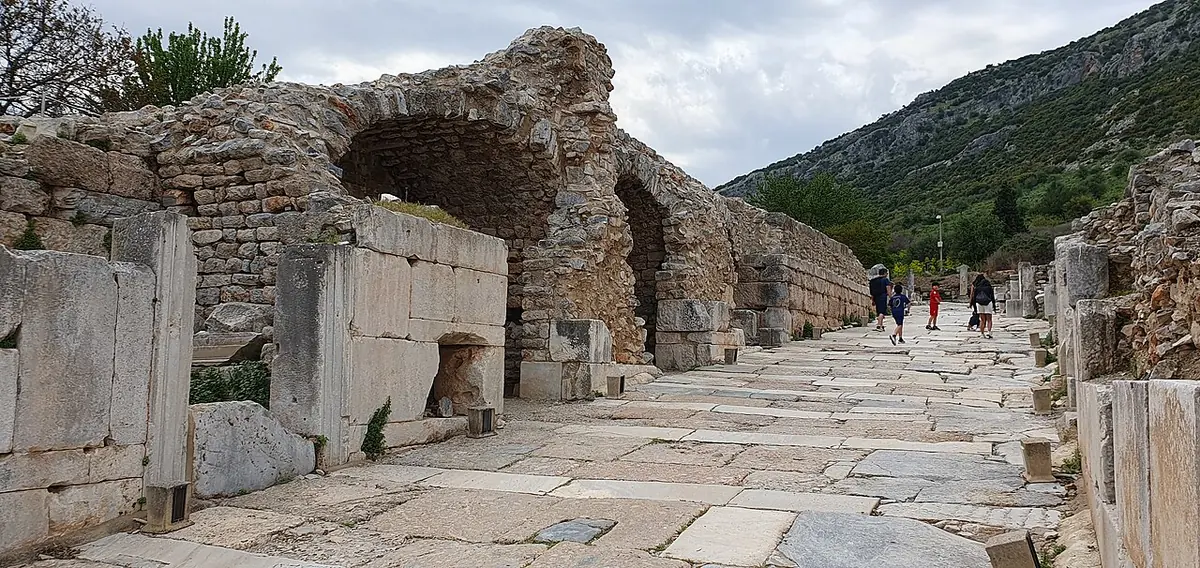
What the early Church remembered about Philip's daughters
The daughters of Philip were famous in the first Christian centuries. Eusebius of Caesarea, writing his Church History in the early 300s, gathered what older writers had said about them.
He quotes a letter of Polycrates, Bishop of Ephesus, written about 190 to Pope Victor. Polycrates lists the "great lights" buried in Asia, among them "Philip, one of the twelve apostles, who sleeps in Hierapolis, and his two aged virgin daughters, and another daughter who lived in the Holy Spirit and now rests at Ephesus." Eusebius also cites Papias, Bishop of Hierapolis, who heard "a wonderful tale from the daughters of Philip" about a man raised from the dead, and he says their gift of prophecy was still spoken of with that of a teacher named Quadratus.
Two puzzles stand out. Polycrates calls their father one of the Twelve, while Luke's Philip is "one of the seven"; ancient writers often blurred the apostle and the deacon. And Polycrates says one daughter was buried at Ephesus, which is where the Eastern tradition places Hermione's grave. We cannot prove the two accounts describe the same woman. They agree in a way that is hard to dismiss.
The life of St. Hermione in Eastern tradition
The fuller story comes from the lives of the saints read in the Orthodox Church. It is a traditional account, written down long after her death, and its details should be read as a devout legend built around a real family of the apostolic Church.
Looking for St. John
Hermione and her sister Eutychis (Eutykhida in the Slavonic form) went to Ephesus hoping to meet St. John the Apostle, only to learn that he had already died. They stayed and became disciples of Petronius, a follower of St. Paul. Hermione had learned healing, and she cared for the sick without payment.

Before two emperors
The Orthodox life says Emperor Trajan, passing through on his war against Persia, summoned her to hear her prophecy. She told him he would win and that Hadrian would follow him. When she confessed that she was a Christian he had her struck, then let her go. She opened a house for the sick and the poor.
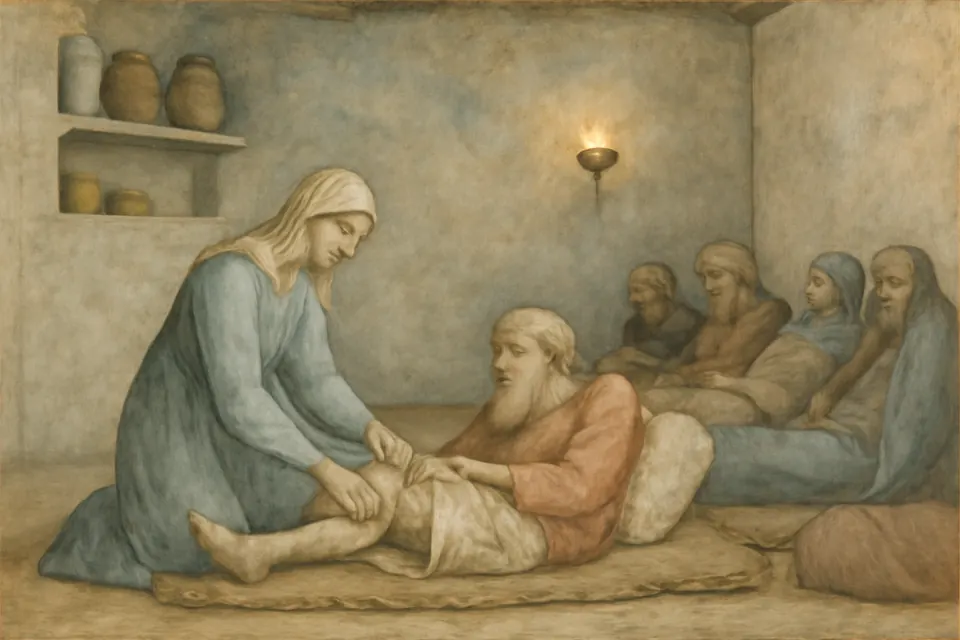
Under Hadrian she was arrested again. The life tells of beatings, of nails, and of a cauldron of boiling pitch and sulfur that did not harm her. When she prayed in a pagan temple, its idols fell. She was led out of the city and beheaded, and Christians buried her at Ephesus. All of these wonders are traditional; there are no records from her lifetime.
The two servants
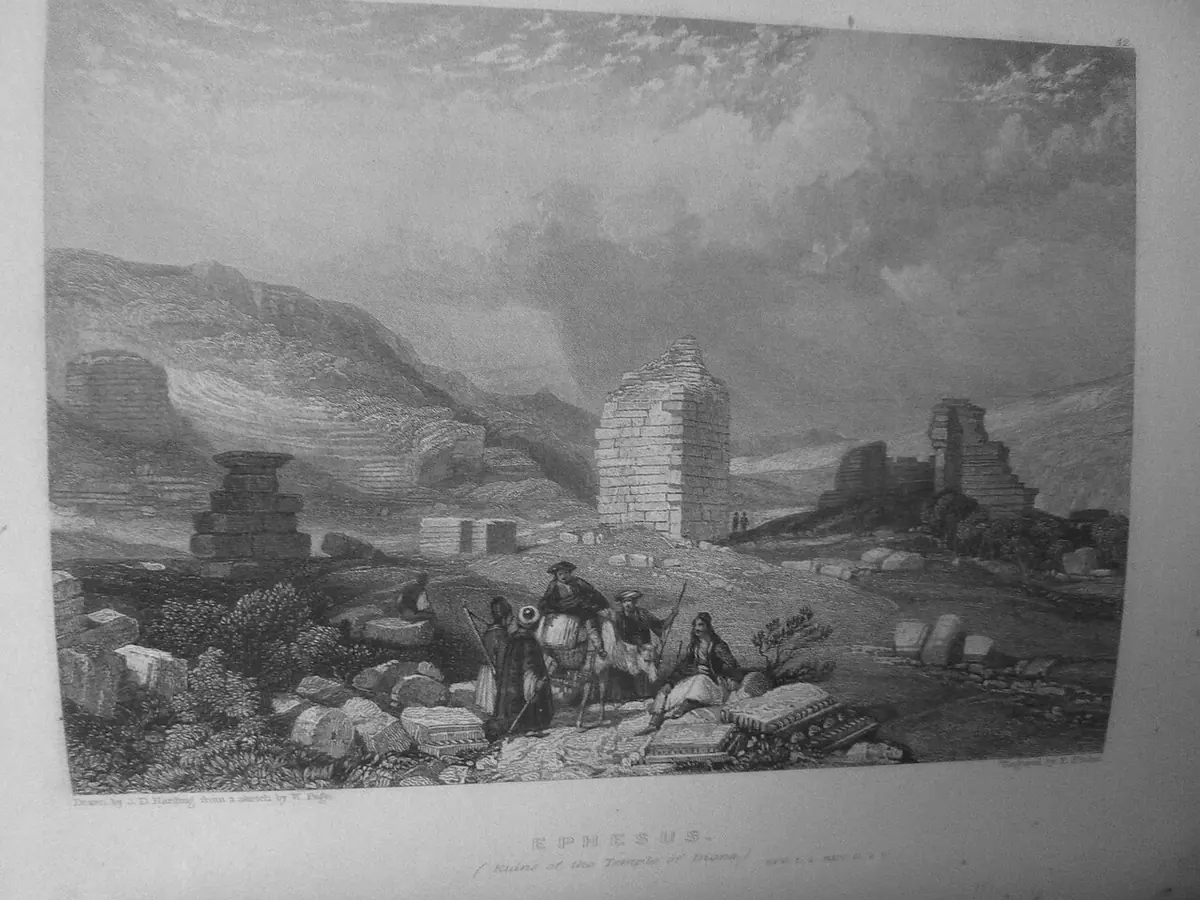
One story in her life is a gentle one. The two servants sent to behead her hurried to the task and found their hands withered. They repented, and Hermione prayed for them and they were healed. Only then was she put to death. The story is traditional, and it shows how her people remembered her: a healer to the end, even of the men sent to kill her.
Symbols of St. Hermione in art
Hermione appears mostly in Greek and Russian icons and in illustrated lists of saints for September. To recognize her:
- A cross in her right hand: the sign of a martyr in Byzantine icons.
- A veil and mantle: the dress of a woman consecrated to God. Her mantle is often deep red, the color of martyrs.
- An open palm: the left hand raised in witness or prayer.
- Name inscription: like most female martyrs she is identified by the Greek letters of her name, Hē Hagia Hermiónē.
The oldest known image of her is in the Menologion of Basil II, a Byzantine book of saints made about the year 1000, which shows her death.
Feast day and prayer
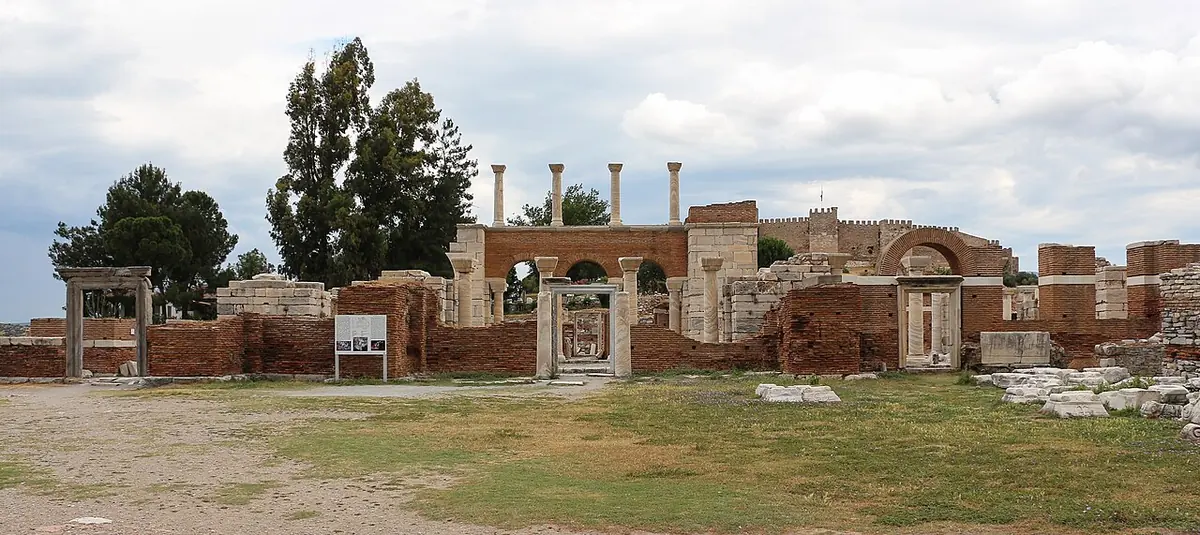
Her feast is September 4. In the Orthodox calendar she shares the day with the holy prophet Moses and the hieromartyr Babylas of Antioch.
There is no traditional Latin prayer to St. Hermione. In the Byzantine churches she is honored with the hymns of her feast. Let us ask her to pray for those who care for the sick and the poor without reward, for Christian doctors and nurses, and for all who wait for an answer from God. Find more early martyrs on our feast days calendar.
Frequently asked questions
Who was St. Hermione?
A daughter of Philip the Deacon (Philip the Evangelist), one of the seven men chosen in Acts 6. Acts 21:9 says Philip had four virgin daughters who prophesied. Eastern tradition names one of them Hermione and says she healed the sick at Ephesus and died a martyr there under Trajan or Hadrian.
When is St. Hermione's feast day?
September 4, in the Orthodox Church and the Eastern Catholic churches that follow the Byzantine calendar.
Is St. Hermione in the Bible?
Not by name. Acts 21:8–9 tells how St. Paul stayed at Caesarea in the house of Philip the evangelist, who "had four daughters, virgins, which did prophesy." Her name comes from later tradition.
Where is St. Hermione buried?
Her life says Christians buried her at Ephesus, and about 190 Bishop Polycrates of Ephesus wrote that a daughter of Philip "now rests at Ephesus." The exact site of her grave is not known today.