Blessed Daudi Okelo, Young Catechist and Martyr of Uganda

Blessed Daudi Okelo (about 1902–1918) was a young Acholi catechist of northern Uganda. He volunteered to teach the faith at the outpost of Paimol with his friend Blessed Jildo Irwa, and both were speared to death in 1918 because they would not stop teaching. John Paul II beatified them in 2002. Their feast is September 18.
Who was Blessed Daudi Okelo?
Blessed Daudi Okelo was a teenage catechist from the Acholi people of northern Uganda. He had been a Christian for barely a year when he asked to be sent to Paimol, a village about 80 kilometers from the mission at Kitgum, where the last catechist had died and where raiders and feuds made life dangerous. His friend Jildo Irwa, still a boy, went with him as his assistant. Within a year both were dead, speared outside their hut because they would not stop teaching the Gospel. John Paul II beatified them on World Mission Sunday, October 20, 2002.
The life of Blessed Daudi Okelo
A new Christian at Kitgum
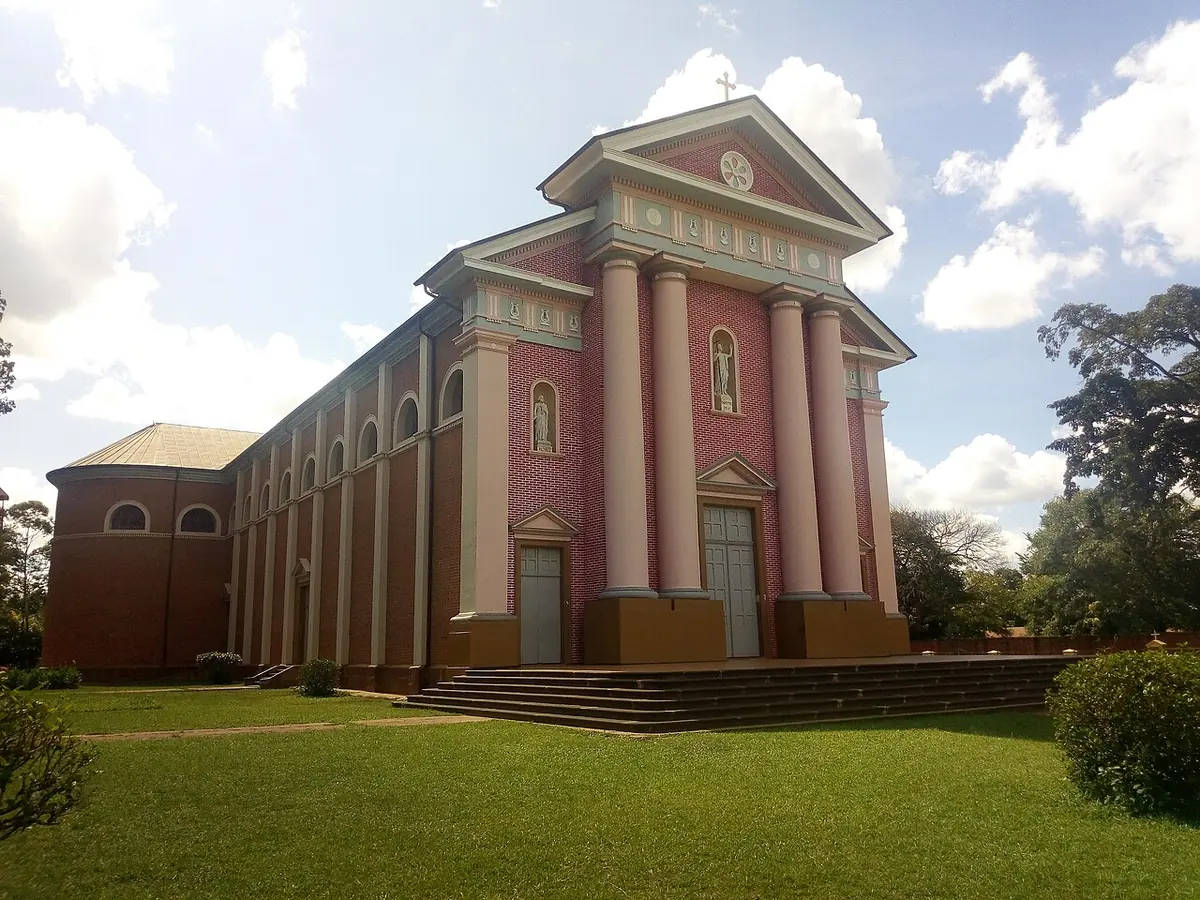
Daudi was born around 1902 at Ogom-Payira, a village on the road between Gulu and Kitgum, the son of Lodi and Amona, who followed the traditional religion. The Comboni Missionaries had founded the Kitgum mission in 1915. Daudi went for instruction there, and Father Cesare Gambaretto baptized him on June 1, 1916, giving him his first Holy Communion the same day. He was confirmed on October 15, 1916, and after more training he was enrolled as a catechist.
"I am not afraid to die"
Early in 1917 Antonio, the catechist at Paimol, died. Daudi went to Father Cesare and offered to take his place. The priest warned the two young volunteers about the distance and the fighting around Paimol. According to the Vatican's biography, Daudi answered, "I am not afraid to die. Jesus, too, died for us!" Toward the end of 1917, with Father Cesare's blessing, the head catechist of Kitgum walked them to their new post.
The catechist's day
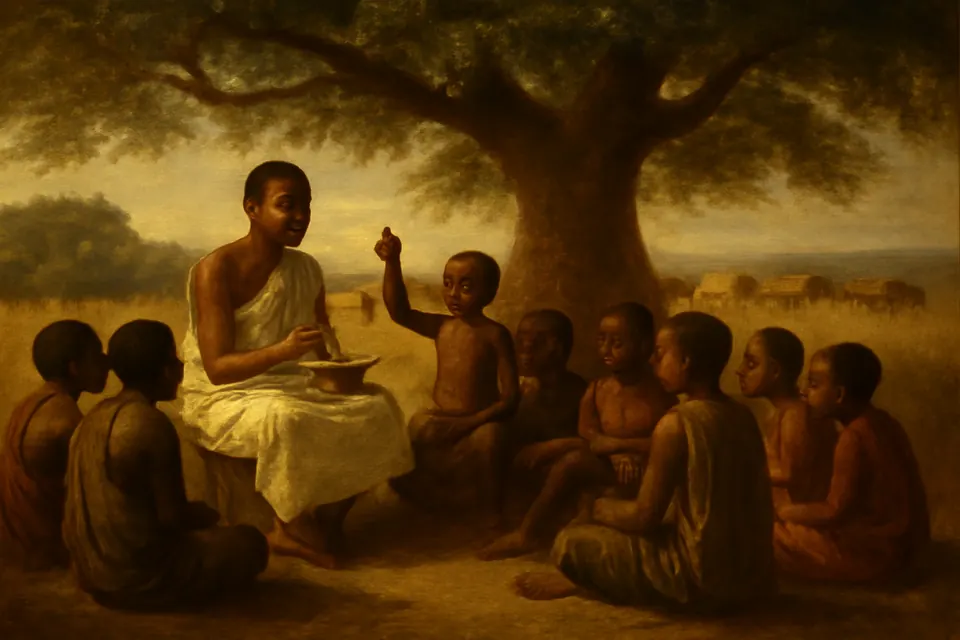
At Paimol, Daudi got to work at once. At dawn he beat the drum to call the catechumens to morning prayer, and he and Jildo prayed the Rosary. He taught the first truths of the faith, the Lok-odiku or "words of the morning," in the sing-song way that helped children memorize the questions and answers. During the day he visited the homesteads where the young people were busy herding cattle and working in the fields. At sunset he called everyone again to prayer and the Rosary, always ending with a hymn to Our Lady. Witnesses remembered him as shy, peaceable and loved by everyone, and he kept out of the tribal and political quarrels of the time.

Martyrdom at Paimol
In 1918 the region was in turmoil. The Vatican biography explains that a bad decision by the British district commissioner raised tensions, and raiders, slave and ivory traders, and local opponents of the new religion used the unrest to try to drive it out. On a weekend between October 18 and 20, 1918, before dawn, five men came to the catechists' hut. A village elder told them they could not kill his guests. Daudi came to the door and begged the elder not to put himself at risk. The men demanded that he give up teaching the catechism. When he refused, they dragged him outside and speared him. He was about sixteen to eighteen years old.
Jildo, urged to run, would not leave him. "We have done nothing wrong," he said in tears. "For the same reason you killed Daudi you must also kill me, because together we came here and together we have been teaching God's word." He was speared too. Daudi's body was left unburied for days; in February 1926 his remains were collected, and they now lie in the mission church of Kitgum at the foot of the Sacred Heart altar.
Beatification
Witnesses interviewed for the cause included Catholics, Protestants and followers of the traditional religion, and one of the killers himself. Pope John Paul II recognized their martyrdom on April 23, 2002, and beatified them on October 20, 2002. As martyrs, no approved miracle was required. In his homily the Pope said that "these two courageous witnesses were no more than boys when, with simplicity and faith, they shed their blood for Christ and his Church."
Why Blessed Daudi Okelo is the patron of catechists
The Pope gave the two martyrs of Paimol to the whole Church "as models and intercessors for catechists throughout the world." They were lay volunteers who left their own clans to teach strangers, and the Vatican biography notes that this made them "a sign of the catholicity and unity of the Church" at a time of tribal fighting. Catechists in Uganda and across Africa look to them, alongside the earlier martyrs of Uganda. See more on our patron saints page.
Symbols of Blessed Daudi Okelo in art
No photograph of Daudi is known, so images of him are modern and simple.
- The spear: the weapon of his martyrdom.
- The palm: the martyr's victory.
- A catechism or Bible: his work as a catechist.
- A rosary: the prayer he and Jildo said every morning and evening.
- A drum: he called the village to prayer with it.
He is almost always shown beside the smaller Jildo Irwa.
Feast day and prayer
The Roman Martyrology lists Daudi Okelo and Jildo Irwa on September 18. Many in northern Uganda remember them in October, near the anniversary of their death and of their beatification. Find others on our feast days page.
We have not found an approved English prayer to the martyrs of Paimol to reprint here. Let us ask Blessed Daudi and Blessed Jildo to pray for catechists everywhere, especially those who teach the faith in danger, and for peace in northern Uganda. And let us take to heart Jildo's words on the last morning: "Do not fear!"
Frequently asked questions
Who was Blessed Daudi Okelo?
An Acholi teenager from Ogom-Payira in northern Uganda who became a Catholic in 1916 and volunteered as catechist for the remote village of Paimol. He and his assistant Jildo Irwa were killed there in October 1918 for refusing to give up teaching the faith.
Who was Jildo Irwa?
Daudi's assistant catechist, a boy of about twelve to fourteen from Bar-Kitoba. He chose to die with Daudi rather than leave, saying, 'For the same reason you killed Daudi you must also kill me.' The two were beatified together.
When is Blessed Daudi Okelo's feast day?
The Roman Martyrology lists the two martyrs of Paimol on September 18. They died between October 18 and 20, 1918, and were beatified on October 20, 2002.
Why are they patrons of catechists?
At their beatification John Paul II gave them to the Church 'as models and intercessors for catechists throughout the world, especially in those places where catechists still suffer for the faith.'
Keep exploring
Sources
- Daudi Okelo (1902 ca.–1918) and Jildo Irwa (1906 ca.–1918), Biography, Vatican. Official biography: baptism dates, the call to Paimol, the words of both boys, the martyrdom and the 1926 recovery of Daudi's remains
- John Paul II, Homily, Beatification of 6 Servants of God, World Mission Sunday, October 20, 2002. Daudi and Jildo as models and intercessors for catechists
- Beato Davide Okelo, catechista e martire, Santi e Beati (Italian). Roman Martyrology entry and date, Father Gambaretto's testimony, and the decree of martyrdom of April 23, 2002