St. Nicetas the Goth, Great Martyr of the Danube

St. Nicetas the Goth was a Christian of the Gothic people on the Danube who was baptized by the Gothic bishop Theophilus, preached Christ to his own people and was burned alive about 372 in the persecution of the pagan King Athanaric. The Orthodox Church honors him as a Great Martyr, and his feast is September 15.
Who was St. Nicetas the Goth?
St. Nicetas the Goth was one of the first martyrs of the Germanic peoples. He lived in the fourth century among the Goths on the north bank of the Danube, in lands that are now Romania and Moldova. He was baptized, taught the faith to his own people, and was burned alive about 372 when the pagan King Athanaric turned on the Christians. The Roman Martyrology remembers him in one line: "St. Nicetas, a Goth, who was burned alive for the Catholic faith, by order of king Athanaric."
The Eastern churches honor him as a Great Martyr, the title they give to Sts. George, Demetrius and Theodore. We keep his feast on September 15.
The life of St. Nicetas
A Goth among the first Christians of his people
By the early 300s there were Christians among the Goths and even a Gothic bishop, Theophilus, who signed the decrees of the Council of Nicaea in 325. The Orthodox life of St. Nicetas says that Theophilus baptized him.
Nicetas worked tirelessly among his fellow Goths, and his example and words brought many of them to Christ. The same life tells of a civil war among the Goths, when the Christian-friendly chieftain Fritigern defeated the pagan Athanaric, and the faith spread further. It also names Ulfilas, the next bishop of the Goths, who made an alphabet for the Gothic language and translated the Scriptures into it. Ulfilas held Arian views about Christ; the Orthodox and Catholic tradition honor Nicetas as a confessor of the true faith.
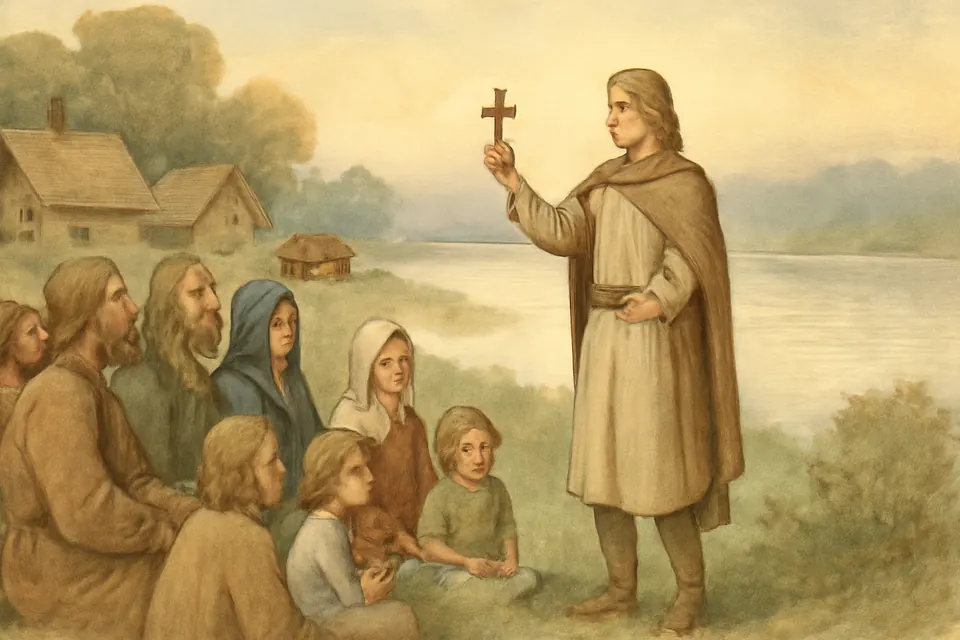
Martyrdom
Athanaric regained his power and set out to stamp out the new religion among his people. Nicetas did not hide. The Orthodox life says he rebuked the king for his cruelty to Christians, was seized, tortured and finally thrown into a fire. He died there about 372.

The miracles of St. Nicetas
- The fire: traditional. The Orthodox life says that although he died in the flames, his body was not burned, and his relics shone with a radiant light.
- The finding of the body: traditional. A Christian named Marianus, guided by that light, took the body by night and carried it to Cilicia in Asia Minor, where he buried it. It was later moved to Constantinople.
The historical core, a Gothic Christian burned alive under Athanaric, is old and well attested in both East and West. The details of the life come from later Greek tradition.


Why St. Nicetas is invoked for children
The Orthodox Church in America says that the faithful pray to St. Nicetas "for the preservation of children from birth defects." Parents expecting a child ask his prayers for the health of the baby. See more causes on our patron saints page.
Symbols of St. Nicetas in art
In Orthodox icons St. Nicetas is usually a young, beardless or lightly bearded man, often in armor like the other warrior saints, with a spear or sword and a cross in his hand. Russian icons often show him beating a small devil with chains or a club. That picture comes from a separate legend that Russian tradition attached to his name, though the Orthodox life does say that he "trampled the devil underfoot." In the West he is shown more simply, as a young martyr with a palm, sometimes with flames at his feet. When you see a young warrior saint holding down a demon in an Eastern church, look for his name.

His relics and veneration
The Orthodox Church in America records that part of his relics was later given to the monastery of Visoki Dečani, the great fourteenth-century Serbian monastery in Kosovo. The monks there still keep them, so a Gothic martyr of the Danube is honored today among the Serbs, far from the river where he died.
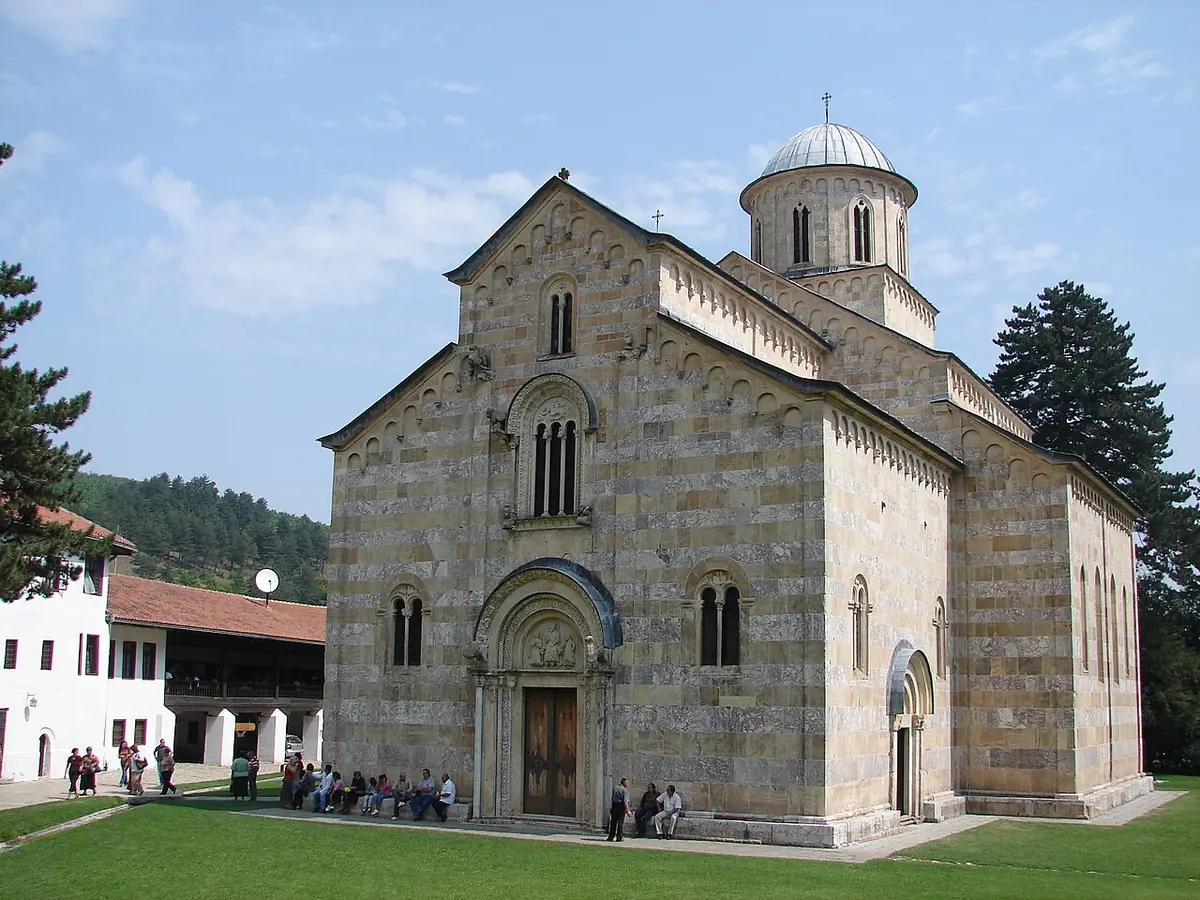
Where the relics of St. Nicetas the Goth are kept: see them on the relics map →
Not to be confused with other saints named Nicetas
Several saints share his name, and the Roman Martyrology lists them on different days. St. Nicetas of Remesiana was a bishop "in Dacia," in today's Serbia, whom the Martyrology praises because he "made fierce and barbarous nations humane and meek by preaching the Gospel"; he lived a generation later than our martyr and died in peace. St. Nicetas of Medikion was an abbot in Bithynia who "suffered much for the worship of holy images" under the emperor Leo the Armenian in the ninth century. Neither was a Goth, and neither was burned. When a church or icon names "St. Nicetas the Great Martyr," it means the Goth of the Danube.
Prayer to St. Nicetas
The Orthodox Church sings a troparion and kontakion to St. Nicetas on his feast; the Orthodox Church in America publishes them with his life. We have found no traditional Catholic prayer to him in the standard prayer books. Let us ask St. Nicetas, who brought the faith to his own people at the cost of his life, to pray for persecuted Christians and for every child waiting to be born. Find other saints of September on our feast days page.
Frequently asked questions
Who was St. Nicetas the Goth?
A fourth-century Goth living north of the Danube, in what is now Romania. He was baptized by Bishop Theophilus of the Goths, who had attended the Council of Nicaea, and he spread the faith among his people until King Athanaric had him burned alive about 372.
When is the feast of St. Nicetas the Goth?
September 15. The Roman Martyrology names him that day: "St. Nicetas, a Goth, who was burned alive for the Catholic faith, by order of king Athanaric."
What do Orthodox Christians pray to St. Nicetas for?
The Orthodox Church in America says that the faithful ask his prayers for the preservation of children from birth defects.
Where are the relics of St. Nicetas?
His friend Marianus buried his body in Cilicia, and it was later taken to Constantinople. Part of the relics was given to the monastery of Visoki Dečani in Serbian Kosovo.
Keep exploring
- Patron saint pages
- Pregnancy
- Feast-day calendar
- Saints remembered in SeptemberSaint of the dayWhat saint is my birthday?
- Relics
- Where the relics are kept (map)
- More
- Saints A to ZPatron saints A to ZExplore every section
Sources
- Orthodox Church in America: Greatmartyr Niketas the Goth. Baptism by Theophilus, the civil war of Fritigern and Athanaric, his death in 372, Marianus, the relics at Visoki Dečani, prayers for children
- The Roman Martyrology (English edition, 1916), September 15 (archive.org). "St. Nicetas, a Goth, who was burned alive for the Catholic faith, by order of king Athanaric"