St. Gratus of Aosta, Bishop and Patron of the Aosta Valley
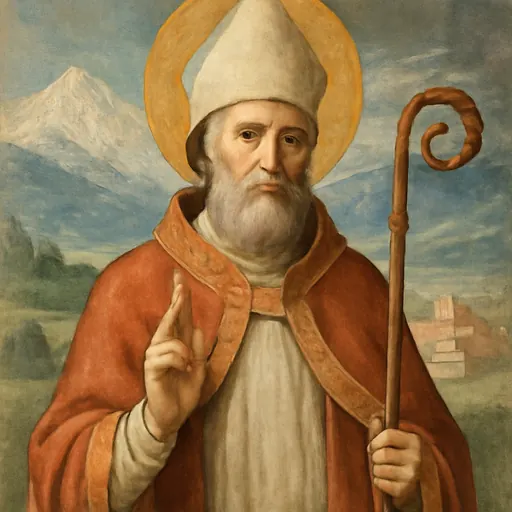
St. Gratus of Aosta (San Grato) was the second known bishop of Aosta, in the Alps of northwest Italy, in the fifth century. As a priest he signed the letter of the Synod of Milan to Pope Leo the Great in 451, and he was buried on September 7. He is the patron of Aosta and is invoked against hail and storms. We keep his feast on September 7.
Who was St. Gratus of Aosta?
St. Gratus of Aosta, called San Grato in Italian and Saint Grat in French, was a bishop of the fifth century and is the patron of the city and valley of Aosta, high in the Alps of northwest Italy. Two very different stories are told about him. One is short and solid: a few lines in a church council's records and the words on a gravestone. The other is long, colorful and medieval, and it is the one that put the head of John the Baptist into his hands in so many paintings. We will look at both, and say plainly which is which.
What his people have never doubted is that he is theirs. For centuries the farmers of the valley and of Piedmont below it have called on him when hail clouds gather over the vineyards and the hayfields.

The life of St. Gratus of Aosta: what history tells us
A priest at the Synod of Milan
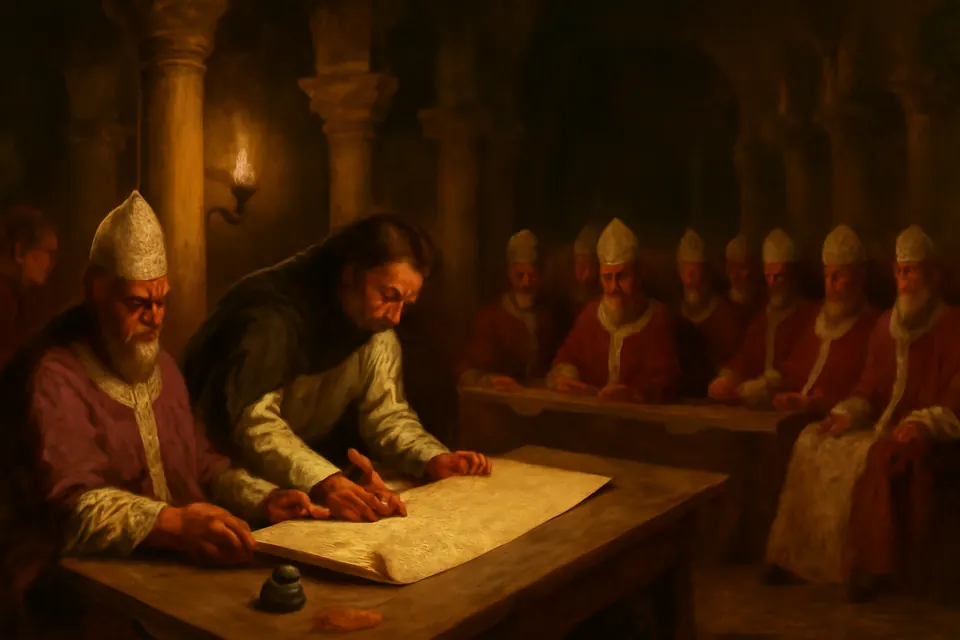
Aosta was the Roman city of Augusta Praetoria. Its first bishop we know of with certainty is Eustasius, whose name appears with that of Aosta on a letter the second Synod of Milan sent to Pope Leo the Great in 451, the Catholic Encyclopedia notes. That letter dealt with the great question of the day, the two natures of Christ, and it upheld the faith Leo had taught against the error of Eutyches.
According to the Italian reference Santi e Beati, Gratus was the priest who signed that letter in place of Bishop Eustasius, as his envoy. Some writers think both men were of Greek origin, and that both may have been formed in the community of clergy founded by St. Eusebius of Vercelli, since Aosta had once belonged to the Church of Vercelli. Those are reasonable guesses, not established facts.
Bishop of Aosta
At some point after 451, when Eustasius died, Gratus became bishop. The Passio of the martyrs of Agaunum, the shrine of St. Maurice and the Theban Legion in today's Switzerland, records that he took part, with the bishops of Agaunum and Sion, in the transfer of relics of St. Innocent, one of the Theban martyrs.
We do not know the year he died. We do know the day he was buried, because his gravestone survives. Its Latin inscription reads, in part, "Hic requiescit in pace S. M. Gratus eps," "here rests in peace Gratus, bishop," and gives the date of his burial as the seventh day before the Ides of September: September 7. That stone is now in the parish church of Saint-Christophe, just outside Aosta. His disciple Jucundus (San Giocondo) succeeded him and was present at a synod in Rome in 501.
The legend of St. Gratus and the head of St. John the Baptist
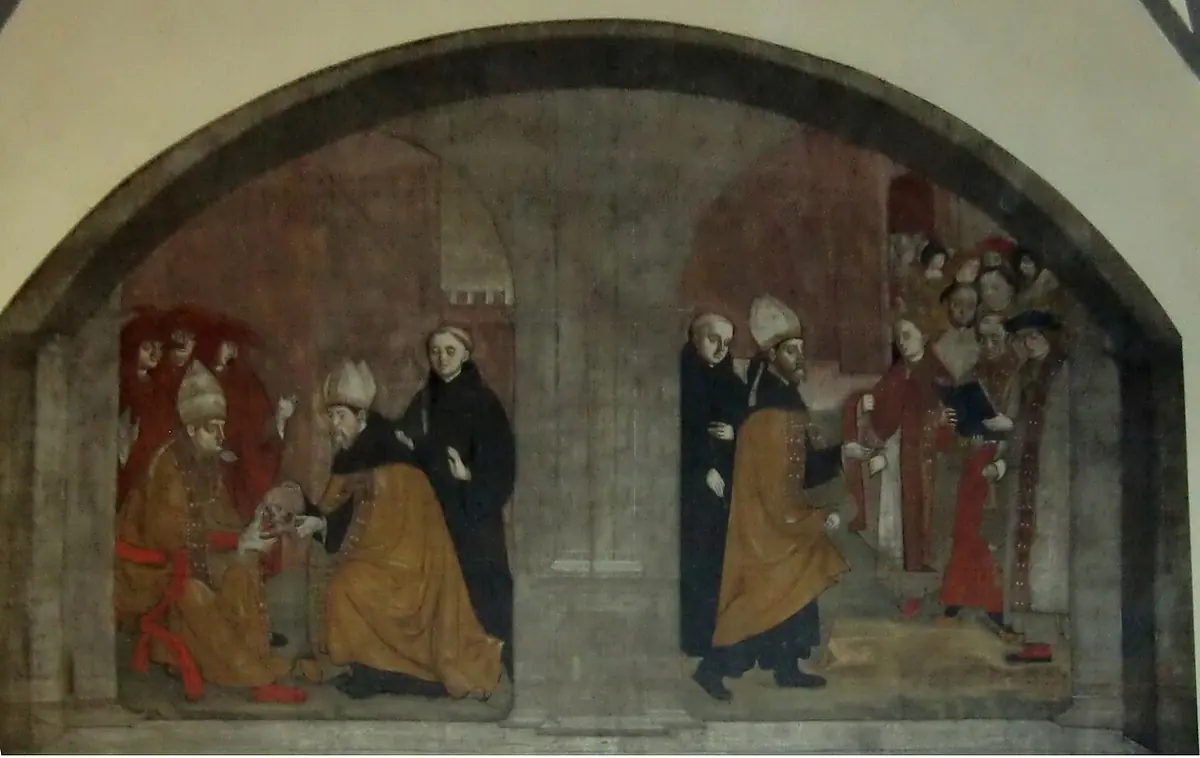
In the thirteenth century, when the saint's relics were moved into Aosta's cathedral, a canon named Jacques de Cours wrote the Magna Legenda Sancti Grati. It is a fine adventure and almost all invention. In it Gratus is born to a noble family of Sparta, studies at Athens, becomes a monk, flees to Rome, is sent as an envoy to Charlemagne, and is named bishop of Aosta after a vision in the Pantheon. Later, at God's command, he travels to the Holy Land with the monk Jucundus and finds the head of St. John the Baptist at the bottom of a deep well. Bells ring by themselves wherever he passes. When he offers the head to the pope in Rome, the jaw comes away in his hand, and the pope lets him take it home to Aosta.
This story is traditional in the plainest sense. It puts a fifth-century bishop in the age of Charlemagne, three hundred years too late. Cardinal Baronius doubted it in the sixteenth century, and in the 1960s the historian Aimé-Pierre Frutaz showed that it was entirely made up. Yet without it we could not understand the way artists have painted him, or how far his cult spread beyond the valley, into Piedmont, Lombardy, Switzerland and Savoy.
Why St. Gratus is the patron saint against hail and storms
The feast that marked the transfer of his relics fell on March 27, at the start of spring, and with it came the "Blessing of St. Grat": a threefold blessing of earth, water and candles to keep every harm away from the fields, the farmers and their animals, and to ask God's favor on the harvest. Over time the people of the valley called on him when melting snow sent the streams over their banks, when drought cracked the ground, when hail threatened the crops, when a hayloft caught fire, and when caterpillars, locusts or moles ruined the fields. Tradition holds that parishes in Piedmont that suffered most from hail used to send delegates to Aosta with offerings, and they carried home candles blessed in his honor to light when a storm came. These are traditional devotions, and they are still alive.
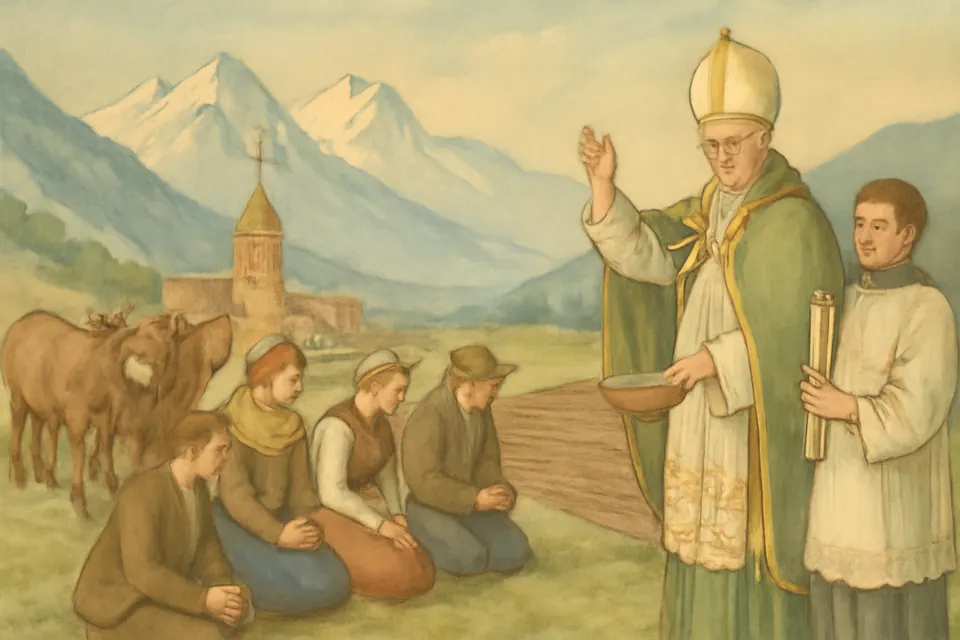
He is the patron of Aosta and of its diocese, and of many towns and villages in Piedmont, Lombardy, Savoy and French-speaking Switzerland. See more causes on our patron saints page.
Symbols of St. Gratus of Aosta in art
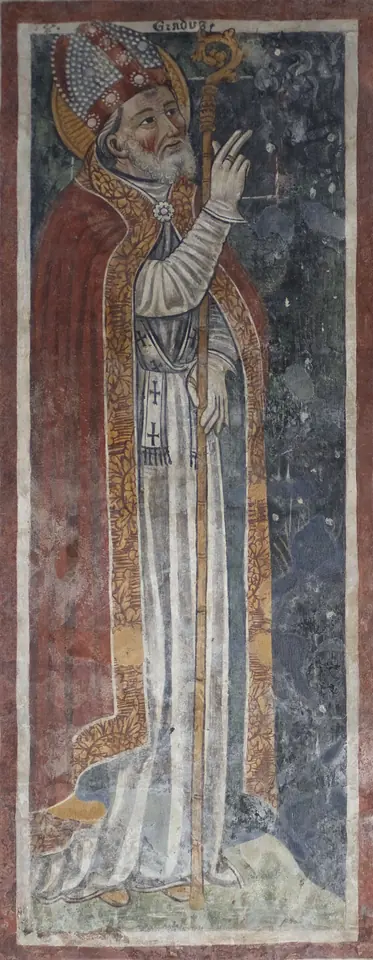
- Miter and crozier: he was a bishop, and he is always shown in a bishop's vestments.
- The head of St. John the Baptist: the most common emblem, from the medieval legend. He holds it before his chest, as in the carved stall at Sant'Orso, or presents it on a cloth.
- Hail and storm clouds: he is sometimes shown driving hail away from the fields or calming the elements.
- A well: a reminder of the well in which the legend says he found the Baptist's head.
If you see a bishop holding a severed bearded head in a church in the Alps or in Piedmont, it is almost surely St. Gratus. Elsewhere, the same emblem can mean other saints, so look for a miter. The sixteenth-century cycle of his life in Aosta Cathedral tells the legend scene by scene.
The feast of St. Gratus and his relics
We keep his feast on September 7. In Aosta it is the solemn feast of the diocese. His relics were moved in the twelfth or thirteenth century from the early Christian church of San Lorenzo, near today's collegiate church of Sant'Orso, into the cathedral, where they rest in a silver and gilded copper reliquary of the fifteenth century. The Collegiate Church of Sant'Orso keeps a smaller reliquary of about 1450 made for the jawbone of the legend. Find other saints of the day on our feast days page.

Prayer to St. Gratus of Aosta
The Church of Aosta honors him in the Mass and Office of his feast, but we know of no traditional English prayer to him with a citable origin. Let us ask his help in our own words, as the farmers of the valley have always done: St. Gratus, faithful bishop who stood for the true faith in Christ, pray for us and for all who work the land; keep our homes and harvests safe from storm and hail, and bring us one day to the Lord you served.
Frequently asked questions
Who was St. Gratus of Aosta?
A fifth-century priest and then bishop of Aosta, successor of its first known bishop, Eustasius. He signed the Synod of Milan's letter to Pope Leo the Great in 451 and took part in the transfer of relics of a Theban martyr at Agaunum.
When is the feast of St. Gratus of Aosta?
September 7, the day of his burial as recorded on his tombstone. It is the great feast of the city and diocese of Aosta.
Why is St. Gratus the patron saint against hail?
From the Middle Ages his spring feast brought a solemn blessing of earth, water and candles for the coming harvest. Farmers came to call on him against hail, storms, floods, drought and pests, and by tradition parishes in Piedmont sent delegates to Aosta to bring home blessed candles.
Why is St. Gratus shown holding a head?
A thirteenth-century legend, the Magna Legenda Sancti Grati, says he found the head of St. John the Baptist in the Holy Land. Historians have shown the story is not historical, but it shaped how artists portray him.
Keep exploring
Sources
- San Grato di Aosta, Vescovo (Santi e Beati). The 451 letter, the Agaunum translation, the tombstone inscription, the transfer of relics, the blessing of St. Grat and Frutaz's study of the legend (in Italian)
- Aosta, Catholic Encyclopedia (1907). Eustasius as the first certain bishop of Aosta, named in the Milan synod's letter to Leo I