St. Jean-Charles Cornay, Missionary Martyr of Vietnam
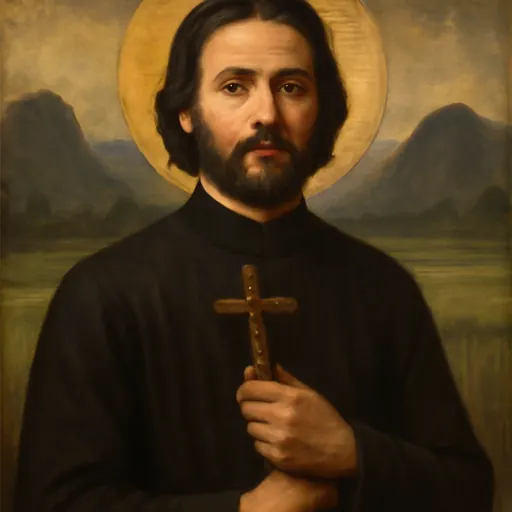
St. Jean-Charles Cornay (1809–1837) was a French priest of the Paris Foreign Missions Society who served in Tonkin, in northern Vietnam. Arrested under Emperor Minh Mang, he was kept in a cage, where he sang the Salve Regina, and beheaded near Son Tay on September 20, 1837. He was canonized in 1988 among the 117 Martyrs of Vietnam.
Who was St. Jean-Charles Cornay?
St. Jean-Charles Cornay was a young French priest who went to Asia to preach the Gospel and gave his life for Christ in northern Vietnam at twenty-eight. He belonged to the Paris Foreign Missions Society (in French, the Missions Étrangères de Paris), which sent hundreds of priests to Asia in the nineteenth century. He meant to go to China and never got there. God kept him in Tonkin instead, among a people who came to love him, and there he died.
He was arrested in June 1837, during the persecution of Christians under the emperor Minh Mang, caged, beaten, and beheaded near the citadel of Son Tay on September 20. Pope John Paul II canonized him in 1988 with the 117 Martyrs of Vietnam.

The life of St. Jean-Charles Cornay
From Loudun to the seminary of the missions
Jean-Charles Cornay was born on February 27, 1809, in the parish of Saint-Pierre at Loudun, in western France. He studied at the college of Saumur, the minor seminary of Montmorillon and the major seminary of Poitiers. On October 13, 1830, already a subdeacon, he entered the seminary of the Foreign Missions in Paris.
Bound for China, kept in Tonkin
The society assigned him, while still a deacon, to the mission of Sichuan in China. He left Paris on August 22, 1831, sailed from Bordeaux on September 17, and tried to reach China by way of Tonkin. The guides who were to take him over the border died in Hanoi, and he stayed in the mission of Western Tonkin. He was ordained a priest there on April 20, 1834, and sent to a parish in the mountains, where he learned the language and began his ministry.
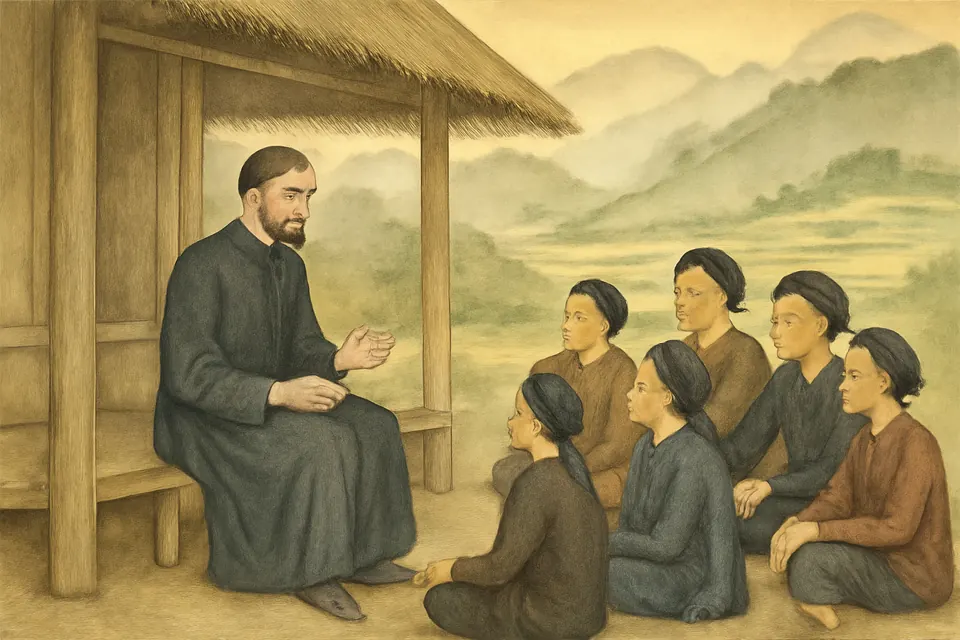
In January 1836 the vicar apostolic of Sichuan wrote that he could not send new guides. Cornay could stay in Tonkin or go back to Macao. His health was already failing. He chose to stay.
Arrest and the cage
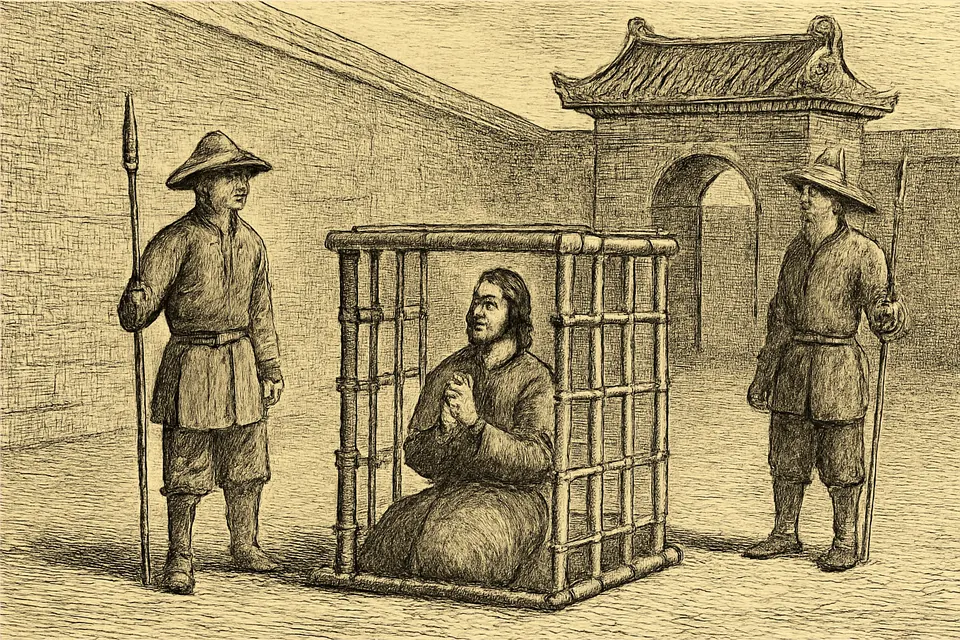
On June 20, 1837, he was arrested at the village of Bau-no, locked in a cage and taken to prison at Son Tay. At his interrogations the judges ordered him to trample a cross. He refused, and he was struck 115 times with rods. Taken back to his cage, he sang the Salve Regina, the ancient hymn to Our Lady.
His martyrdom
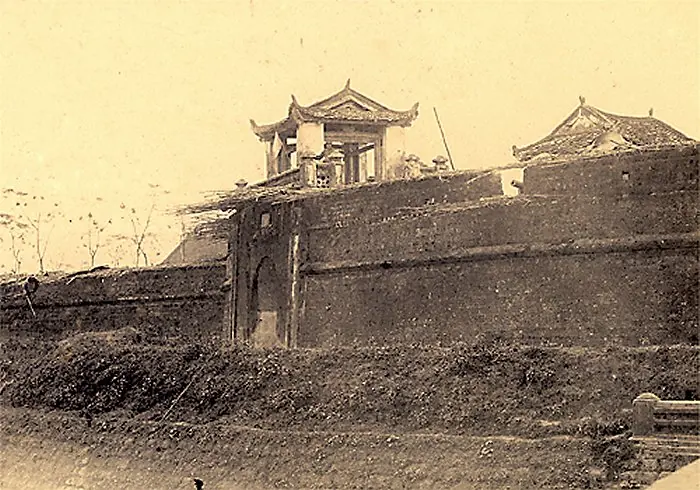
The court at Son Tay condemned him to lang tri, death by slow cutting of the limbs, followed by beheading, and Minh Mang confirmed the sentence. On September 20, 1837, he was led to a field near the citadel. He sang and prayed along the way. The archives of the Paris Foreign Missions record that, contrary to the sentence, the executioner beheaded him first, and only then was his body cut.
A fellow missionary, Father Marette, recovered and hid his remains and sent the acts of his martyrdom to France. They were buried near the place of execution, later moved to the site of the old church of Chieu Ung, and now rest in that parish church.
His canonization
Cornay was declared Venerable on June 19, 1840, only three years after his death. Pope Leo XIII beatified him in May 1900, and the solemn ceremony was held at St. Peter's in Rome on May 27. Pope John Paul II canonized him on June 19, 1988, with the 116 other Martyrs of Vietnam. Of those 117, ten were French priests and bishops of the Paris Foreign Missions. As a martyr, no miracle through his intercession was required, and none is claimed here.
Symbols of St. Jean-Charles Cornay in art
Cornay is shown as a young missionary priest, often with long hair and a beard. Look for:
- A black cassock: the dress of a missionary priest of his time.
- A cage: the bamboo cage he was kept in at Son Tay.
- A crucifix: the cross he would not trample.
- A rosary or a book of hymns: his songs to Our Lady in captivity.
- The martyr's palm.
A painting of his martyrdom made in Tonkin is kept by the Paris Foreign Missions. In group images of the Vietnamese Martyrs he stands among the European priests in a cassock. A statue of him was raised at Mauroc in 1904, and his home church of Saint-Pierre-du-Marché in Loudun honors him too.

Feast day and where he is honored
The Roman Martyrology remembers St. Jean-Charles Cornay on September 20, the day of his death. The Church celebrates him with all the Martyrs of Vietnam on November 24. His remains are venerated in the parish church of Chieu Ung, near Son Tay. In Paris, the seminary of the Foreign Missions on the rue du Bac keeps relics: some of his hair, the cords that bound him when he was arrested, and the carpet, still stained with his blood, on which he was executed. Find the saints of nearby days on our feast days page, and read about another missionary of his society, St. Théophane Vénard.
Prayer to St. Jean-Charles Cornay
There is no long traditional prayer to St. Jean-Charles Cornay alone. The Church prays with him in the collect of the Vietnamese Martyrs on November 24, and we can join our voices to the hymn he sang in his cage:
Hail, holy Queen, Mother of mercy, our life, our sweetness and our hope.
Let us ask St. Jean-Charles Cornay to pray for missionaries far from home, for Christians in Vietnam and wherever the faith is persecuted, and for the young who are deciding whether to stay where God has placed them.
St. Jean-Charles Cornay, pray for us.
Frequently asked questions
When is the feast day of St. Jean-Charles Cornay?
September 20, the day he was martyred in 1837. He is also honored on November 24, the memorial of St. Andrew Dung-Lac and Companions, the Martyrs of Vietnam.
How did St. Jean-Charles Cornay die?
He was arrested at Bau-no on June 20, 1837, and held in a cage at Son Tay. The court sentenced him to death by slow dismemberment, and Emperor Minh Mang approved it. On September 20 he was led out singing and praying; the archives of the Paris Foreign Missions record that, contrary to the sentence, he was beheaded first and his body cut afterward.
When was St. Jean-Charles Cornay canonized?
Pope Leo XIII beatified him in May 1900, and Pope John Paul II canonized him on June 19, 1988, with the 116 other Martyrs of Vietnam.
Where are the relics of St. Jean-Charles Cornay?
His remains rest in the parish church of Chieu Ung near Son Tay, where the faithful venerate them. The Paris Foreign Missions Society in Paris keeps relics including his hair, the cords that bound him at his arrest and the carpet on which he was executed.