St. Finbarr of Cork, First Bishop and Patron of Cork
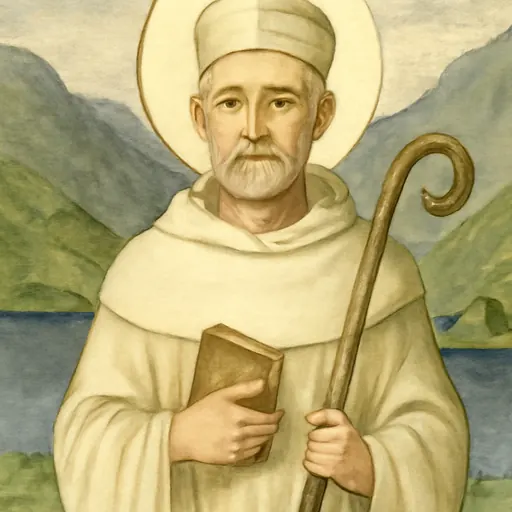
St. Finbarr (also Fin Barre or Barr) was a sixth-century Irish monk who lived as a hermit at Gougane Barra and then founded a monastery and school on the marshes of the River Lee. Butler says the crowds of students who came to him were the origin of the city of Cork, and he was its first bishop. His feast is September 25.
Who was St. Finbarr of Cork?
St. Finbarr of Cork (also spelled Fin Barre, Finbar or simply Barr) was a sixth-century Irish monk and bishop, the founder and patron of the city of Cork. He lived first as a hermit on a lake island in the mountains of west Cork, then founded a monastery and school where the River Lee meets the sea. So many students came that, in Butler's words, they "changed, as it were, a desert into a large city." We keep his feast on September 25.
Butler says his baptismal name was Lochan, and that Finbarr, "Barr the White," was given him later for his fair hair.
The life of St. Finbarr of Cork
Birth and boyhood
His medieval Lives, in Latin and Irish, were written centuries after him and mix history with legend. They say his father, Amergin, came from Connaught and settled in Munster. Popular tradition in Cork places Finbarr's birth near Bandon. As a boy, the Lives say, he was given to three holy men from Leinster to be taught, and he grew up studying under monks in Leinster and Munster.
The hermit of Gougane Barra
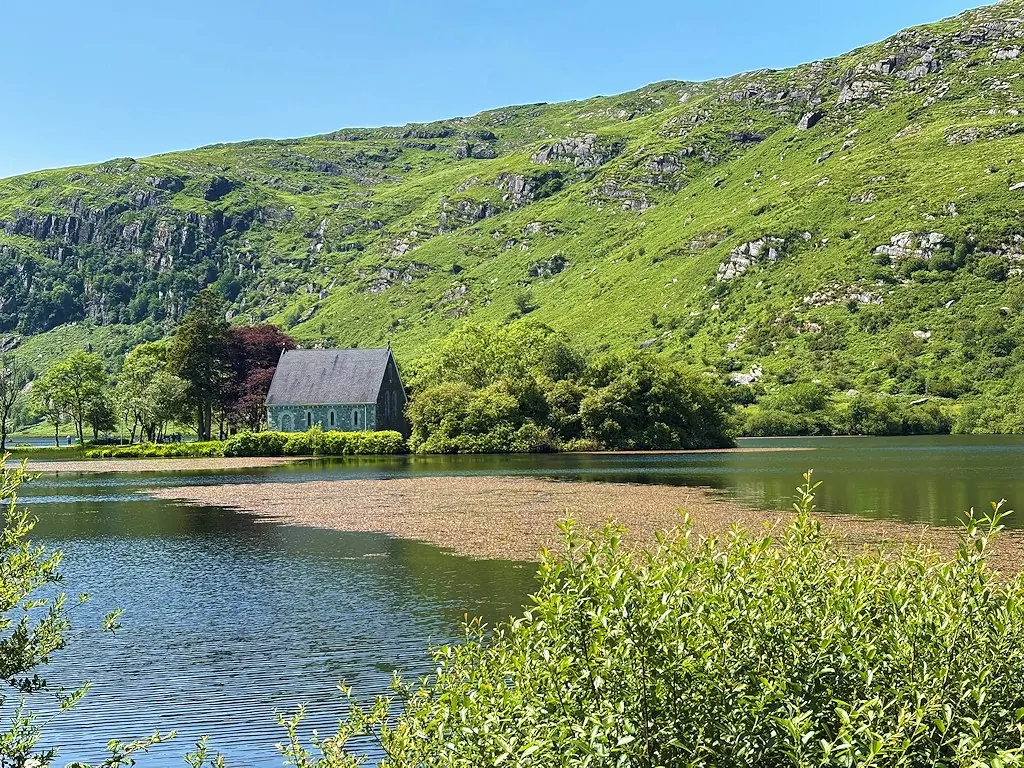
Finbarr's first home as a monk was Gougane Barra, a dark lake ringed by mountains where the River Lee rises. The name is usually rendered "Finbarr's rock-cleft." He lived in a cell on a little island in the lake. O'Hanlon describes the ruins of a chapel and eight arched cells still traceable there in the nineteenth century, and a holy well near the causeway.
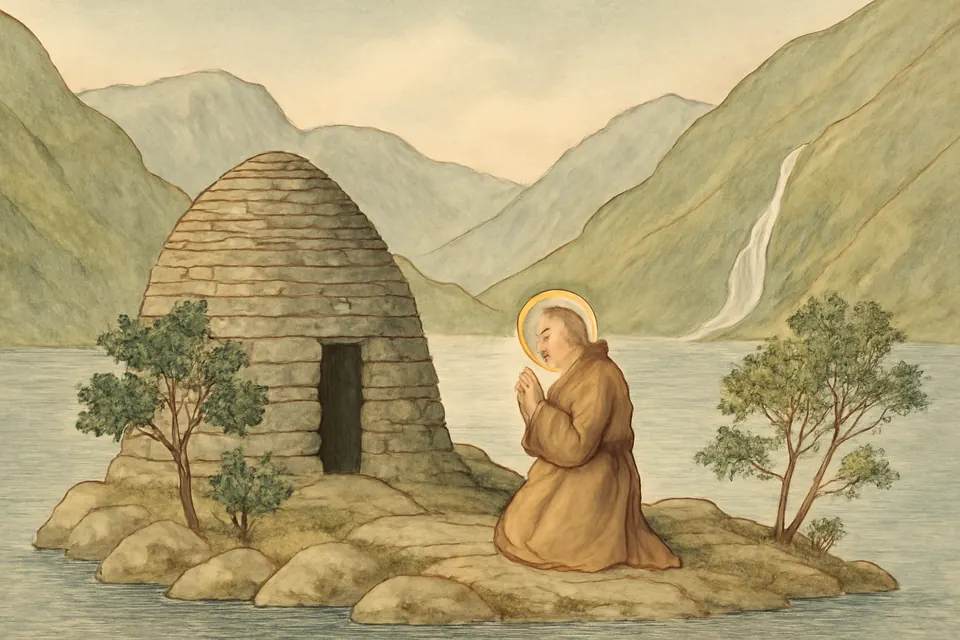
Disciples gathered even there. The Lives list among them Eolang, his tutor, and Nessan, who later built up his school at Cork.
The founding of Cork
The Irish Life says an angel led Finbarr down the Lee to a marshy place near its mouth and told him it would be "the place of his resurrection," the place where he would rest until the last day. A man named Aed, out looking for a stray cow, found the saints there and gave them the land. Butler says the monastery and school stood at Lough Eirc, a hollow later drained and built over. The city takes its name from Corcach, "marsh."

Finbarr was the first bishop of Cork. Butler gives him seventeen years in the office. His disciple St. Colman founded the see of Cloyne, and Nessan carried on the school.
His death
Finbarr died at Cloyne, about fifteen miles from Cork, while visiting friends. The Irish Life says he received the Body and Blood of Christ and "gave up his most happy spirit to God." His body was brought home and buried in his own church at Cork. The year is not known; O'Hanlon gives about 623.
Miracles and legends of St. Finbarr
O'Hanlon warns that many stories in the Lives "seem to rest only on popular tradition." All of these are traditional:
- As an infant he spoke to a chief to save his parents from punishment.
- At his burial, the Life says, the sun did not set for fifteen days.
- St. Fursey, visiting Cork, saw a golden ladder at Finbarr's tomb reaching to heaven, "for taking up souls."
The Life adds that his relics were later raised and placed in a silver shrine, and that miracles were wrought at the time.
Why St. Finbarr is the patron of Cork
His monastery was the seed of the city, and he was its first bishop. The Irish bishops list St. Finbarr, September 25, as patron of Cork in the Diocese of Cork and Ross. The Catholic church of St. Finbarr South and the Church of Ireland's St. Fin Barre's Cathedral both carry his name, the cathedral on the traditional site of his monastery.

Symbols of St. Finbarr in art
There is no portrait from his time. Irish artists show him with:
- A miter and crozier, as the first bishop of Cork.
- A book, for his famous school.
- A lake and island cell, for Gougane Barra.
Harry Clarke's window in the Honan Chapel at University College Cork, made in 1916–1917, is the finest image of him, a bishop in deep red against a field of blue.

Feast day and pilgrimage
On September 25 Cork honors its patron. O'Hanlon records that pilgrims long came to Gougane Barra on the eve and day of the feast, and that Mass was celebrated on the island on the Sunday within the octave. See our feast days calendar and our page on Irish saints.
Prayer to St. Finbarr
We know of no ancient prayer to St. Finbarr in wide use. We may ask him to pray for the people of Cork, for students and teachers, and for all who seek God in quiet places. St. Finbarr, pray for us.
Frequently asked questions
When is St. Finbarr's feast day?
September 25. The Irish bishops list him as patron of Cork, in the Diocese of Cork and Ross, with his feast on that day.
What does the name Finbarr mean?
"Fair head" or "white-topped," from the Irish fionn, fair, and barr, head. Butler says his baptismal name was Lochan, and that Finbarr was a nickname for his light hair.
What is Gougane Barra?
A mountain lake at the source of the River Lee in west County Cork, where Finbarr lived as a hermit on a small island. A nineteenth-century oratory stands there today, and pilgrims come on the Sunday nearest his feast.
Is St. Finbarr the founder of Cork?
Yes, in the sense that his monastery and school were the beginning of the city. Butler writes that so many disciples came that they "changed, as it were, a desert into a large city."
Keep exploring
Sources
- Alban Butler, Lives of the Saints, vol. IX (1866): St. Barr, or Finbarr, First Bishop of Cork. His baptismal name Lochan, the school at Lough Eirc, seventeen years as bishop, death at Cloyne, the silver shrine and Gill Abbey
- John O'Hanlon, Lives of the Irish Saints, vol. 9 (September 25): St. Bairre or Finbar. The medieval Lives, Gougane Barra and its pilgrimage, the gift of land at Cork, the legends of his burial and the burning of Cork and Cloyne in 1089
- Irish Catholic Bishops' Conference: Diocese of Cork and Ross. Patrons of the diocese: Cork, St Finbarr, 25 September
- Roman Martyrology (2004), September 21 to 30, GCatholic. Feast on September 25, as bishop at Cork in Munster