St. Agatha Kwon Chin-i
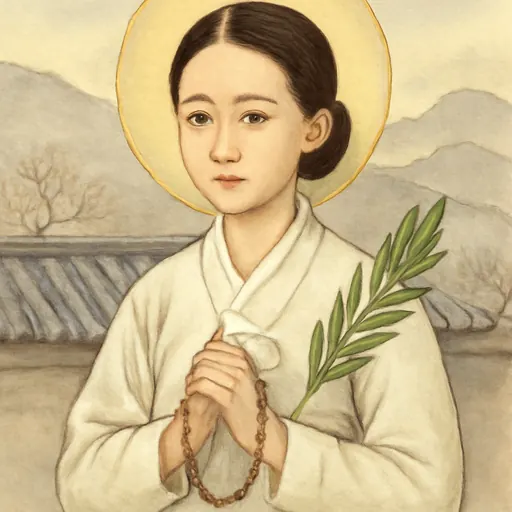
St. Agatha Kwon Chin-i was a young Korean Catholic from Seoul who was arrested with her mother, St. Magdalene Han Yong-i, in the persecution of 1839. She once escaped from custody, was taken again, endured severe torture, and was beheaded at Danggogae on January 31, 1840, at twenty-one. She is one of the 103 Korean martyrs, whose feast we keep on September 20.
Who was St. Agatha Kwon Chin-i?
St. Agatha Kwon Chin-i was a young Korean Catholic who gave her life for Christ outside Seoul on January 31, 1840, at twenty-one. She was arrested with her mother, St. Magdalene Han Yong-i, in the great persecution of 1839, survived months of prison and torture, and was beheaded at Danggogae with five other Christians. Her life holds a fall and a costly repentance, and the Church honors her among the 103 Korean martyrs canonized by Pope John Paul II in Seoul in 1984.
A family that came to the faith
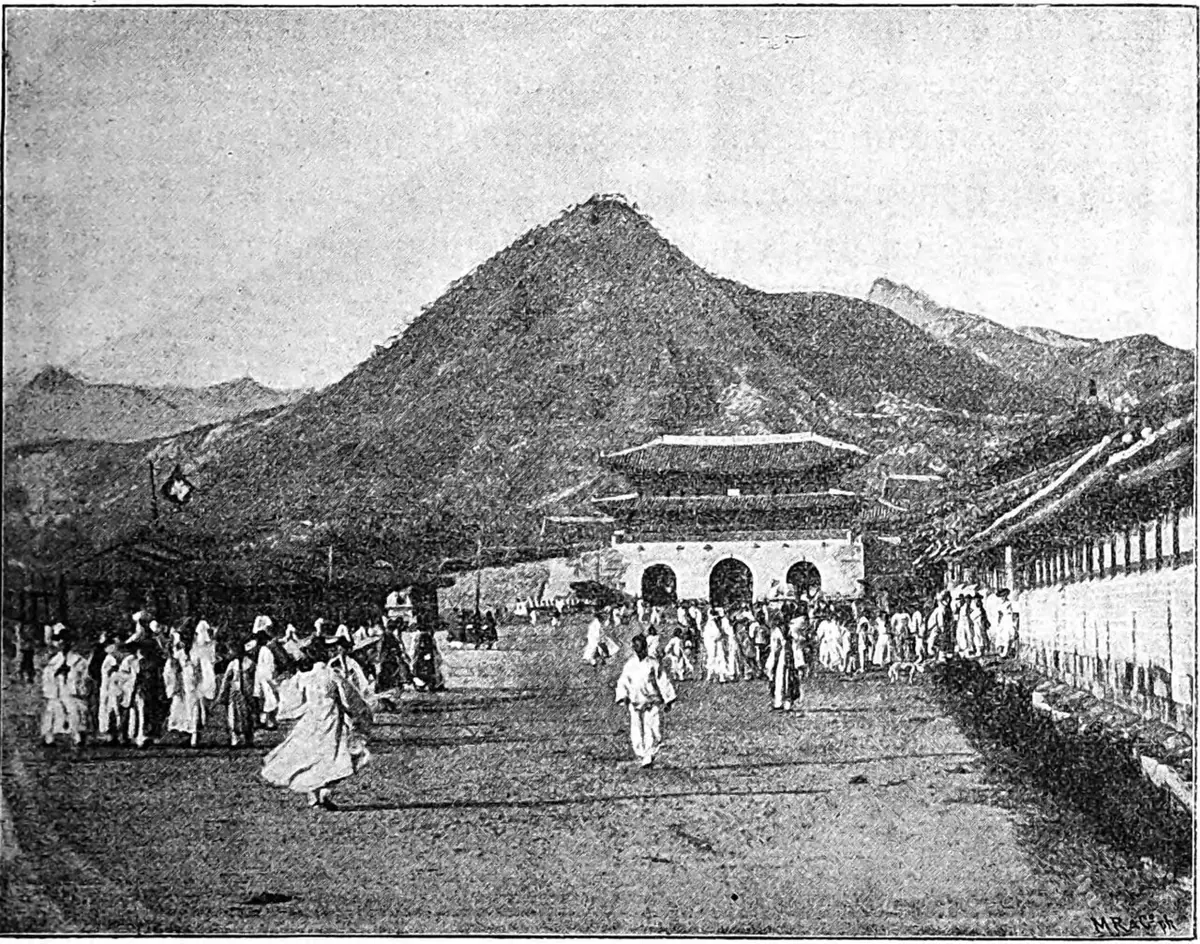
Agatha was born in Seoul around 1820. Her father, a scholar of the gentry class named Kwon, heard of the Christian religion, embraced it and taught it to his wife. Falling gravely ill, he was baptized at the end and told her to practice the faith faithfully. His widow, Magdalene Han, kept that promise and brought their daughter into the Church with her.
They were very poor. Agatha was married at about twelve or thirteen, but her husband had nothing to keep her on, so she lived in the house of his relative, St. Paul Chong Hasang, the lay leader who was working to bring priests back to Korea.
A fall and a repentance
In 1833 a Chinese priest, Father Pacificus Yu, entered Korea secretly, and Agatha went to serve in his household. She wanted to give her life to God as a virgin, and he declared her marriage null. We must tell what follows honestly, because the missionaries who wrote down her story did. Charles Dallet's history of the Korean Church, compiled from their letters, says plainly that the priest abused the girl's trust and drew her into sin, causing grave scandal among the Christians, until the French missionary Father Pierre Maubant sent him away from Korea.
After he left, Agatha came back to her mother. Moved by Father Maubant's fatherly counsel, she gave herself to prayer and penance, and Dallet writes that she kept saying she wanted to be a martyr to make amends for her sins. Few saints' stories show so clearly that God's mercy is greater than our falls. She did not hide from her past; she offered her life.
Arrest and escape
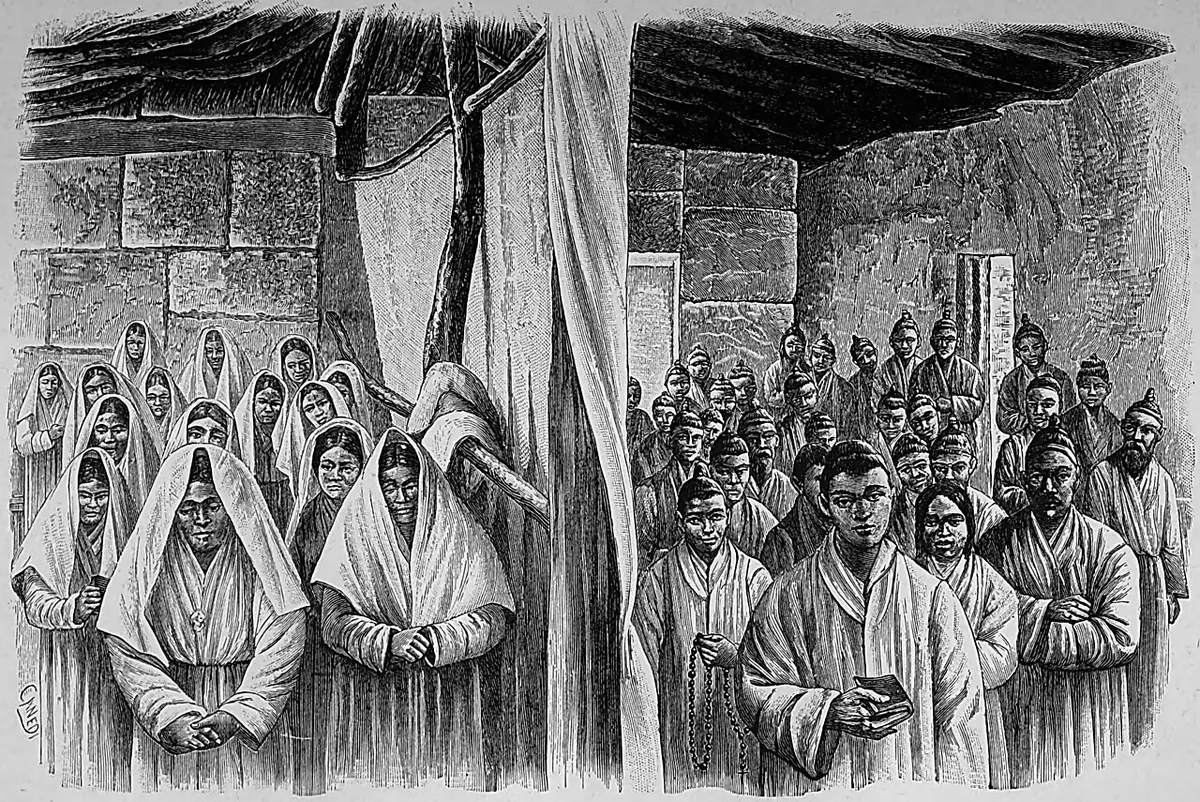
A young woman named St. Agatha Yi Kyong-i came to live with Agatha and her mother; she too had seen an unhappy marriage annulled. The three lived together in prayer. Then, in the persecution of 1839, an apostate named Kim Sun-seong denounced Agatha Kwon. On July 17, 1839, the three were arrested at night, with a young Christian servant girl.
The officer put Magdalene alone in prison and kept the young women under guard in a nearby building. The reason soon became clear: the traitor came to see Agatha and tried, with promises and threats, to make her run off with him. She answered him with contempt. The guards, moved by her youth, helped her slip away from him, and a few days later she and Agatha Yi escaped.

The government learned what had happened, dismissed the officer and exiled several guards. Agatha was hunted down and taken again.
Torture, her mother's death, and martyrdom
The chief criminal judge put Magdalene and the two Agathas to terrible tortures; Agatha Kwon was punished with special severity for having escaped. All three held firm and were sent on to the high court, where more questioning and more suffering waited, and finally they were condemned to death.
Magdalene Han was beheaded first, outside the Little West Gate of Seoul, on December 29, 1839, at fifty-six. Agatha and Agatha Yi followed a month later. On January 31, 1840, they were beheaded together with other Christians at Danggogae, a little way outside the capital.
Miracles and canonization
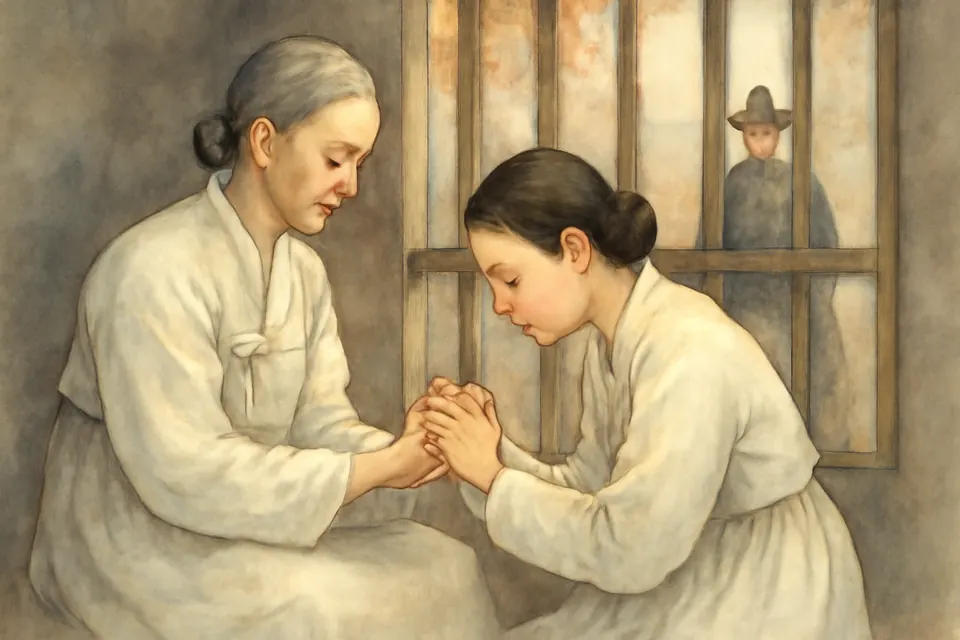
No miracles are attached to her name. She is honored as a martyr, for whom the Church does not require a miracle. Pope John Paul II canonized her with 102 companions in Seoul on May 6, 1984.
Symbols of St. Agatha Kwon Chin-i in art
Korean Catholic art shows the 103 martyrs in the dress of their time, so look for:
- The white hanbok of a poor Seoul household, often with a young woman's simple hair.
- The martyr's palm, and sometimes a rosary in her hands.
- In group paintings of the 103 martyrs she is usually near her mother, Magdalene Han, and Agatha Yi.
Feast day and where she is honored
We keep her feast with all the Korean martyrs on September 20. See the feast day calendar. The Danggogae Martyrs' Shrine in Yongsan, Seoul, stands near the place where she and her companions died in January 1840.
There is no traditional prayer to St. Agatha Kwon Chin-i in common use. Let us ask her, who rose from a grave fall to the grace of martyrdom, to pray for all who carry shame for the past, for those wounded by people who should have protected them, and for the Church in Korea.
Frequently asked questions
Who was St. Agatha Kwon Chin-i?
A young Korean woman from Seoul who came to the faith with her mother, Magdalene Han Yong-i, after her father's dying wish. Arrested on July 17, 1839, she refused to deny Christ under torture and was beheaded at Danggogae on January 31, 1840. She was canonized in 1984.
When is the feast of St. Agatha Kwon Chin-i?
September 20, the memorial of St. Andrew Kim Taegon, St. Paul Chong Hasang and companions. The day of her death was January 31.
Who was St. Agatha Kwon Chin-i's mother?
St. Magdalene Han Yong-i, who was arrested with her and beheaded outside Seoul's Little West Gate on December 29, 1839, a month before her daughter. Both are among the 103 Korean martyrs.
Why is her story called a story of repentance?
The French missionaries' history of Korea records that as a young woman she fell into serious sin with a priest who later was sent away. She returned to her mother, did penance, and said she wished to be a martyr to make amends. The Church honors her as a martyr who died for Christ.
Keep exploring
Sources
- Catholic Bishops' Conference of Korea: 103 Martyr Saints, no. 67, Kwon Chin-i Agatha (in Korean). Her birth in Seoul, conversion with her mother at her father's wish, marriage at about thirteen, life in the house of Chong Ha-sang, service to Fr. Yu, arrest on July 17, 1839, escape, and beheading at Danggogae on January 31, 1840, at 21
- Catholic Bishops' Conference of Korea: 103 Martyr Saints, no. 65, Yi Kyong-i Agatha (in Korean). The informer Kim Sun-seong, the two Agathas held apart from Magdalene Han, the attempt to carry off Agatha Kwon and their escape together
- Charles Dallet, Histoire de l'Église de Corée, vol. 2 (Paris, 1874), pp. 227–231. Her father, the scholar Kwon, her annulled marriage, her fall and repentance after Fr. Pacificus Yu left, the arrest and escape, and the execution of January 31, 1840
- Pope John Paul II, homily at the canonization of the Korean martyrs, Seoul, May 6, 1984. The canonization of the 103 martyrs