Blessed Theodore Romzha
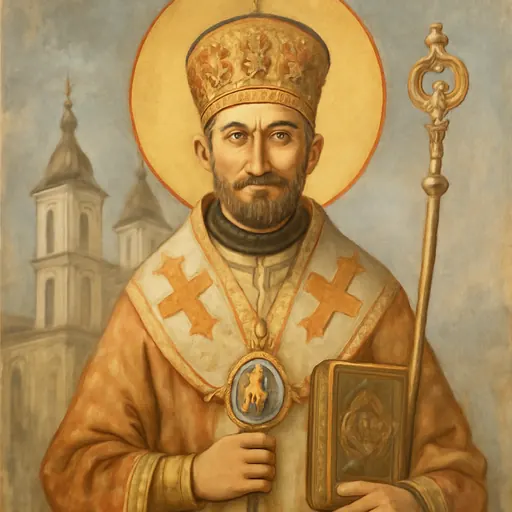
Blessed Theodore Romzha (1911–1947) was the Greek Catholic bishop of Mukachevo in Transcarpathia who refused to break communion with Rome when Stalin's regime set out to destroy his Church. After a staged road accident failed to kill him, he was poisoned in a Mukachevo hospital on November 1, 1947. Pope John Paul II beatified him as a martyr in 2001. His feast is November 1.
Who was Blessed Theodore Romzha?
Blessed Theodore Romzha was the young Greek Catholic bishop of Mukachevo, in the Carpathian region of today's western Ukraine, who led his Church through the first years of Soviet persecution and was murdered for refusing to break with Rome. The Dicastery for the Causes of Saints says he knew his confession of faith would cost him his life. Pope John Paul II beatified him as a martyr in Lviv on June 27, 2001. We keep his feast on November 1, the day he died.
He was born on April 14, 1911, in Velykyi Bychkiv in Transcarpathia, the son of a railroad worker. He studied philosophy and theology at the Gregorian University in Rome and was ordained a priest at Christmas in 1936.
Priest and bishop
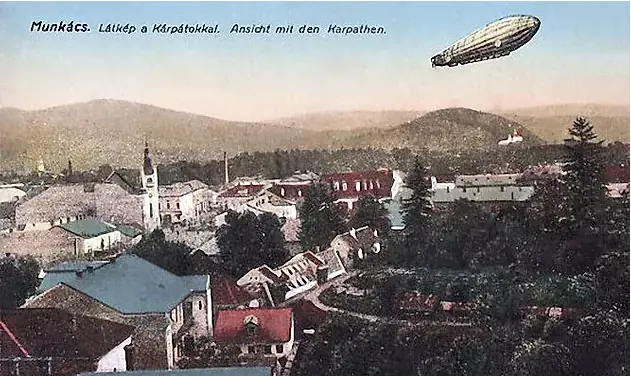
From the spring of 1938 he served the mountain villages of Berezovo and Nyzhnia Bystra in the district of Khust. In the fall of 1939 he was called to the theological seminary in Uzhhorod as spiritual director and professor of philosophy. On September 24, 1944, at only 33, he was ordained a bishop for the Eparchy of Mukachevo.
He is remembered for encouraging his people with words like these, as given by the New Liturgical Movement's report from Uzhhorod:
Faith is our greatest treasure on this earth. To preserve our faith we must even be ready to lay down our life. If we must die, then let us die as true martyrs, defending our faith. One thing is sure; that we will never abandon our faith nor betray our Church.
The plan to destroy his Church
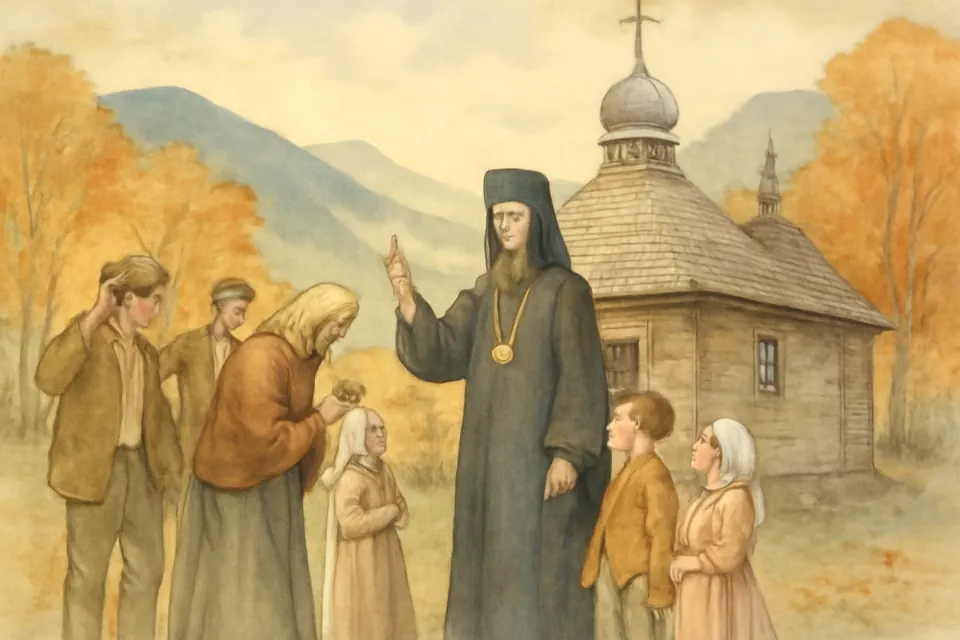
On Stalin's personal orders, the Dicastery writes, the Greek Catholic Church was to be suppressed and absorbed into the Russian Orthodox Church. Bishop Theodore did not deny his union with the Holy See. Instead he prepared his clergy and his diocese not to give way. Priests were arrested, and more and more churches were handed over to the Orthodox. The authorities took his car to keep him from traveling, so he visited his parishes by horse-drawn carriage. The Byzantine Catholic Menaion remembers him in those years as tireless in caring for his flock and in defending the rights of his Church.
His martyrdom
Since the regime could find no plausible pretext to arrest him, it planned his death. On October 27, 1947, as he returned from a pastoral visit, his carriage was hit by a Soviet military truck in a staged accident, and he and his companions were beaten and left for dead. He survived, badly hurt, and was taken to the hospital in Mukachevo.
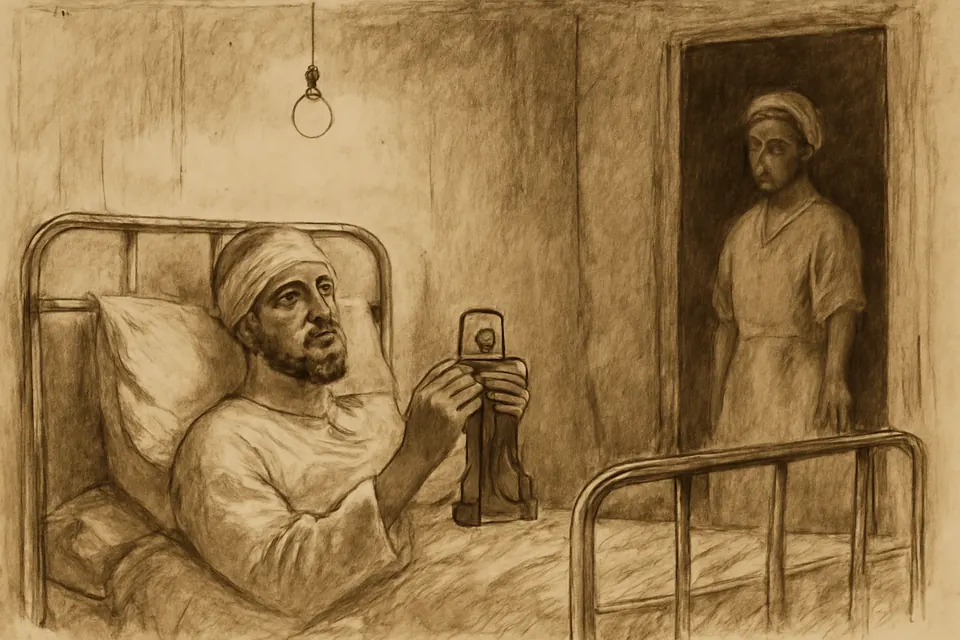
On November 1, 1947, while he was recovering, he was poisoned by order of the general of the state police and his agents. The Dicastery says his example strengthened the clergy and faithful through the long persecution that followed, when the Greek Catholic Church in Ukraine could live only underground, and made him a symbol of their resistance.
- Approved: the Church recognized his death as martyrdom, killed in hatred of the faith. A martyr does not need a miracle for beatification.
Beatification
Pope John Paul II beatified him on June 27, 2001, at a Byzantine Divine Liturgy in Lviv, together with Mykola Charnetskyi and his 24 companion martyrs and Omelian Kovch, and with Josaphata Hordashevska. The Pope said these martyrs had shown that love is stronger than death.
Symbols of Blessed Theodore in art
He lived in the age of photography, so icons of him follow his photographs: a young bishop with a short dark beard. In Byzantine icons he wears a bishop's gold vestments, the omophorion and a crown-shaped miter, with a panagia, the bishop's medallion of the Mother of God, on his chest. He may hold a Gospel book or a cross, and the palm or a red mantle marks him as a martyr. The Church calls him a "hieromartyr," a priest-martyr.
Feast day, relics and troparion
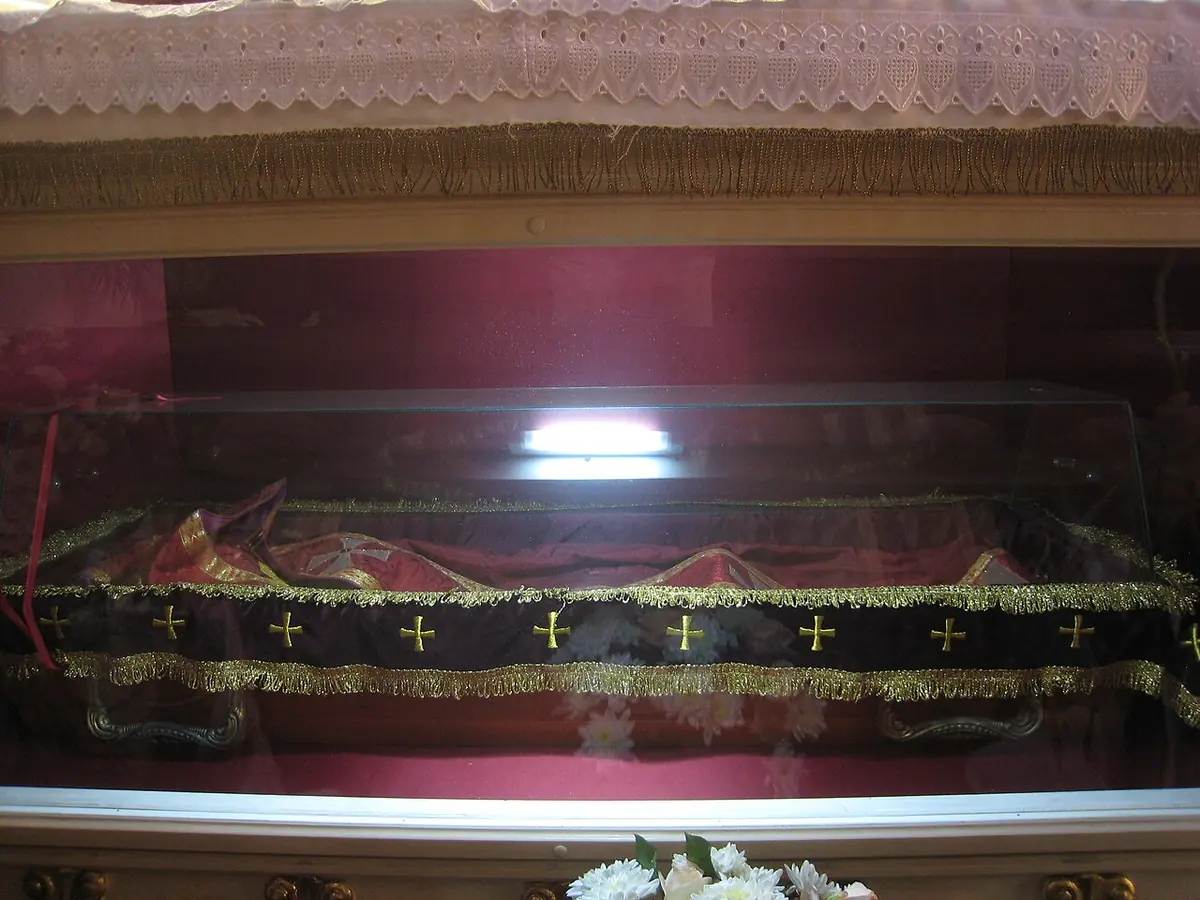
His principal feast is November 1. On June 28, 2003, his relics were solemnly carried to the Greek Catholic Cathedral of the Holy Cross in Uzhhorod, and that day became his second feast. Each June 28 thousands walk in procession with the relics from the seminary to the cathedral. See the feast day calendar.

At that procession the faithful sing his troparion, the short hymn of his feast, given in English by the New Liturgical Movement's report:
O priest martyr Theodore, following the Apostles' path of piety, as a good shepherd guarding Christ's flock, you laid down your life; for having been slain by the godless, o Blessed One, adorned with wounds you entered into eternal joy, o Long-Suffering One, and received from the Lamb of God the crown of glory. Pray to Him to save our souls!
Let us ask him to pray for bishops and priests, for the Greek Catholic Churches, and for all Christians who are pressured to give up their faith. Blessed Theodore Romzha, pray to God for us.
Where the relics of Blessed Theodore Romzha are kept: see them on the relics map →
Frequently asked questions
Who was Blessed Theodore Romzha?
A priest of the Ruthenian Greek Catholic Eparchy of Mukachevo, ordained a bishop at 33 in 1944. When the Soviet army took Transcarpathia, the regime pressed his Church to merge with the Russian Orthodox Church. He refused and strengthened his clergy to stay faithful, and he was murdered in 1947.
How did Theodore Romzha die?
On October 27, 1947, during a pastoral visit, his carriage was rammed by a truck in a staged accident and he was badly hurt. While he was recovering in the hospital at Mukachevo, he was poisoned by agents of the state police on November 1, 1947.
When is the feast of Blessed Theodore Romzha?
November 1, the day of his death. June 28, the day his relics were moved to the cathedral in Uzhhorod in 2003, is kept as a second feast.
Where are his relics?
In the Greek Catholic Cathedral of the Holy Cross in Uzhhorod, Ukraine, where they were solemnly placed on June 28, 2003.
Keep exploring
Sources
- Dicastery for the Causes of Saints: Teodor Romża (1911–1947). His life, the staged accident and the poisoning; the beatification homily of June 27, 2001
- Metropolitan Cantor Institute, Menaion for June 28. His feasts on November 1 and June 28; the translation of his relics in 2003
- New Liturgical Movement: Procession in Ukraine to Honor Bl. Theodore Romzha (June 30, 2016). The June 28 procession, his remembered words and the troparion