Blessed Raymond of Capua
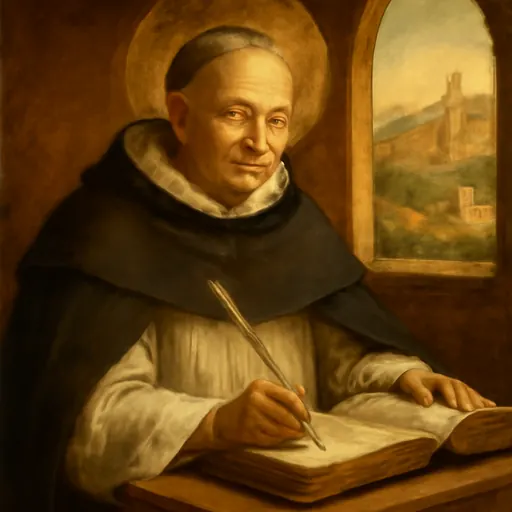
Blessed Raymond of Capua (about 1330–1399) was an Italian Dominican friar, the confessor and friend of St. Catherine of Siena and the author of her great Life, the Legenda maior. Elected master of the Dominican Order in 1380, he led its reform and is sometimes called its second founder. His feast is October 5.
Who was Blessed Raymond of Capua?
Blessed Raymond of Capua was the Dominican friar whom God gave to St. Catherine of Siena as her confessor, and who after her death wrote the Life through which the whole Church came to know her. He was elected master of the Order of Preachers in 1380 and spent the rest of his life calling his brothers back to their rule. Pope Leo XIII confirmed his cult in 1899, and we keep his feast on October 5.
He was born around 1330 in Capua, near Naples, into the noble De Vineis (della Vigna) family. The Dominican Order's own account says he was sent to Bologna to study and entered the Order there around 1350.

The life of Blessed Raymond of Capua
Biographer of St. Agnes
Before he met Catherine, Raymond already had a gift for telling the lives of holy women. He served as chaplain to the Dominican nuns at Montepulciano, and in 1366 he wrote the first Life of their foundress, St. Agnes of Montepulciano, from the memories of her sisters and the records of her miracles.
Confessor to St. Catherine
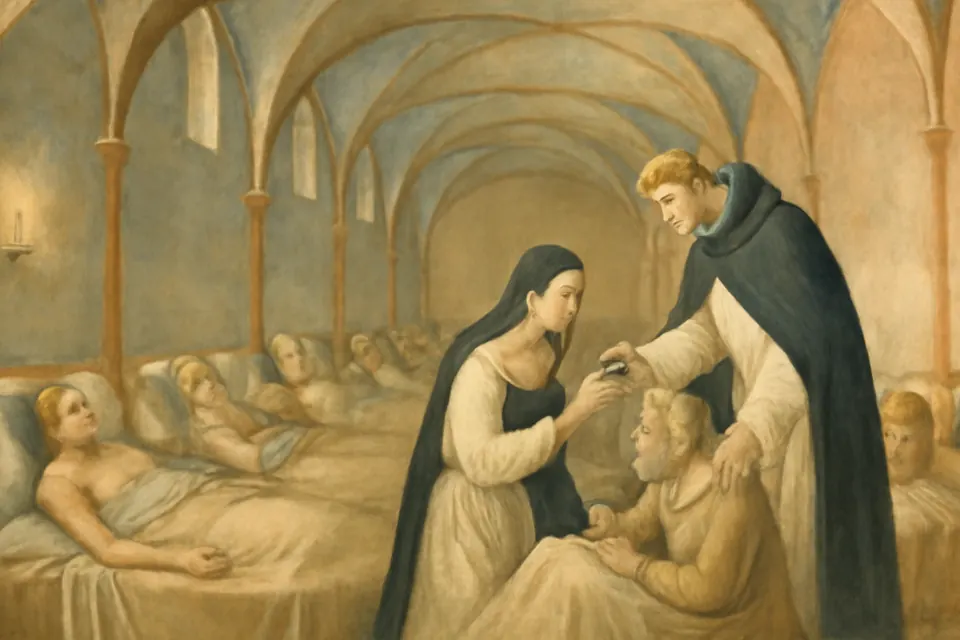
In 1374 Catherine was called to Florence, apparently to answer questions about her way of life before the Dominican general chapter. She came home to Siena, where the plague had returned, with a new confessor: Raymond of Capua. He was about forty-four; she was twenty-seven.
Their friendship began among the sick. Scudder's chronology of Catherine's life notes that she returned from Florence "to minister to the plague-stricken," and it was then that she met Raymond. The wonders he later reported about her, in Siena and elsewhere, are reported accounts from a close witness, not miracles the Church has examined.
For the next years he went where she went. He was with her at Pisa in 1375 when, he reports, she received the stigmata. Her letters show him at Avignon working on her behalf with Pope Gregory XI, whom she was urging to return to Rome. She called him "father and son," given to her, she said, by "that sweet mother, Mary."
The letter to Genoa
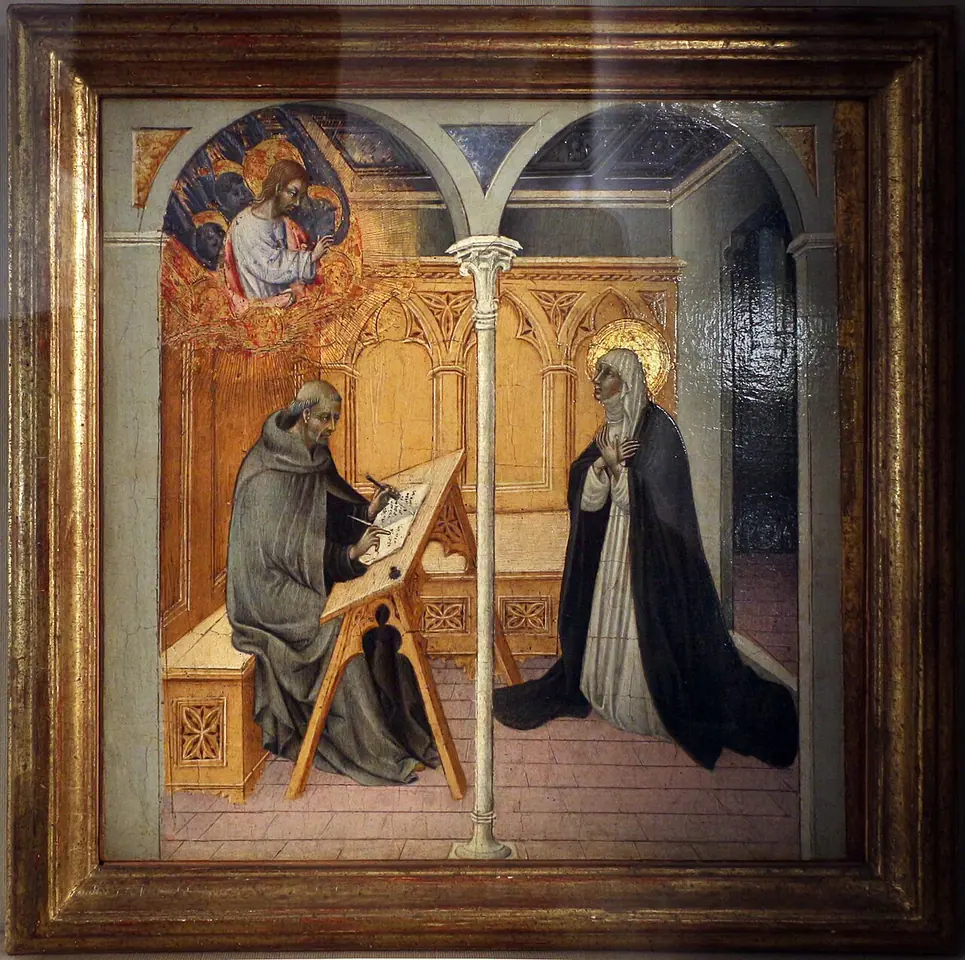
After the Great Western Schism broke out in 1378, Pope Urban VI sent Raymond on a mission to the King of France. He got as far as Genoa, where the antipope's galleys blocked the way, and he turned back. Catherine, who would gladly have died for the Church, wrote him two letters. In Vida Scudder's 1905 translation the first begins: "How blessed your soul and mine would have been could you have sealed with your blood a stone in Holy Church!"
It is one of the most human moments in the lives of the saints. She scolded him as a mother would, and she loved him no less. Scudder notes that he did not return to Rome until after her death on April 29, 1380.
Master of the Order
That same year Raymond was elected the 23rd master of the Dominican Order. Catherine had always pressed him to serve the Church and the Pope, and he spent his last two decades doing that, standing with the Roman pope during the Schism and visiting the convents of his Order.
In 1383, with Urban VI's permission, he arranged for Catherine's head to be brought from Rome to Siena, where the Basilica of San Domenico still keeps it.
From 1390 he began the reform of the Order. The Catholic Encyclopedia explains that he set out to restore the monastic observances that had fallen away, insisting that convents keep the Constitutions exactly. For this work he is sometimes called the second founder of the Order of Preachers.
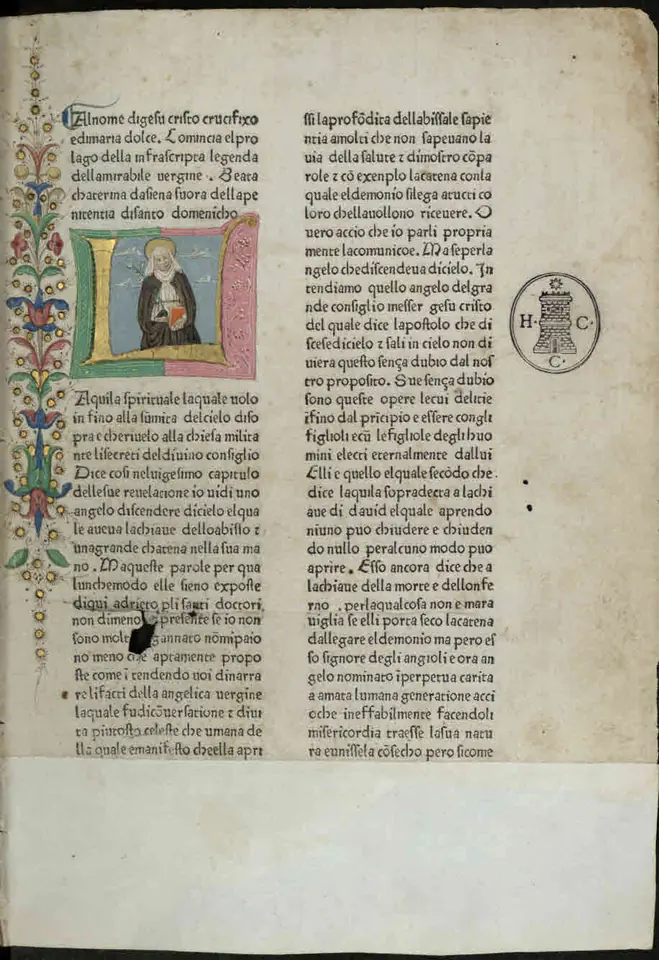
He finished the Legenda maior in 1395, according to the Catholic Encyclopedia. It is long and full of wonders, written by a friend and devotee, and it is still the main source for Catherine's life. Raymond is careful to say what he saw himself and what Catherine told him.
Death and beatification
Raymond died a holy death at Nuremberg on October 5, 1399, while visiting the Dominican convents of Germany. He was buried there, and his body was later moved to Naples, to the great Dominican church of San Domenico Maggiore. Pope Leo XIII confirmed his cult on May 15, 1899, the five hundredth anniversary of his death.

Symbols of Blessed Raymond of Capua in art
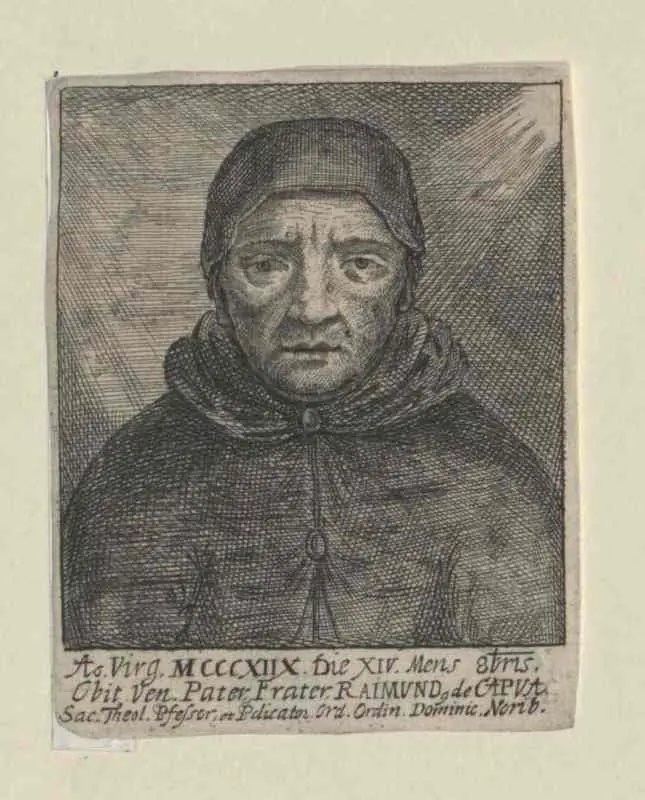
Raymond is shown in the white habit and black cloak of a Dominican friar. Most often he appears with St. Catherine of Siena: writing as she dictates, hearing her confession or standing as a witness to her mystical marriage, as in Subleyras's painting. A book or pen marks him as her biographer. A heart sometimes recalls the exchange of hearts between Christ and Catherine that he described. In portraits on his own, an old engraving shows him as a lined, hooded old man.
Feast day, tomb and prayer
We keep his feast on October 5, the day of his death, which the Dominican Order keeps in its calendar. His body rests in San Domenico Maggiore in Naples. See the feast day calendar.

We know of no traditional prayer to him that we can quote. Let us ask him to pray for confessors and spiritual directors, for all who write the lives of the saints, and for the renewal of religious life. Blessed Raymond of Capua, pray for us.
Frequently asked questions
Who was Blessed Raymond of Capua?
A Dominican friar from a noble family of Capua who became St. Catherine of Siena's confessor in 1374, worked with her for the return of the popes to Rome and the unity of the Church, and after her death became master of the Order of Preachers. He wrote her Life and the first Life of St. Agnes of Montepulciano.
What did Raymond of Capua write?
His best-known book is the Legenda maior, the long Life of St. Catherine of Siena, which the Catholic Encyclopedia says he finished in 1395. He also wrote a Life of St. Agnes of Montepulciano, letters and short works on the reform of the Order.
When was Raymond of Capua beatified?
The Dominican Order's official site says Pope Leo XIII confirmed his cult on May 15, 1899, five hundred years after his death.
Where is Raymond of Capua buried?
He died at Nuremberg on October 5, 1399, and was buried there. His body was later moved to Naples, to the Dominican church of San Domenico Maggiore.
Keep exploring
Sources
- Order of Preachers (op.org): B. Raymundi a Capua. Birth at Capua around 1330, entry into the Order at Bologna around 1350, 23rd master in 1380, death at Nuremberg, cult confirmed May 15, 1899, body moved to Naples
- Catholic Encyclopedia (1911): Order of Preachers. His reform of the Order begun in 1390
- Catholic Encyclopedia (1908): St. Catherine of Siena. The Legend finished in 1395
- Vida D. Scudder, ed., Letters of Catherine Benincasa (Saint Catherine of Siena as Seen in Her Letters), Project Gutenberg. Catherine's letters to Raimondo, including the letter to him at Genoa
- Basilica Cateriniana di San Domenico, Siena: La Storia della Basilica. Raymond brought Catherine's head to Siena in 1383