Blessed Alexandrina of Balazar (Alexandrina Maria da Costa)
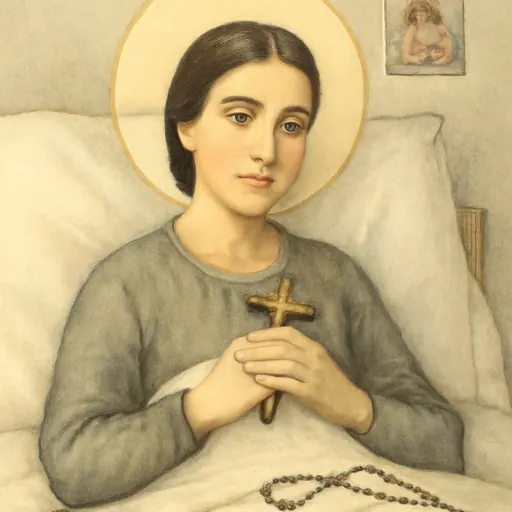
Blessed Alexandrina of Balazar (Alexandrina Maria da Costa, 1904–1955) was a Portuguese laywoman who, paralyzed after jumping from a window to protect her purity, spent thirty years in bed offering her suffering for sinners. For the last 13 years of her life she took no food but the Eucharist. Pope John Paul II beatified her in 2004, and we keep her feast on October 13.
Who was Blessed Alexandrina of Balazar?
Blessed Alexandrina of Balazar, born Alexandrina Maria da Costa, was a Portuguese farm girl who spent thirty years in bed, paralyzed, and turned that bed into an altar. She offered every pain for sinners, relived the Passion of Christ in her body, and for more than thirteen years took no food but the Eucharist. When Pope John Paul II beatified her in 2004, he summed up her life in her own three words: "suffer, love, make reparation." We keep her feast on October 13.

The life of Blessed Alexandrina
A strong country girl
Alexandrina was born on March 30, 1904, in Balazar (also spelled Balasar), a rural parish in the north of Portugal. Her family was devout, and she grew up a lively, strong girl who could do a man's share of work in the fields to help keep the household going.
The leap from the window
On Holy Saturday of 1918, when she was fourteen, three men broke into the house and tried to assault Alexandrina, her sister Deolinda and a young apprentice girl. To keep her purity, Alexandrina jumped from a window, a fall of about four meters. She survived, but the injuries were many, and the doctors called her condition irreversible.
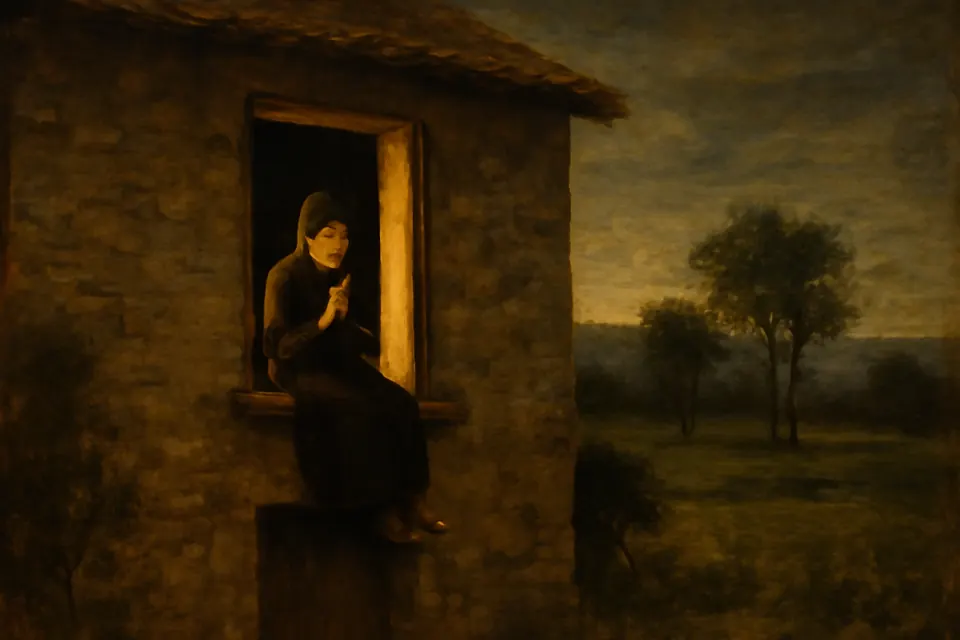
For a few years she could still drag herself to church. From April 14, 1925, she was confined to bed, completely paralyzed, and she stayed there for the rest of her life, about thirty years.
A vocation in a sickbed
Slowly she came to see her suffering as her calling: to be a victim soul, offering herself with Christ for the salvation of sinners. The Vatican biography records words she said Jesus spoke to her one day: "I want that while your heart is filled with suffering, on your lips there is a smile." Visitors found her cheerful.
The Passion and the Eucharistic fast
From October 3, 1938, to March 24, 1942, every Friday for about three hours, Alexandrina lived through the Passion of Jesus. During those hours, the Vatican biography says, her paralysis seemed to be lifted, and she followed the Stations of the Cross with her body, in great physical and spiritual pain, including temptations against the faith. Not everyone believed her, and some in the Church criticized her.
Then, from March 27, 1942, until her death, she took no food at all except Holy Communion. That lasted about thirteen years and seven months. Her weight fell as low as 33 kilos, about 73 pounds. Doctors examined her repeatedly, often coldly and with hostility, and could not explain it.
- Reported: the weekly Passion ecstasies of 1938 to 1942 and the thirteen-year fast, documented by witnesses and physicians in her lifetime. The Church honors her heroic virtue; it has not declared the fast itself a miracle.
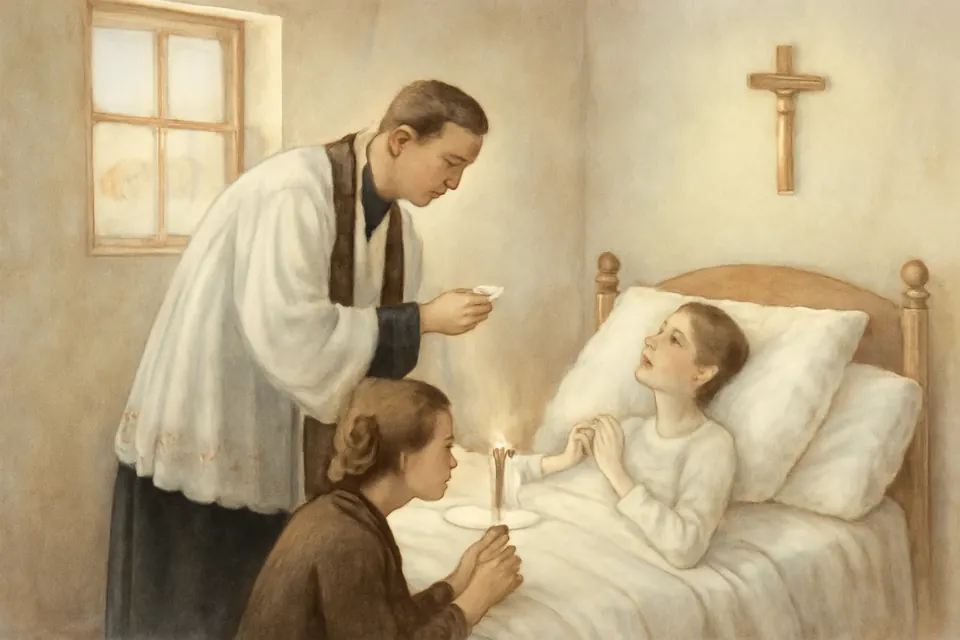
In 1944 she joined the Salesian Cooperators, the lay branch of the family of St. John Bosco, and offered her suffering for the salvation of souls and the holiness of young people. A Salesian priest, Father Umberto Pasquale, guided her from that year on.
Her death and her epitaph
Alexandrina died in Balazar on October 13, 1955, the anniversary of the last apparition of Our Lady of Fatima. Her last words were: "I am happy, because I am going to Heaven."
She had asked that her tomb speak to sinners. Its words, as the Vatican gives them in English, begin:
Sinners, if the dust of my body can be of help to save you, come close, walk over it, kick it around until it disappears. But never sin again: do not offend Jesus anymore!
Pope John Paul II beatified her in St. Peter's Square on April 25, 2004. "A 'spouse of blood'," he said, "she relived mystically Christ's passion and offered herself as a victim for sinners, receiving strength from the Eucharist: this became her only source of nourishment for the final 13 years of her life."
Symbols of Blessed Alexandrina in art
Alexandrina lived in the age of photography, and her images follow her photographs. Look for:
- A young woman with dark hair, smiling, in a bed or propped on pillows: her sickbed was her whole world for thirty years.
- Hands crossed over the heart, the pose of statues of her at Balazar, a sign of self-offering.
- A crucifix, for her sharing in the Passion.
- The Host, for the Eucharist that was her only food.
Feast day and prayer
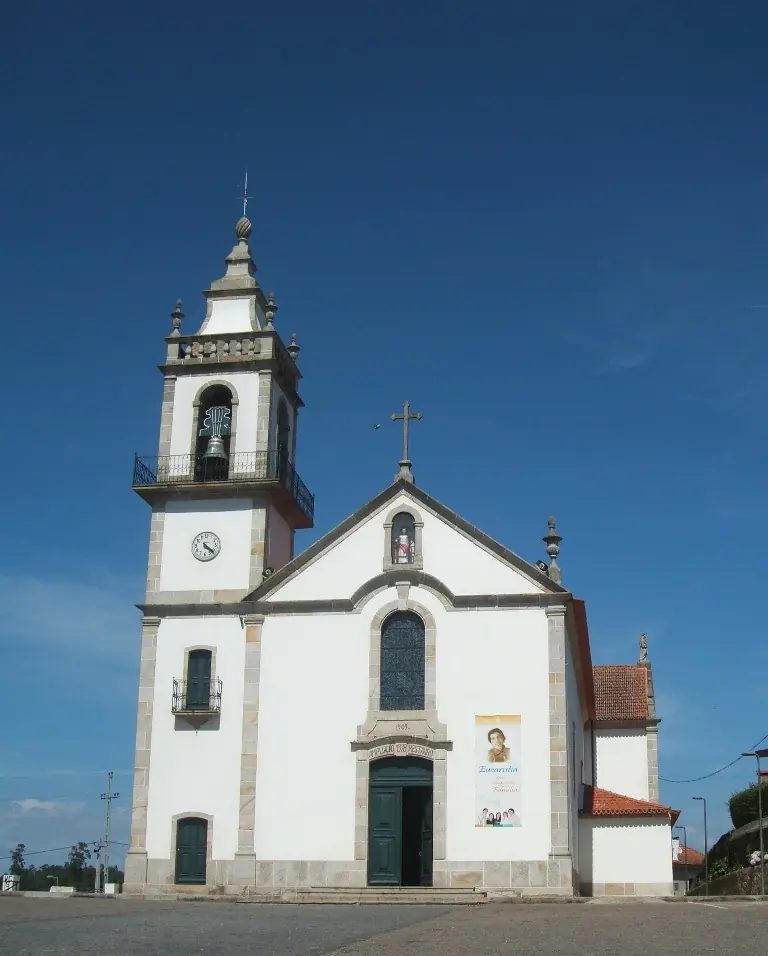
We keep the feast of Blessed Alexandrina on October 13. Pilgrims come to her tomb in the parish church of Balazar, near Póvoa de Varzim. See the feast day calendar.
We know of no traditional prayer to her that we can quote. Let us ask Blessed Alexandrina to pray for the sick and bedridden, that they may find meaning in their suffering; for victims of violence; and for sinners, that they may turn back to Jesus, "for he is so good." Blessed Alexandrina of Balazar, pray for us.
Frequently asked questions
Who was Blessed Alexandrina of Balazar?
Alexandrina Maria da Costa, a farm girl from Balazar in northern Portugal. At fourteen she leapt from a window to escape men who broke into her home, and the injuries left her bedridden and paralyzed from 1925 until her death in 1955. She accepted this as her vocation, offering herself as a victim for sinners, and she became a Salesian Cooperator in 1944.
Did Alexandrina of Balazar really live on the Eucharist alone?
The Vatican biography says that from March 27, 1942, until her death, about 13 years and seven months, she took no food except the Eucharist, and that doctors examined her and were baffled. Pope John Paul II said the Eucharist became her only nourishment for the final 13 years of her life. The Church did not beatify her for the fast itself but for her heroic love.
What was Blessed Alexandrina's motto?
Her life is summed up in three words: "suffer, love, make reparation," the "trilogy" Pope John Paul II named in her beatification homily.
When is the feast of Blessed Alexandrina?
October 13, the day she died in 1955, which is also the anniversary of the last apparition of Our Lady at Fatima.
Keep exploring
Sources
- Vatican: Alexandrina Maria da Costa (1904-1955), biography. The 1918 attack and fall, paralysis from April 14, 1925, the Friday Passions of 1938–1942, the Eucharistic fast from March 27, 1942, her weight, the Salesian Cooperators, her epitaph and last words
- Pope John Paul II, homily for the beatification of six Servants of God (April 25, 2004). The date of beatification and the Pope's words on her life, quoted here